
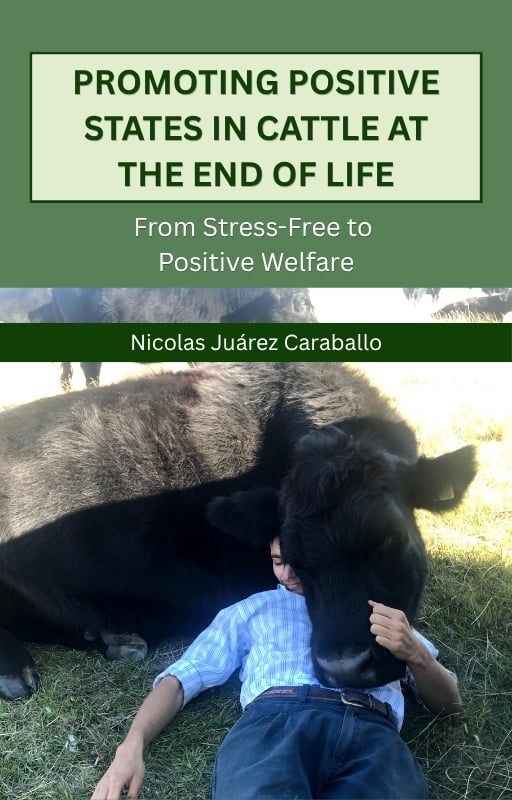
Promoting Positive States in Cattle at the End of Life
From Stress-Free to Positive Welfare
For decades, livestock welfare has been measured by what it prevents: less stress, less fear, less bruising. This book asks a different question—can an animal's final hours be not merely bearable, but good?
Written by an agronomist who spent years among cattle, Promoting Positive States in Cattle at the End of Life makes the case that sparing an animal suffering is not the same as giving it something positive—and that we can do the latter. Drawing on welfare science and years of first-hand observation, it moves the conversation beyond the stress-free baseline toward the active presence of positive states in the animals we raise.
The book proposes a purpose-built approach to the final hours, grounded in the animal's own senses—scent, sound, sight, touch, and taste—using cues familiar from the farm to draw cattle forward calmly, rather than driving them by force. It is offered honestly, as a proposal: the author is clear throughout about what the evidence supports and what still needs testing.
Inside:
- The economic and biological case for positive welfare, not just stress reduction
- How each of the five senses can be used to shape a calm, positive final experience
- A facility and training approach designed around the animal's experience
- An honest reckoning with the ethics of the final minute
- Open research questions for those who want to take the work further
Part welfare science, part practical proposal, and part the story of Preto—the calf whose trust made the whole idea possible—this is a considered resource for producers, agronomists, students, and anyone who believes the end of an animal's life deserves more thought than it usually gets.