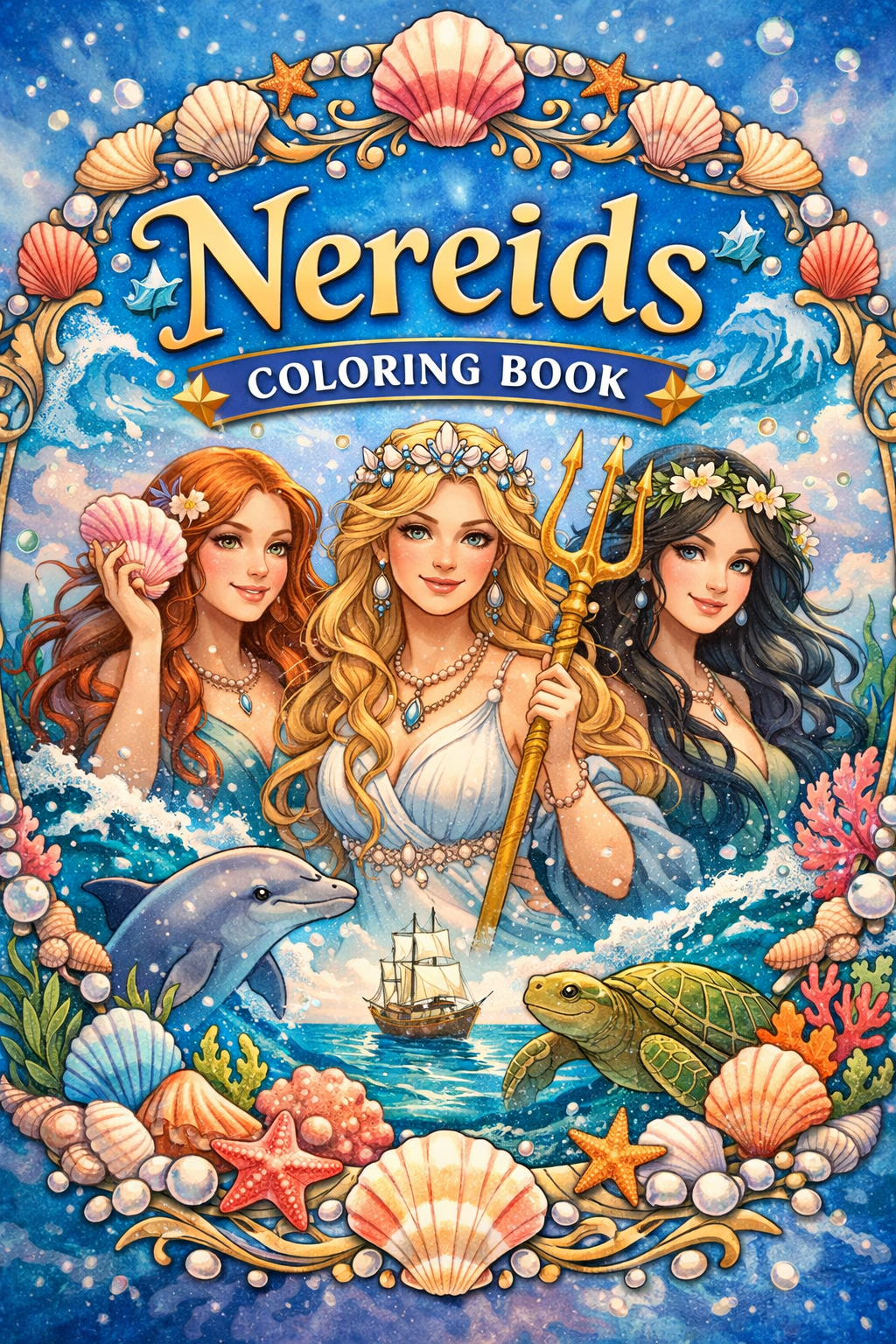
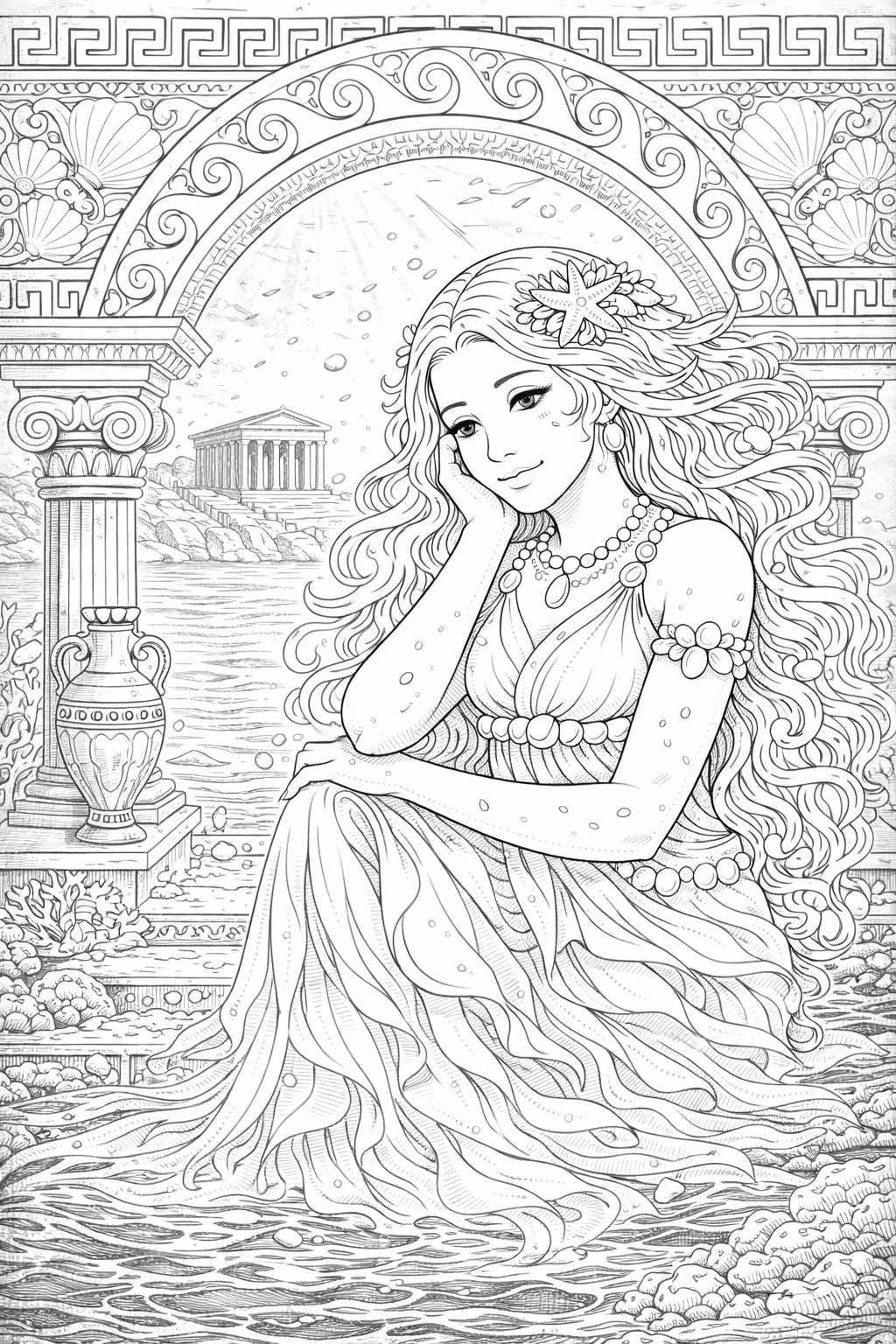
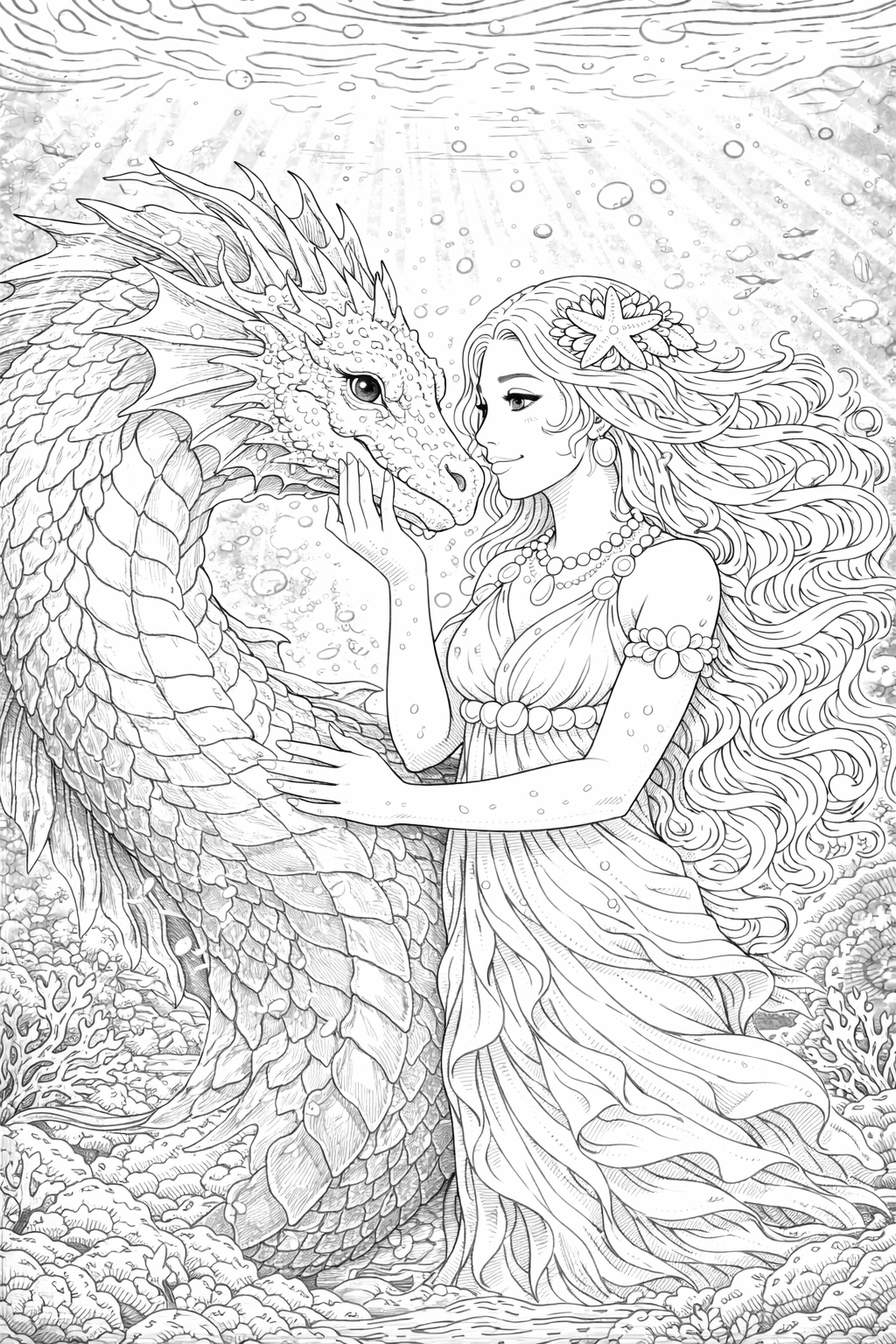



The Nereids of Greek Mythology- Graceful Sea Nymphs of the Ancient World, 56 designs, coloring ebook, digital printable product, instantly download
The Nereids of Greek Mythology-
Graceful Sea Nymphs of the Ancient World, 56 designs, coloring ebook, digital printable product, instantly download
In Greek mythology, the Nereids were enchanting sea nymphs who embodied the beauty, generosity, and mysterious power of the Mediterranean Sea. Gentle yet formidable, they represented the calm, life-giving aspects of the ocean, standing in contrast to its darker and more destructive forces. Revered by sailors, poets, and artists alike, the Nereids occupied a unique place in the mythological imagination of ancient Greece.
They were not distant goddesses ruling from the heights of Olympus, but intimate spirits of nature, moving freely through the waves, guiding ships, aiding heroes, and reflecting the ever-changing character of the sea itself.
Origins and Divine Parentage
The Nereids were the fifty daughters of Nereus, an ancient sea god known for his wisdom, honesty, and prophetic abilities, and Doris, one of the Oceanids. Nereus was often called the “Old Man of the Sea”, symbolizing the sea’s benevolent and truthful nature.
Their lineage made the Nereids part of the primordial generation of sea deities, older than the Olympian gods. Unlike many later gods, Nereus and his daughters were associated with kindness, guidance, and protection, rather than chaos or destruction.
The Nereids were believed to dwell in a magnificent underwater palace, often described as being made of coral, pearls, and shimmering stone, located deep within the sea—sometimes near Mount Aegaeon, a mythical marine realm.
Nature and Symbolism of the Nereids
The Nereids symbolized:
the gentle waves and calm seas
the fertility and abundance of the ocean
the protective forces that guide sailors home
the grace and beauty of the natural world
They were frequently depicted as beautiful young women, riding dolphins, sea horses, or hippocamps, their hair flowing like seafoam. Though generally benevolent, they commanded great respect, for the sea they embodied could swiftly turn dangerous if dishonored.
For ancient Greeks, the Nereids were reminders that nature, even in its most beautiful form, deserved reverence.
The Role of the Nereids in Myth
Companions of the Gods
The Nereids often accompanied major sea deities, especially Poseidon, acting as his attendants and messengers. They also formed part of the retinue of Amphitrite, Poseidon’s wife and herself a Nereid.
Helpers of Heroes
In many myths, the Nereids appear as helpers and protectors of heroes:
They aided sailors lost at sea
They offered magical objects or guidance
They intervened at critical moments
Their assistance reinforced the idea that the sea, while dangerous, could be compassionate to those favored by fate or the gods.
Famous Nereids and Their Stories
Thetis
The most famous of all Nereids, Thetis was destined to bear a son greater than his father. To prevent this, Zeus arranged her marriage to the mortal hero Peleus. Their son was Achilles, the greatest warrior of the Trojan War. Thetis played a crucial role in Achilles’ life, attempting to make him immortal and later intervening with the gods on his behalf.
Amphitrite
Amphitrite became the queen of the sea as Poseidon’s consort. Though she initially fled his advances, she was later persuaded to marry him. She ruled beside Poseidon and was honored in coastal cults throughout Greece.
Galatea
Galatea is known for her tragic love story involving the Cyclops Polyphemus and the mortal Acis. Her tale explores themes of unrequited love, jealousy, and transformation.
Other Nereids—such as Cymodoce, Panope, Psamathe, and Dynamene—appear throughout epic poetry and hymns, each associated with specific aspects of the sea, such as waves, currents, or shorelines.
The Nereids in Art and Literature
From Homer’s Iliad to later Roman poetry, the Nereids were frequent subjects of artistic inspiration. They appear in:
ancient vase paintings
marble sculptures and mosaics
Renaissance and Neoclassical art
Artists favored them as symbols of idealized beauty, movement, and harmony with nature. In literature, they often functioned as lyrical figures—voices of the sea rather than dominant actors.
Worship and Cultural Significance
Though they did not have large temples like the Olympian gods, the Nereids were honored in coastal sanctuaries and invoked by sailors before voyages. Offerings were made to ensure safe passage and calm waters.
They represented a deeply Greek worldview: that nature is alive, responsive, and worthy of respect.
Legacy of the Nereids
The Nereids remain enduring symbols of:
the sea’s beauty and mercy
the feminine presence in nature
the intimate bond between humanity and the natural world
Their legacy lives on in art, literature, and even modern language, where they continue to inspire images of mystical sea maidens and ocean spirits.