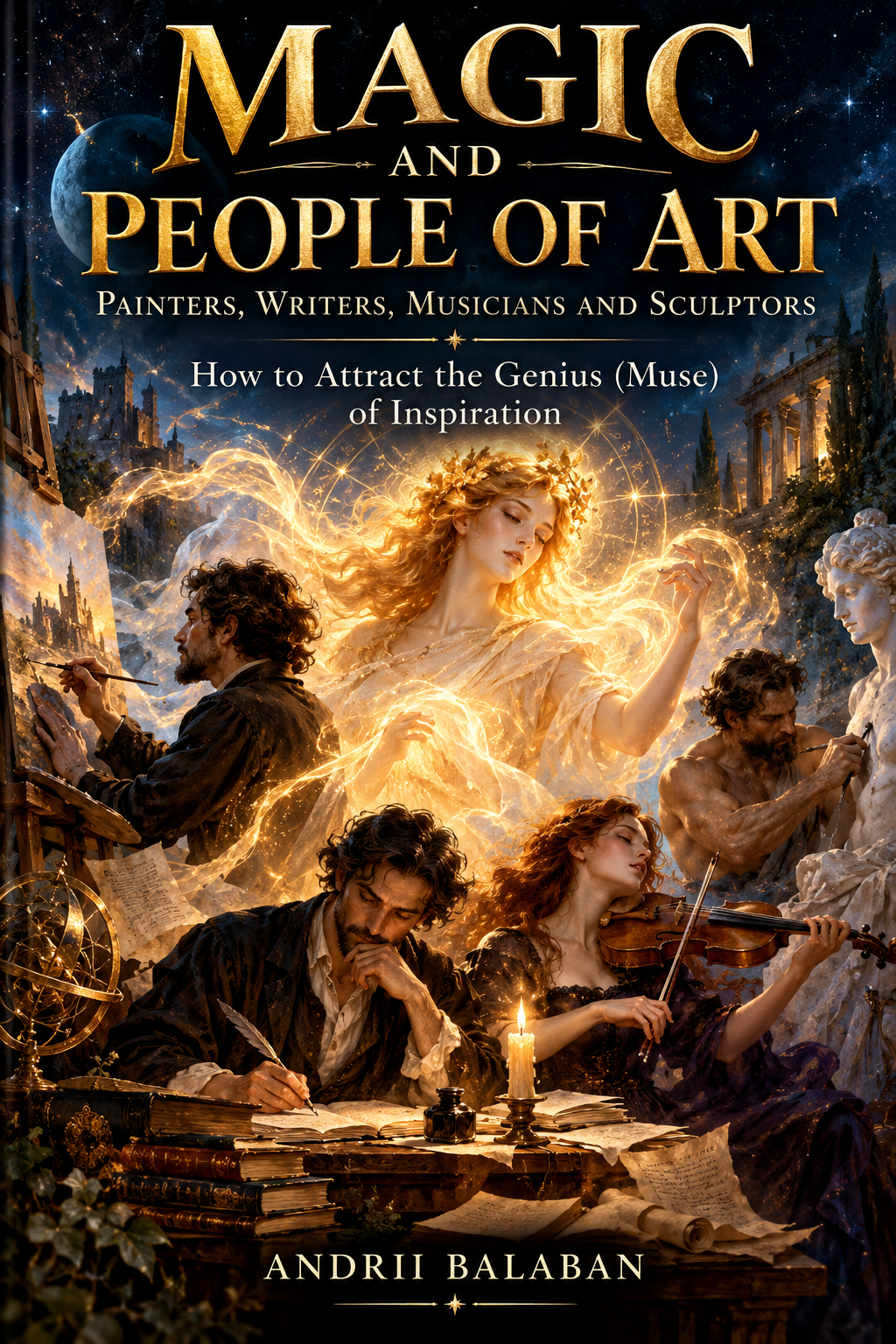
Magic and people of art Painters, writers, musicians and sculptors How to attract the Genius (Muse) of inspiration
Contents
1. The hidden nature of creative magic
The magical structure of creativity and the ancient relationship between art, inspiration, imagination, and the unseen world. The Genius and the Muse as personifications of creative power. The difference between inspiration, talent, craftsmanship, discipline, and recognition. Why uncertainty accompanies creative work and why magical ritual has historically been attractive to artists. The fundamental principle of this book: magic should lead toward creation rather than replace it.
2. The Genius and the Muse: establishing contact with inspiration
The Genius as a personal creative companion and the Muse as the symbolic source of inspiration. Different ways of understanding these figures: spiritual, magical, mythological, and psychological. Choosing a personal image of the Muse, giving symbolic form to inspiration, creating an altar or creative sanctuary, and selecting objects associated with one’s art. The first invocation of the Genius and the establishment of a continuing relationship that does not depend upon constant signs or supernatural confirmation.
3. Opening the gates of inspiration
Rituals performed before beginning creative work. Candles, water, incense where appropriate, stones, written formulas, planetary and lunar symbolism, music, silence, visualization, and the consecration of artistic tools. The magical threshold between ordinary consciousness and the creative state. Morning and evening practices, short rituals for daily work, and more elaborate ceremonies for beginning a major project. How to invite inspiration without waiting passively for it.
4. Fear, doubt, creative blocks, and the magic of confidence
The inner obstacles encountered by painters, writers, musicians, sculptors, and other creators. Fear of failure, fear of criticism, perfectionism, comparison with others, uncertainty about talent, procrastination, and the paralysis of the empty page or blank canvas. Magical practices for containing anxiety and transforming doubt into action. Rituals of the first mark, first sentence, first note, and first cut into stone. Why confidence often follows action rather than preceding it.
5. The magic of painters, writers, musicians, and sculptors
The distinctive magical language of the four principal creative paths explored in this book. Color, image, brush, and canvas in the magic of painting; words, ink, books, and the written page in literary magic; sound, rhythm, voice, and instruments in musical magic; stone, clay, wood, metal, and form in sculptural magic. Individual invocations and rituals adapted to each art. The consecration of tools and the transformation of the studio, desk, rehearsal room, or workshop into a creative space.
6. Protecting the artist and the unfinished work
The vulnerability of creativity before a work has fully taken form. Magical boundaries around the studio and the unfinished project. Protection from distraction, destructive criticism, envy, intrusive opinions, and the artist’s own tendency to abandon work prematurely. Talismans, seals, circles, protective objects, and rituals for preserving concentration. The importance of knowing when to show unfinished work and when to keep it private. Protection without isolation and confidence without hostility toward the outside world.
7. Recognition, audience, success, and the magic of being seen
The transition from private creation to public presentation. Magical practices associated with exhibitions, publication, performances, auditions, competitions, presentations, and the search for an audience. Rituals for courage before showing one’s work and symbolic practices for opening roads toward professional opportunities. The difference between attracting attention and attempting to control the judgment of others. How to work magically with the desire for recognition without making self-worth dependent upon applause, sales, reviews, or fame.
8. Rejection, failure, criticism, and the return of the Muse
What happens when the desired result does not appear. Rejected manuscripts, unsuccessful auditions, poor reviews, unsold paintings, failed exhibitions, abandoned projects, creative exhaustion, and periods when inspiration seems to disappear. Rituals of closure, release, mourning, purification, and return. How to separate the failure of one work from the identity of the artist. The magical meaning of beginning again and the transformation of disappointment into material for future creation.
9. The complete art of creative magic
The integration of the entire system into a mature relationship between the artist, the work, and the Genius or Muse. A complete ritual of creative invocation using the circle, candle, water, artistic tool, personal talisman, written intention, symbol of the Muse, period of actual creative work, and formal closure. When rituals should be repeated, simplified, changed, or abandoned. How to prevent creative magic from becoming compulsive or replacing artistic discipline. The final principle of the system: the Muse may open the door to inspiration, but only the artist can transform inspiration into art.