
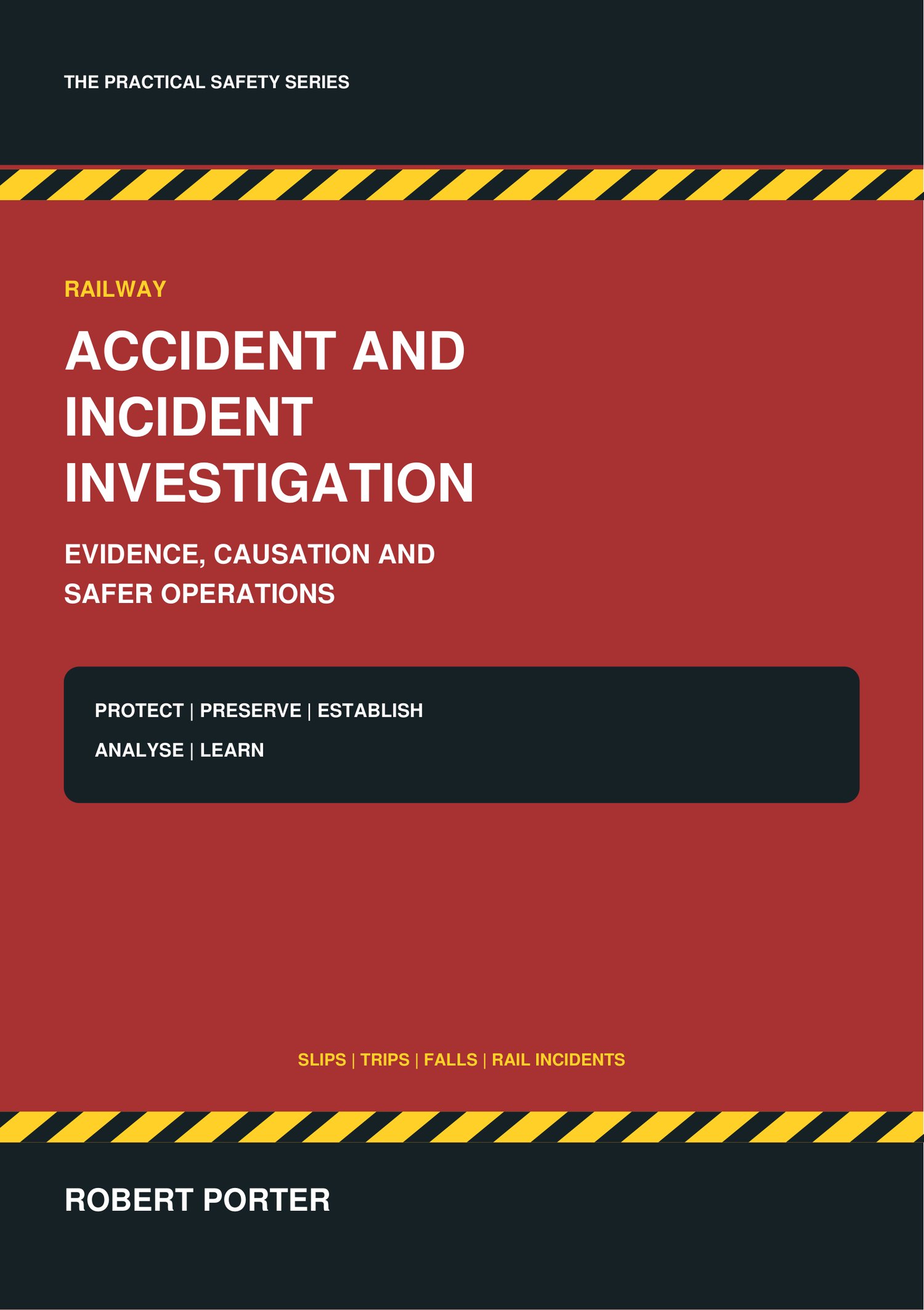
Railway Accident and Incident Investigation
Evidence, Causation and Safer Operations
Protect | Preserve | Establish | Analyse | Learn
What happened is only the beginning. A credible investigation must establish why it happened, which controls failed and what must change to prevent it happening again.
Railway Accident and Incident Investigation: Evidence, Causation and Safer Operations is a comprehensive 308-page guide for railway managers, investigators, station leaders, safety professionals and operational staff.
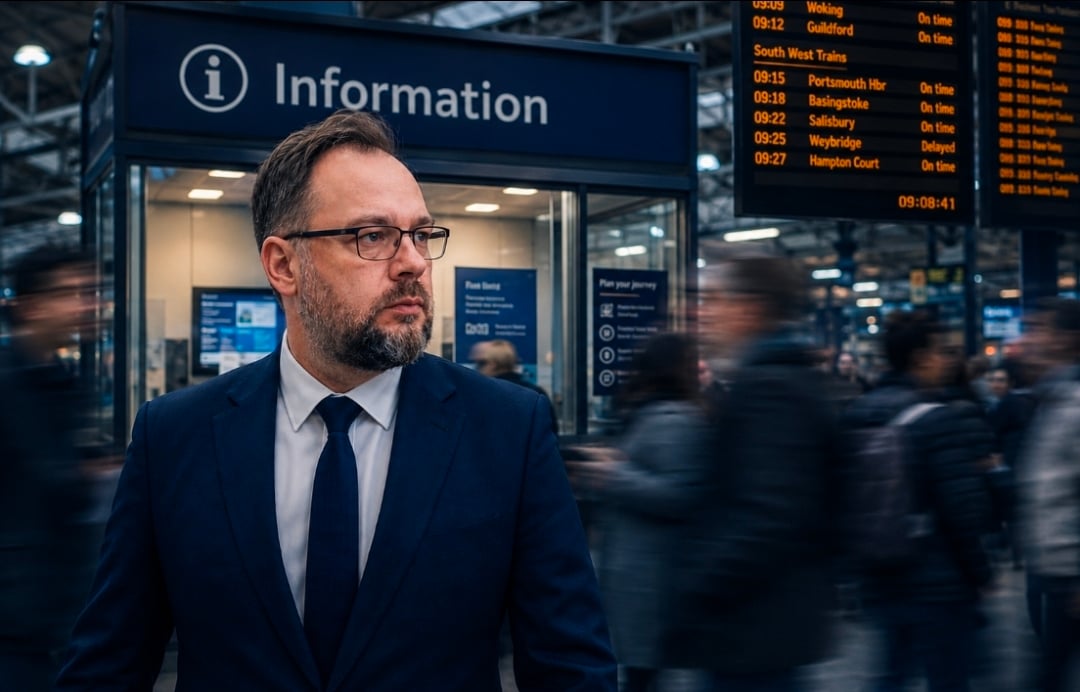
Written by experienced railway operational leader and Station Incident Officer Robert Porter, the book combines structured investigation practice with the realities of live railway environments.
It begins with the immediate response: protecting life, controlling further risk, raising notifications, preserving the scene and identifying evidence that may disappear within minutes or hours.
A dedicated evidence section explains the distinction between physical, documentary, digital, witness and perishable evidence. Readers are shown how to maintain an evidence register, protect original files, preserve metadata, document transfers and maintain a defensible chain of custody.
Slips, trips and falls receive detailed treatment. The book examines underfoot conditions, surface materials, contamination, drainage, weather, lighting, footwear, handrails, crowding, distraction, cleaning, inspections and maintenance history.
Steps, stairs, escalators and platform–train interface incidents are explored through measured rise, going, gradients, gaps, train stopping positions, door thresholds, stepping distances and passenger movement.
Photography guidance covers:
Overall, approach, relationship and close-up photographs
Camera position and perspective
Scales and evidence markers
Lighting and reflective wet surfaces
Photograph logs and timestamps
Original files and controlled working copies
CCTV chapters address urgent preservation, camera ownership, time offsets, blind spots, native export, retention, audit information, lawful processing and the dangers of estimating movement speed without calibrated evidence.
The book explains the relevant UK framework, including RIDDOR, ROGS, the Railways (Accident Investigation and Reporting) Regulations, RAIB, ORR, BTP and parallel company investigations. Because individual train operating companies use different controlled procedures, readers are given a TOC procedure-mapping framework rather than a fictional universal process.
Human factors and interview chapters cover free recall, open questions, witness welfare, memory limitations, contradictory evidence, fatigue, workload, situational awareness and fair accountability.
Analysis methods include timelines, immediate and underlying causes, systemic factors, barrier analysis, change analysis, alternative hypotheses and confidence statements.
The book also includes:
A first-hour evidence card
Perishable-evidence register
Photographic evidence log
CCTV preservation request
Slip, trip and fall scene checklist
Witness interview plan
Causal-analysis framework
Recommendation quality check
TOC procedure map
Welfare follow-up plan
Ten worked railway scenarios
Harvard-style references
Suitable for:
Railway accident and incident investigators
Station managers and duty managers
Train operating company safety teams
Network Rail and infrastructure personnel
Operations and competence managers
Health and safety professionals
Trade union safety representatives
NEBOSH incident-investigation learners
Facilities, cleaning and maintenance managers
Staff responsible for evidence or corrective actions
This is an independent operational and educational guide. It does not replace statutory authority, legal advice, current TOC procedures, Network Rail requirements or instructions from RAIB, ORR, BTP or another competent investigating body.
Protect people first. Preserve what can disappear. Follow the evidence. Make the learning consequential.