

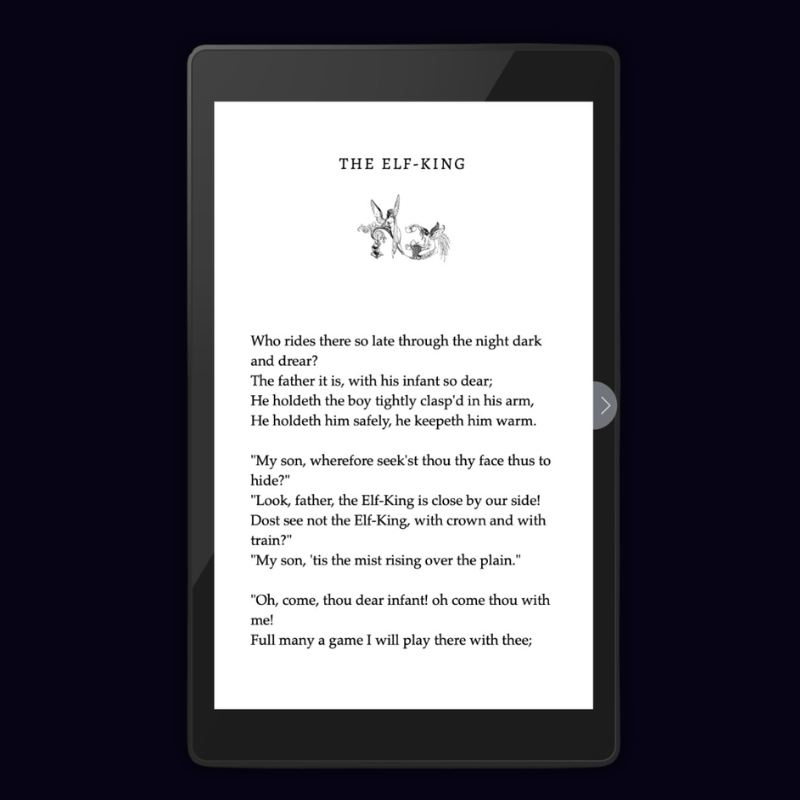
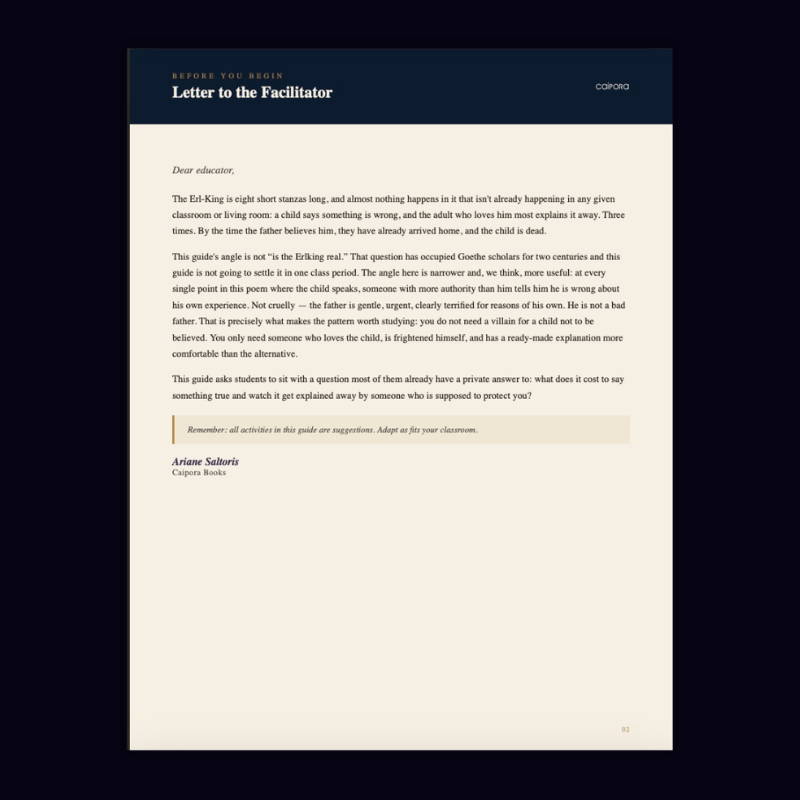





The Elf-King
On Sale
€39.00
€39.00
The Erl-King: Mini-Framework
Johann Wolfgang von Goethe, 1782
Designed for
- Teachers and school facilitators working with ages 13-18. It suits language, literature, German, music, ethics and PSHE/social-emotional lessons, and it works in mixed and multicultural groups. You don’t need a background in Gothic fiction.
- Team leaders, managers, trainers and HR or DEI facilitators who want a short, story-based way to open a conversation about what it costs to be told that what you know to be true isn’t. It needs no prep beyond reading a short poem.
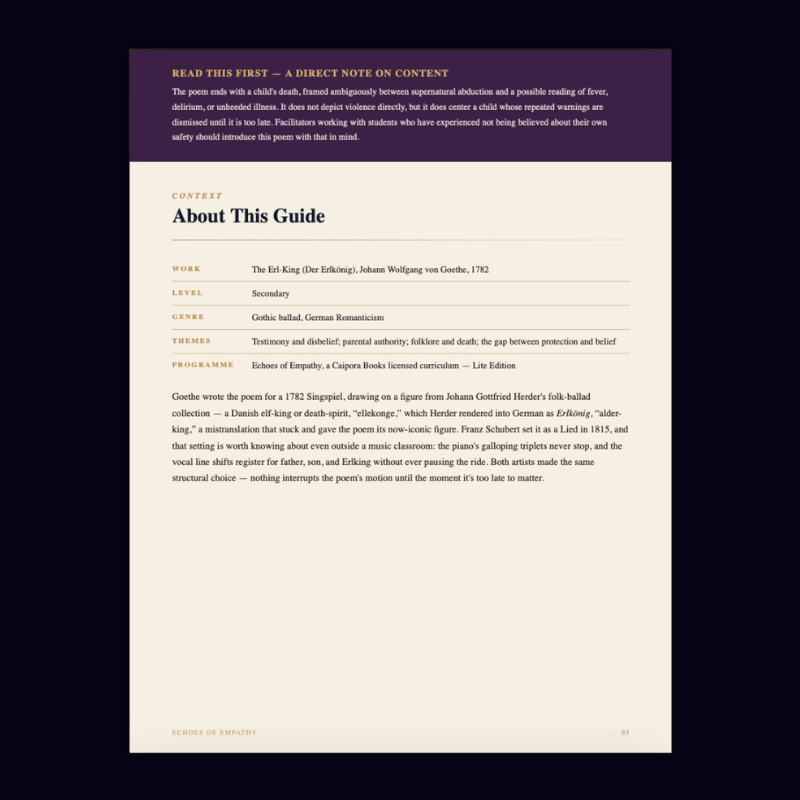
Ages: 13+ for school groups. Adults are the default for team settings. The poem ends with a child’s death. Read it first, and if you work with people who have had their own safety concerns dismissed, introduce it with care. The guide includes a content note on this.
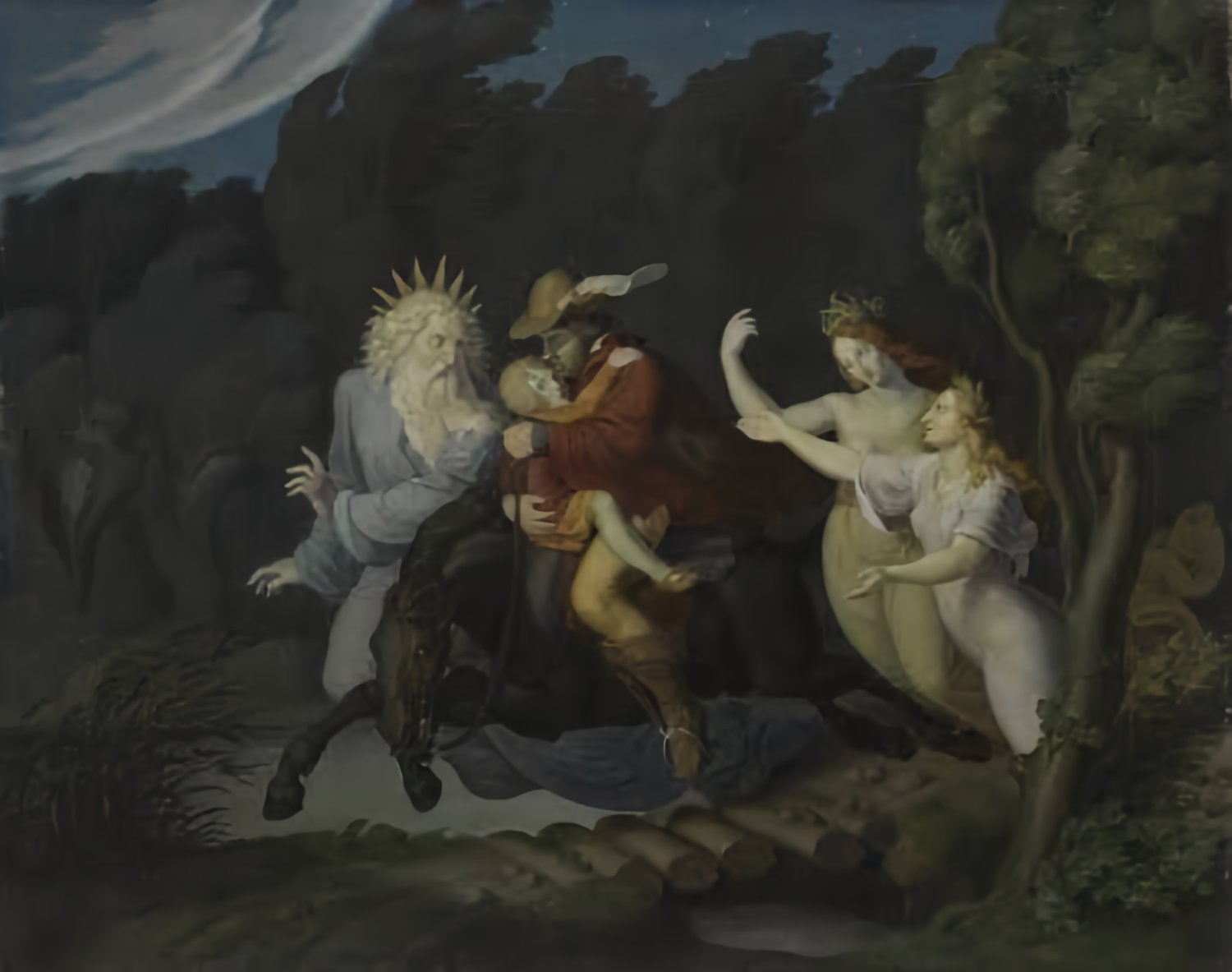
The angle: The question isn’t whether the Erlking is real. It’s what happens when a child tells the truth three times to the person who loves him most, and is corrected each time. The father isn’t a villain. The framework is about how loving someone and believing them are two different things. It’s the first half of a pair with The Little Match Girl.
What’s inside
- A short letter that sets up the angle
- A content note on the ending
- Background on the poem, Herder’s mistranslation and Schubert’s setting
- Activity I, the Echoes X-Factor, “Who Gets to Be Believed”: questions to ask before, during and after reading, plus a personal writing piece, “The Thing I Said and No One Believed”
- Activity II, “Comfort Without Belief”: separates protecting someone from believing them, with a pair task, “Two Fathers, Same Ride”, where students rewrite a stanza with a father who believes his son
- An assessment table for observing students across both activities
- A Music extension: listening to Schubert’s setting and asking whose side the music takes
- Suggestions for further reading, and references
What to expect
- Two activities and one extension. Every activity is a suggestion you can adapt.
- The X-Factor carries no rubric, but the guide includes an observation table for the full arc.
- It’s a mini-framework, not a full unit or a lesson-by-lesson script.