

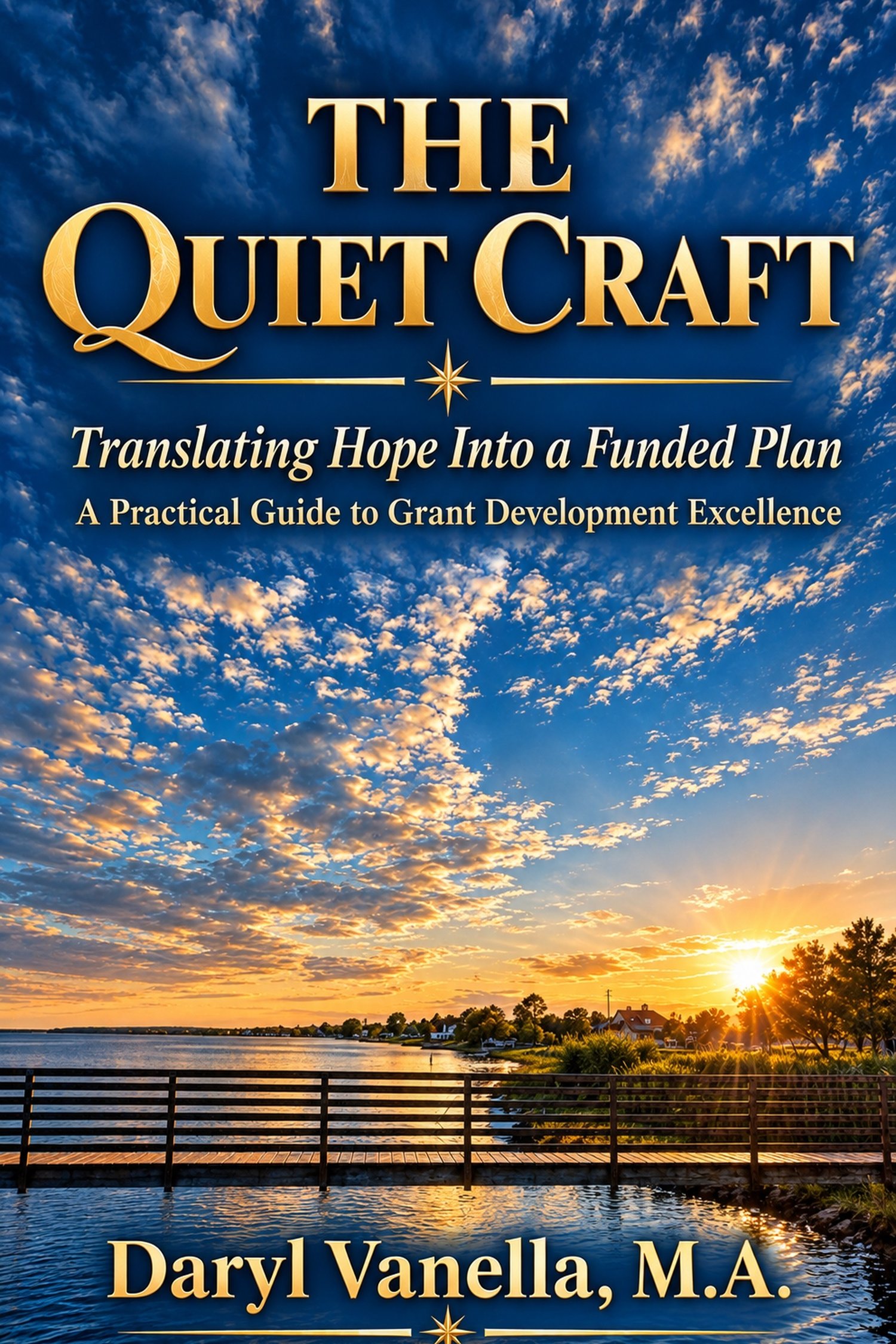
The Quiet Craft
The morning sun stretches its first light across the desk. The coffee is still too hot to drink. The page is still blank. Somewhere in a filing cabinet, or more likely a cloud folder, sits a stack of proposals that rose and a stack that fell, and the only real difference between them was rarely the size of the ask.
THE QUIET CRAFT is the shortcut that took twenty-five years to build.
Most grant writing guides hand you advice. This one hands you a system, built from more than nine million dollars in competitively secured funding and over 350 proposals developed across human service agencies, medical services, tech services, community-based organizations, behavioral health, senior services, child welfare, housing, and education. Every chapter pairs a hard-earned truth with a tool you can put to work immediately, so that what you read on one page, you can use on the next.
Inside, you'll find twelve fillable tools, not just chapters:
- A Grant Readiness Checklist that tells you whether your organization can compete before you waste a single hour writing
- A Fit-Scoring Tool that turns gut instinct into a number, so you stop chasing grants you were never going to win
- An Annual Funding Pipeline Planner built to help you think a full year ahead instead of lurching from deadline to deadline
- A Federal Grant Readiness Checklist covering the compliance questions that quietly sink first-time federal applicants
- A complete eleven-stage Grant Workflow Checklist spanning the full lifecycle, start to sustainability
- A clear-eyed chapter on artificial intelligence in grant writing: what it's genuinely good for, where it quietly fails you, and how funders are already beginning to police it
As AI tools reshape how proposals get written, this book doesn't dodge the question, it tackles it head-on. A full chapter, "Artificial Intelligence and the Modern Grant Writer," walks you through what AI can and can't do for your grant writing, what funders like NSF now require you to disclose, and how to verify AI-assisted work before it goes out the door. You'll also get a practical AI Use Disclosure and Verification Log, one of twelve tools in the book's appendix, so you can use these tools with confidence instead of guesswork.
This book does not pretend grant writing is glamorous. Nobody throws a parade for a well-built logic model. But a funded proposal is a shelter that gets built, a child who finally gets counseling, a program that survives to serve one more year. The craft is quiet. The impact never is.
Why buy it here instead of a retailer? This is my own personal shelf, and when you buy directly, far more of what you pay goes straight toward the next book in this series rather than being split several ways first. If this work has been useful to you, or you just want to back an independent author directly, this is the most meaningful way to do it.
You do not need to be fearless to begin. You only need to start.