Parent–School Collaboration Toolkit — 24 Editable Tools for Communication, Family Voice, Shared Planning, Progress & Partnership
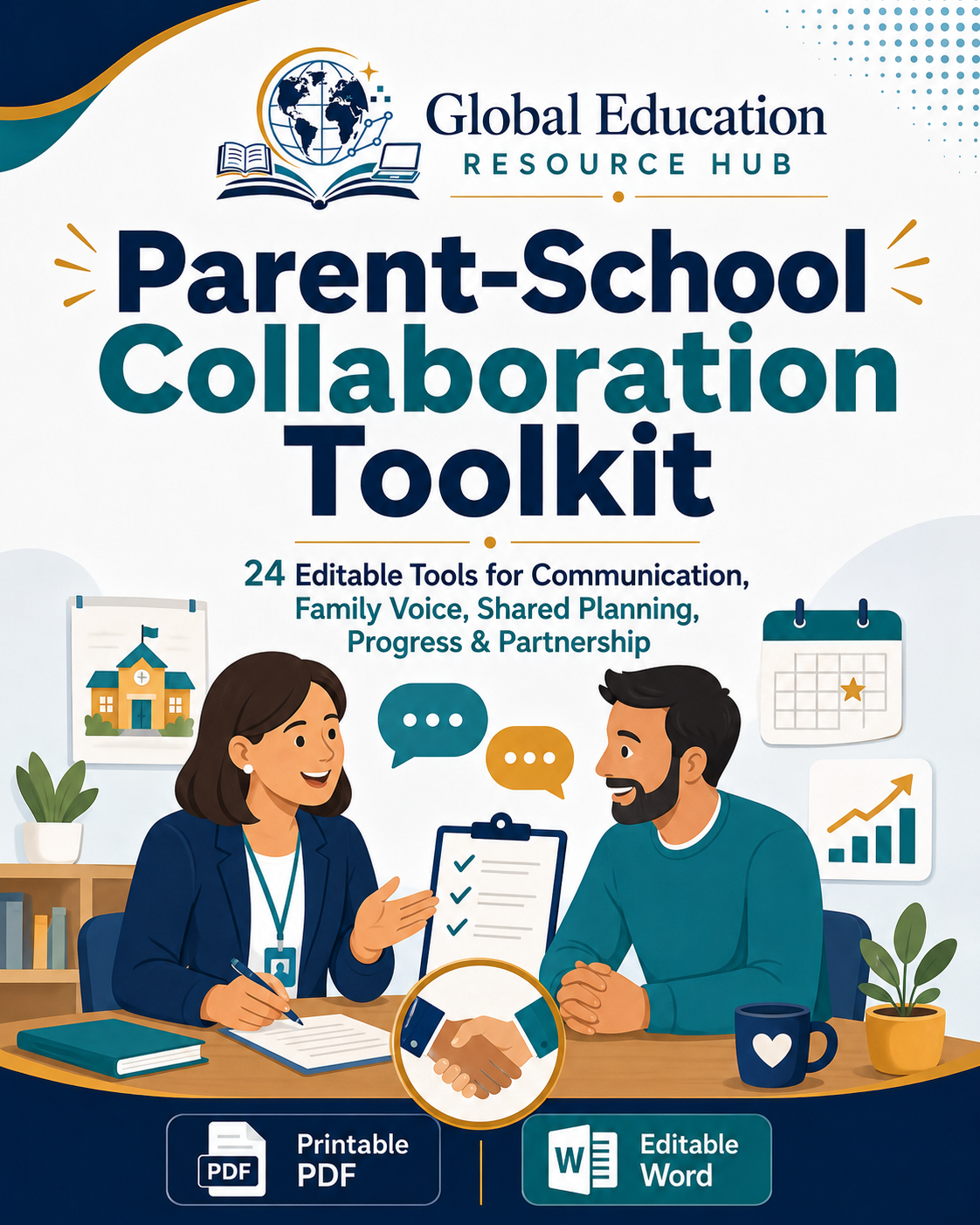
The Parent–School Collaboration Toolkit is a practical professional resource designed to help teachers, special educators, inclusion coordinators, school leaders, and support teams build stronger, more respectful partnerships with parents and carers.
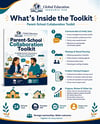
The toolkit contains 24 editable tools covering communication, family voice, meeting preparation, shared planning, progress updates, difficult conversations, collaborative problem-solving, home–school coordination, and partnership review.
It is designed to make parent–school collaboration more structured, inclusive, strengths-based, and practical.
What’s included:
- Family Strengths & Priorities Profile
- Parent/Carer Communication Preferences Form
- Welcome-to-Partnership Conversation Guide
- Family Voice Questionnaire
- Learner-Family-School Shared Priorities Sheet
- Meeting Preparation Checklist
- Parent–Teacher Meeting Agenda
- Collaborative Problem-Solving Record
- Difficult Conversation Planning Sheet
- Conflict De-escalation & Repair Guide
- Home–School Support Plan
- Home–School Communication Log
- Weekly Progress Update Template
- Strengths-Based Progress Sharing Sheet
- IEP / Individual Support Meeting Family Input Form
- Shared Goal-Setting Template
- Attendance & Participation Partnership Plan
- Behaviour Support Family Partnership Record
- Transition Planning Family Checklist
- Family Workshop / Information Session Planner
- Family Feedback & Satisfaction Survey
- Parent–School Partnership Review Tool
- Communication Breakdown Reflection Tool
- 30-Day Parent–School Partnership Improvement Plan
Ideal for:
Classroom teachers, special educators, SEN/SEND professionals, inclusion coordinators, school leaders, learning-support teams, counsellors, educational consultants, and professionals working directly with families.
Why this toolkit is useful:
The tools help schools and professionals:
- understand family priorities and perspectives;
- establish preferred communication methods;
- prepare more effective parent–teacher meetings;
- include family voice in educational planning;
- identify shared priorities;
- solve problems collaboratively;
- prepare for sensitive or difficult conversations;
- repair communication breakdowns;
- coordinate home–school support;
- share progress in concise, strengths-based ways;
- strengthen family participation in IEP and individual-support planning;
- establish shared goals;
- address attendance and participation barriers collaboratively;
- include family knowledge in behaviour support;
- prepare for transitions;
- gather family feedback; and
- review and strengthen the quality of the partnership over time.
Editable and printable:
The purchase includes both a printable PDF and an editable Word version, allowing buyers to personalize the tools for individual learners, families, schools, meetings, and professional contexts.
Partnership principle:
Families and schools bring different but equally valuable knowledge about the learner. Strong collaboration combines both perspectives to support participation, progress, wellbeing, belonging, and successful educational planning.
Communication should remain respectful, accessible, culturally responsive, and focused on shared solutions.
Single-user licence:
One named purchaser may use, print, and adapt the materials for their own professional practice and the learners and families they directly support. The files may not be resold, redistributed, uploaded, shared, sublicensed, republished, or placed in shared organizational resource libraries.
A separate school or multi-user licence is required for use by multiple staff members.
Important note:
This toolkit supports educational communication and collaborative planning. It does not replace safeguarding procedures, legal advice, formal mediation, clinical services, statutory processes, or qualified professional judgment. Sensitive information should be handled according to applicable privacy and child-protection requirements.