
Understanding Crisis, Distress & Regulation
Understanding Crisis, Distress & Regulation
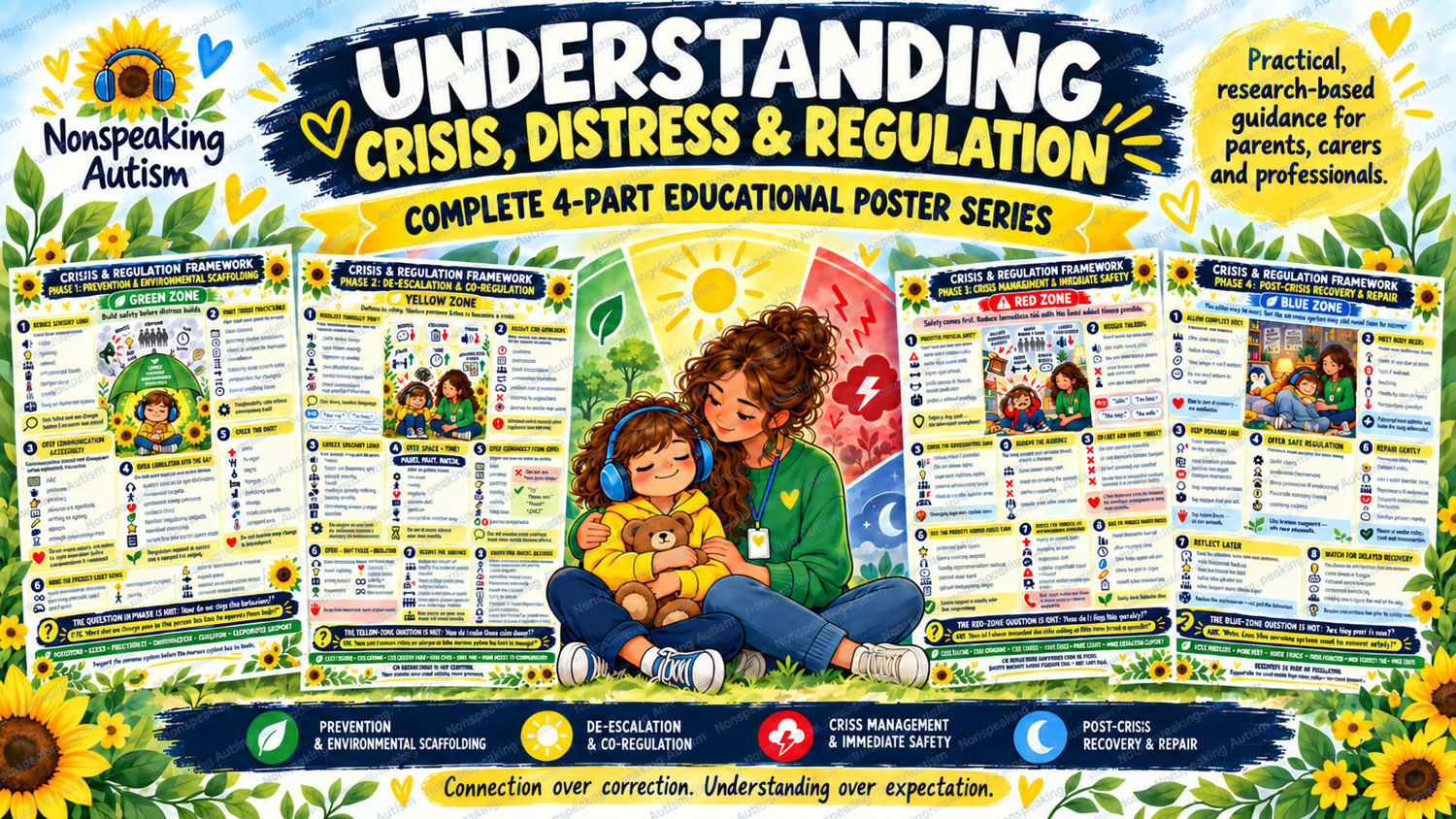
Complete 4-Part Educational Poster Series
Prevention • De-Escalation • Understanding Distress • Immediate Safety
When distress escalates, the most useful question is often not:
“How do we stop the behaviour?”
It is:
“What is happening for this person, what is increasing the load, and what can we change to support safety and regulation?”
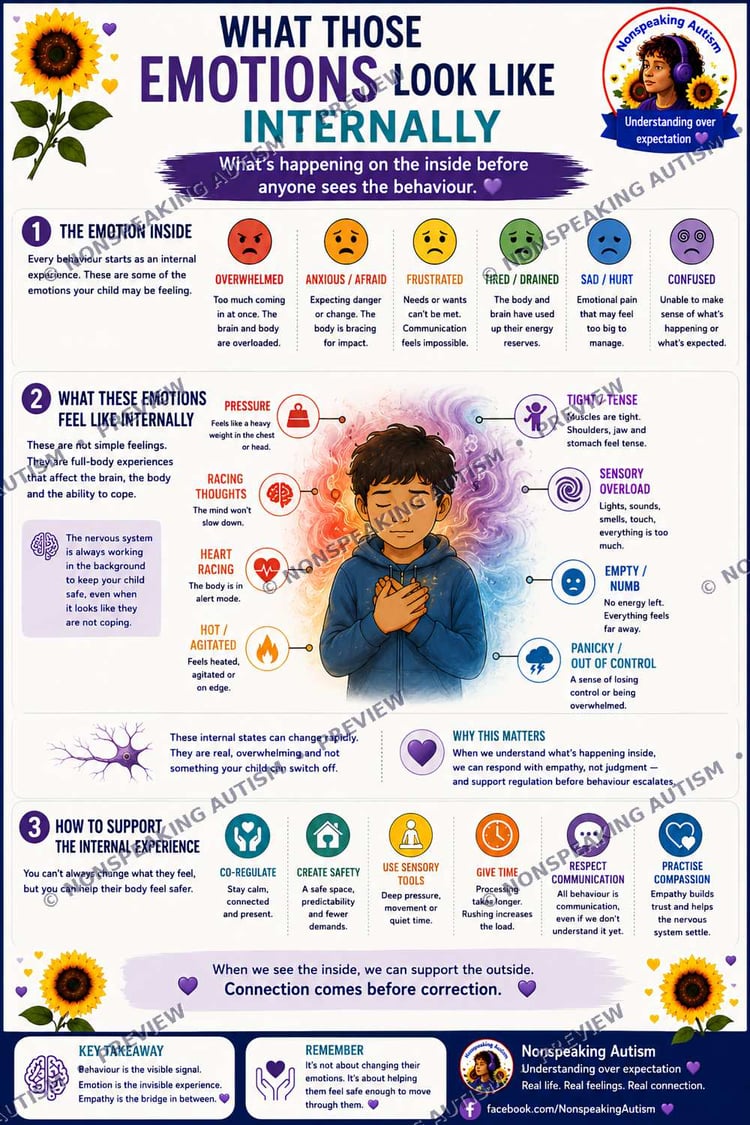
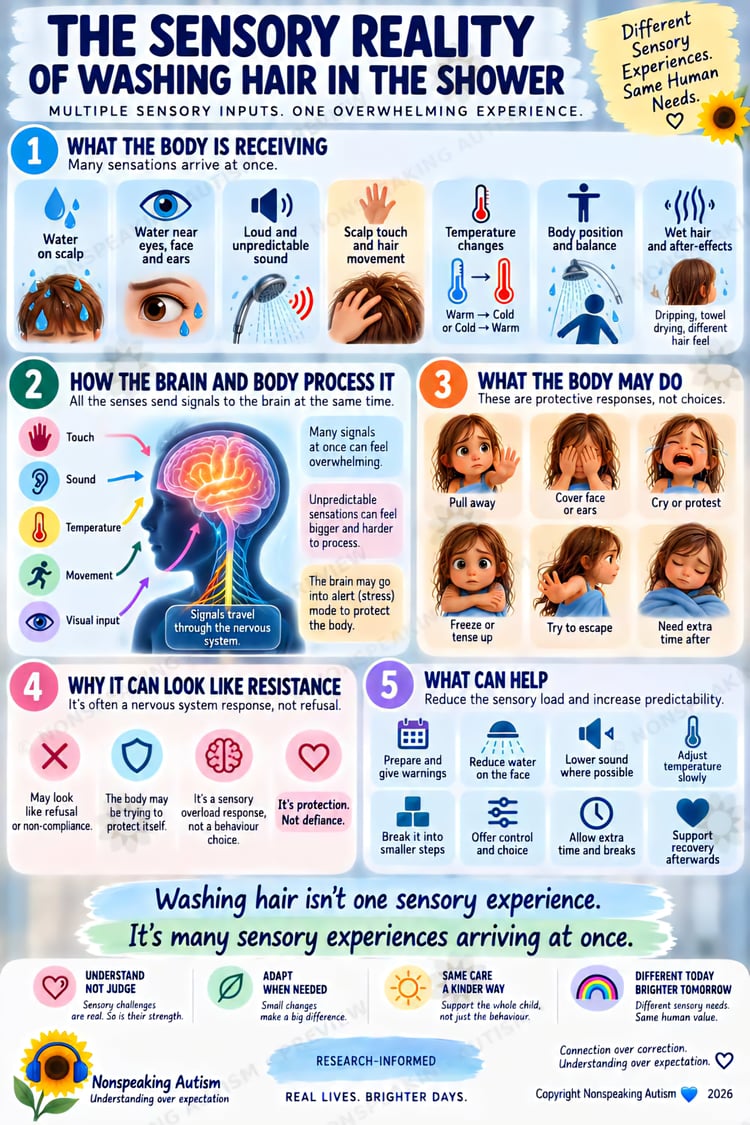
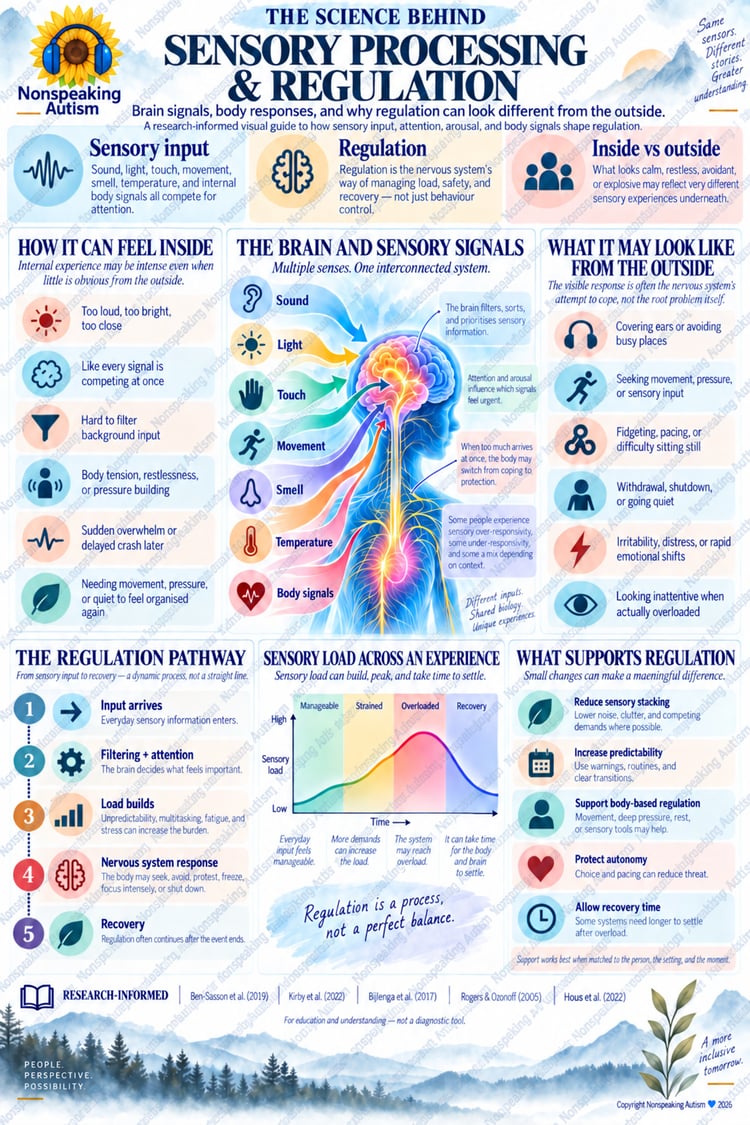
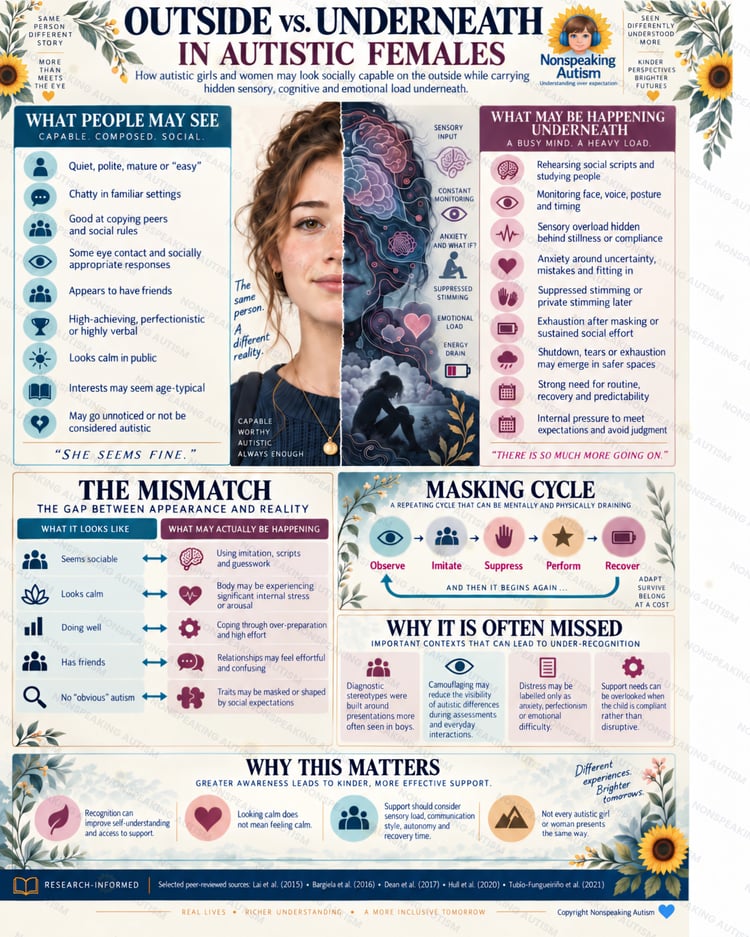
Understanding Crisis, Distress & Regulation is a comprehensive 4-part educational poster collection from Nonspeaking Autism, created to help parents, carers, educators and professionals understand distress through a compassionate, nervous-system-aware and safety-conscious framework.
The collection moves through the different stages surrounding distress — from proactive prevention, through rising dysregulation, to immediate crisis safety, while also helping adults look beyond broad labels such as “aggression” to consider context, communication, sensory load, pain, fear and unmet needs.
The aim is not to demand calmness or compliance.
It is to reduce unnecessary load, protect communication, understand the person and respond as safely as possible.
🌻 What Is Included in the 4-Part Collection?
🟢 Part 1 — Prevention & Environmental Scaffolding
Green Zone: Build Safety Before Distress Builds
The first poster focuses on what can be changed before a crisis develops.
It encourages adults to look at the environment and consider whether unnecessary demands or sensory barriers are already increasing nervous-system load.
It explores:
- reducing sensory load
- noise, lighting and crowds
- unexpected touch
- temperature and smells
- cluttered or busy environments
- increasing predictability
- clear routines
- transition warnings
- visual or spoken information
- countdowns and preparation
- shorter waiting periods
- keeping communication accessible
- AAC, gestures, pointing, symbols, writing, typing and speech
- providing enough processing time
- building regulation into everyday life
- checking pain and physical needs
- identifying the person's individual early signs
A key principle is:
Regulation support is access — not a reward for coping.
Instead of waiting until someone reaches crisis, Part 1 asks:
“What can we change now so this person has less to recover from later?”
🟡 Part 2 — De-Escalation & Co-Regulation
Yellow Zone: Distress Is Rising
Part 2 focuses on the period when early signs of distress are becoming more noticeable.
At this stage, adding more demands, more language, more people or more sensory input can sometimes increase the load further.
The poster encourages adults to consider:
Regulating themselves first
A calm, steady approach can become part of the environment.
This may include:
- speaking more slowly
- using fewer words
- relaxing posture
- providing physical space
- avoiding unnecessary eye-contact demands
- using short, familiar language
Reducing demands
Where safe and appropriate, this may mean temporarily reducing:
- questions
- instructions
- social expectations
- unnecessary transitions
- problem-solving conversations
- demands for explanations
- demands for speech or eye contact
A demand can often be revisited when the person has greater access to regulation.
Reducing sensory load
Look around — not only at the person.
Consider:
- noise
- bright or flickering lights
- people nearby
- touch
- multiple conversations
- strong smells
- competing sensory input
- access to a quieter environment
Giving space and time
Pause. Wait. Watch.
The person may need time to:
process,
move,
regulate,
access AAC,
gesture,
or respond in another way.
Keeping communication open
Speech may become harder to access during significant distress.
Communication can continue through:
AAC • symbols • pointing • gestures • typing • writing • body movement • yes/no responses
Less talking. Less demand. Less sensory load. More space. More time. More access to communication.
💛 Part 3 — Beyond ‘Aggression’
Describe the Behaviour. Understand the Distress. Find the Cause.
The third resource challenges the tendency to use “aggressive” as the complete explanation for a person's actions.
Instead, it encourages adults to separate what happened from assumptions about why it happened.
Rather than:
❌ “He was aggressive.”
the resource encourages more descriptive language such as:
✅ “He hit out during intense distress when the room became too noisy.”
The poster explores observable behaviours such as:
- hitting
- pushing
- biting
- kicking
- throwing objects
- scratching
- shouting
- running away
It then asks adults to consider possible contributors including:
sensory overload
pain or illness
fear or panic
communication breakdown
sudden change
waiting or uncertainty
fatigue
hunger or thirst
The purpose is not to excuse behaviour that could cause harm.
It is to understand enough about the circumstances to develop safer, more effective support.
Behaviour is the output. Distress, overload, pain or fear may be the cause.
🔴 Part 4 — Crisis Management & Immediate Safety
Red Zone: Safety Comes First
When there is immediate danger, the priority changes.
This part focuses on reducing acute risk while adding as little extra threat, pressure and stimulation as possible.
It covers:
🛡️ Prioritising physical safety
Where appropriate to the situation:
- clear hard or dangerous objects
- move other people back
- create space
- block access to hazards if safe to do so
- avoid unnecessary crowding
💬 Reducing talking
During acute distress, additional language may increase processing demand.
The resource encourages:
- calm, steady voice
- very short familiar phrases
- avoiding lectures and unnecessary questions
- one adult taking the lead where possible
🔉 Lowering environmental load
This may involve:
- reducing noise
- softening lighting
- stopping unnecessary conversations nearby
- removing unnecessary touch
- moving towards a safer, quieter area where feasible
👥 Removing the audience
Too many people can mean additional:
noise + social demand + pressure + threat
Where safe, reduce unnecessary bystanders and avoid surrounding the distressed person.
🚫 Avoiding additional threat
A crisis is generally not the moment for:
arguing
shaming
threatening
demanding explanations
forcing unnecessary interaction
or delivering lengthy consequences and teaching.
📋 Using the person's known crisis plan
Where an individualized plan already exists, use established supports rather than improvising.
🚑 Watching for medical or safeguarding concerns
The resource reminds adults to consider:
- injury or severe pain
- breathing concerns
- possible head injury
- sudden unusual changes from baseline
- seizures or other signs of medical emergency
Safety first. Reflection later.
🧠 A Framework — Not a Universal Behaviour Scale
The Green, Yellow and Red Zone structure in this collection is an educational framework for organizing support.
It should not be treated as a diagnostic scale, a universal sequence that every autistic person follows, or a system for categorizing people as “good,” “bad,” “calm” or “dangerous.”
Someone may move between states quickly.
Another person may show very subtle early signs.
Some people may become quieter rather than more visibly distressed.
Others may experience shutdown, reduced speech, increased movement, escape behaviour or significant changes in communication.
Individual patterns matter more than fitting someone neatly into a colour.
💬 Communication Must Remain Accessible
One of the most important themes running throughout the collection is that communication should not disappear when distress increases.
A person who normally speaks may temporarily have less access to spoken language.
A nonspeaking person may rely on AAC, gesture, symbols, typing or body movement.
A distressed person may need much more processing time.
Communication can include:
AAC
gestures
pointing
symbols
writing
typing
body movement
yes/no responses
and speech when accessible.
Do not automatically interpret reduced speech as refusal, defiance or lack of understanding.
Communication access matters most when communication is hardest.
🔊 Look at the Environment — Not Just the Person
Across all four resources, the collection repeatedly redirects attention towards the environment.
Consider:
Is it too loud?
Too bright?
Too crowded?
Too unpredictable?
Is the person being touched unexpectedly?
Are too many people talking?
Have demands accumulated?
Is there somewhere quieter to go?
Does the person know what is happening next?
Sometimes changing the environment can reduce distress more effectively than repeatedly asking the person to change their behaviour.
🩺 Check the Body Too
Not every change in behaviour is behavioural in origin.
Pain, illness and physical discomfort should remain part of the picture.
Depending on the person and circumstances, consider:
pain
hunger
thirst
fatigue
toileting needs
illness
medication effects
temperature
or another physical-health concern.
Sudden or significant changes from someone's usual presentation should not automatically be attributed to autism, sensory processing or emotional dysregulation.
❤️ Co-Regulation Is Not Control
Co-regulation is not about making another person display calm behaviour.
It is about how our own actions, communication and presence may contribute to either reducing or increasing pressure.
Support might involve:
fewer words
more time
greater predictability
physical space
reduced sensory load
accessible communication
familiar supports
and a calm, non-threatening presence.
The goal is not performance of calmness. The goal is greater safety and access to regulation.
🌱 Prevention Matters
The collection does not begin with crisis management.
It begins with prevention.
That distinction matters.
If adults only provide sensory support, communication access, breaks, reduced demands or environmental accommodations after a person reaches crisis, important opportunities for prevention may be missed.
The wider framework encourages teams to learn:
What increases load?
What does the person's early distress look like?
What helps?
What communication remains accessible?
What sensory input is preferred or avoided?
What does genuine recovery require?
and:
What can we change before the nervous system has to shout?
🔬 Research & Guidance-Informed
The collection draws on established autism, sensory, communication and distress-support principles, including professional guidance emphasizing individualized assessment, environmental adaptations, communication support, predictability, consideration of physical-health factors and understanding the context surrounding behaviour.
It is important, however, not to turn nervous-system language into certainty about the cause of an individual person's behaviour.
Terms such as overload, regulation, threat and nervous-system response are used as accessible educational frameworks.
A specific behaviour cannot, by itself, prove a particular neurological mechanism or cause.
Observe patterns. Consider context. Individualize support. Seek professional assessment where appropriate.
👨👩👧 Who Is This Collection For?
This series may be particularly useful for:
- parents and carers
- autistic people and their supporters
- teachers
- teaching assistants
- SENCOs and SEND teams
- mainstream and specialist schools
- support workers
- respite services
- occupational therapists
- speech and language therapists
- healthcare professionals
- social-care professionals
- psychologists and behavioural professionals
- multidisciplinary teams
- autism and disability organizations
The posters may be useful for home, school, support settings, staff rooms, training, professional reflection and parent/carer discussions.
📦 What You Receive
Your purchase includes the Understanding Crisis, Distress & Regulation — Complete 4-Part Educational Poster Series:
1 × Phase 1: Prevention & Environmental Scaffolding — Green Zone
1 × Phase 2: De-Escalation & Co-Regulation — Yellow Zone
1 × Beyond ‘Aggression’ — Describe the Behaviour, Understand the Distress, Find the Cause
1 × Phase 3: Crisis Management & Immediate Safety — Red Zone
4 educational posters in total
The purchased digital files are supplied clear and without the promotional preview watermarks shown on the Payhip listing images.
Watermarks displayed on preview images are for copyright and listing protection only.
Digital download only — no physical product will be shipped.
⚠️ Important Safety, Medical & Professional Disclaimer
This collection is provided for educational and informational purposes only.
It is not a diagnostic tool, medical assessment, behavioural assessment, functional behaviour assessment, psychological assessment, safeguarding plan, individualized crisis plan, restraint protocol, treatment plan, risk assessment or substitute for appropriately qualified professional advice.
The Green, Yellow and Red framework is an educational organizational model only. Individuals may experience and express distress differently and may not move through predictable stages.
The strategies included are examples and must be individualized. A strategy that regulates one person may distress another.
Do not use this resource as instruction for physical restraint, seclusion or restrictive intervention. Where there is a foreseeable risk of significant harm, obtain appropriately qualified support and follow applicable safeguarding requirements, organizational policies, individualized plans and law.
Sudden, severe, unusual or unexplained changes in behaviour, consciousness, communication or physical presentation may have a medical cause and should receive appropriate assessment.
If someone has a serious injury, breathing difficulty, seizure, loss of consciousness or another suspected medical emergency, contact the emergency service appropriate to your location.
Where ongoing behaviour places the person or others at significant risk, seek individualized professional assessment and safety planning.
©️ Copyright & Permitted Use
Copyright © 2026 Nonspeaking Autism. All rights reserved.
Purchase permits use for personal/family use, your own classroom or educational setting, your own clinic or individual professional practice, and direct educational/support work with people you support.
The files may not be resold, redistributed, file-shared, uploaded to other websites or platforms, commercially reproduced, altered for resale, or incorporated into another product for sale or distribution.
Please direct other individuals, schools, services or organizations wishing to obtain the collection to the original Nonspeaking Autism product listing.
💛 The Message Behind the Collection
Distress is not the moment to demand better performance.
Crisis is not the moment for a lecture.
Communication should not disappear because someone is overwhelmed.
Regulation should not have to be earned.
And prevention should not begin only after something has gone wrong.
Sometimes the most powerful support begins much earlier:
reduce the noise
make the next step predictable
keep AAC available
notice the early signs
check for pain
give more time
reduce unnecessary demands
create more space
listen to what the behaviour may be telling us
and protect safety without adding unnecessary fear.
The question changes from:
“How do we control this behaviour?”
to:
“What does this person need from us and the environment right now?”
Support the nervous system before the nervous system has to shout.
Connection over correction. Understanding over expectation. 💛
© Nonspeaking Autism 2026 🌻💙