
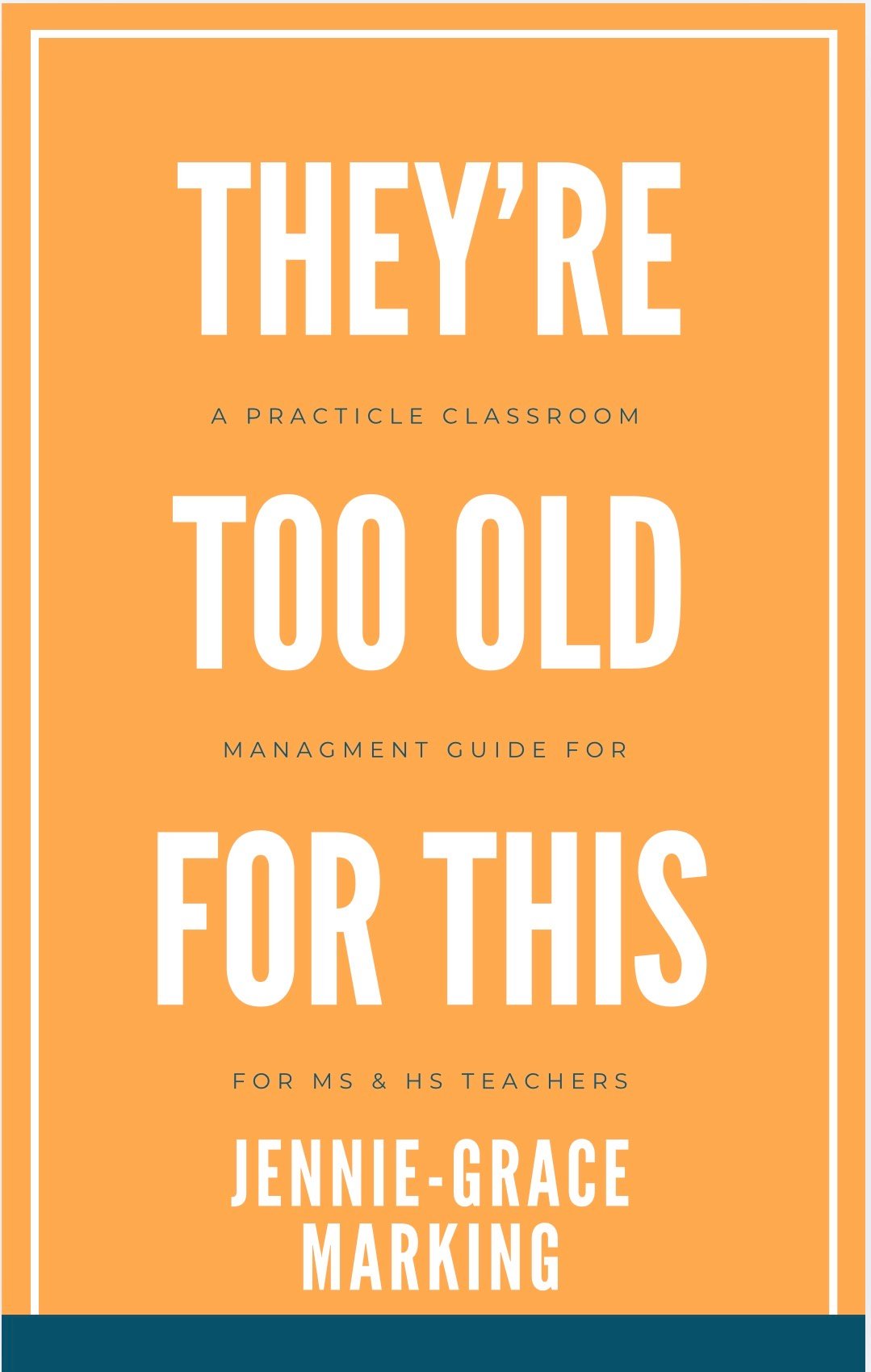
They’re Too Old For This
Why Upper Grades Need a Different Approach
Somewhere between elementary school and middle school, most classroom management advice quietly stops applying. The behavior chart disappears. The sticker jar disappears. And a lot of teachers are left holding strategies that were built for six-year-olds, trying to apply them to teenagers who can see straight through them.
Upper grade students do not respond to being tricked into good behavior. They respond to being treated like people who are capable of making choices, and who will be held to those choices consistently. That distinction is the foundation of everything in this guide.
This does not mean upper grade management is about being tougher, louder, or stricter. In fact, the loudest teacher in the building is rarely the one with the calmest classroom. It means being clearer. Clear about expectations. Clear about consequences. Clear about what you will and will not engage with in the moment.
It also means understanding what's actually happening underneath the behavior. A student who refuses to work is rarely lazy. A student who argues about everything is rarely just difficult. A student with an "I don't care" attitude almost always cares more than they're willing to show you. Every chapter in this guide tries to name what's really going on, not just how to make the behavior stop.
You will notice that very few of the strategies in this guide involve raising your voice, and none of them involve public humiliation, sarcasm as a management tool, or a race to see who can win the power struggle. Those approaches can produce short-term compliance, but they cost you the relationship, and in upper grades, the relationship is most of your leverage.
What you'll find instead are scripts. Specific, exact sentences you can say out loud, in the moment, without having to invent the right words while your heart is pounding and 29 other students are watching. Teachers don't need another paragraph about the theory of de-escalation. They need to know what to actually say when a 14-year-old tells them, out loud, in front of the class, that the assignment is stupid and they're not doing it.
So that's what this guide gives you. Eighteen chapters, each one built around a specific situation, each one ending with language you can borrow starting tomorrow.