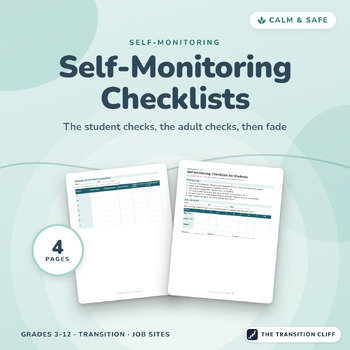
Student Self-Monitoring Checklists: On-Task Behavior and Job Site Self-Check, High School
The goal of any behavior support is for the kid to not need you. Self monitoring is how you get there. The student checks themselves, the adult checks too, you compare, and then the adult slowly steps back.
What's included:
• A setup page
• "Am I on task?" interval checklist and a class period self check for secondary
• A work habits rubric with Me and Adult columns
• A weekly goal tracker
• A job site self check for work based learning
• A four stage fading plan
How I'd use it:
Celebrate matches, not just yeses. A kid who honestly marks "no" and matches you is learning the skill. The job site page is where I see this pay off in transition: same habit, now with a supervisor instead of a teacher.
Start with one behavior and one class period. When the student matches the adult most of the time, add a second behavior or a longer period. The rubric version is good for older students who do not want a beep every few minutes. The fading plan keeps you honest about stepping back, which is the part most self monitoring plans forget.
Who it's for: Teachers, paras, job coaches, and students. Grades 3 to 12, plus adult education.
What you download: one printable PDF, 4 pages, US Letter.
Made by Jeremy D. Gooch, special education teacher and transition coordinator. Drafting and layout had AI assistance; every page was checked by me.