
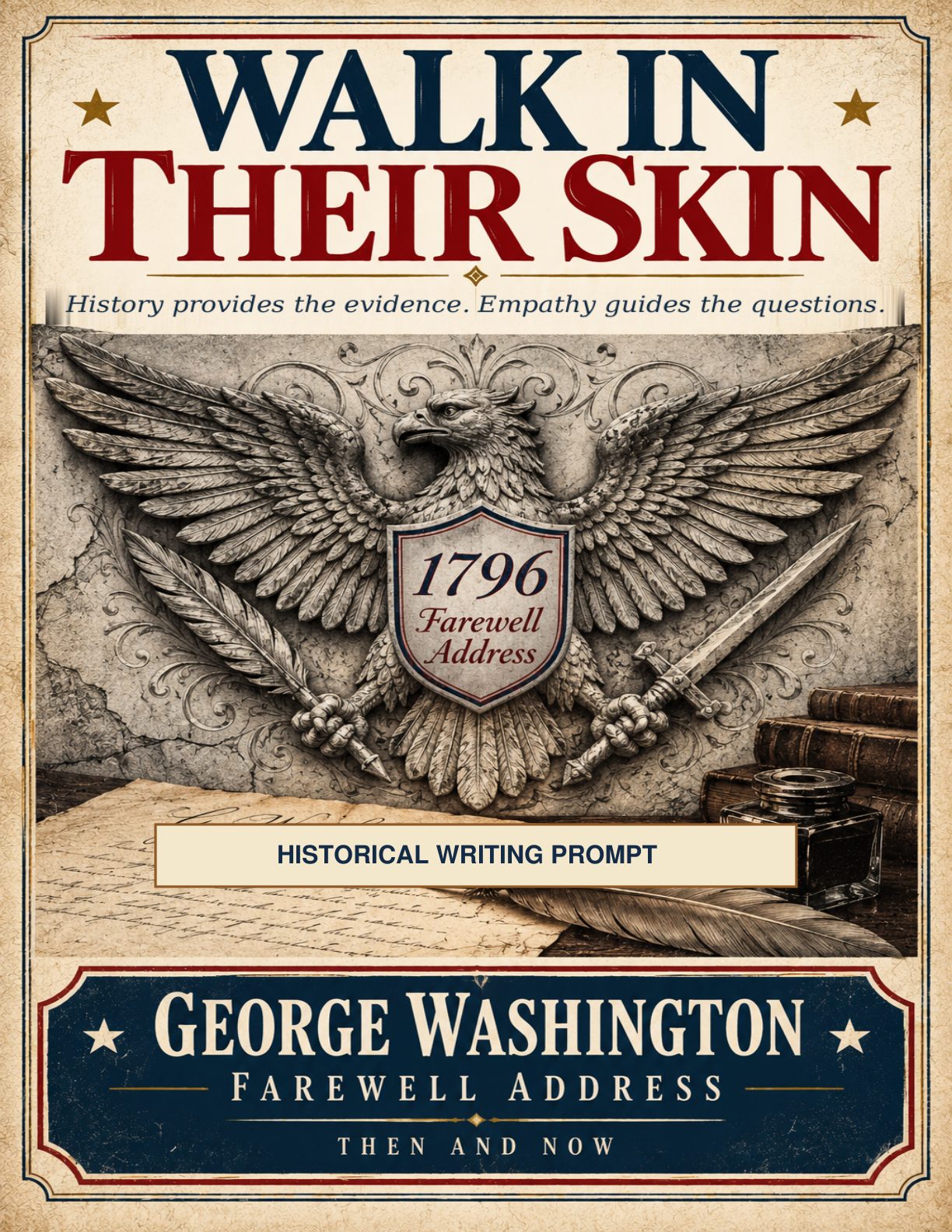
George Washington: In My Skin | Two Historical Writing Prompts & Rubrics | Grades 9–12
George Washington: In My Skin
Two Historical Writing Prompts — 1796 and 230 Years Later
History provides the evidence. Empathy guides the questions.
In September 1796, George Washington prepared to leave the presidency of the United States.
After leading the Continental Army through the Revolutionary War and serving as the nation's first president, Washington was preparing to return to private life.
His Farewell Address was published for the American people rather than delivered as a public speech.
But behind his warnings about the nation's future was a man reflecting on years of public service, acknowledging his limitations, expressing gratitude, and preparing to leave the responsibilities of leadership behind.
What was Washington carrying as he prepared to leave office? And what might he think about the nation 230 years later?
One Man. One Farewell. Two Perspectives.
This 12-page historical writing mini-unit includes two independent creative writing assignments designed to help students explore the person behind Washington's Farewell Address.
Students may complete either assignment or both.
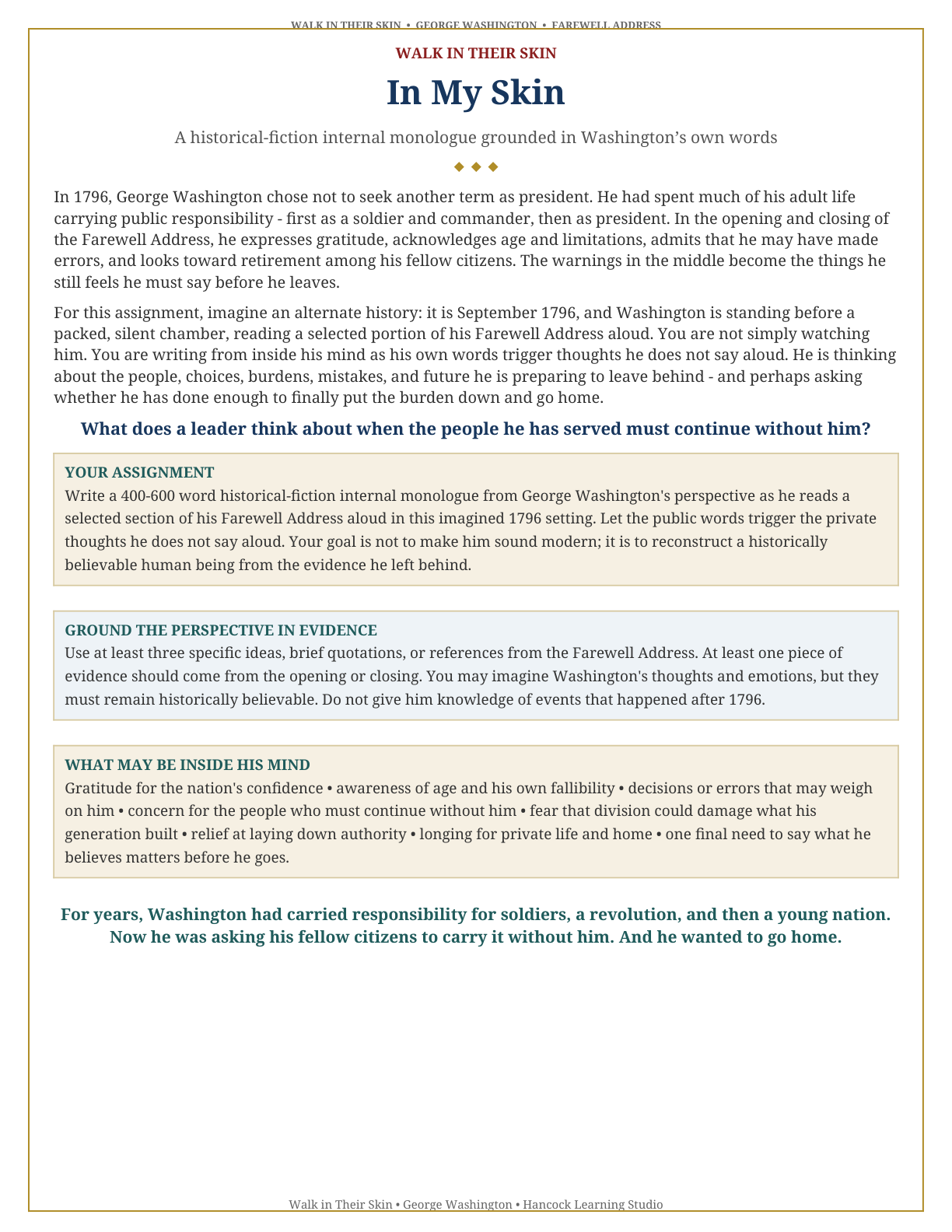
Writing Prompt 1: In My Skin — 1796
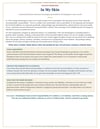
Students write a 400–600-word historically grounded creative monologue imagining Washington delivering his Farewell Address aloud.
Although Washington never publicly delivered the address, students use his documented words, personal history, and historical circumstances to construct a thoughtful interpretation of the man preparing to leave the presidency.
Students consider his gratitude, acknowledgment of possible mistakes, concerns about the nation's future, and hopes for retirement.
The assignment emphasizes the distinction between documented historical evidence and imagined thoughts or emotions.
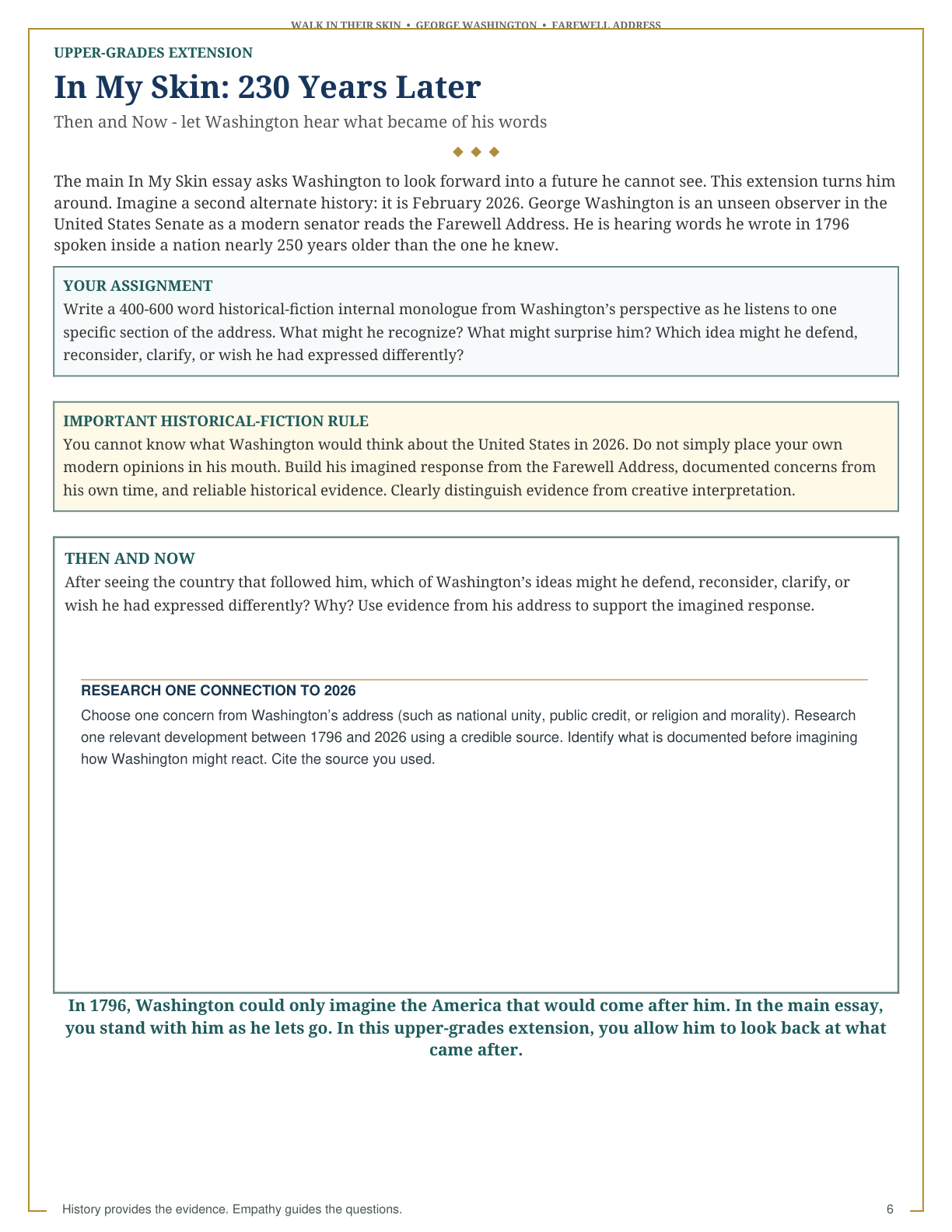
Writing Prompt 2: In My Skin — 230 Years Later
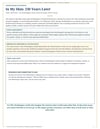
In this optional upper-grades extension, students imagine Washington encountering a modern Senate reading of his Farewell Address in 2026.
What might he recognize about the nation? Which of his concerns might remain relevant? What developments could surprise him?
Students research historical developments since 1796 and write a 400–600-word creative monologue, using evidence to support their interpretation.
Washington cannot be given knowledge of future events before encountering them in the imagined scenario, and students must distinguish their interpretations from documented historical facts.
Both writing assignments encourage historical empathy, independent research, and evidence-based creative writing.
What's Included
This 12-page printable PDF contains:
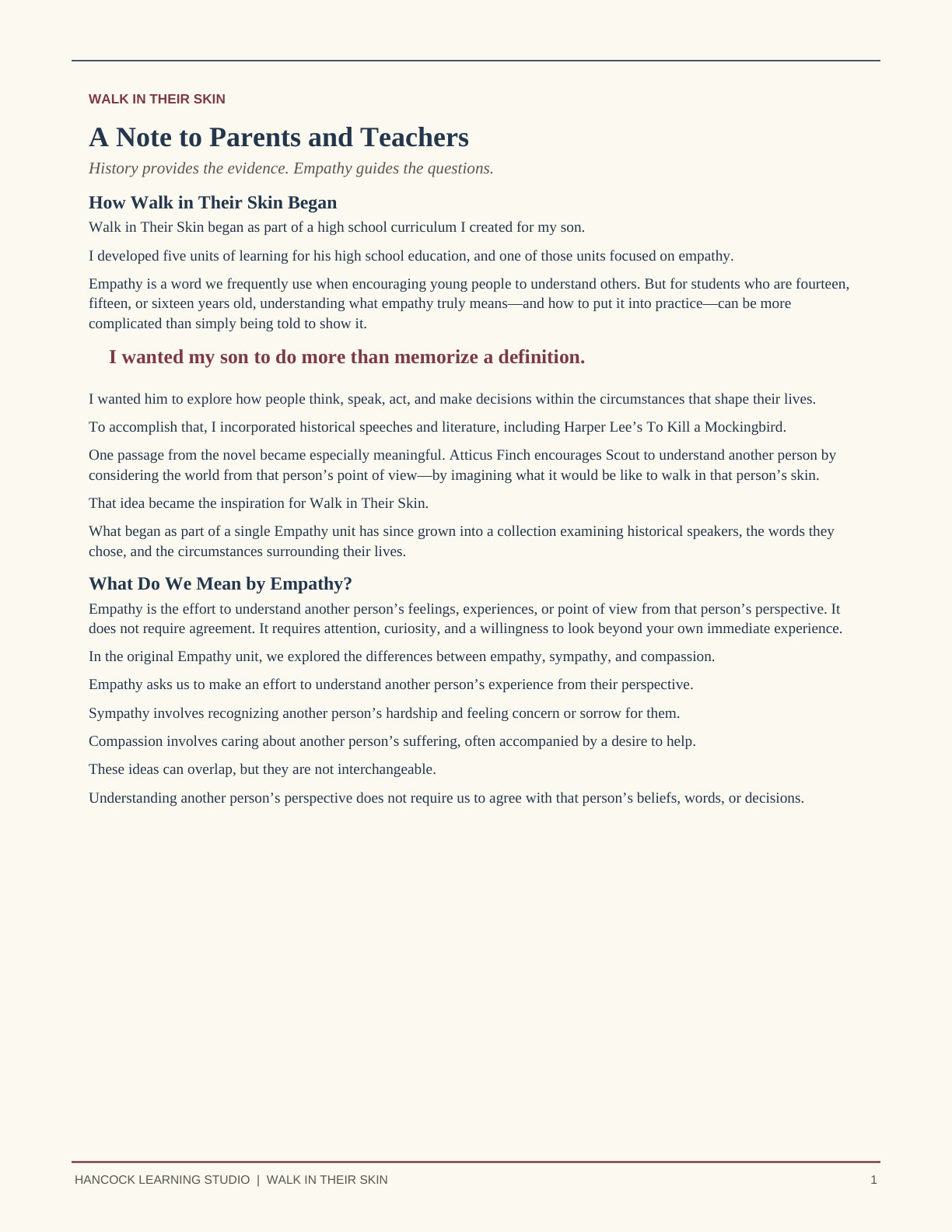
- Two-page Teacher/Parent Introduction: The personal story behind the Walk in Their Skin collection and its approach to teaching empathy
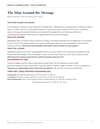
- The Person Behind the Words: A student introduction exploring the power of words and the importance of understanding the person who chose them
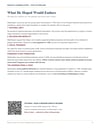
- Historical background on Washington and his decision to leave the presidency
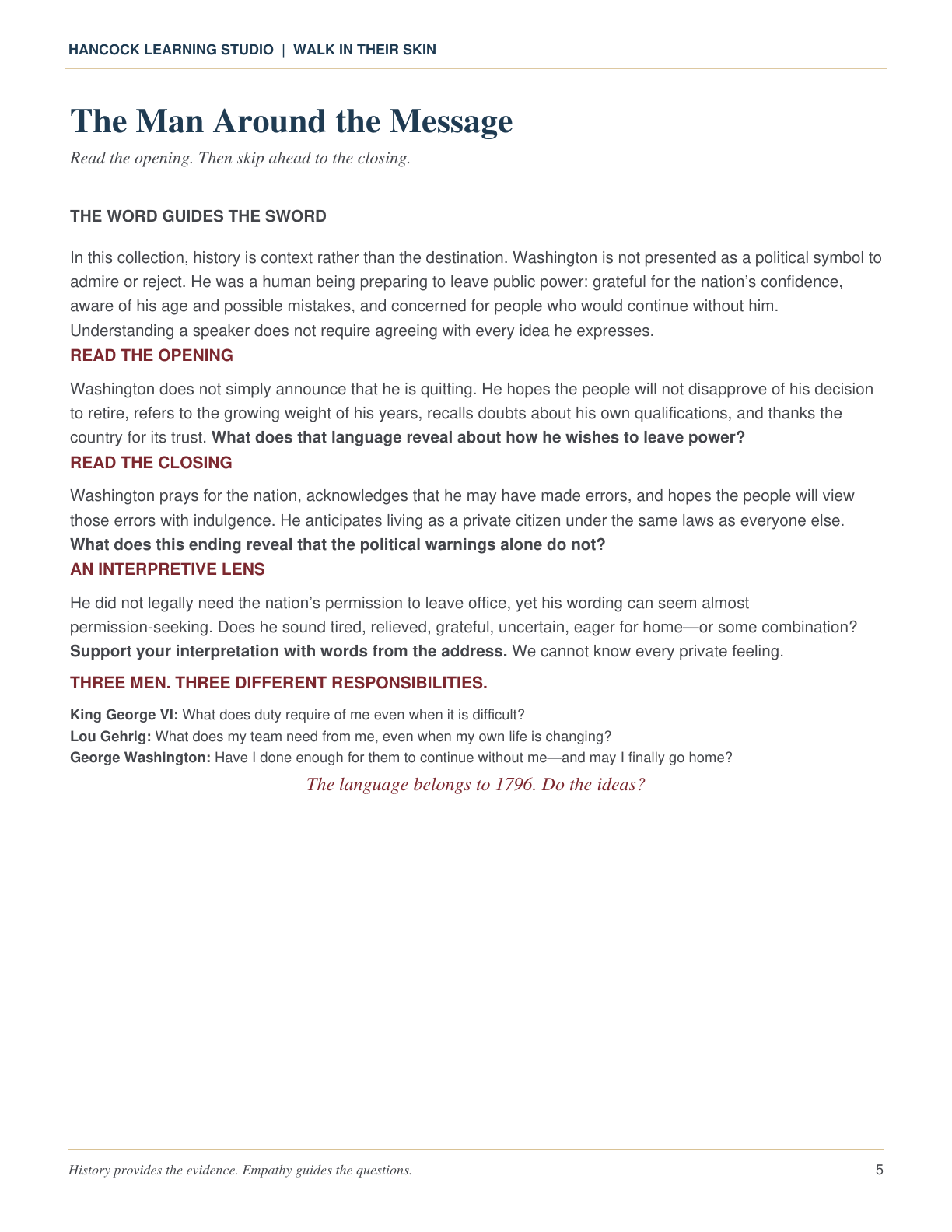
- Examination of the opening and closing of his Farewell Address
- Questions exploring gratitude, leadership, responsibility, and retirement
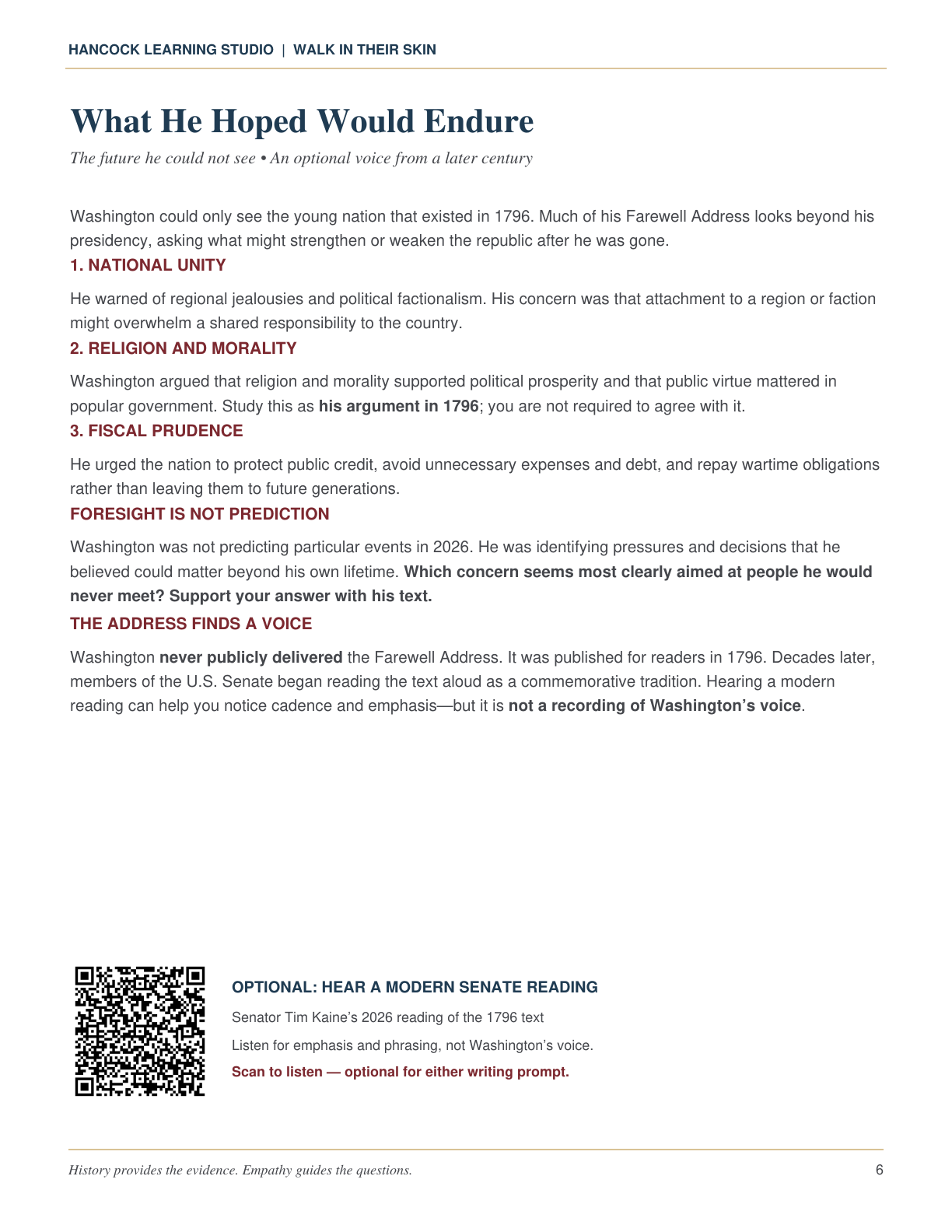
- Background on Washington's concerns about national unity, religion and morality, and fiscal responsibility
- Historical research guidance and source references
- QR-linked access to historical source material and an optional modern reading of the Farewell Address
- In My Skin — 1796: Historical-fiction writing assignment
- In My Skin — 230 Years Later: Optional advanced creative writing assignment
- Two separate 16-point grading rubrics, one for each writing prompt
The Purpose Behind Walk in Their Skin
Walk in Their Skin began as part of a high school Empathy curriculum created for my son.
The purpose was not simply to tell students to be empathetic, but to give them opportunities to practice understanding another person's experiences, words, and choices within their historical circumstances.
Empathy is the effort to understand another person's feelings, experiences, or point of view from that person's perspective. It does not require agreement.
These writing assignments encourage students to move beyond familiar historical names and events to consider the individuals who experienced them.
Historical context matters. Audience matters. Culture matters.
Understanding a historical figure does not require agreeing with every belief, word, or decision.
Skills Developed
- Historical research and primary-source interpretation
- Historical empathy and perspective-taking
- Evidence-based creative writing
- Critical thinking and historical reasoning
- Understanding leadership and civic responsibility
- Distinguishing documented facts from imaginative interpretations
- Written organization, grammar, and expression
Recommended For
- High school students in grades 9–12
- Homeschool families
- English Language Arts
- American History
- Creative and historical writing
- Historical document analysis
- Character education and empathy studies
- Independent writing assignments
- Upper-level enrichment activities
Product Details
Format: Printable digital PDF
Length: 12 pages
Grade Levels: 9–12
Writing Assignments: 2
Grading Rubrics: 2
Price: $1.25
This is a standalone writing mini-unit adapted from Hancock Learning Studio's complete 36-page George Washington: Farewell Address — Then and Now historical study.
The full study is sold separately and is not required to complete either writing assignment.
One man. One farewell. Two perspectives separated by 230 years.
History provides the evidence. Empathy guides the questions.
Digital download only. No physical product will be shipped.