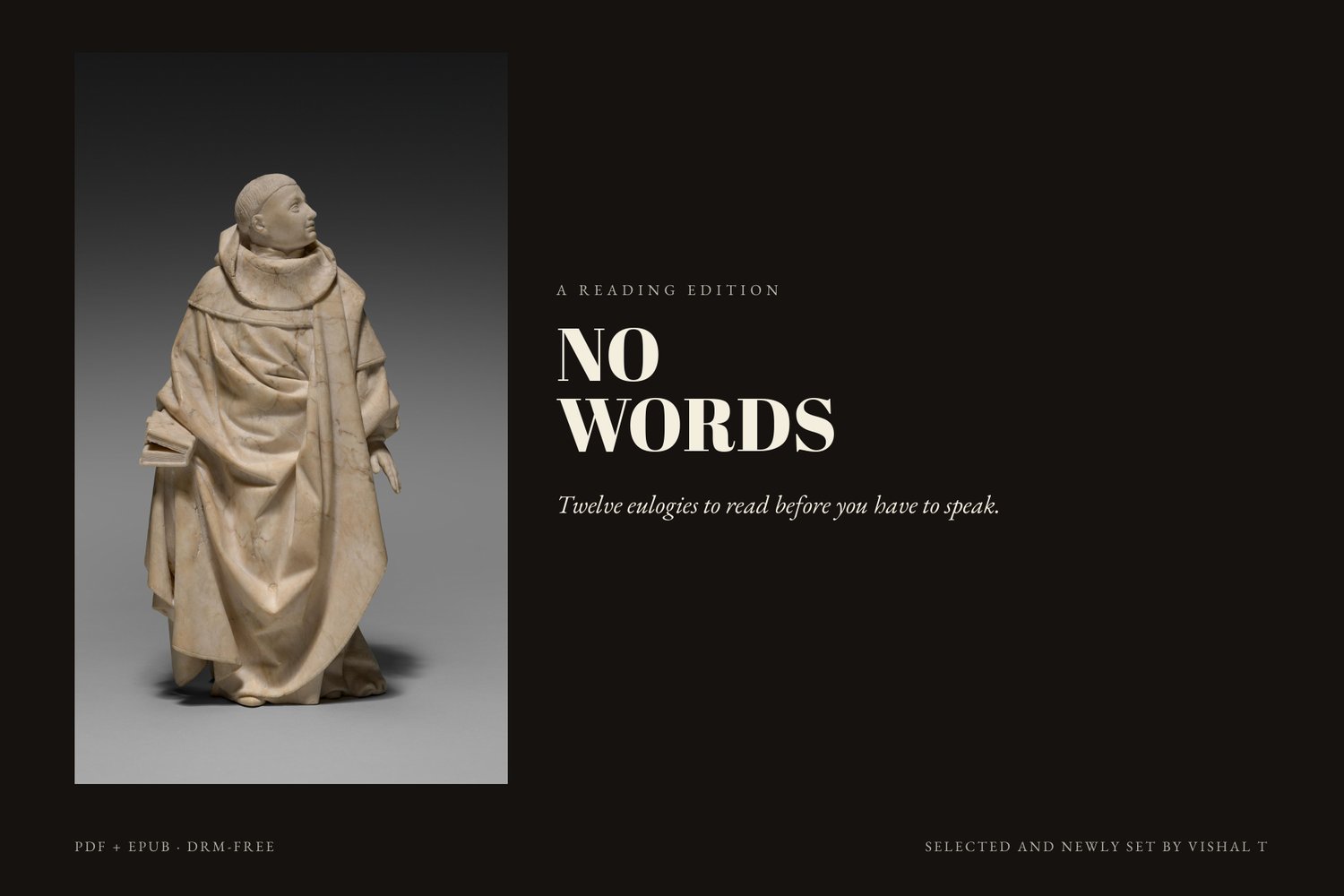
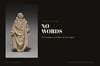
No Words — 12 Eulogies to Read Before You Have to Speak (PDF + EPUB)
Sooner or later somebody hands you a room.
Twenty people in it, or forty, or eleven. A coffin, an urn, a photograph beside the sandwiches. You stand because the person who should be there is not there, and the room expects the impossible thing: a life made briefly present by a voice.
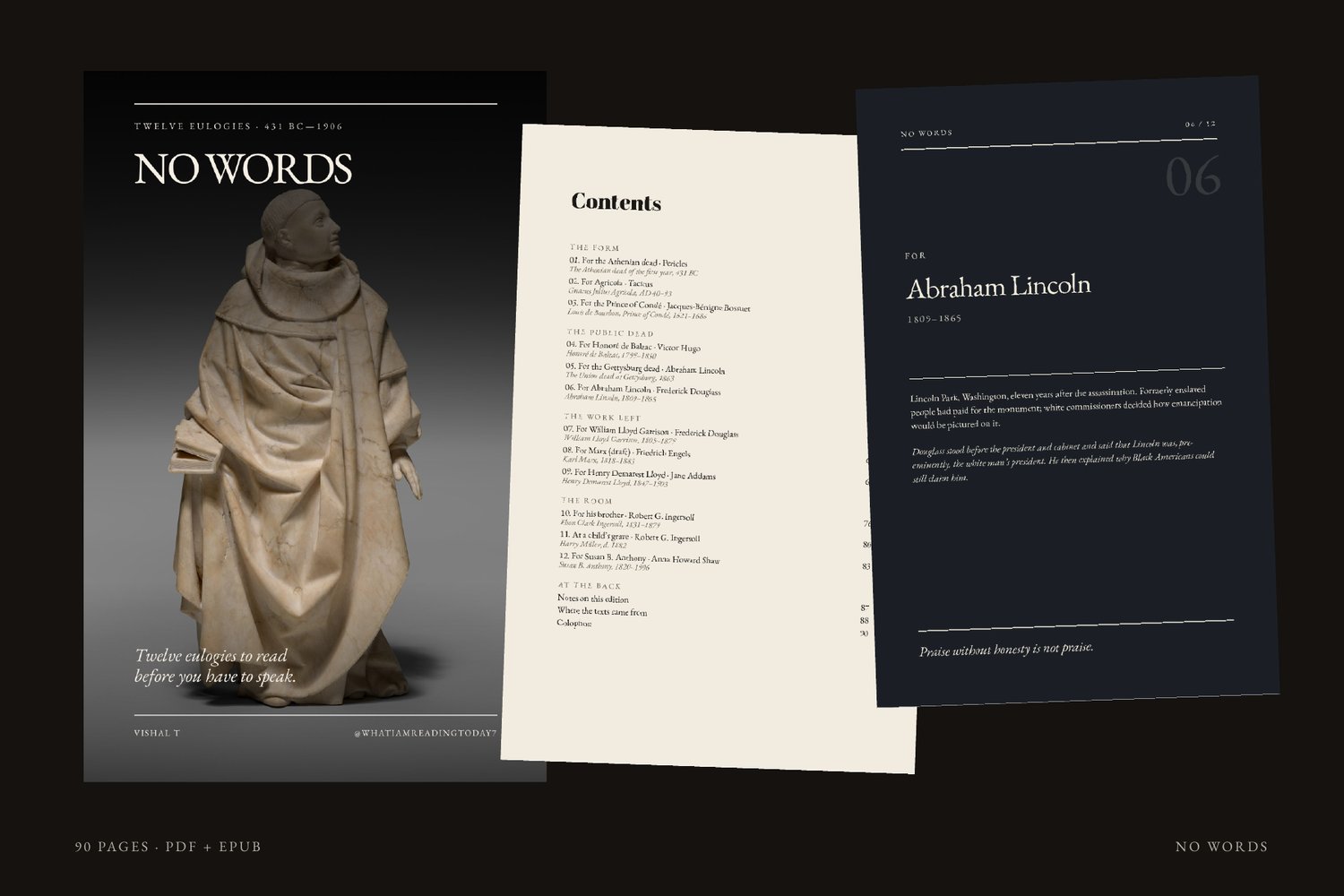
No Words collects twelve attempts, from Pericles outside Athens in 431 BC to Anna Howard Shaw speaking for Susan B. Anthony in a Rochester blizzard in 1906.
This is not a cabinet of famous last words. Each piece has to do something you may one day need to do in that room.
- Tell the truth without shrinking the dead into a saint. Frederick Douglass can call Lincoln “pre-eminently the white man’s President” and still explain why freed people honour him.
- Place a private loss inside a public world. Victor Hugo makes Balzac stand for an age; Lincoln gives a cemetery two minutes.
- Hand unfinished work to the living. Jane Addams turns Henry Demarest Lloyd’s habits into a method. Anna Howard Shaw refuses to let Susan B. Anthony’s funeral become a finish.
- Find a humane sentence without demanding certainty. At Harry Miller’s grave, Robert Ingersoll offers help for the living and hope for the dead.
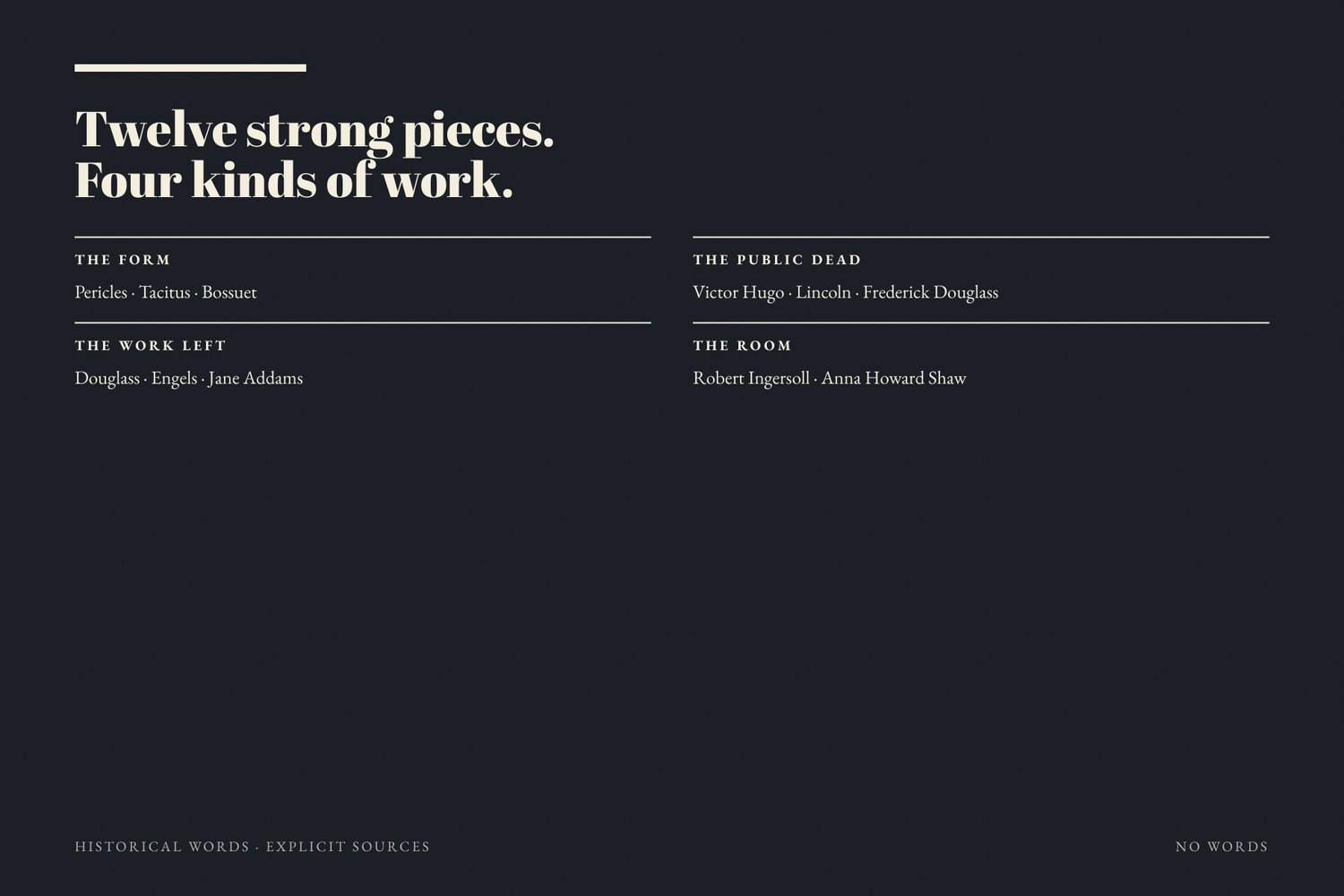
The twelve
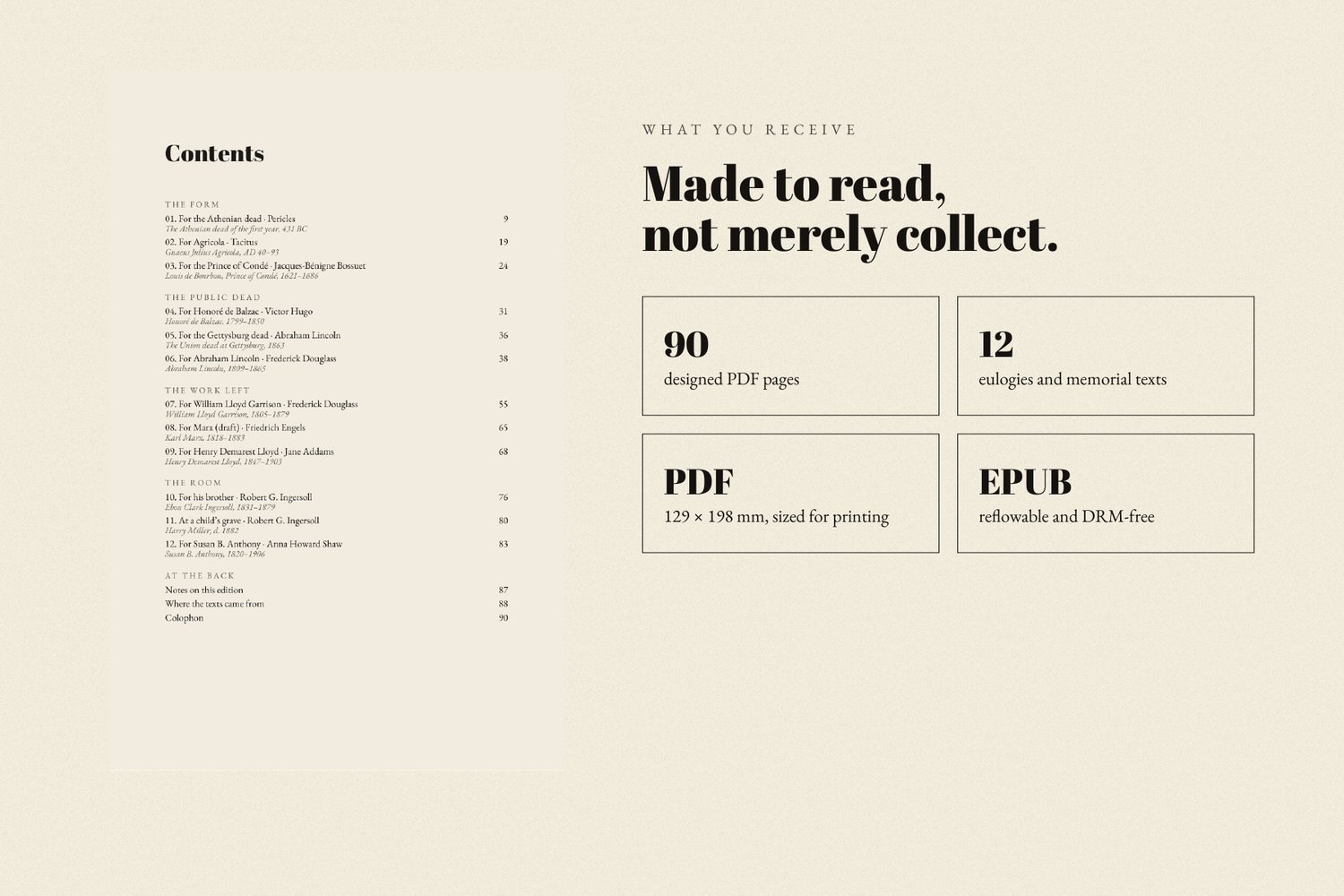
The form: Pericles for the Athenian dead; Tacitus for Agricola; Bossuet for the Prince of Condé.
The public dead: Victor Hugo for Balzac; Abraham Lincoln at Gettysburg; Frederick Douglass for Lincoln.
The work left: Douglass for William Lloyd Garrison; Friedrich Engels for Karl Marx; Jane Addams for Henry Demarest Lloyd.
The room: Robert Ingersoll for his brother; Ingersoll at a child’s grave; Anna Howard Shaw for Susan B. Anthony.
An honest paper trail
A eulogy happens once. The text is whatever paper trail it leaves behind. Thucydides reconstructed the speech of Pericles. Tacitus wrote years after a burial he missed. The Engels selection is his own English draft for Marx’s burial, not a transcript of the speech he delivered. Bossuet appears in two marked passages from a 1908 abridgment. Shaw appears in a shorter text attributed to a 1906 printing; the original magazine pages were not directly inspected.
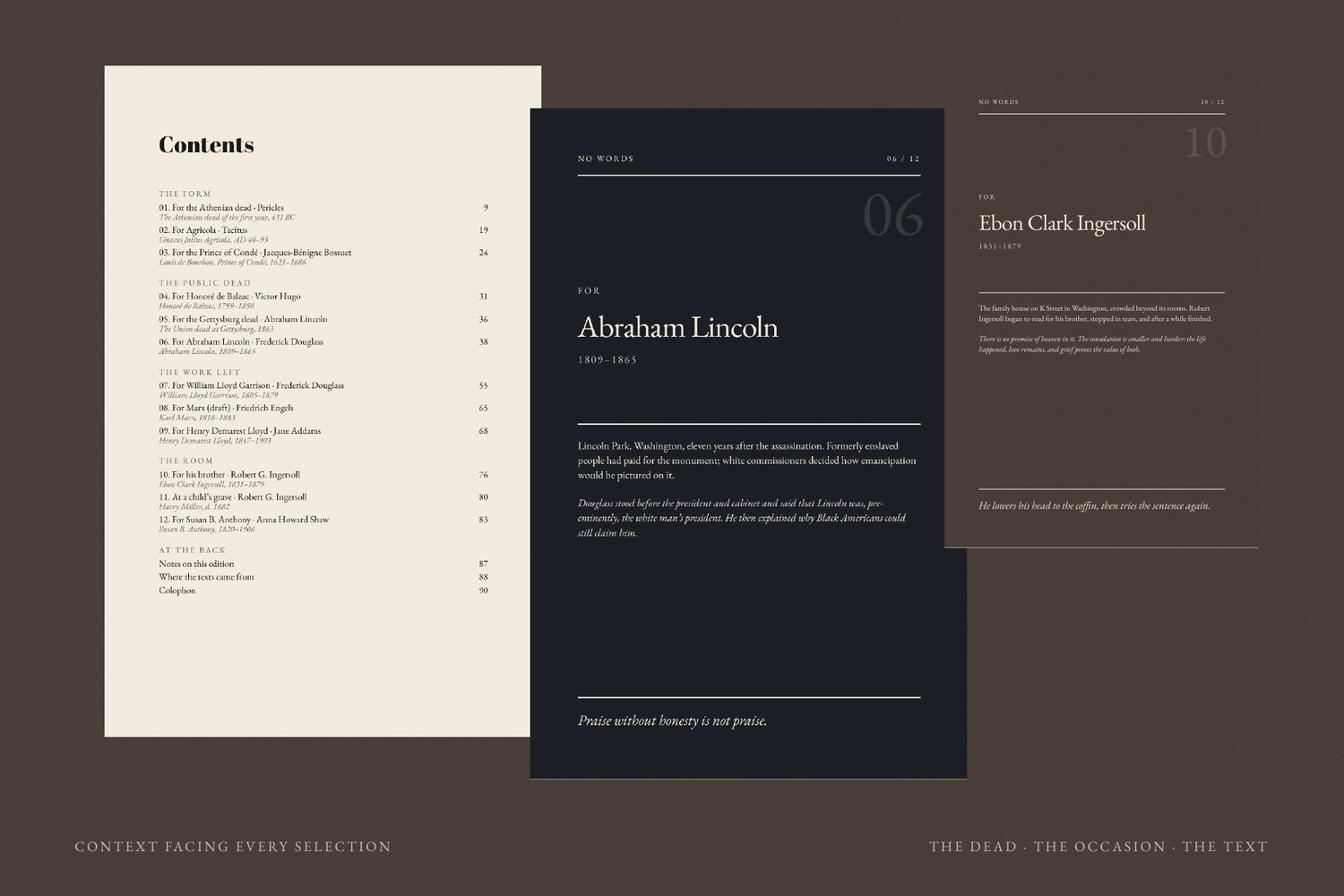
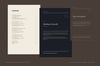
Every selection is preceded by a page naming the dead, the occasion, and the route by which the words reached this edition. Its scope and any transmission uncertainty are disclosed in the book.
You receive
- a 90-page designed PDF at 129 × 198 mm, suitable for tablets, laptops and printing;
- a reflowable EPUB for Kobo, Apple Books and most e-readers; Kindle readers can use Send to Kindle;
- twelve eulogies and memorial texts, grouped into four purposeful sections;
- a full context page before every selection;
- source and transmission notes;
- DRM-free files that are yours to keep and move between devices.
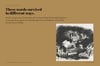
The cover and section artwork are public-domain/CC0 works from the Cleveland Museum of Art; no AI-generated images are used.
Selected, restored and newly set by Vishal T · @whatiamreadingtoday7