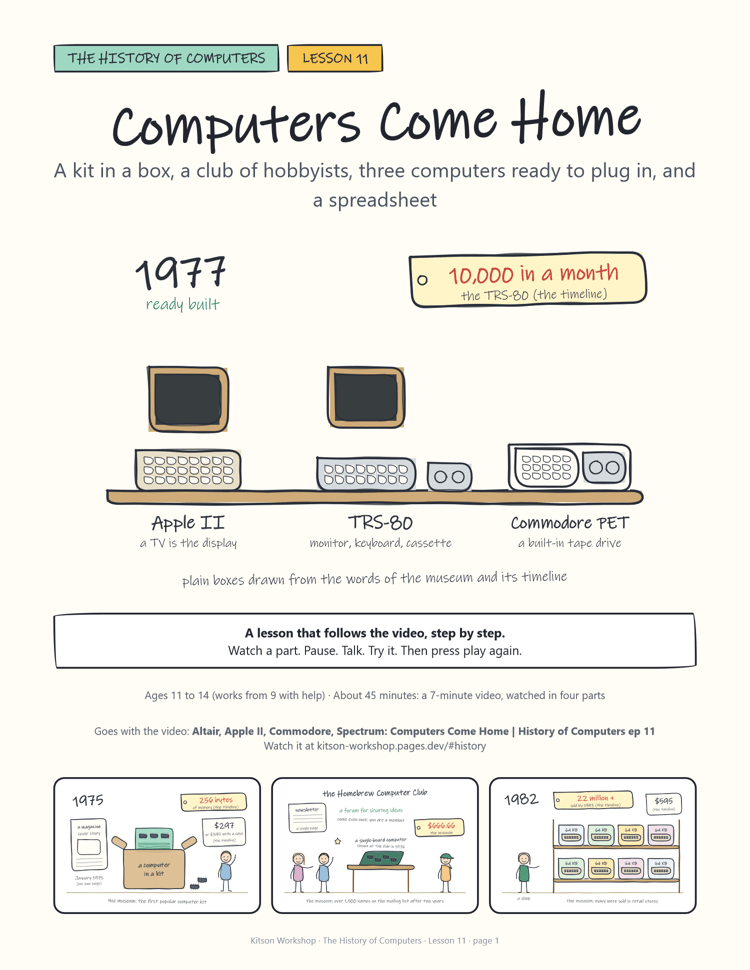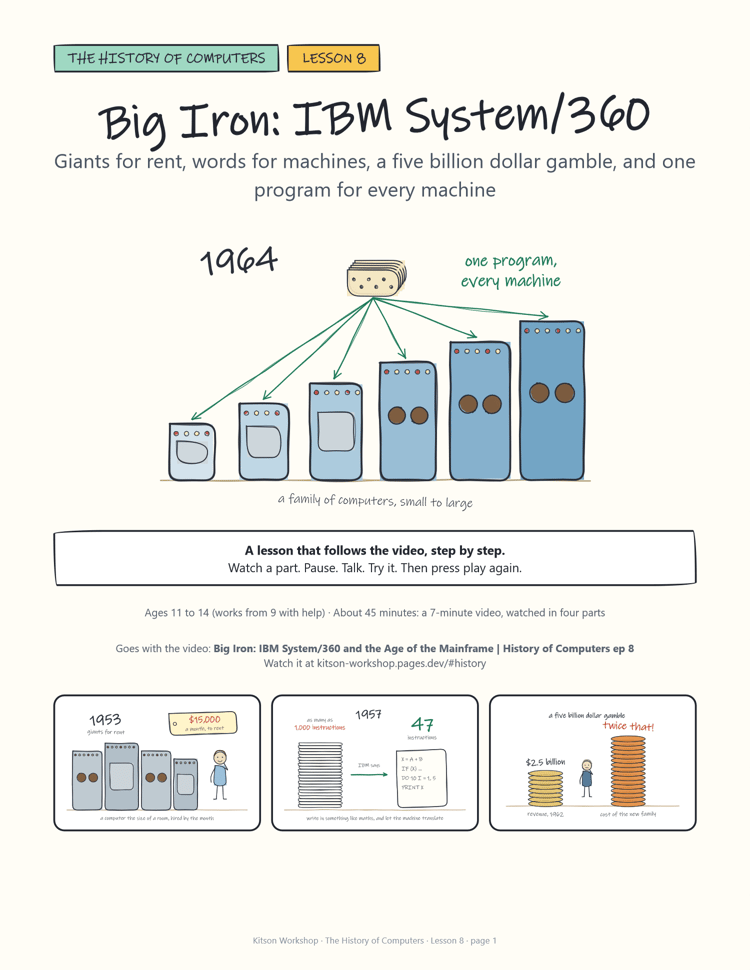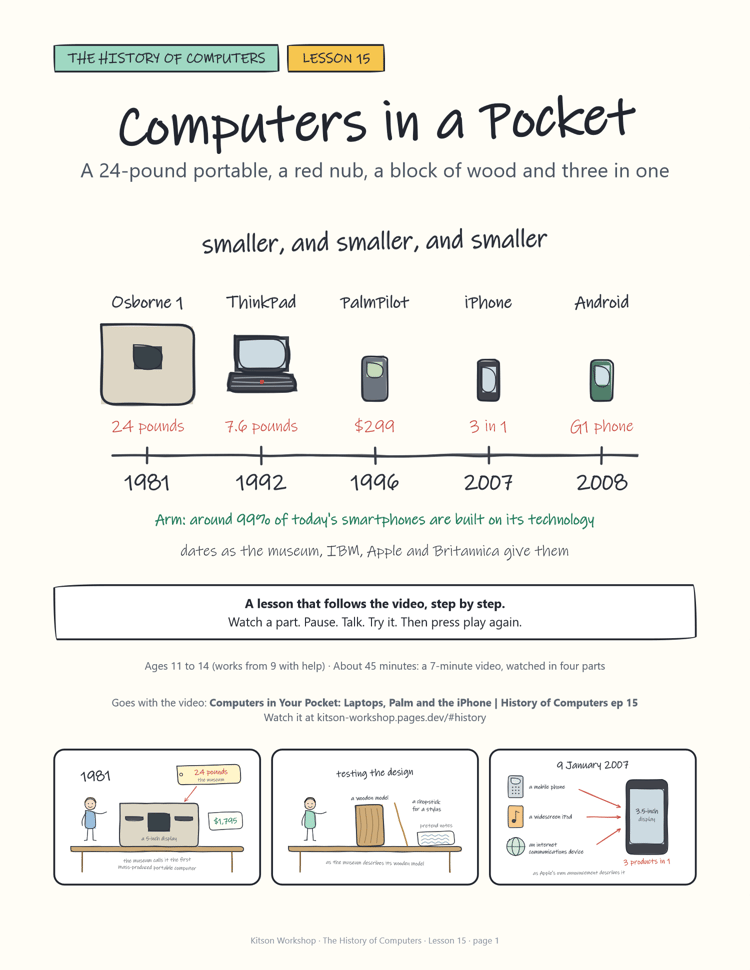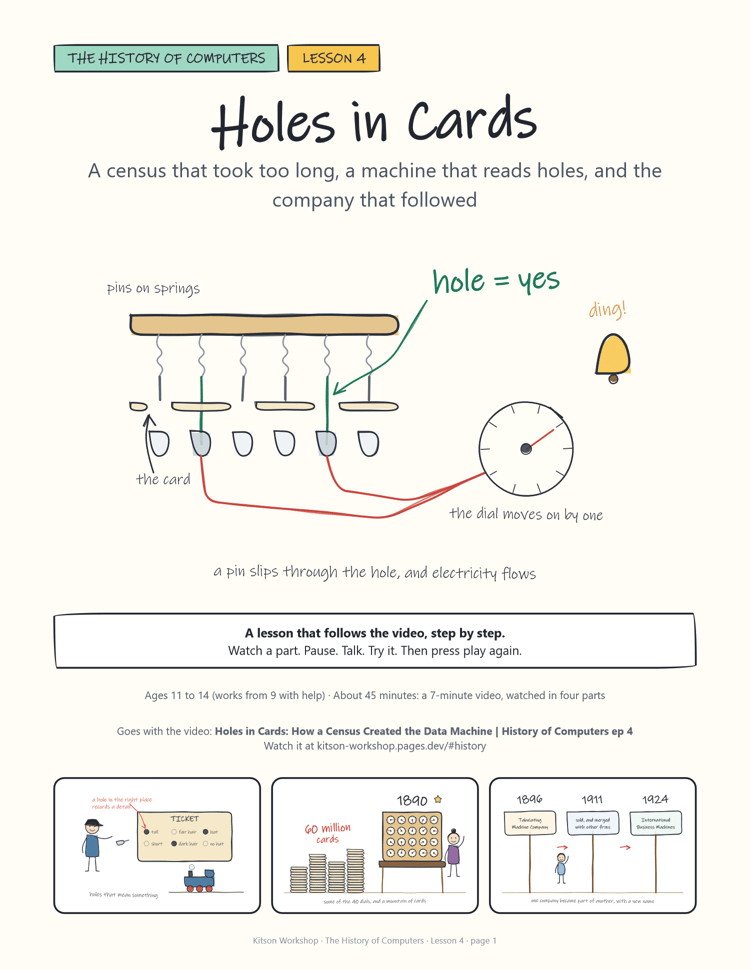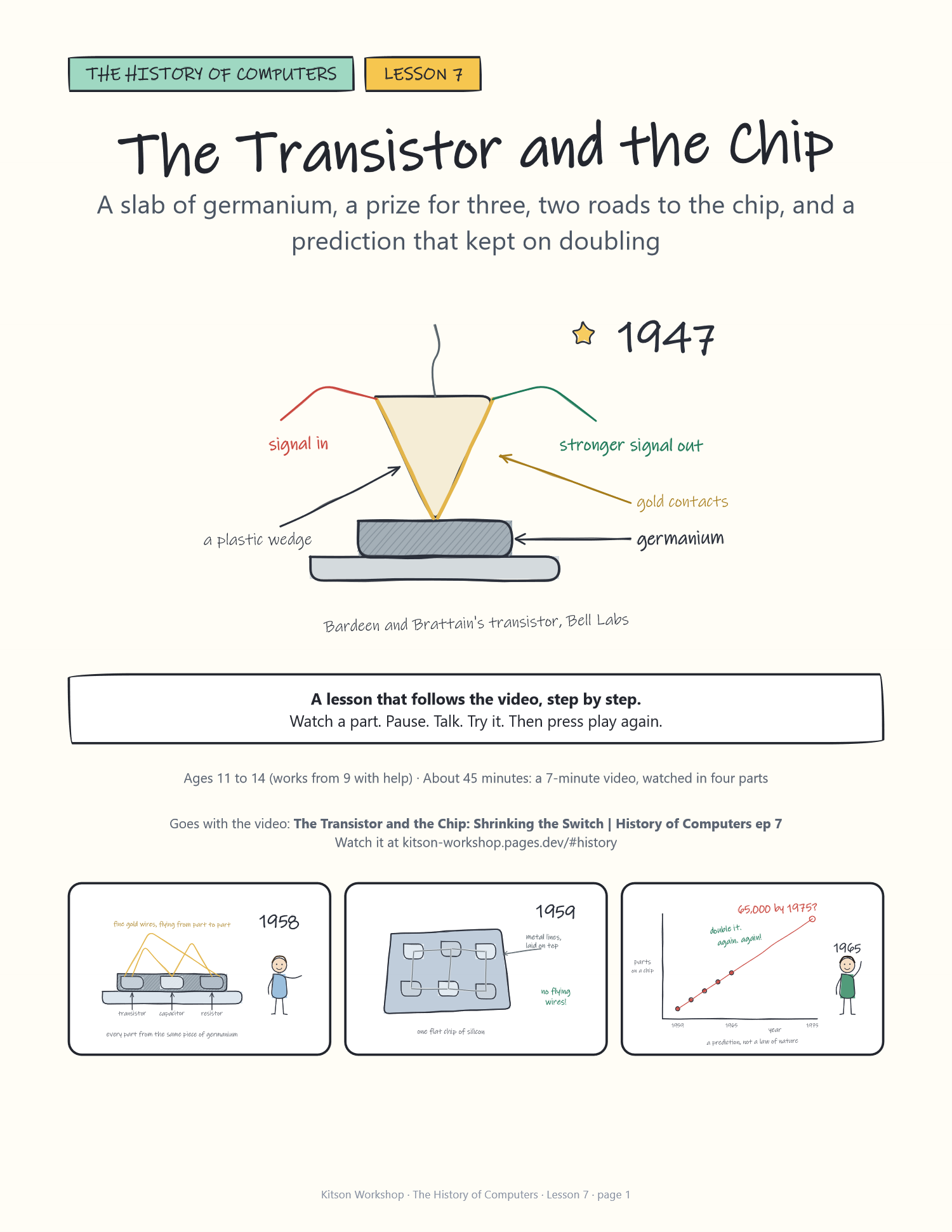
History of Computers Lesson 7: The Transistor and the Chip (logic gates and doubling) - printable lesson, ages 11-14
A ready-to-teach lesson that follows our free video, step by step.
Watch a part. Pause. Talk. Try it. Then press play again.
The story: the first transistor in 1947, a Nobel Prize shared by three, the problem of joining up thousands of parts, two routes to the integrated circuit, and Gordon Moore's prediction that the parts on a chip would keep doubling.
What you get (13-page printable PDF):
- A one-page guide for the grown-up, with the exact times to pause the video
- Key words, and a "think first" question
- Four pupil pages, one for each part of the video: what we just heard, two questions to talk about, and something to try
- Two worksheets: AND, OR and NOT gates played with counters, a matching task, doubling and "count the wires" sums, and a cut-out timeline
- The story in four pictures, and an 8-question quiz
- All the answers, teaching notes, and the sources for every fact
For ages 11 to 14 (works from 9 with help). About 45 minutes. You need pencils, scissors and about 16 counters.
Every drawing and every word is our own. The free video is at kitson-workshop.pages.dev/#history
Want to try one first? Lesson 1 (the abacus) is free: payhip.com/b/nmZIE
Pay once, use it for ever: one purchase covers one teacher or one family. Use it as often as you like with your own classes, and print as many copies as your own pupils need. Please do not resell it or pass the file on.
For educational purposes only. Not affiliated with any company named in the lesson.