

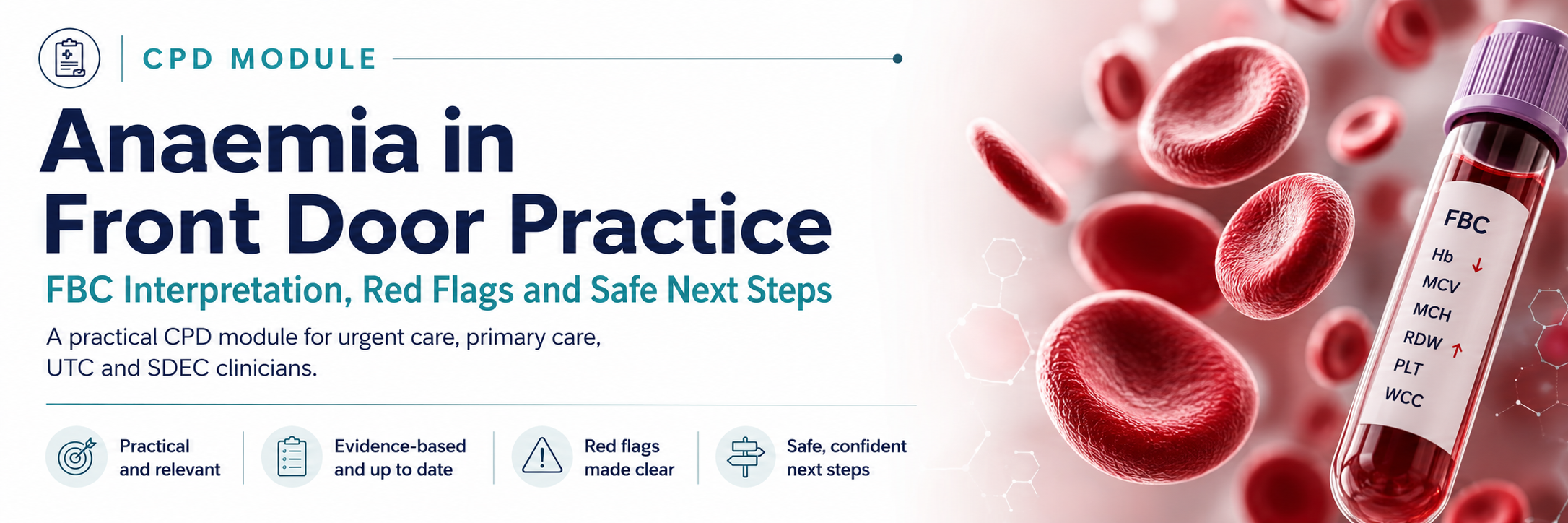
A low Hb is never just a number...
A practical CPD module for clinicians working in urgent care, primary care, UTC, SDEC and front-door services. Learn how to interpret anaemia safely, recognise red flags, understand microcytic, normocytic and macrocytic patterns, and decide when to escalate, refer, treat or safety-net.
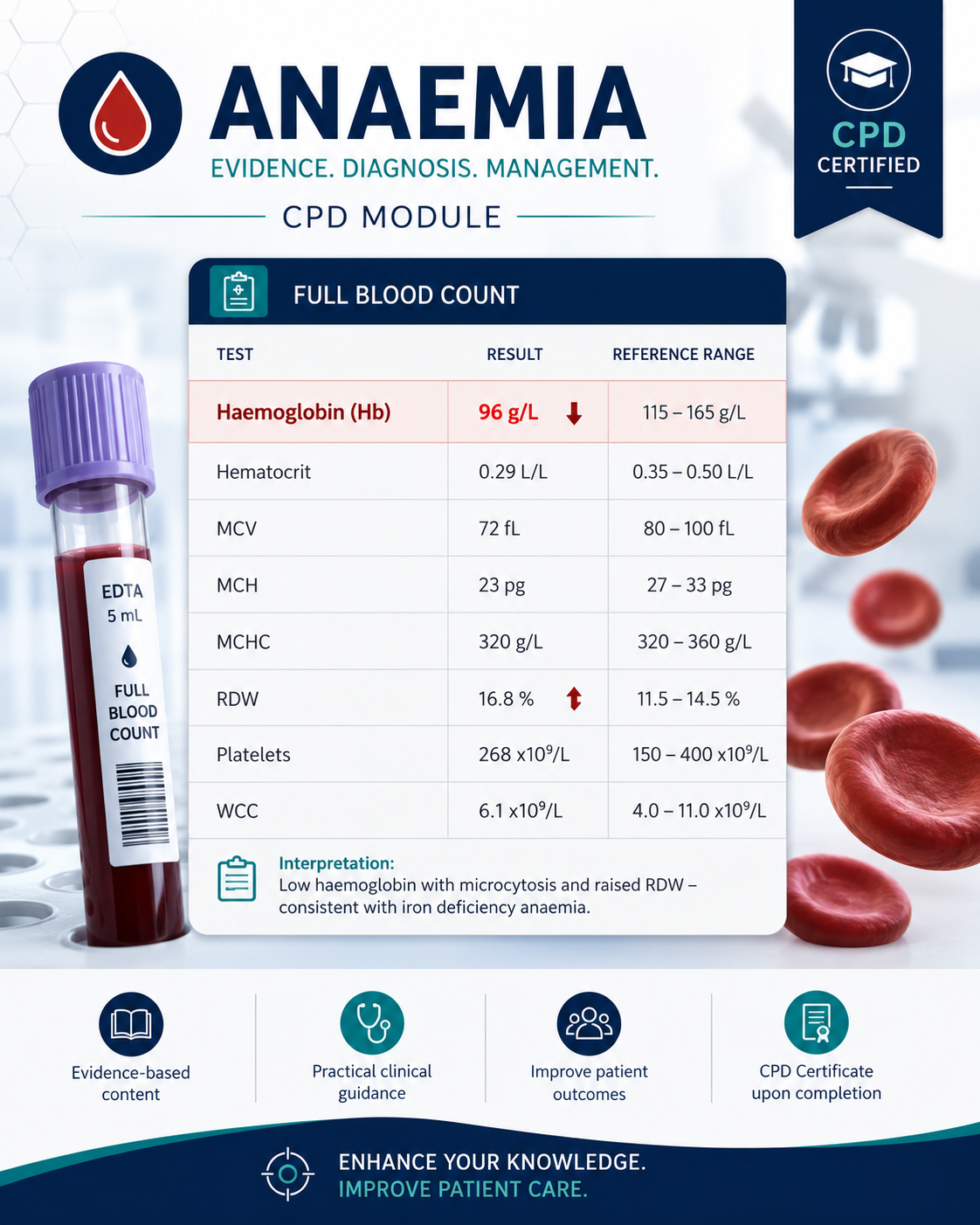
Anaemia is one of the most common blood abnormalities seen across primary care, urgent care and front-door services — but interpreting it safely is not always straightforward.
This module helps clinicians move beyond simply spotting a low haemoglobin and instead ask:
Is the patient clinically safe?
Is this acute or chronic?
What does the FBC pattern suggest?
Could this represent bleeding, deficiency, renal disease, inflammation, malignancy or marrow pathology?
Can this be safely followed up, or does it need escalation?
What learners will cover
- Why anaemia matters in front-door practice
- How to interpret Hb, MCV, MCH, RDW, WCC, platelets and reticulocytes
- Microcytic, normocytic and macrocytic anaemia patterns
- Red flags requiring same-day escalation
- Useful additional bloods and how to match tests to the pattern
- Treatment principles: stabilise, identify cause, replace safely, follow up
- Discharge safety-netting and follow-up planning
- Case-based examples from urgent/front-door practice
Who it is for
This CPD module is suitable for:
- Paramedics
- ACPs
- ANPs
- ENPs
- Nurses
- Pharmacists
- Physician associates
- Junior doctors
- Clinicians working in UTC, SDEC, primary care, ED interface or urgent care
What is included
- Video CPD module
- Case-based learning
- Downloadable quick-reference resources
- Quiz/check your learning
- Certificate of completion
- Members area extras
-
1First Section
-
2Course Video