
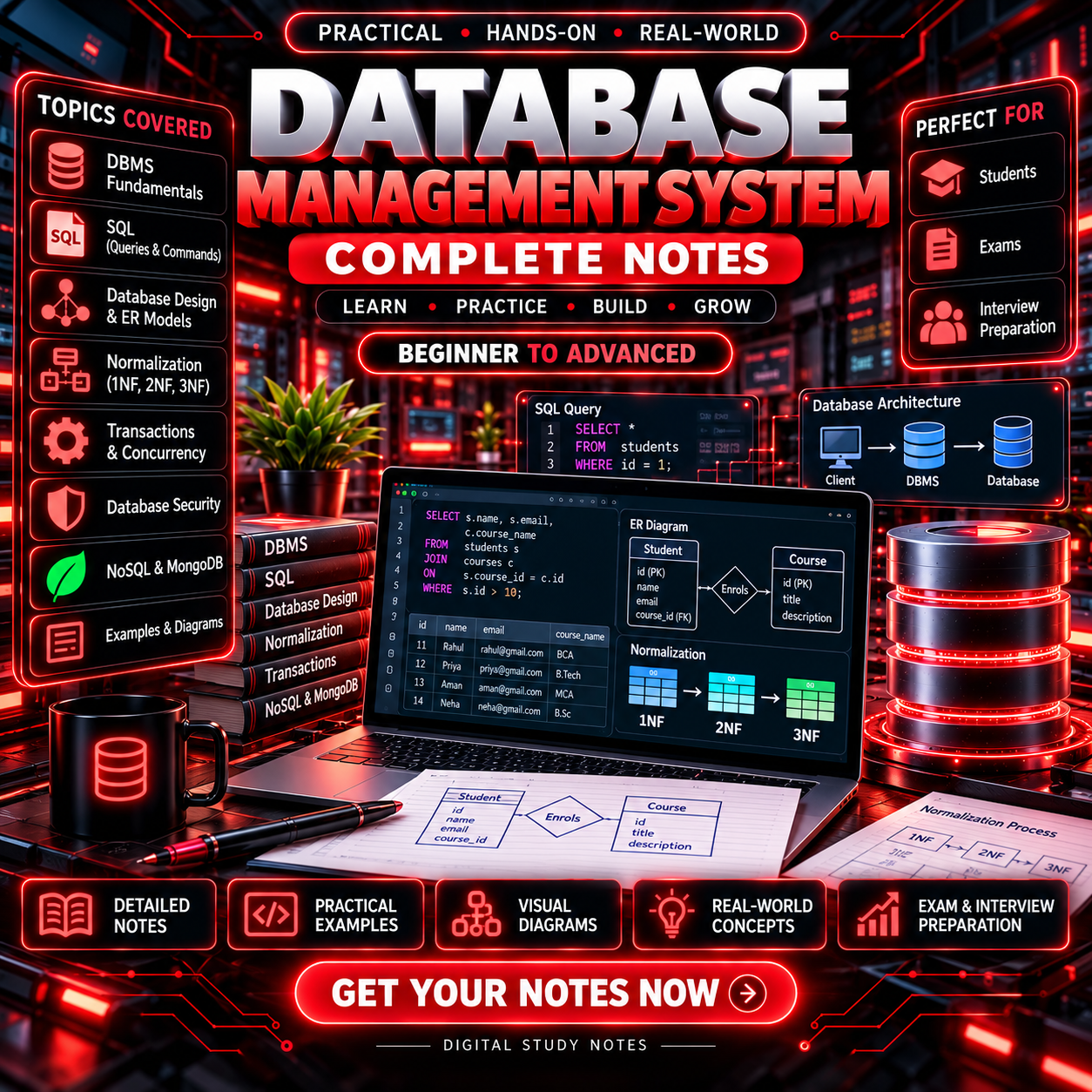
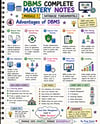
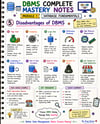
DBMS Complete Notes PDF
📚 DBMS Complete Notes PDF — Database Management System
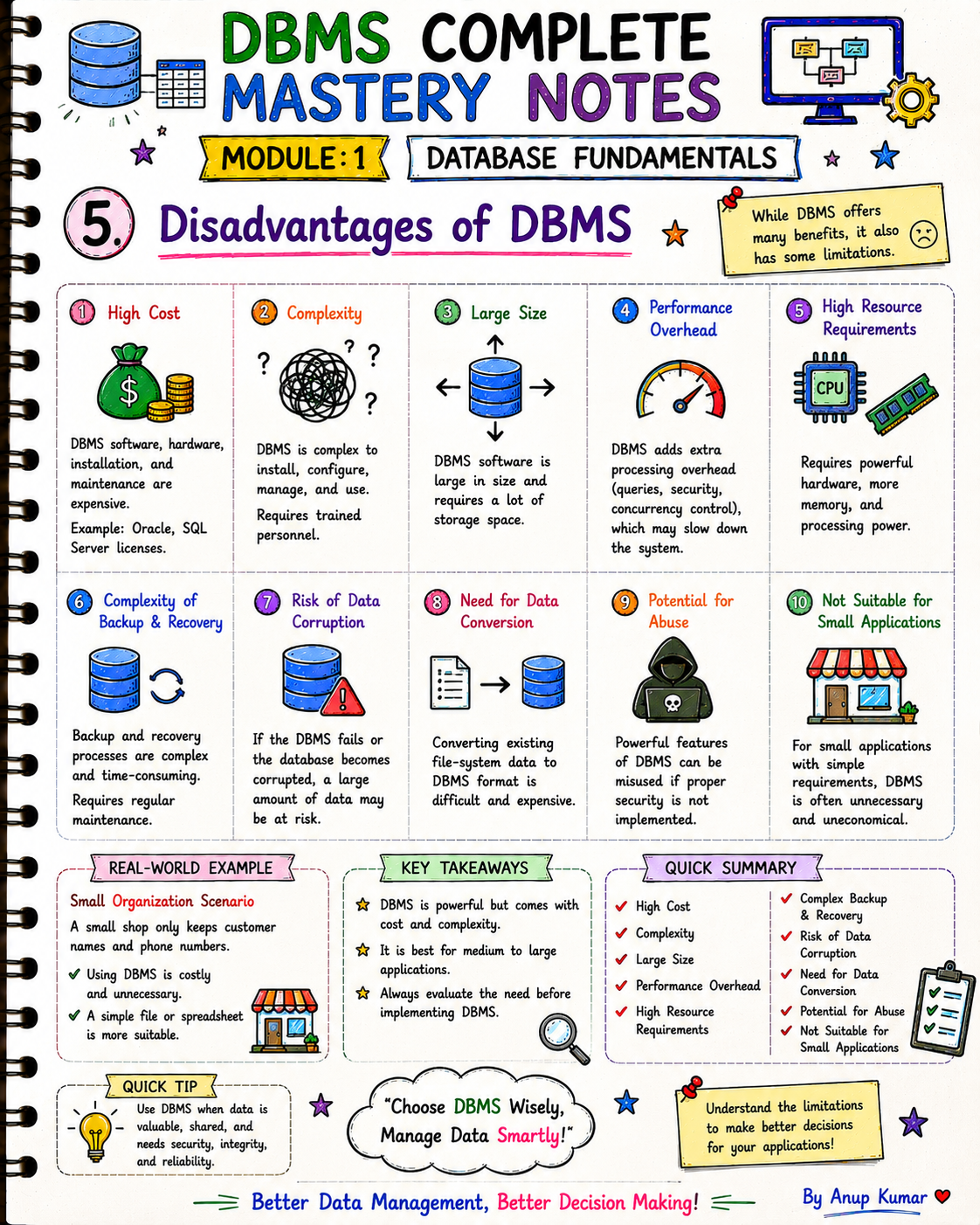
Build a strong foundation in Database Management Systems (DBMS) with these structured, visual and easy-to-understand notes covering database concepts from fundamentals to advanced topics.
This resource is designed to help students understand DBMS concepts, database design, SQL, relational databases, normalization, transactions, concurrency, database security, recovery and modern database technologies through structured explanations, examples, diagrams and visual learning material.
Whether you're studying DBMS for academics, exams, technical interviews or strengthening your database fundamentals, these notes provide a structured learning path from DBMS fundamentals to real-world database concepts.
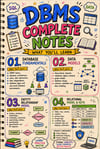
🎯 What You'll Learn
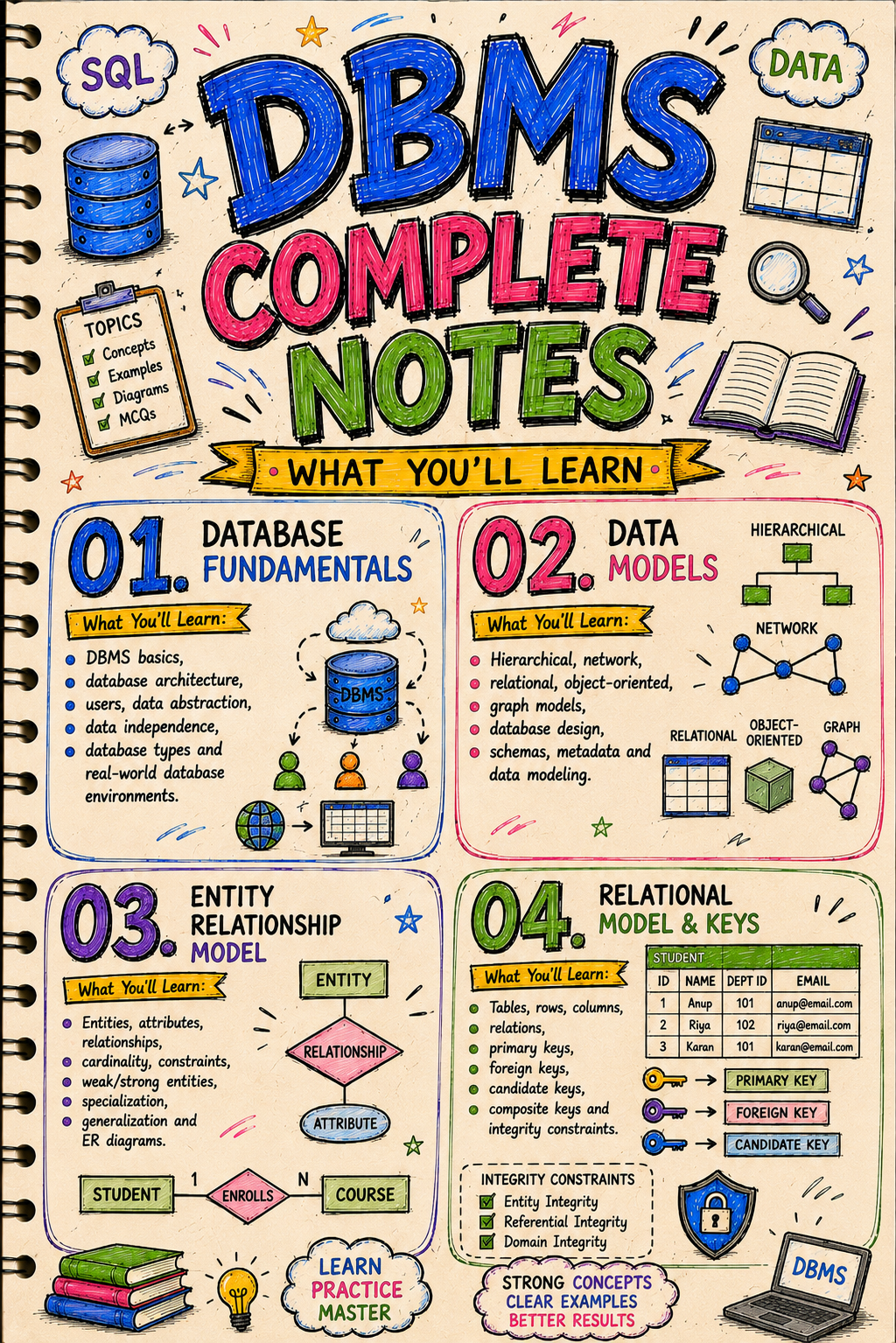
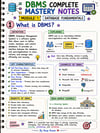
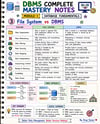
01. Database Fundamentals
Build your foundation in database management systems.
Topics include:
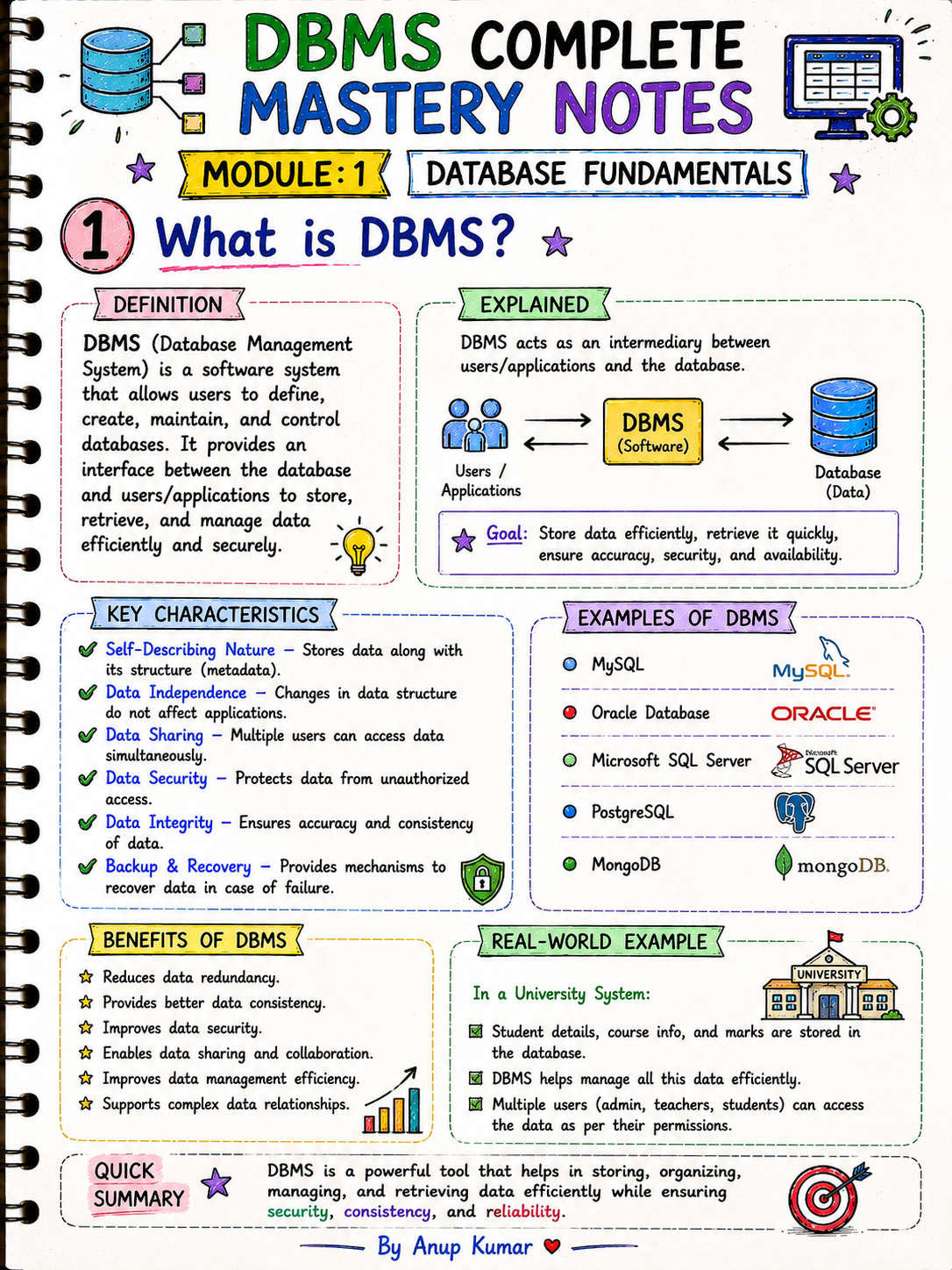
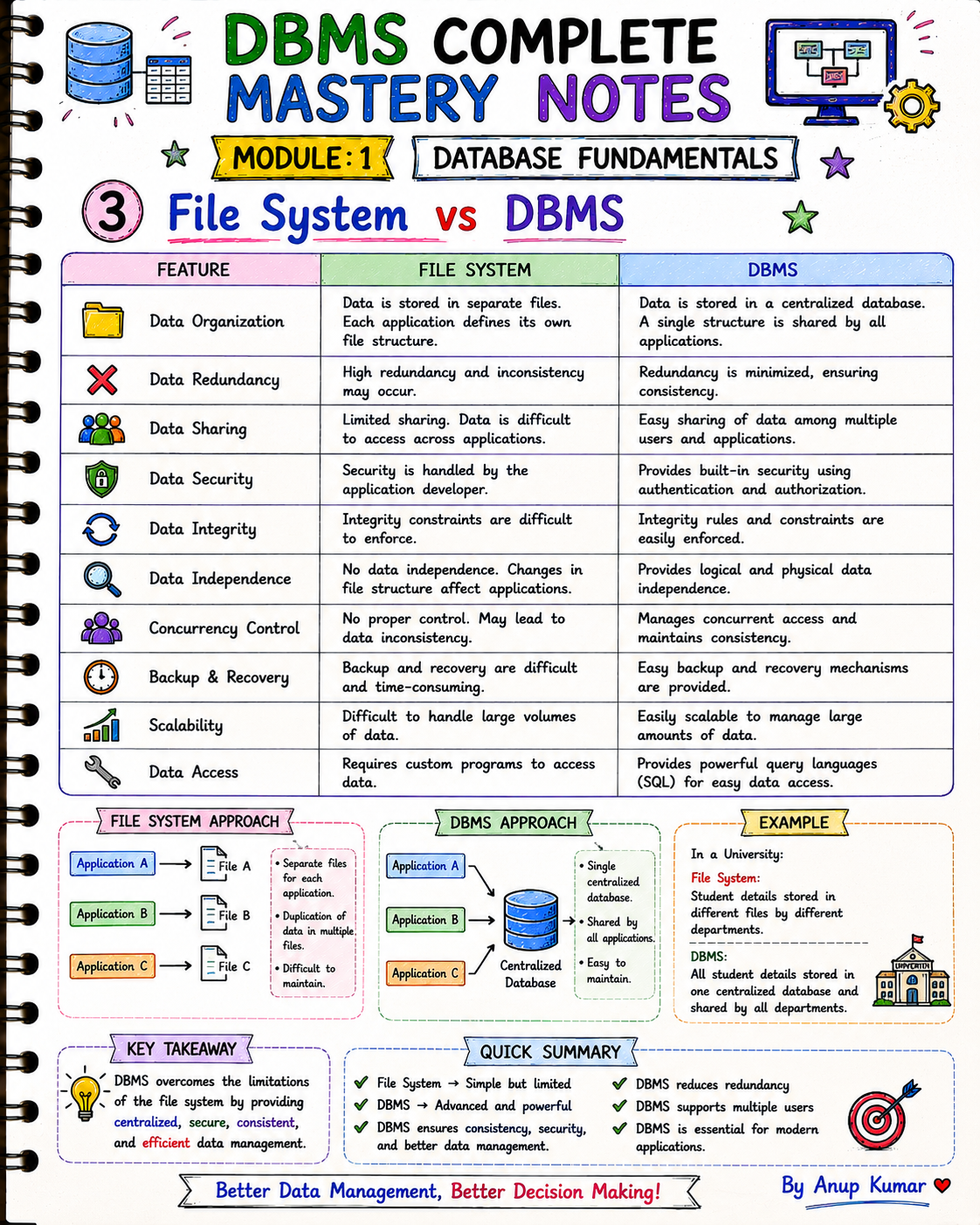
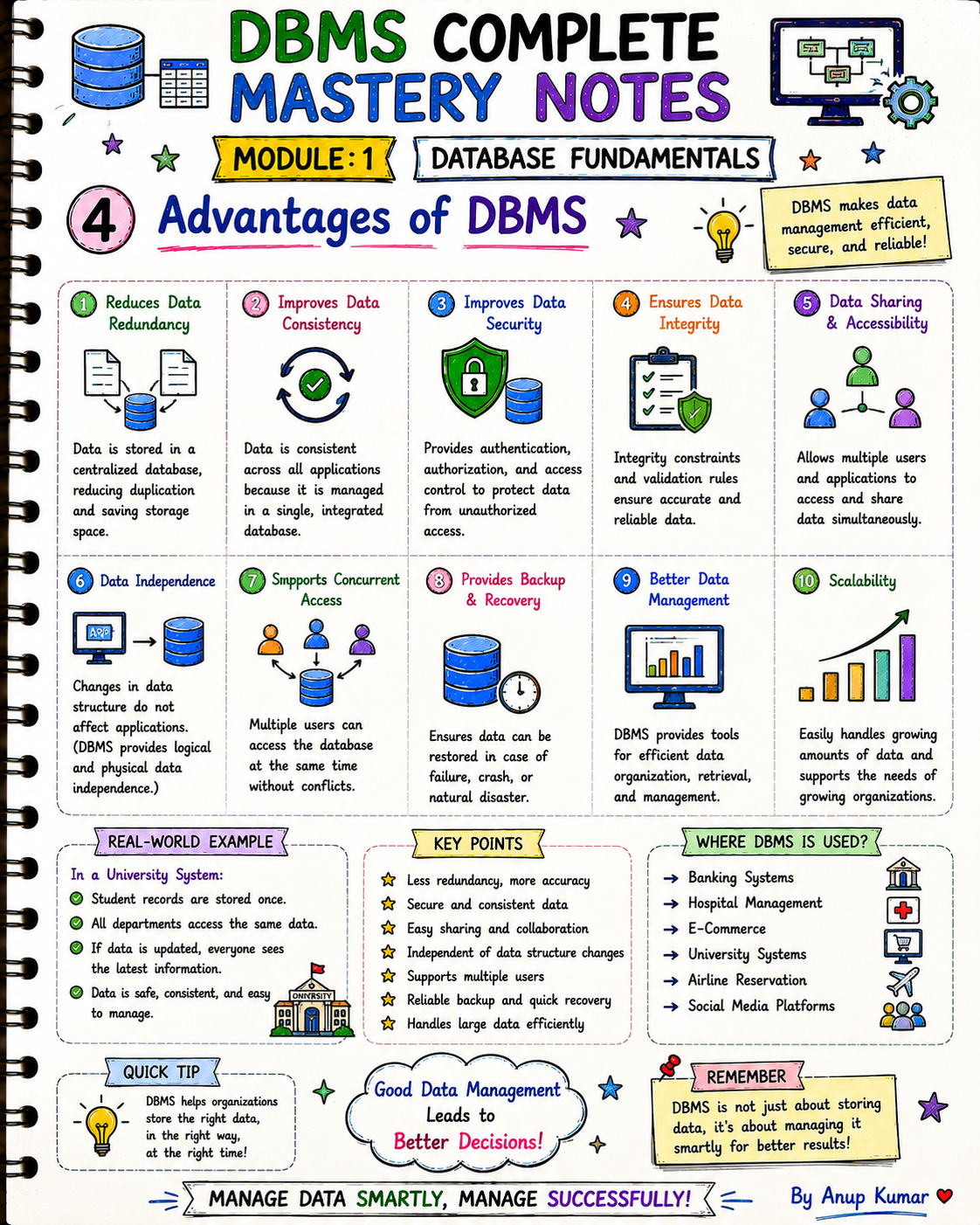
- DBMS basics
- Database architecture
- Users
- Data abstraction
- Data independence
- Database types
- Real-world database environments
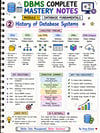
02. Database Models
Understand different ways of representing and organizing data.
You'll explore:
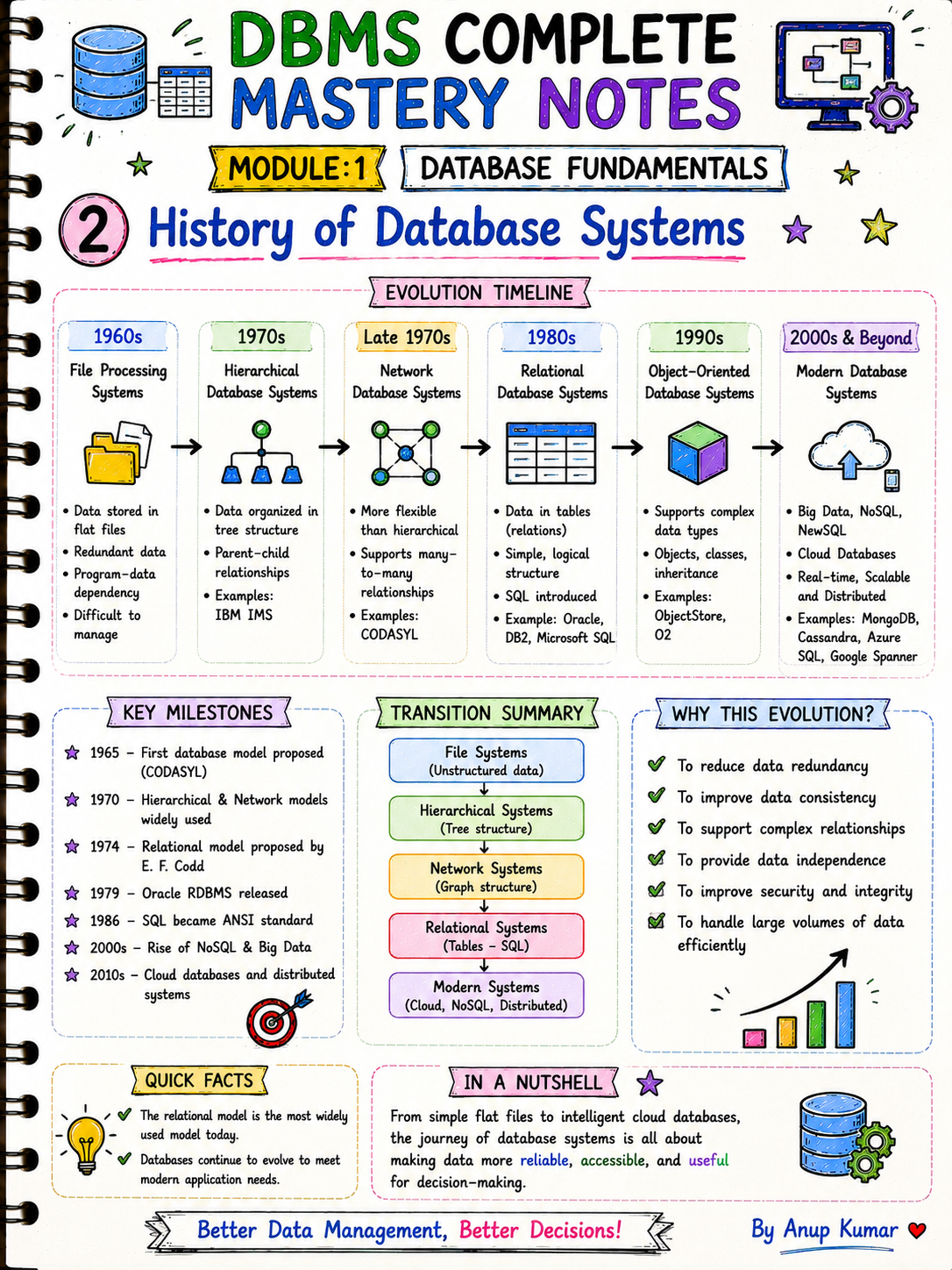
- Hierarchical database model
- Network database model
- Relational database model
- Object-oriented database model
- Graph database model
- Database design
- Schemas
- Metadata
- Data modeling
03. Entity Relationship Model
Learn how entities and relationships are represented during database design.
Topics include:
- Entities
- Attributes
- Relationships
- Cardinality
- Constraints
- Weak and strong entities
- Specialization
- Generalization
- ER diagrams
You'll also work with concepts such as:
Entity → Relationship → Attribute
04. Relational Model & Keys
Understand the fundamentals of relational databases.
Topics include:
- Tables
- Rows
- Columns
- Relations
- Primary keys
- Foreign keys
- Candidate keys
- Composite keys
- Integrity constraints
Including:
- Entity integrity
- Referential integrity
- Domain integrity
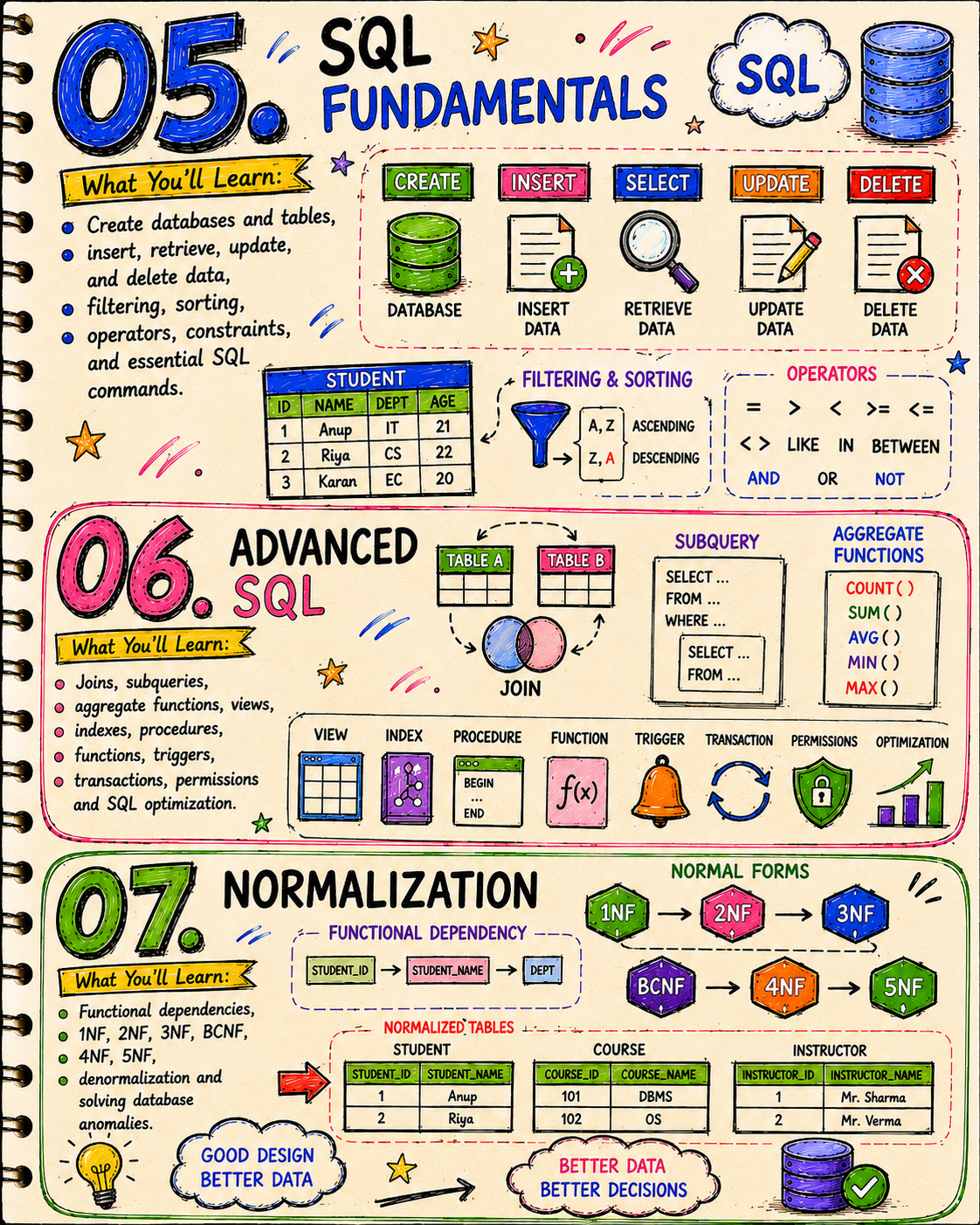
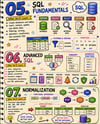
05. SQL Fundamentals
Learn the essential SQL operations used to work with relational databases.
Topics include:
- Creating databases
- Creating tables
- Inserting data
- Retrieving data
- Updating data
- Deleting data
- Filtering
- Sorting
- Operators
- SQL commands
- AND
- OR
- NOT
- LIKE
- IN
- BETWEEN
- Comparison operators
Core SQL operations include:
CREATE → INSERT → SELECT → UPDATE → DELETE
06. Advanced SQL
Move beyond basic queries and understand advanced SQL concepts.
Topics include:
- Joins
- Subqueries
- Aggregate functions
- Views
- Indexes
- Procedures
- Functions
- Triggers
- Transactions
- Permissions
- SQL optimization
Aggregate functions include:
- COUNT()
- SUM()
- AVG()
- MIN()
- MAX()
07. Database Normalisation
Understand how normalisation helps create better database structures.
Topics include:
- Functional dependencies
- 1NF
- 2NF
- 3NF
- BCNF
- 4NF
- 5NF
- Denormalization
- Database anomalies
The notes visually explain the progression:
1NF → 2NF → 3NF → BCNF → 4NF → 5NF
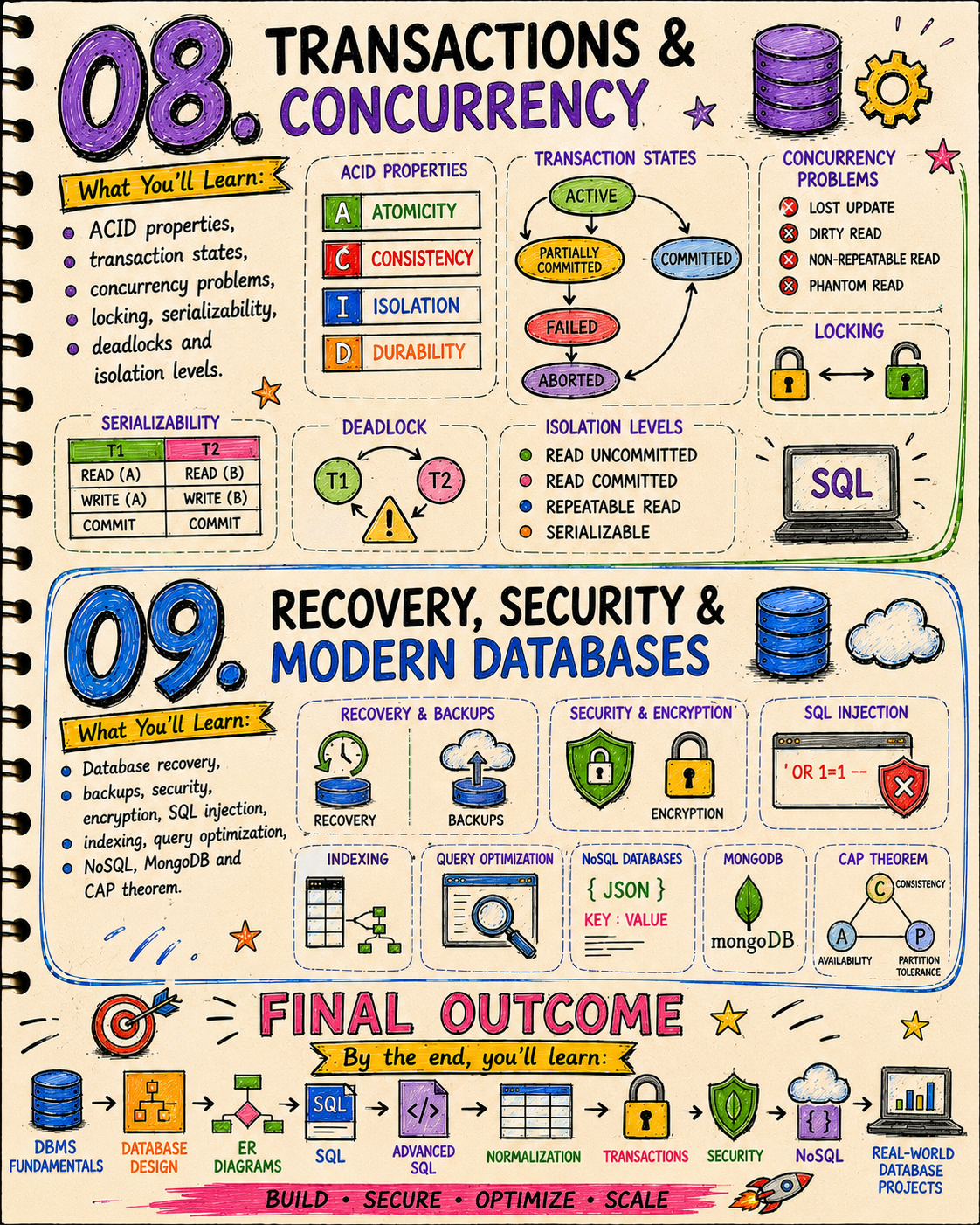
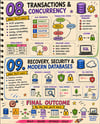
08. Transactions & Concurrency
Learn how databases manage multiple transactions and maintain consistency.
Topics include:
- ACID properties
- Atomicity
- Consistency
- Isolation
- Durability
- Transaction states
- Concurrency problems
- Locking
- Serializability
- Deadlocks
- Isolation levels
Concurrency problems covered include:
- Lost update
- Dirty read
- Non-repeatable read
- Phantom read
Isolation levels include:
- Read Uncommitted
- Read Committed
- Repeatable Read
- Serializable
09. Recovery, Security & Modern Databases
Explore database protection, recovery and modern database technologies.
Topics include:
Recovery & Backups
- Database recovery
- Backups
Database Security
- Database security
- Encryption
- SQL injection
Performance
- Indexing
- Query optimization
NoSQL
- NoSQL databases
- MongoDB
- Key-value concepts
- CAP theorem
The notes introduce the three CAP concepts:
Consistency • Availability • Partition Tolerance
🚀 COMPLETE LEARNING PATH
The notes provide a structured progression:
DBMS Fundamentals
↓
Database Design
↓
ER Diagrams
↓
Relational Model
↓
SQL
↓
Advanced SQL
↓
Normalization
↓
Transactions & Concurrency
↓
Security & Recovery
↓
NoSQL & MongoDB
↓
Real-World Database Projects
💡 Why These DBMS Notes?
These notes use a visual and structured learning approach with:
✅ Clear concepts
✅ Practical examples
✅ Database diagrams
✅ ER diagrams
✅ SQL concepts
✅ Visual explanations
✅ Tables and database examples
✅ Key concepts for revision
✅ Structured topic progression
The pages use visual diagrams for topics such as database architecture, database models, ER relationships, relational tables, SQL operations, normalisation, transaction states, locking, recovery, security and NoSQL concepts.
👨🎓 Who Is This For?
These DBMS notes are suitable for:
- BCA Students
- BSc Computer Science Students
- MCA Students
- Computer Science Students
- IT Students
- Database Beginners
- Students preparing for DBMS exams
- Students learning SQL
- Students preparing for technical interviews
- Beginners learning database design
📦 What You'll Learn From This Resource
By working through the material, you can build an understanding of:
DBMS → Database Models → ER Model → Relational Model → SQL → Advanced SQL → Normalization → Transactions → Concurrency → Security → Recovery → NoSQL → MongoDB
🎯 Build Strong Database Fundamentals
Learn → Practice → Understand → Apply
Strengthen your understanding of database concepts and develop a foundation for working with SQL, relational databases, database design and modern database technologies.
📥 Get Instant Access
Start learning Database Management Systems with structured notes covering fundamental concepts, database design, SQL, normalisation, transactions, security and modern databases.
Learn DBMS. Understand SQL. Build Better Database Skills. 🚀