
Beyond Sensory Overload
Beyond Sensory Overload — Nonspeaking Autism Volume 2 (US Edition) | FREE 36-Page Illustrated Book with 3 Fillable Worksheets
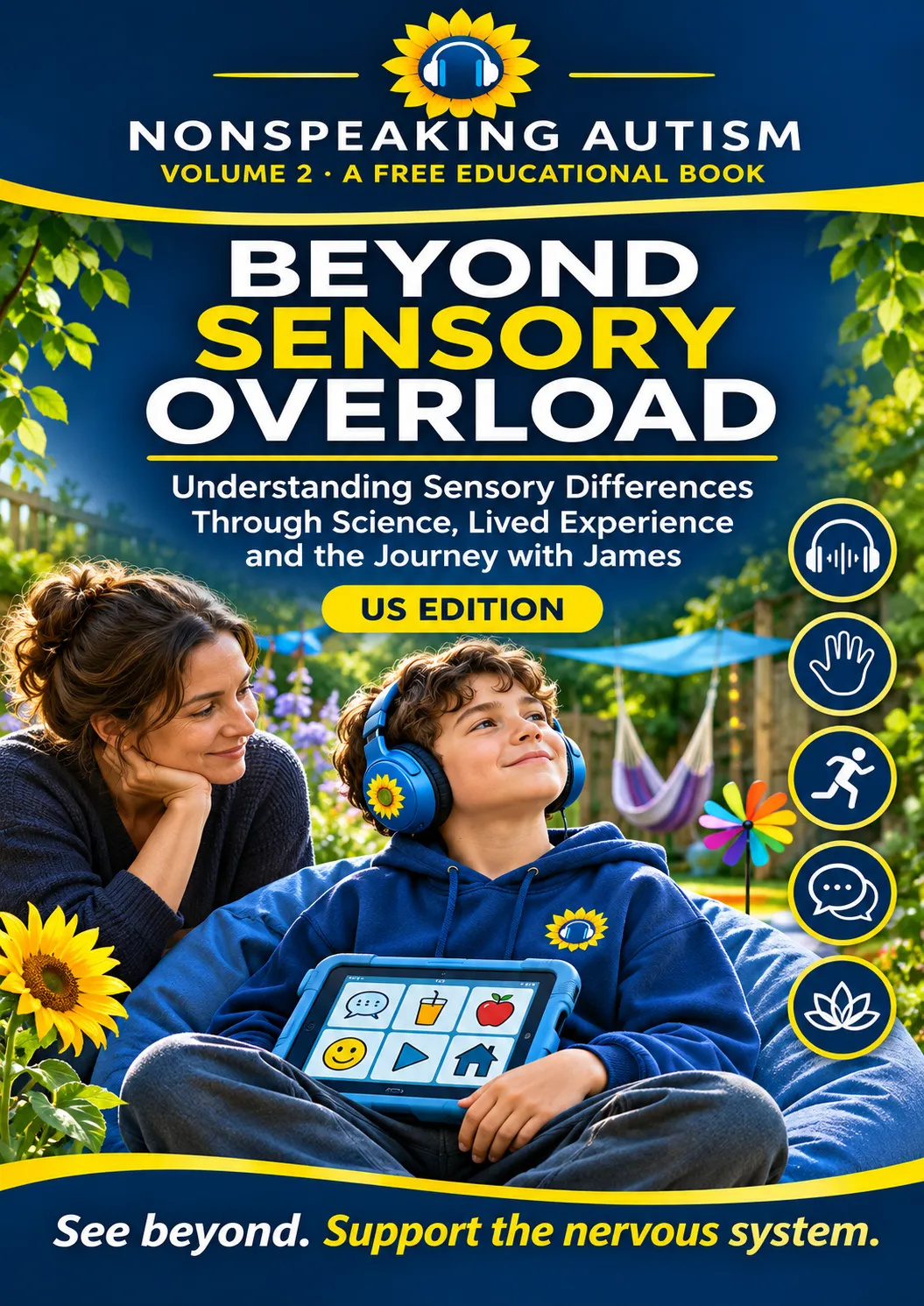
BEYOND SENSORY OVERLOAD — US EDITION
Understanding Sensory Differences Through Science, Lived Experience and the Journey with James
Nonspeaking Autism · Volume 2 · A free educational book
See beyond. Support the nervous system.
Connection over correction. Understanding over expectation.
━━━━━━━━━━━━━━━━━━━━
WHAT THIS BOOK IS
A 36-page illustrated PDF for parents, caregivers, educators and professionals supporting autistic children and young people — especially those who are nonspeaking or use AAC.
When a child covers their ears, leaves a room, refuses food or bangs their head, it is easy to see a "behavior" to stop. This book asks a different question: what might this person be experiencing that we cannot see — sensory overload, pain, a communication barrier, tiredness, or something they enjoy and value?
It brings together current research, US and international clinical guidance, and one mother's account of her son James, written in plain, practical language. You do not have to read everything before making one helpful change.
This US edition uses US emergency guidance (911), US health sources and US support organizations.
━━━━━━━━━━━━━━━━━━━━
WHAT'S INSIDE
• Welcome and the journey with James (pages 4–5)
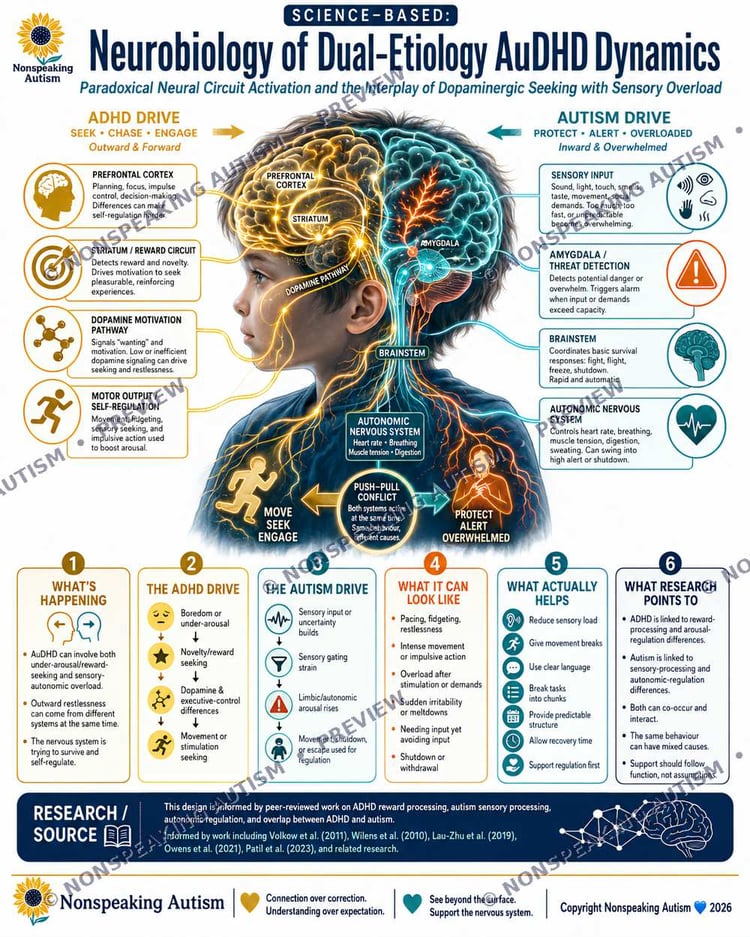
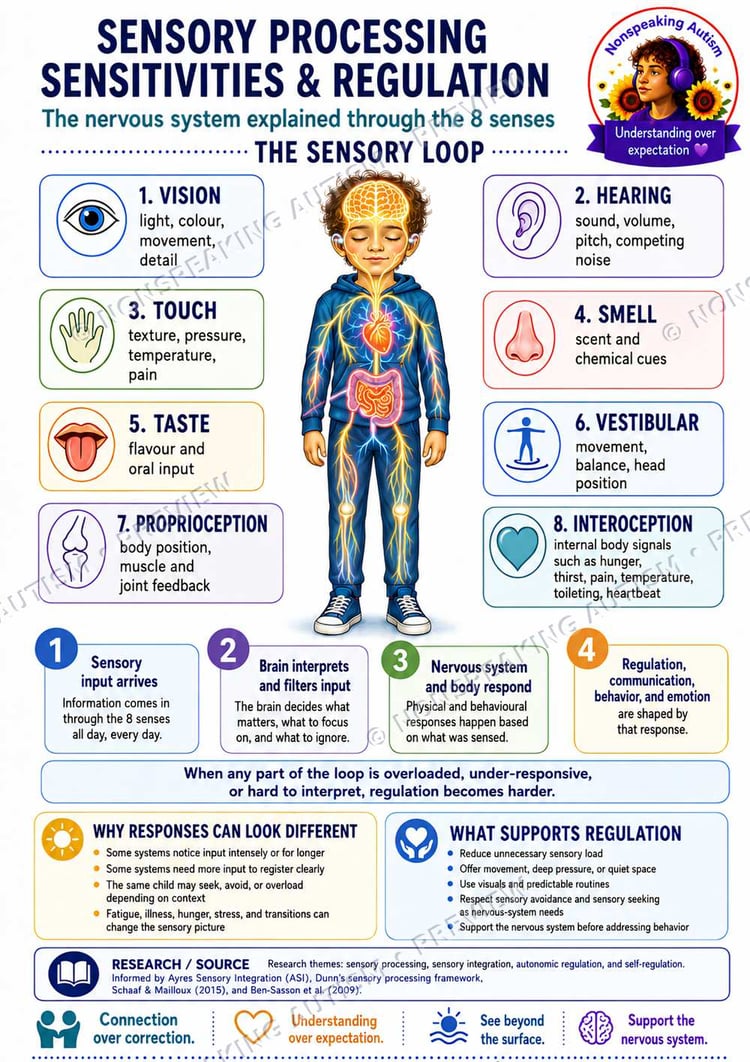
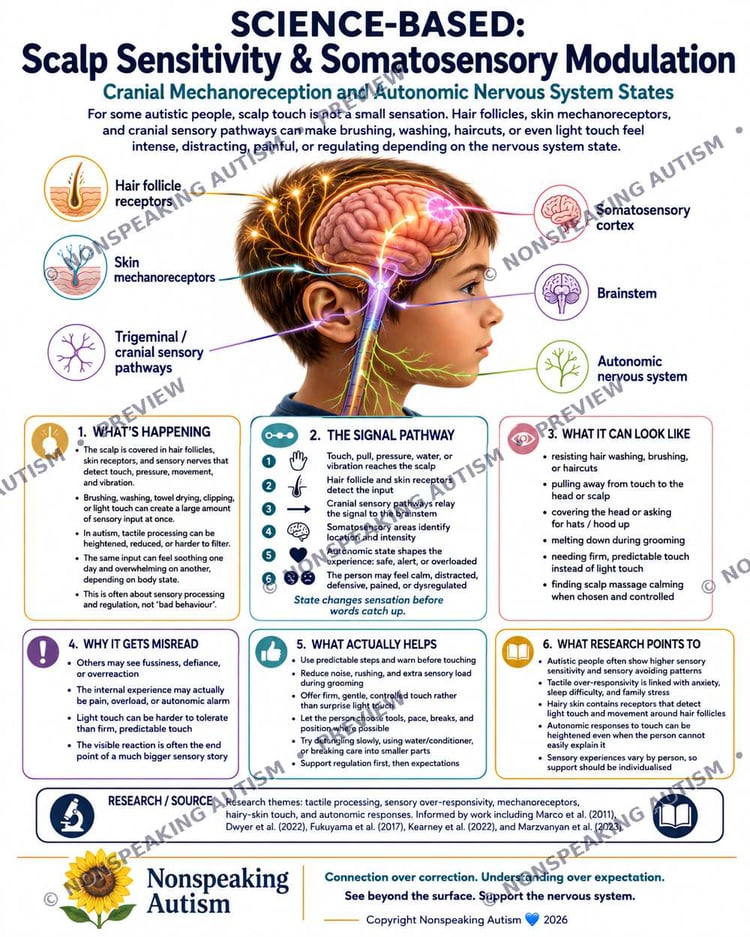
• The sensory world and body signals — more than five senses, interoception, and why a pattern is not a permanent "type" (6–8)
• Communication beyond speech — AAC, access that fits the moment, and presuming possibility (9–11)
• Seeking, enjoying and overload — sensory joy, needing to stop, and when everything becomes too much (12–14)
• Distress, physical pain and getting help — "Could something hurt?", James's story, and clear US urgent-help signs (15–17)
• School, transitions and recovery — the hidden sensory day, accessible transitions, and after-school recovery (18–20)
• Safety without suppression — safety plans, self-injury, and personal care with dignity (21–23)
• Eating, personal care, toileting and sleep (24–26)
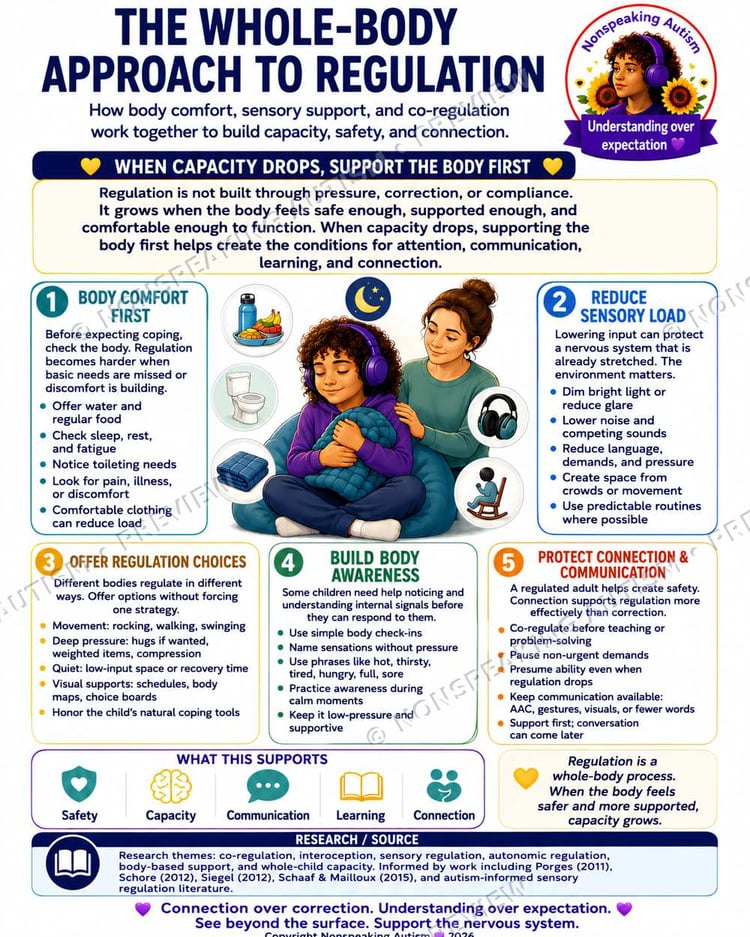
• Building support that fits — reducing demands, real choices, co-regulation, and how to tell if support is helping (27–30)
• Three fillable worksheets (31–33)
• References and further support (34–35)
• A closing reflection (36)
━━━━━━━━━━━━━━━━━━━━
THREE FILLABLE WORKSHEETS
1. My sensory & communication profile — a changing support summary, completed with the person wherever possible
2. Notice with compassion — a short observation record (urgent health or safety needs always come first)
3. A shared home–school plan — agree what each adult will do, including the child through their own communication
Click or tap a box to type, or print and write by hand. Typed answers can be saved in free Adobe Acrobat Reader and most web browsers; some phone apps may not save typed answers. Pages are A4 — on US Letter paper, choose "Fit to page" when printing. These are conversation aids, not diagnostic tests or behavior scores.
━━━━━━━━━━━━━━━━━━━━
WHO IT'S FOR
✔ Parents and caregivers
✔ Teachers, paraprofessionals and special education teams
✔ Speech-language pathologists, occupational therapists and other professionals
✔ Anyone who wants to look beyond the surface of distress
━━━━━━━━━━━━━━━━━━━━
WHAT YOU GET
• The illustrated PDF (36 pages, full color, nine chapter illustrations, three fillable worksheets)
• An accessible text edition (HTML) with the same text in reading order, headings, and working links for screen readers and text-to-speech
━━━━━━━━━━━━━━━━━━━━
ABOUT THIS EDITION
• US edition, November 2026, adapted from the first (UK) edition
• 15 numbered references, checked November 13–14, 2026
• Clickable contents, bookmarks and reference links
• The PDF is tagged with image descriptions and labeled form fields, but it has not been certified to PDF/UA accessibility standards — the text edition is provided for full screen-reader access
• Outside the US, use your local services and emergency numbers
The illustrations show illustrative people, not James or his family. James's experiences come from his mother's account; they are personal experience, not clinical evidence.
Volume 1 is a separate resource. You do not need to buy anything, subscribe or purchase support to use this book.
━━━━━━━━━━━━━━━━━━━━
YOUR FEEDBACK MATTERS
If this book helped you or someone you support, please consider leaving a short review here on Payhip. It helps other families and professionals find it — and your comments help shape future editions.
━━━━━━━━━━━━━━━━━━━━
FURTHER RESOURCES
• USSAAC — the US chapter of the International Society for Augmentative and Alternative Communication, supporting people who use AAC
https://ussaac.org/
• Autism Society of America — information and a network of local affiliates for autistic people and families
https://autismsociety.org/
• Center for Parent Information and Resources — find your local Parent Center for school and IEP support
https://www.parentcenterhub.org/
• Autistic Self Advocacy Network — Welcome to the Autistic Community (written by autistic people)
https://autisticadvocacy.org/book/welcome-to-the-autistic-community/
• CDC — Preventing Drowning (barriers, supervision and life jackets)
https://www.cdc.gov/drowning/prevention/index.html
• Poison Help — 1-800-222-1222 (for emergencies, always call 911)
━━━━━━━━━━━━━━━━━━━━
RESEARCH & REFERENCES
Clinical guidance
1. National Institute for Health and Care Excellence (2013; updated 2021). Autism spectrum disorder in under 19s: support and management. Clinical guideline CG170 (UK). https://www.nice.org.uk/guidance/cg170/chapter/recommendations
15. Hyman, S. L., Levy, S. E., Myers, S. M., AAP Council on Children with Disabilities and Section on Developmental and Behavioral Pediatrics (2020). Identification, evaluation, and management of children with autism spectrum disorder. Pediatrics, 145(1), e20193447. https://doi.org/10.1542/peds.2019-3447
Sensory differences, interoception and therapy
2. Chen, Y., Xi, Z., Saunders, R., Simmons, D., Totsika, V. and Mandy, W. (2024). A systematic review and meta-analysis of the relationship between sensory processing differences and internalising/externalising problems in autism. Clinical Psychology Review, 114, 102516. https://doi.org/10.1016/j.cpr.2024.102516
3. Klein, M., Witthöft, M. and Jungmann, S. M. (2025). Interoception in individuals with autism spectrum disorder: a systematic literature review and meta-analysis. Frontiers in Psychiatry, 16, 1573263. https://doi.org/10.3389/fpsyt.2025.1573263
12. Randell, E., Wright, M., Milosevic, S., et al. (2022). Sensory integration therapy for children with autism and sensory processing difficulties: the SenITA RCT. Health Technology Assessment, 26(29), 1–140. https://doi.org/10.3310/TQGE0020
Communication and AAC
4. American Speech-Language-Hearing Association (no date). Augmentative and Alternative Communication (AAC). Practice Portal. https://www.asha.org/practice-portal/professional-issues/augmentative-and-alternative-communication/
See also: National Joint Committee for the Communication Needs of Persons With Severe Disabilities, Introduction to AAC. https://www.asha.org/njc/aac/
Autistic experience
5. Kapp, S. K., Steward, R., Crane, L., Elliott, D., Elphick, C., Pellicano, E. and Russell, G. (2019). 'People should be allowed to do what they like': Autistic adults' views and experiences of stimming. Autism, 23(7), 1782–1792. https://doi.org/10.1177/1362361319829628
13. Autistic Self Advocacy Network (no date). Welcome to the Autistic Community. https://autisticadvocacy.org/book/welcome-to-the-autistic-community/
Health and urgent help (US)
6. Centers for Disease Control and Prevention (no date). HEADS UP: Signs and symptoms of concussion. https://www.cdc.gov/heads-up/signs-symptoms/index.html
7. Nemours KidsHealth (2023). Swimmer's ear (otitis externa). Medically reviewed April 2023. https://kidshealth.org/en/parents/swimmer-ear.html
8. Mayo Clinic (no date). Tooth abscess: symptoms and causes. https://www.mayoclinic.org/diseases-conditions/tooth-abscess/symptoms-causes/syc-20350901
9. MedlinePlus, US National Library of Medicine (no date). Dehydration. https://medlineplus.gov/ency/article/000982.htm
10. National Institute of Diabetes and Digestive and Kidney Diseases (no date). Constipation in children. https://www.niddk.nih.gov/health-information/digestive-diseases/constipation-children
Daily living, school and safety
11. NHS (2026). Supporting an autistic child (UK guidance). Page reviewed May 6, 2026. https://www.nhs.uk/conditions/autism/supporting-a-child/
14. Centers for Disease Control and Prevention (no date). Preventing drowning. https://www.cdc.gov/drowning/prevention/index.html
Reference numbers match the citations in the book. Research records were checked on November 13, 2026, and US guidance and resource links on November 14, 2026. Guidance can change, so please use the linked organizations for updates. The listed organizations and researchers have not endorsed this book.
Sources:
- Chen et al. 2024: University of Glasgow repository
- Klein et al. 2025: Frontiers in Psychiatry
- Kapp et al. 2019: PubMed Central
- Randell et al. 2022: NIHR Journals Library
━━━━━━━━━━━━━━━━━━━━
DISCLAIMER
This book offers general educational information.
It cannot diagnose autism, explain a particular episode of distress, or replace medical, dental, communication or occupational therapy assessment.
Seek professional advice for new, persistent or worrying changes. If someone is seriously unwell or unsafe, call 911 (or your local emergency number outside the US).
The urgent-help examples in the book are selected warning signs, not a full triage tool.
Practical examples are suggestions to adapt, not tested treatment programs.
━━━━━━━━━━━━━━━━━━━━
COPYRIGHT & PERMITTED USE
© Nonspeaking Autism 2026. All rights reserved in original text, illustrations and design. A free download does not waive copyright.
You may type into or print the three worksheets for personal use or to support an individual in your care. Please share the official download link rather than selling, adapting or republishing this book without permission. Referenced works retain their own rights.
nonspeaking-autism.com · payhip.com/NonspeakingAutism