
Science-Based: Scalp Sensitivity & Somatosensory Modulation
Science-Based: Scalp Sensitivity & Somatosensory Modulation — Educational Infographic (Printable, A2)
You will receive the printable unwatermarked version of this infographic
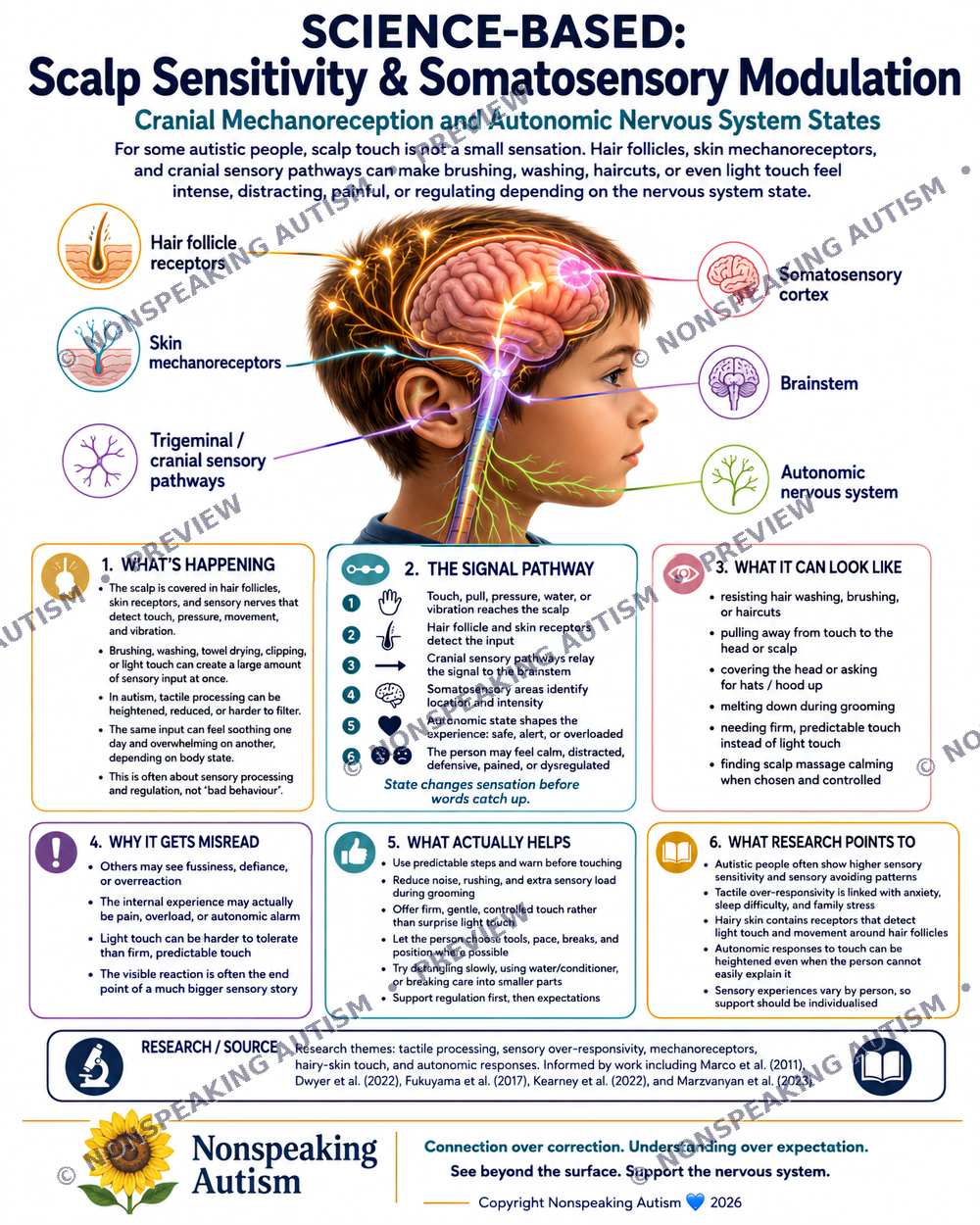
A detailed, research-grounded visual explaining why scalp touch is not a small sensation for some autistic people — hair follicles, skin mechanoreceptors, and cranial sensory pathways can make brushing, washing, haircuts, or light touch feel intense, distracting, painful, or regulating depending on nervous system state.
This infographic covers:
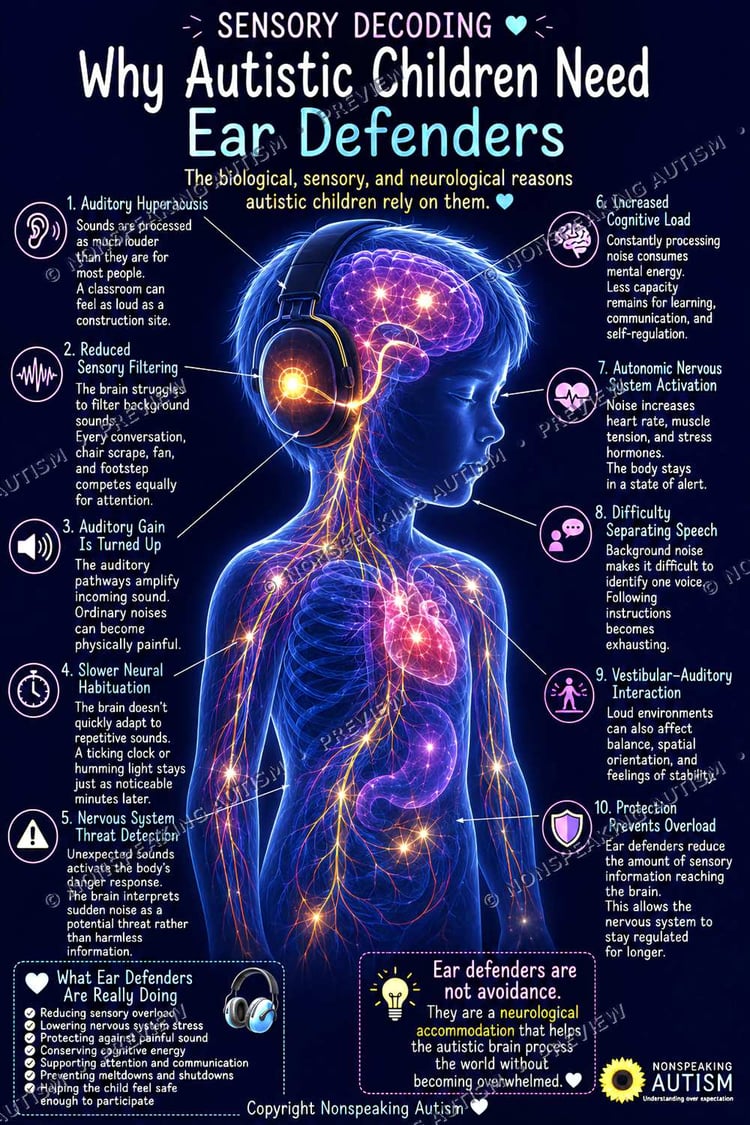
- Anatomical detail: hair follicle receptors, skin mechanoreceptors, trigeminal/cranial sensory pathways, somatosensory cortex, brainstem, autonomic nervous system
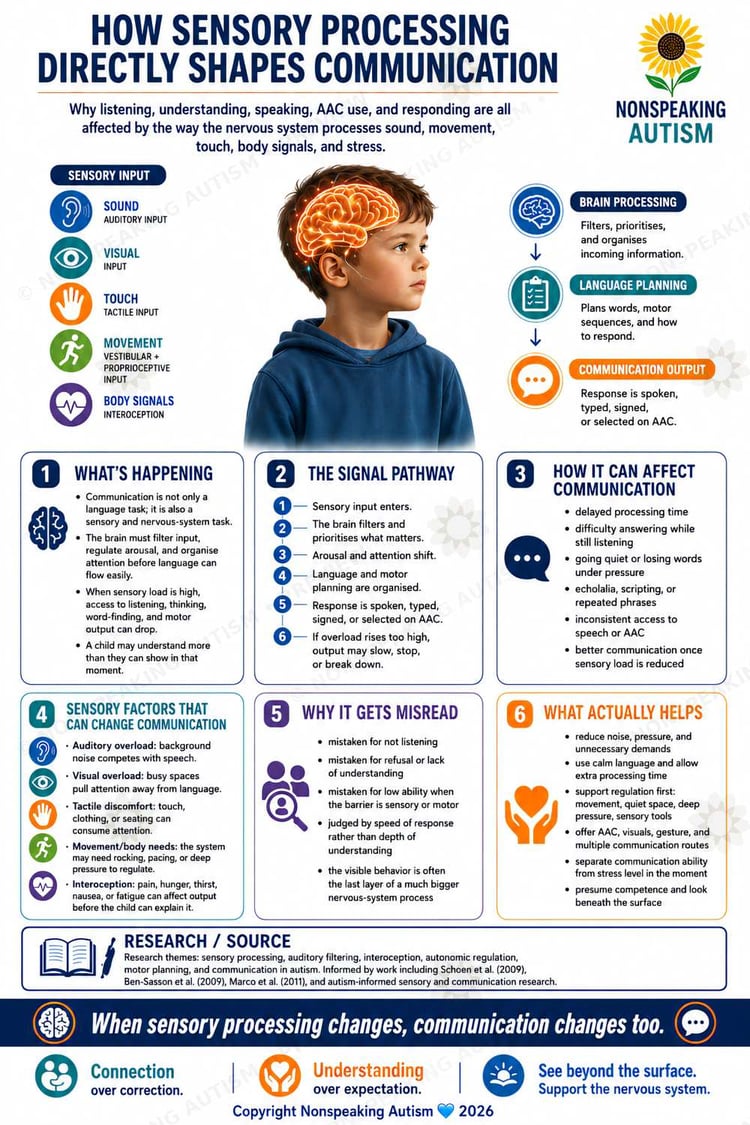
- What's happening: brushing, washing, towel drying, clipping, or light touch can create a large amount of sensory input at once; the same input can feel soothing one day and overwhelming another
- The signal pathway: touch/pull/pressure/water/vibration reaches the scalp → hair follicle and skin receptors detect input → cranial sensory pathways relay to brainstem → somatosensory areas identify location and intensity → autonomic state shapes the experience → the person may feel calm, distracted, defensive, pained, or dysregulated
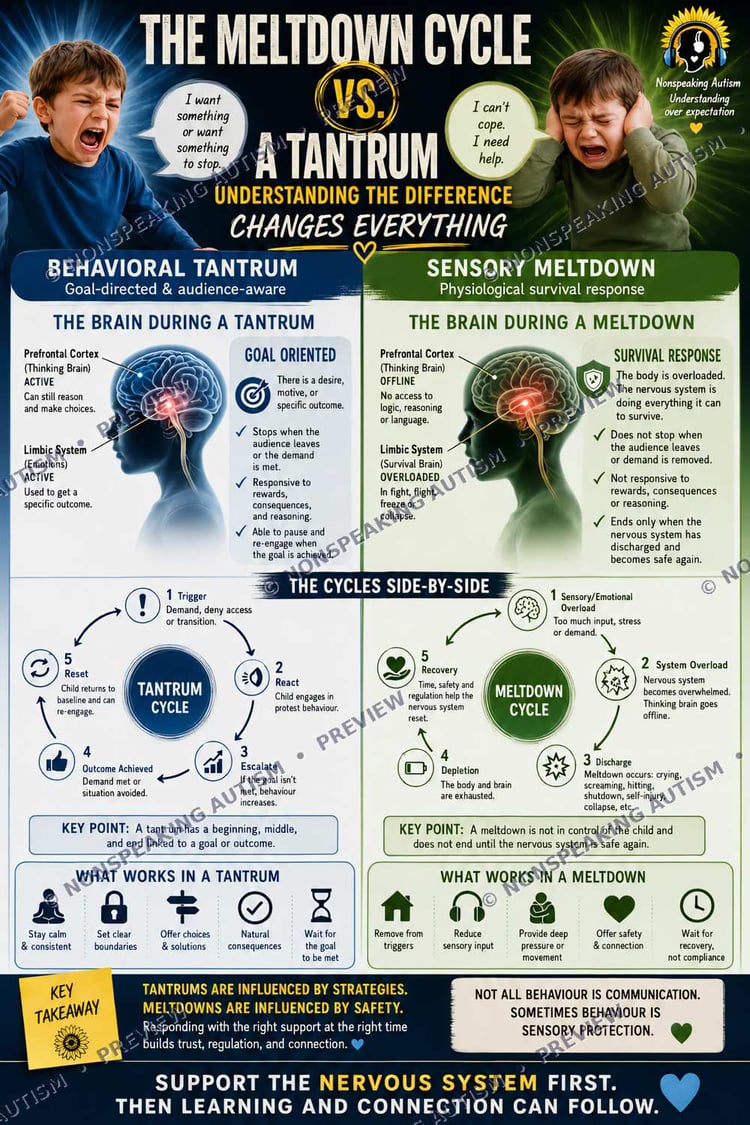
- What it can look like: resisting hair washing/brushing/haircuts, pulling away from touch, covering the head, needing firm predictable touch instead of light touch
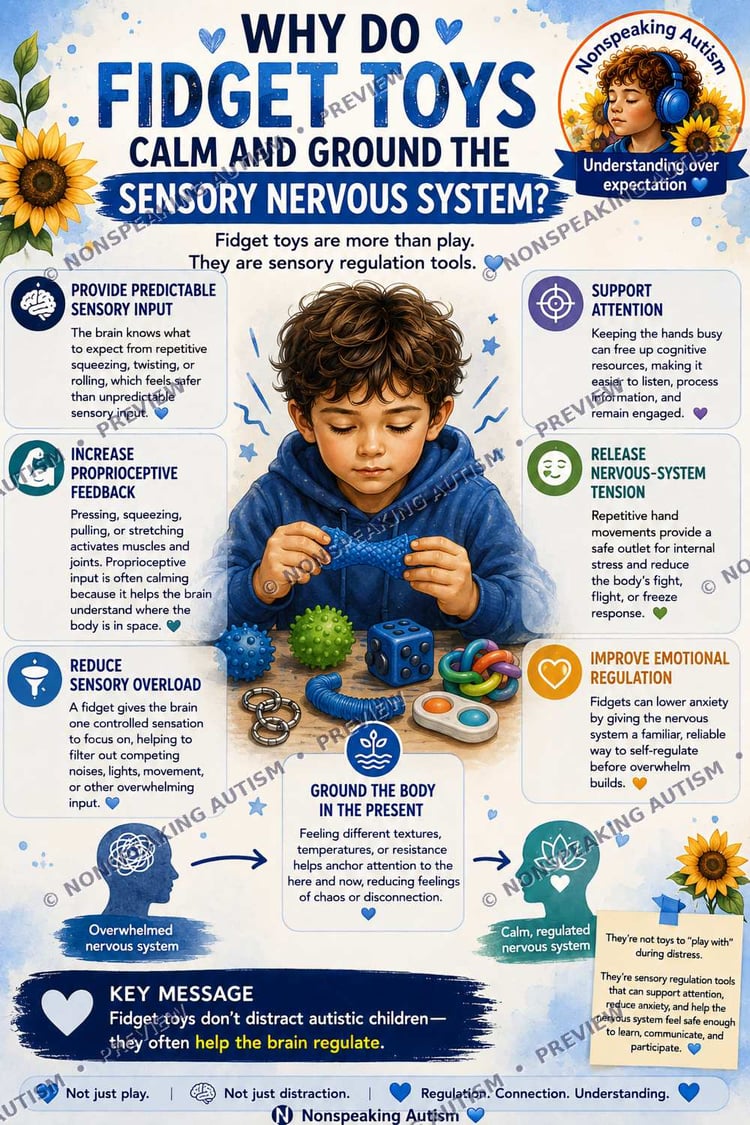
- Why it gets misread: light touch can be harder to tolerate than firm predictable touch; the visible reaction is often the end point of a much bigger sensory story
- What actually helps: use predictable steps and warn before touching, offer firm gentle controlled touch rather than surprise light touch, let the person choose tools/pace/position, support regulation first
- Grounded in peer-reviewed research (Marco et al. 2011; Dwyer et al. 2022; Fukuyama et al. 2017; Kearney et al. 2022; Marzvanyan et al. 2023)
What you get:
- High-resolution PDF, print-ready and scalable up to A2 (420 × 594mm)
- Instant digital download
Perfect for: SEND and clinical training, therapy rooms, staff CPD, parent carer forums, and personal understanding.
For personal, classroom, and professional educational use. Not for resale or redistribution.
© Nonspeaking Autism
Disclaimer:
This resource is intended for educational and informational purposes only. It is designed to support understanding of autism, sensory processing, nervous system regulation, and behaviour from a neurodevelopmental perspective.
The information provided is not medical, psychological, therapeutic, or legal advice and should not be used as a substitute for assessment, diagnosis, or treatment by a qualified healthcare professional.
Every autistic person is unique. Strategies and supports should always be tailored to the individual's needs, strengths, and circumstances.
If a child displays a sudden change in behaviour, severe distress, signs of illness, injury, or behaviours that place themselves or others at risk, seek appropriate medical advice or emergency assistance where necessary.
While every effort has been made to ensure the information is accurate and reflects current understanding, knowledge in autism and neuroscience continues to evolve.
This resource is for the purchaser's personal, educational, or professional use only. It may not be copied, redistributed, resold, edited, shared publicly, or reproduced in whole or in part without prior written permission.
© Nonspeaking Autism 💙