
The Science of Oral Sensory Seeking
The Science of Oral Sensory Seeking
Part 3 of 8 | Nonspeaking Autism
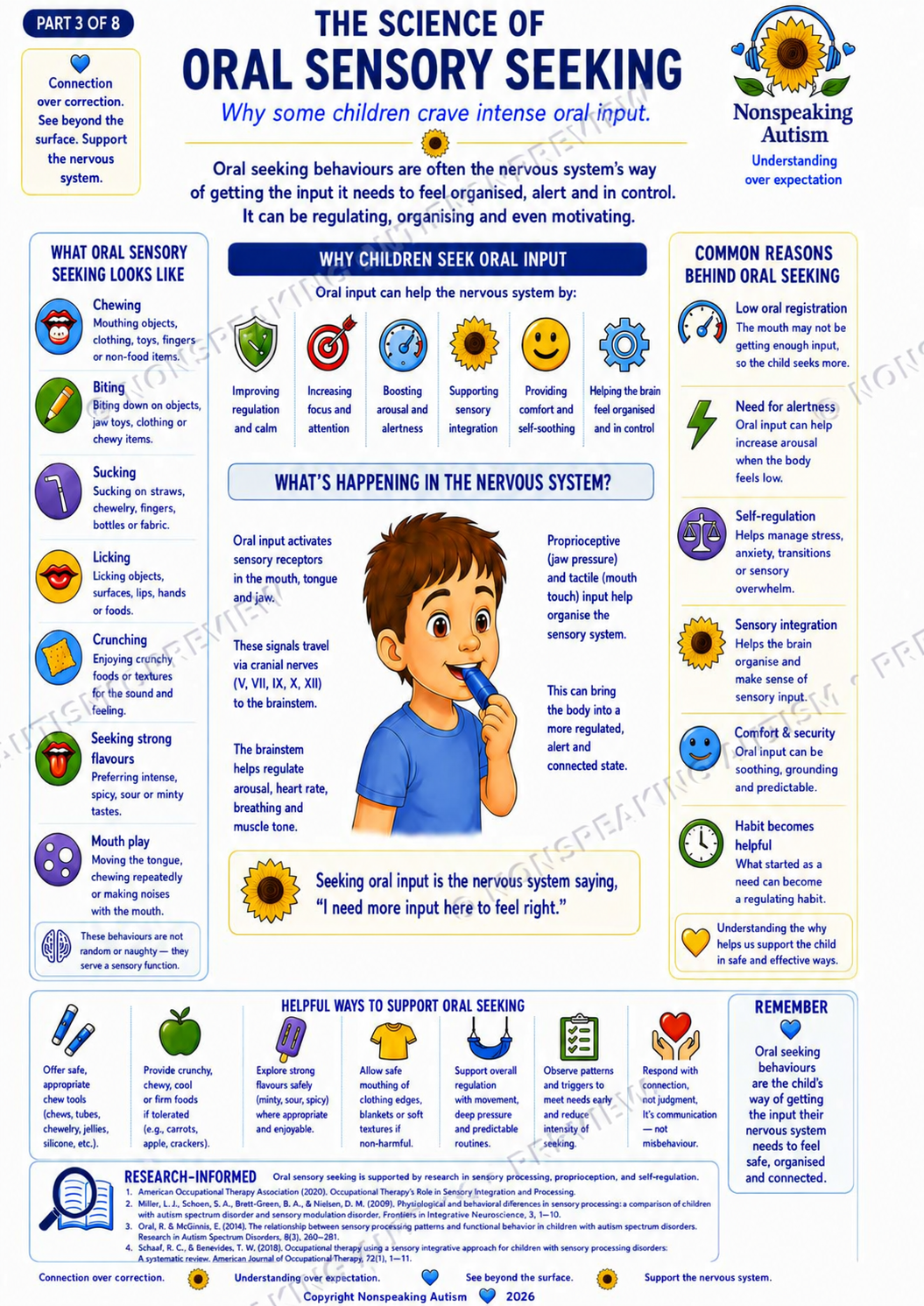
Why do some autistic children chew, bite, suck, lick, crunch or seek strong flavours?
The Science of Oral Sensory Seeking is a clear, visual, research-informed resource designed to help parents, carers, educators and professionals look beyond the behaviour and understand the sensory and nervous-system needs that may be underneath it.
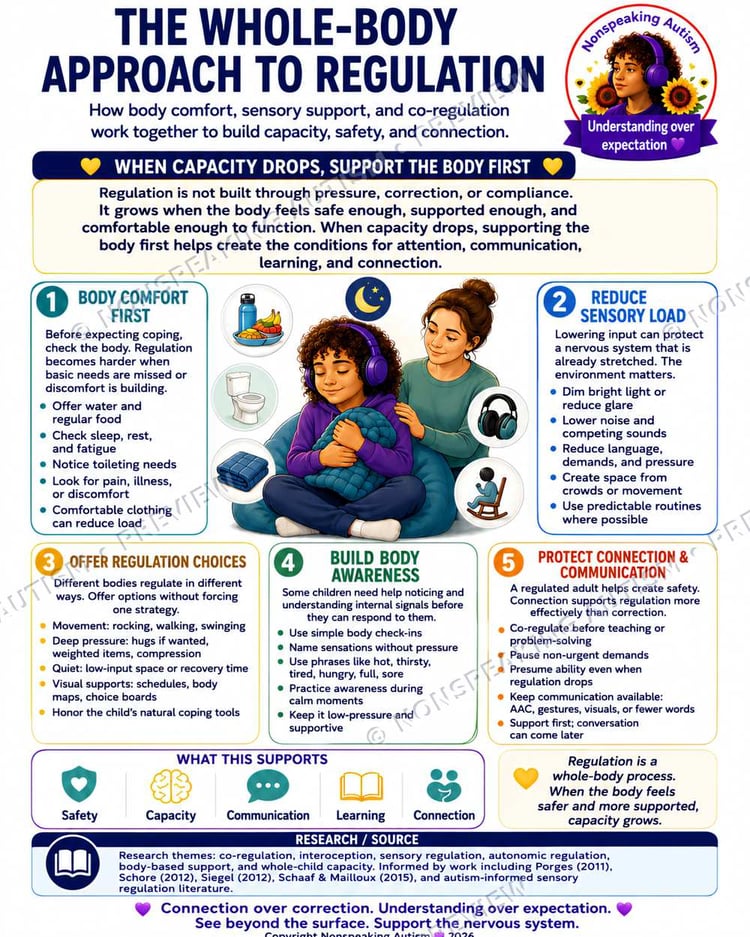
Rather than viewing oral seeking simply as a behaviour to stop, this resource explores how oral sensory input may support regulation, alertness, attention, comfort and sensory organisation.
🌻 Inside this resource:
• What oral sensory seeking can look like
• Why children may seek oral input
• What may be happening in the nervous system
• Common reasons behind oral seeking
• The role of proprioceptive and tactile input
• Practical, supportive ways to respond
• Ideas for safer and appropriate oral sensory input
• Research-informed references for further reading
💙 The key message:
Connection over correction. See beyond the surface. Support the nervous system.
Oral seeking behaviours can be a child's way of getting the sensory input their nervous system needs. Understanding the why can help us respond with greater curiosity, compassion and appropriate support.
Perfect for:
SEND and clinical training, therapy rooms, staff CPD, parent carer forums, and personal understanding.
Your Download
You will receive a high-quality A2 print-ready PDF (420 × 594 mm), ideal for printing and displaying in educational, clinical, workplace, community and training settings.
Usage Licence
Purchasers may print and publicly display this poster in educational, clinical, workplace, community or training settings.
Redistribution, resale, public upload, sharing with third parties, or editing of the digital PDF files is not permitted.
Disclaimer
This resource is provided for educational and informational purposes only. It is intended to support understanding of sensory processing and oral sensory-seeking behaviours and does not constitute medical, diagnostic, therapeutic or professional advice.
Every autistic person is unique, and sensory needs, behaviours and responses can vary considerably. The information and strategies included may not be appropriate for every individual.
Where there are concerns about chewing, swallowing, choking, feeding, nutrition, dental health, pain or safety, please seek advice from an appropriately qualified healthcare professional, such as an occupational therapist, speech and language therapist, dietitian, dentist or doctor.
Any sensory or chew products should be age-appropriate, suitable for the individual, used according to the manufacturer's instructions and supervised where necessary.
Nonspeaking Autism accepts no responsibility for injury, loss or harm arising from the use or misuse of the information contained within this resource.
🌻 Nonspeaking Autism
Connection. Understanding. Belonging.
© Nonspeaking Autism 2026
All rights reserved.