
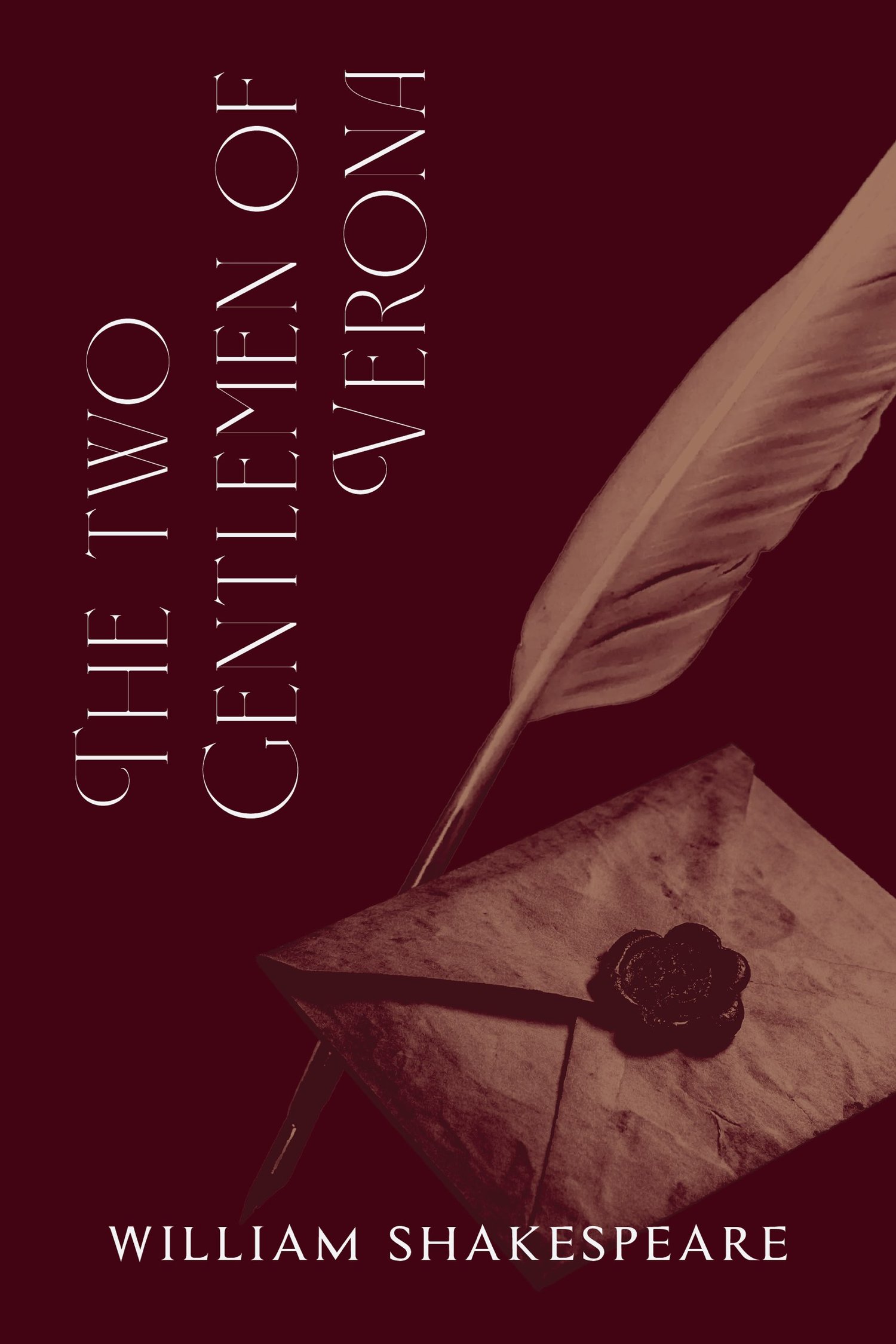
The Two Gentlemen of Verona
William Shakespeare’s The Two Gentlemen of Verona begins with an ideal friendship. Valentine and Proteus are Veronese gentlemen and inseparable companions until Valentine leaves for Milan to seek his fortune while Proteus remains behind, consumed by love for Julia. Their separation seems temporary and their bond unbreakable—until Proteus’s father forces him to Milan too, and everything falls apart. In Milan, Valentine has fallen for Silvia, the Duke’s daughter, and shares his happiness with his best friend. Proteus takes one look at Silvia and decides he wants her for himself, instantly forgetting both Julia and every principle of friendship. What follows is betrayal upon betrayal as Proteus schemes to destroy Valentine’s relationship and claim Silvia as his prize.
Proteus’s villainy escalates shockingly. He reveals Valentine’s plan to elope with Silvia to her father, getting his best friend banished to the forest, where outlaws immediately make Valentine their captain. Then Proteus pursues Silvia himself, pretending friendship while undermining her at every turn. Meanwhile, Julia—a wonderfully resourceful heroine—disguises herself as a male page named Sebastian and follows Proteus to Milan, where she’s forced to witness his courtship of another woman and even deliver his love messages to her rival. The servants provide comic relief: Launce and his dog Crab deliver some of Shakespeare’s funniest monologues as Launce complains about the ungrateful cur who embarrasses him at every opportunity.
The forest finale brings everyone together for a resolution that’s been controversial for four centuries. Proteus corners Silvia and attempts assault, Valentine intervenes, and Proteus suddenly repents. Valentine not only forgives him instantly but offers to give up Silvia to restore their friendship—a moment that has audiences gasping in disbelief. Julia faints, reveals her identity, and Proteus remembers he actually loved her all along. The Two Gentlemen of Verona is Shakespeare’s earliest comedy, and you can see him working out ideas he’d refine in later masterpieces: the cross-dressed heroine, the tension between male friendship and heterosexual romance, and the complexities of forgiveness. While the problematic ending sparks debate, the play offers witty dialogue, one of Shakespeare’s most charming heroines in Julia, and fascinating insight into Elizabethan attitudes about male bonds versus romantic love. It’s minor Shakespeare, but it shows the genius learning his craft.
About the author
William Shakespeare (1564-1616) is widely regarded as the greatest writer in the English language and the world’s preeminent dramatist. Born in Stratford-upon-Avon, he wrote approximately 39 plays and 154 sonnets that have shaped literature, theater, and the English language itself for over four centuries. His works, from tragedies like Hamlet and King Lear to comedies like A Midsummer Night’s Dream and histories like Henry V, explore the full range of human experience with unmatched psychological insight, poetic brilliance, and emotional power. Shakespeare’s influence extends far beyond the stage; his phrases and characters have become woven into the fabric of modern culture, and his exploration of timeless themes—love, power, ambition, jealousy, mortality—continues to resonate with audiences worldwide. Despite the passage of centuries, his work remains startlingly contemporary, speaking to each new generation with fresh relevance and inexhaustible depth.