
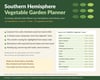
Southern Hemisphere Vegetable Garden Planner
On Sale
ZAR79.00
ZAR 79.00
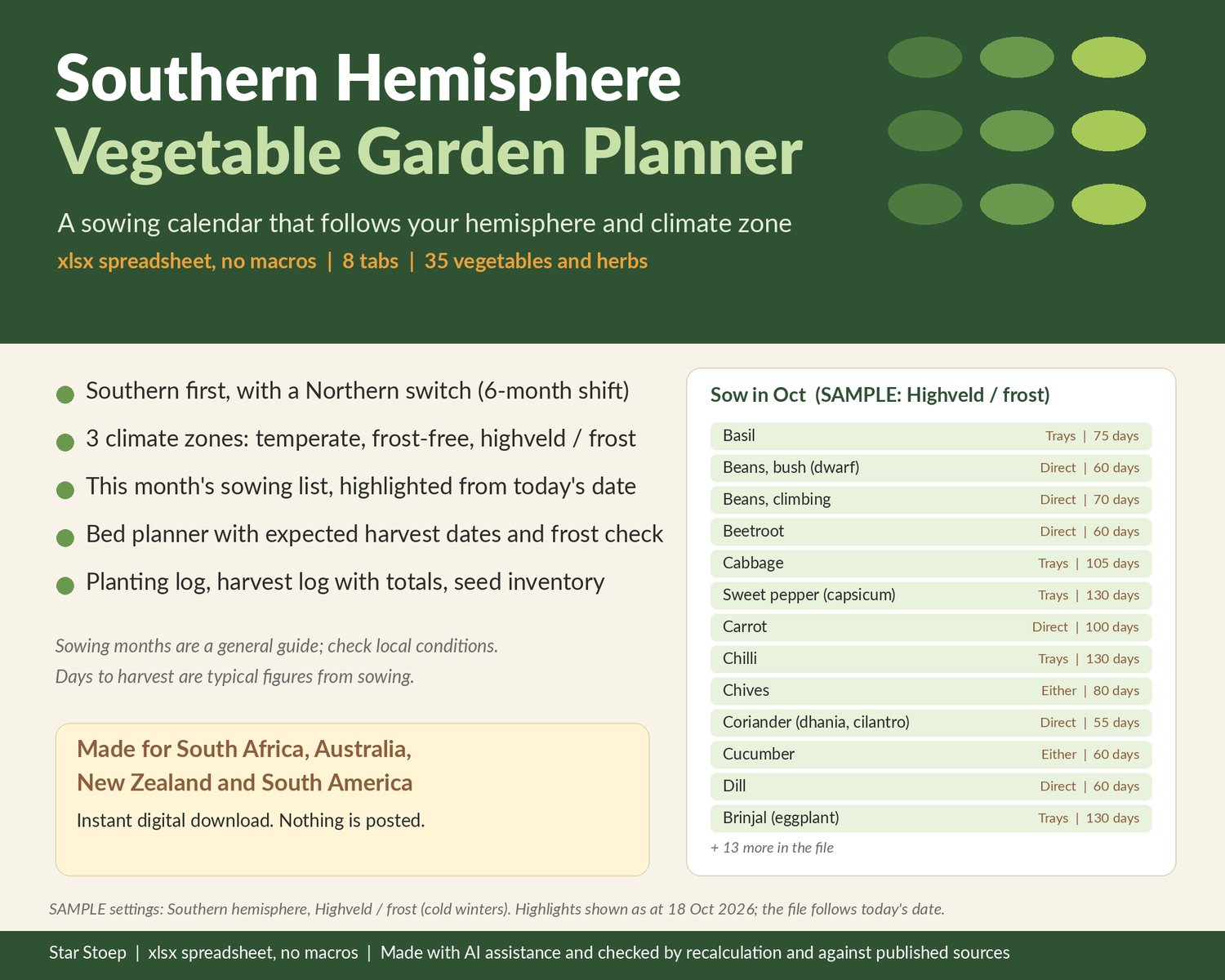
A vegetable garden planner built southern hemisphere first. Choose your hemisphere and climate zone once and the sowing calendar shows what to sow each month, with this month highlighted and listed from today's date. Made for gardeners in South Africa, Australia, New Zealand and South America who are tired of northern hemisphere planting charts, with a Northern switch if you move or garden for someone overseas.
WHAT IT DOES
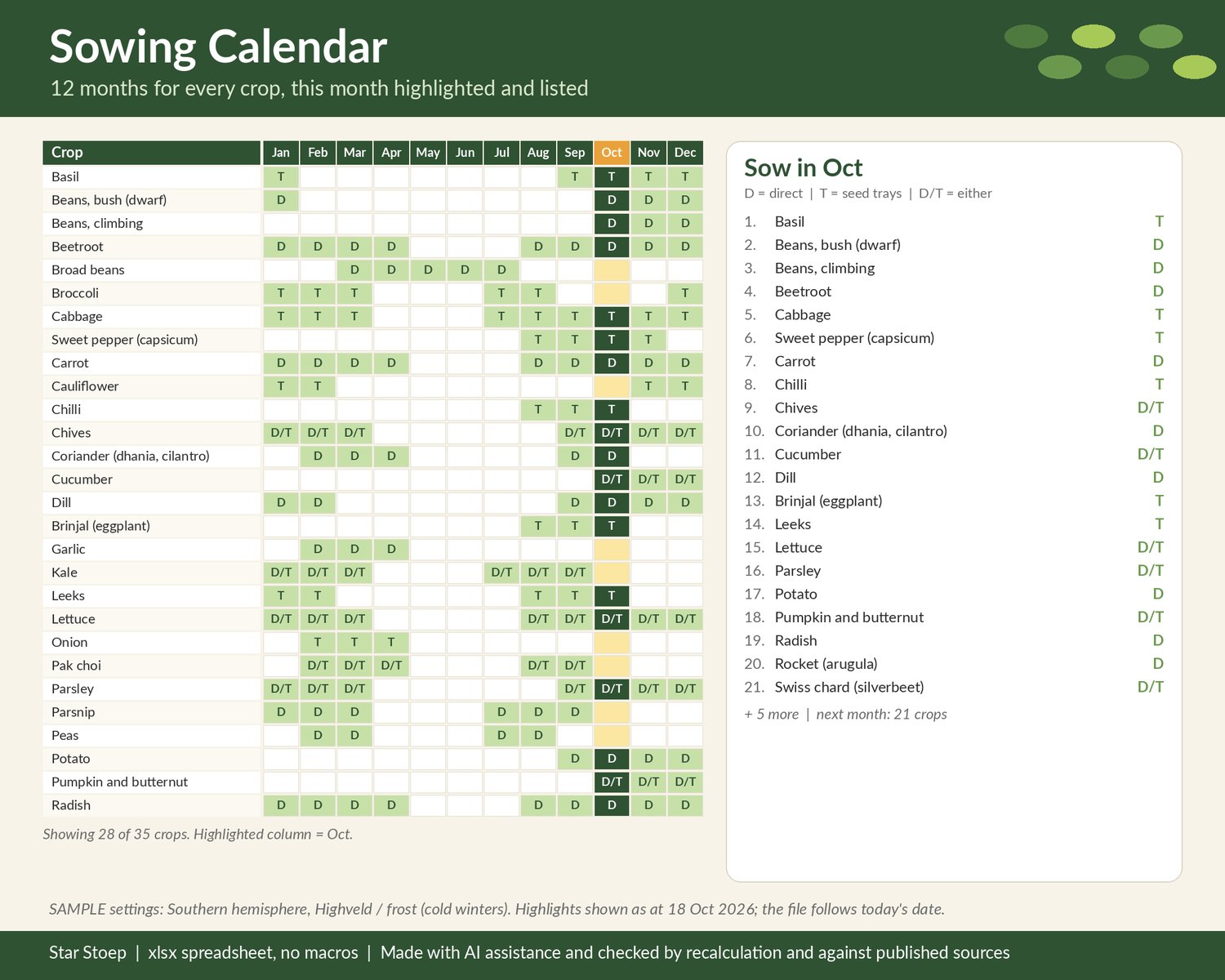
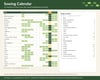
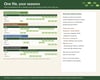
- Sowing Calendar: 12 months for every crop in the library. The current month's column is highlighted and a "Sow this month" list fills in on the right with how to sow (direct or seed trays), days to harvest and a frost note. A "Coming up next month" list sits beside it. Pick any month in Settings to plan ahead.
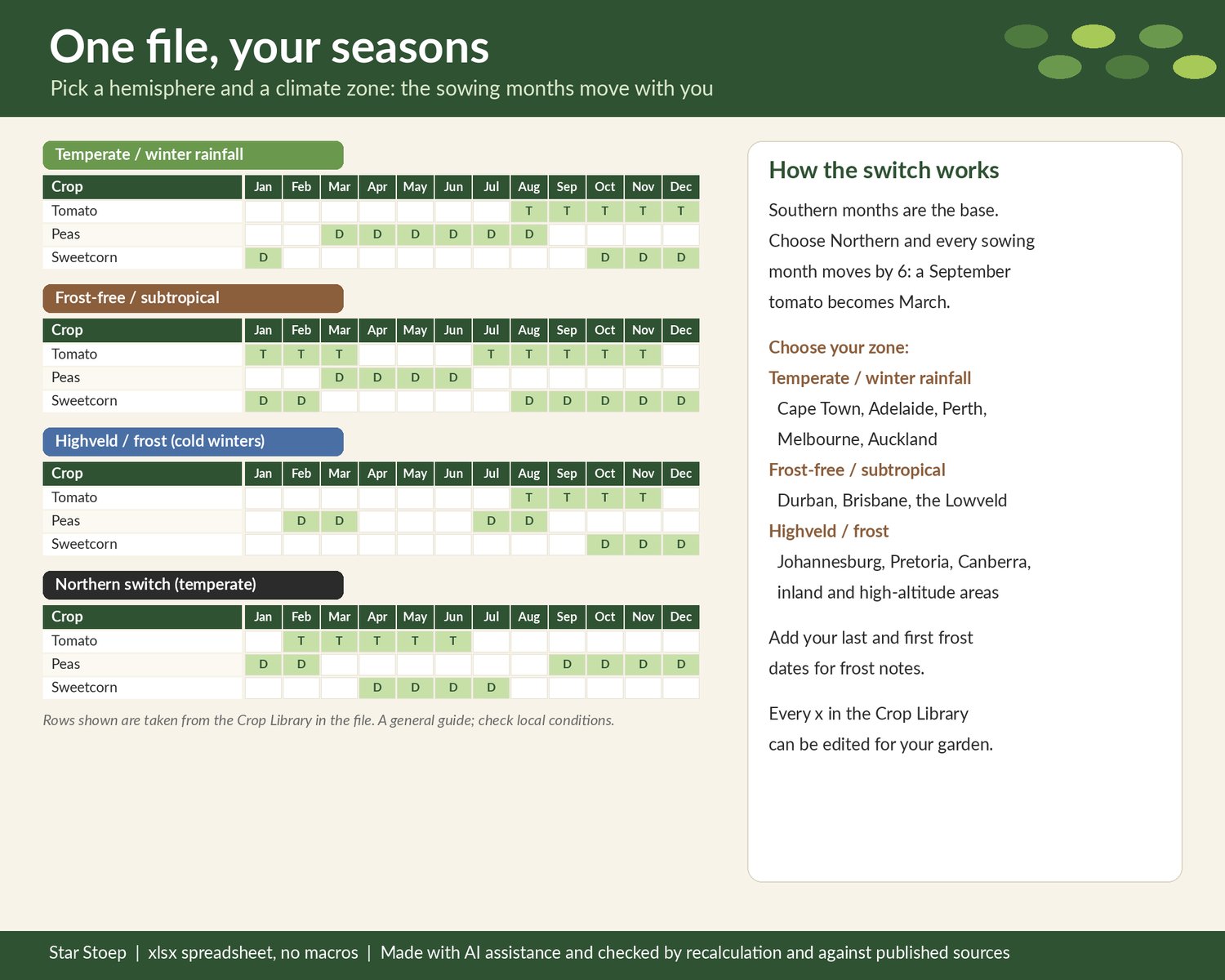
- Hemisphere switch: choose Southern or Northern. Northern moves every sowing month by 6 months.
- 3 climate zones: Temperate / winter rainfall (for example Cape Town, Adelaide, Perth, Melbourne, Auckland), Frost-free / subtropical (for example Durban, Brisbane, the Lowveld) and Highveld / frost with cold winters (for example Johannesburg, Pretoria, Canberra and inland, high-altitude areas).
- Frost dates: type your usual last and first frost dates (or none). Frost-tender crops get a note when it is too early to plant out, or when a crop may not finish before the first frost.
- Crop Library: 35 vegetables and herbs with how to sow, days to harvest, weeks in the tray, spacing, sun, frost tenderness, seed life and sowing months for each zone. Every month mark can be edited, and there are 10 rows for your own crops.
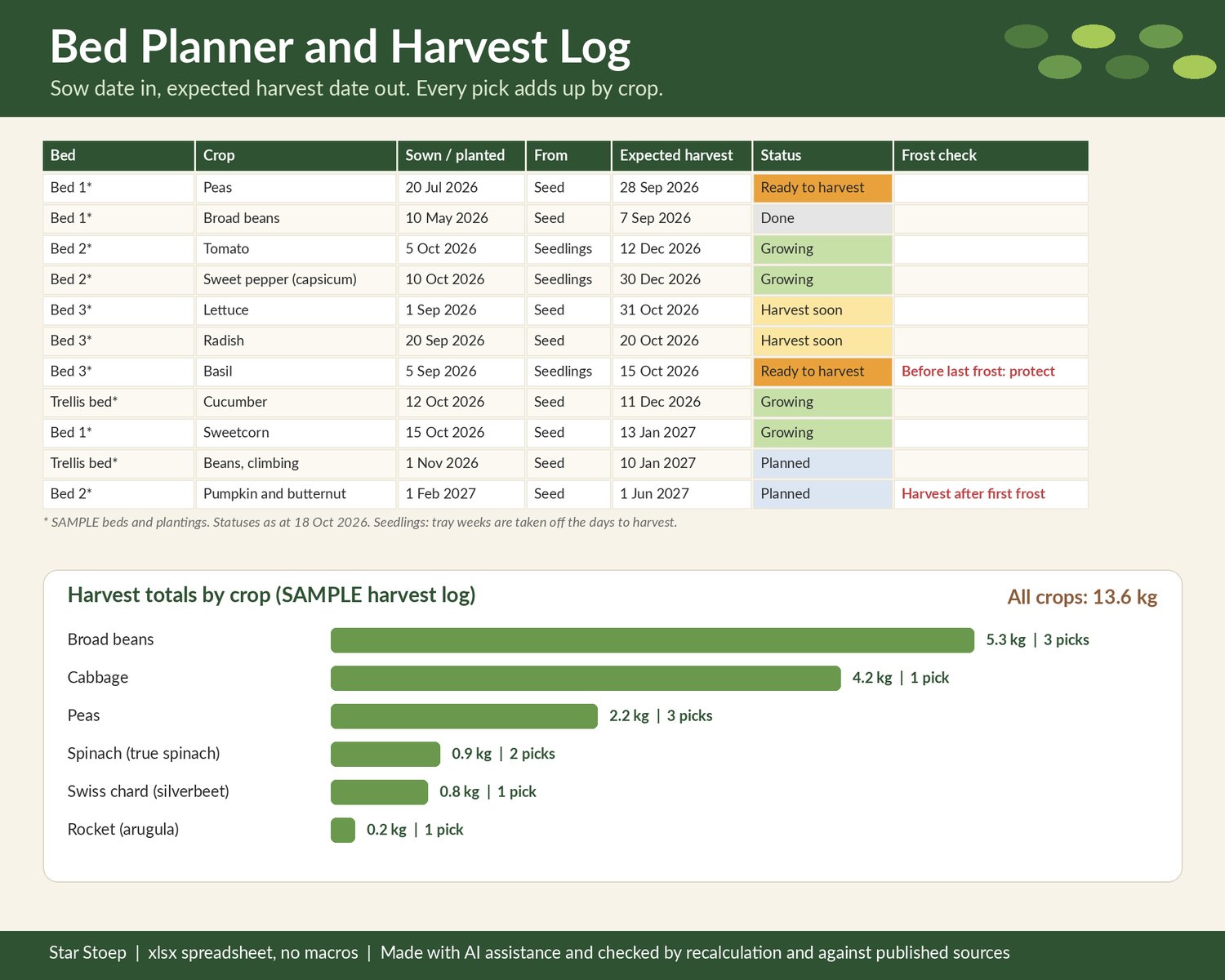
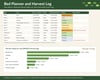
- Bed Planner: list up to 12 beds, then up to 80 plantings. Enter the sow or planting date and the expected harvest date, approximate plant count, status (Planned, Growing, Harvest soon, Ready to harvest, Done) and frost check fill in. Seedlings automatically take the tray weeks off.
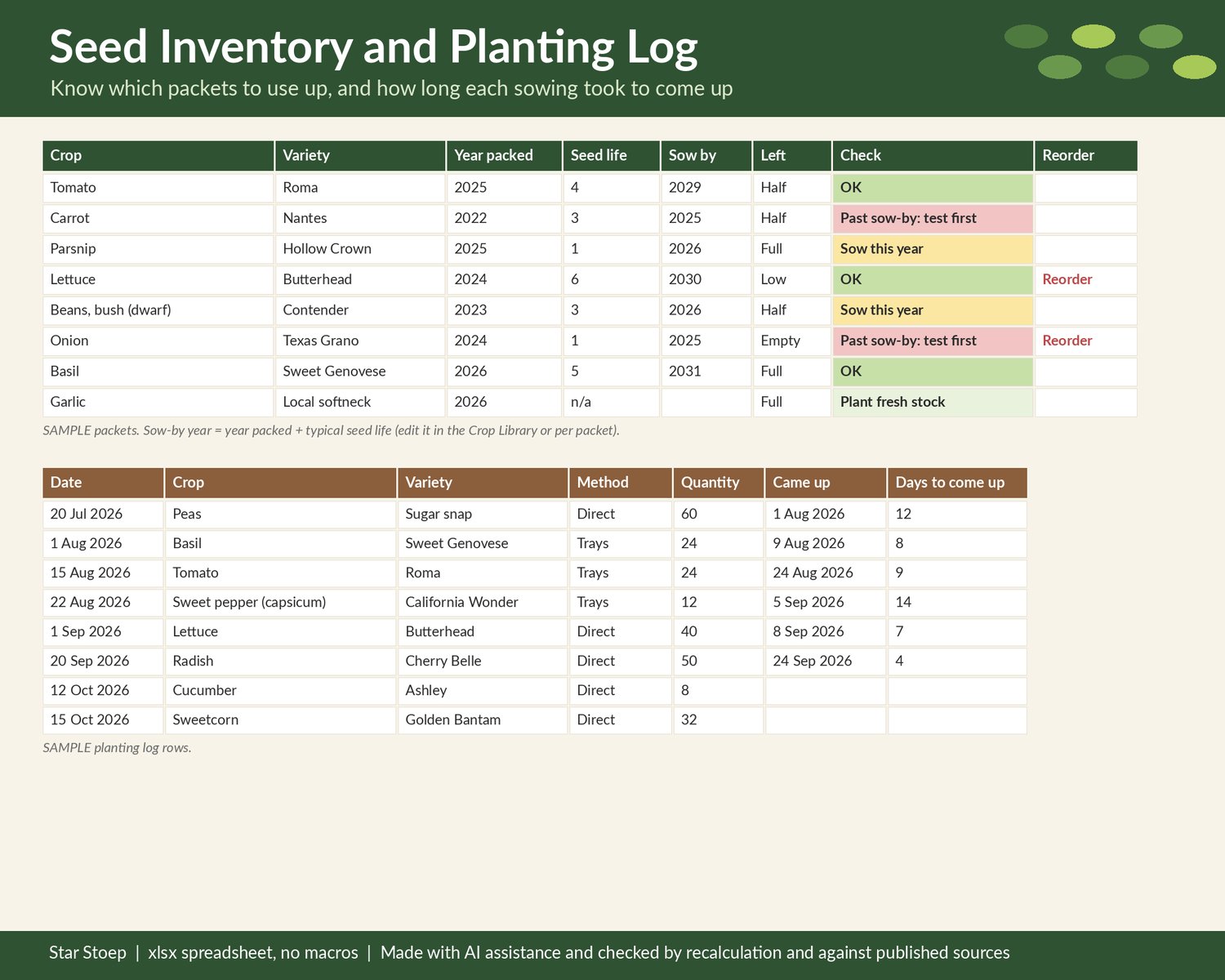
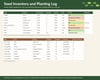
- Planting Log: 150 rows for what you sowed, where, how many and how many days it took to come up.
- Harvest Log: 300 rows in kg or items, with totals by crop, this year's total, number of picks and last harvest date.
- Seed Inventory: 120 packets with a sow-by year (year packed plus typical seed life) and "Past sow-by: test first", "Sow this year" and "Reorder" flags.
WHAT'S INSIDE
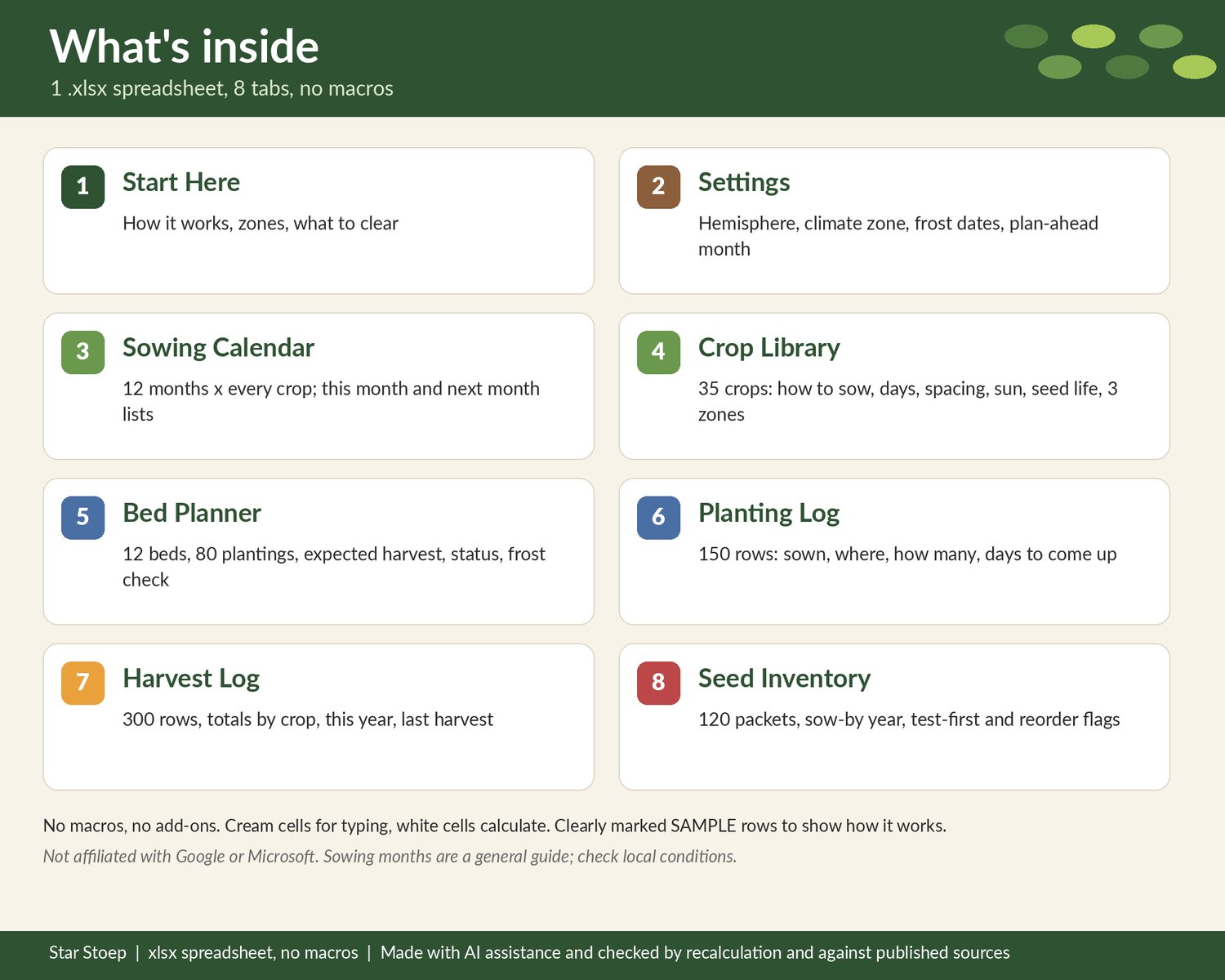
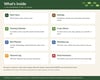
- 1 .xlsx spreadsheet with 8 tabs: Start Here, Settings, Sowing Calendar, Crop Library, Bed Planner, Planting Log, Harvest Log, Seed Inventory
- 35 crops: basil, bush and climbing beans, beetroot, broad beans, broccoli, cabbage, sweet pepper, carrot, cauliflower, chilli, chives, coriander, cucumber, dill, brinjal, garlic, kale, leeks, lettuce, onion, pak choi, parsley, parsnip, peas, potato, pumpkin and butternut, radish, rocket, Swiss chard, spinach, spring onions, sweetcorn, tomato and baby marrow
- Clearly labelled SAMPLE beds, plantings, logs and seed packets so you can see how it works, plus a short list of what to clear
- Cream cells for your input, white cells that calculate. No macros, no add-ons.
HOW TO USE IT
- An .xlsx spreadsheet with no macros. Tested in LibreOffice Calc; not yet opened in Excel or Google Sheets.
- Start with the Start Here tab, then fill in Settings.
GOOD TO KNOW
- Digital download, nothing is posted.
- Checked by recalculation and against published sources.
- Sowing months are a general guide; check local conditions. They were compiled from several published planting guides for each climate type. Your microclimate, altitude, rainfall and the season's weather matter more, so check your seed packets and edit the month marks to suit your garden.
- Days to harvest are typical figures from sowing and vary with variety and weather. Frost notes compare dates only; they cannot predict the weather.
- Not affiliated with Google or Microsoft, or with any seed company.
- Different from our home maintenance schedule: this one is for growing food, with sowing months, beds and harvests.