
Why Transitions Are So Triggering
Why Transitions Are So Triggering — Educational Infographic (Printable, A2)
You will receive the printable unwatermarked version of this infographic
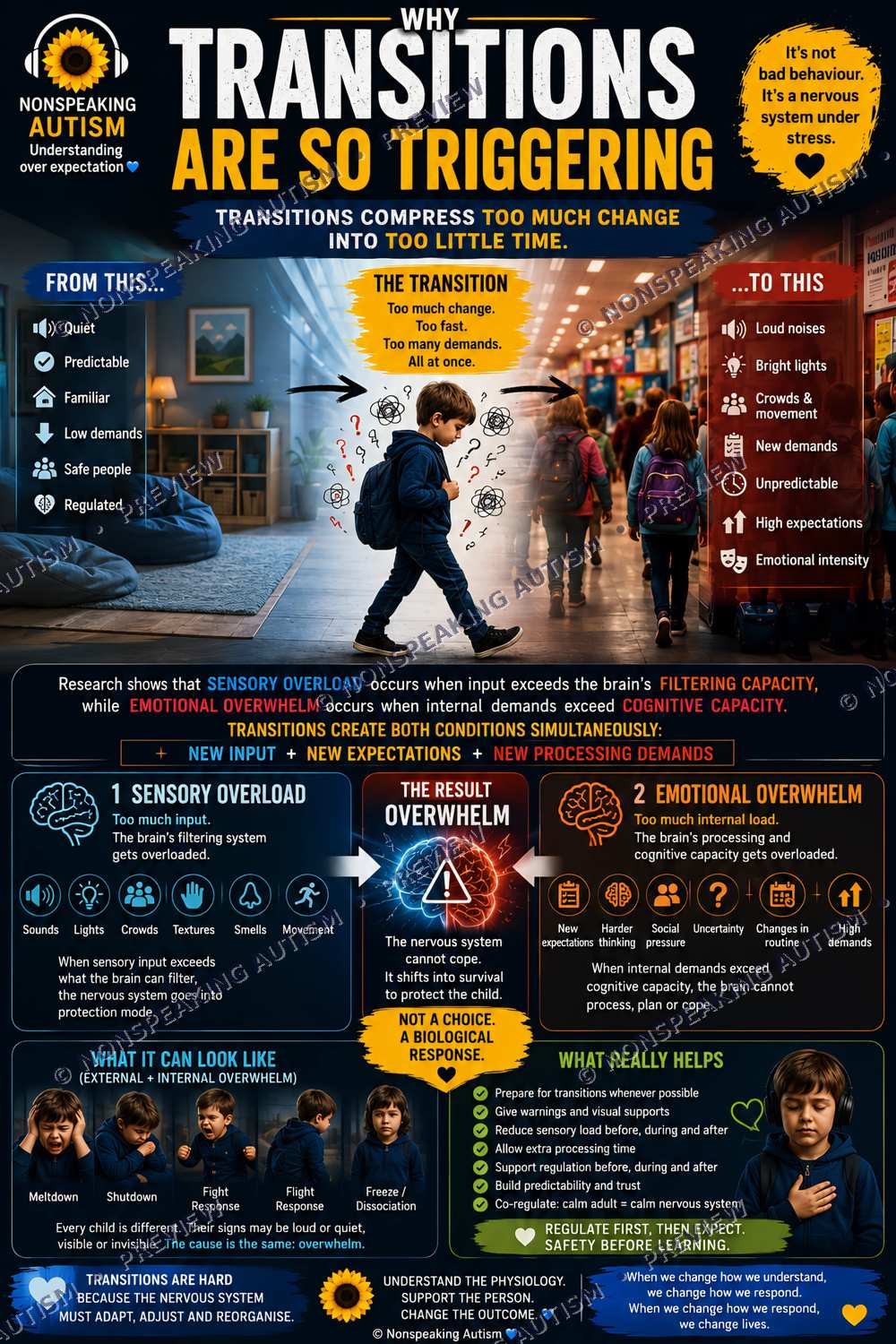
A vivid, research-grounded visual explaining why transitions compress too much change into too little time — and why it's not bad behaviour, it's a nervous system under stress.
This infographic covers:
- From this (quiet, predictable, familiar, low demands, safe people) to this (loud noises, bright lights, crowds, new demands, unpredictable, high expectations)
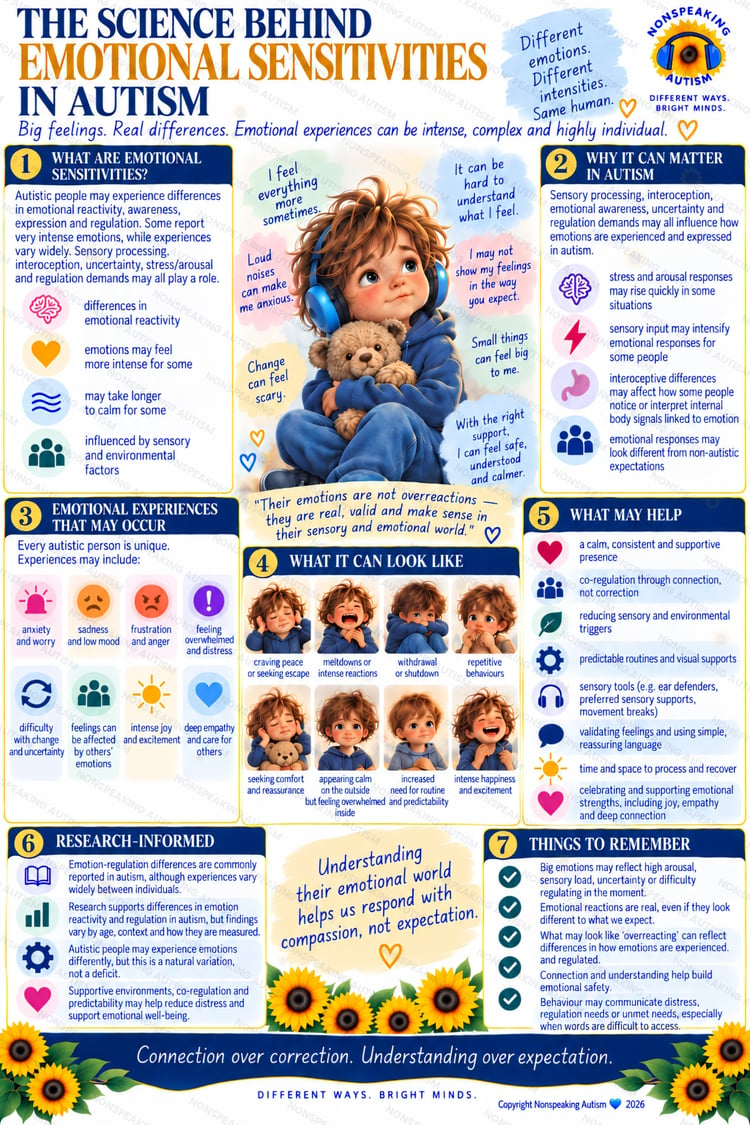
- Two conditions transitions create simultaneously: sensory overload (input exceeding the brain's filtering capacity) and emotional overwhelm (internal demands exceeding cognitive capacity)
- Sensory overload triggers: sounds, lights, crowds, textures, smells, movement
- Emotional overwhelm triggers: new expectations, harder thinking, social pressure, uncertainty, changes in routine, high demands
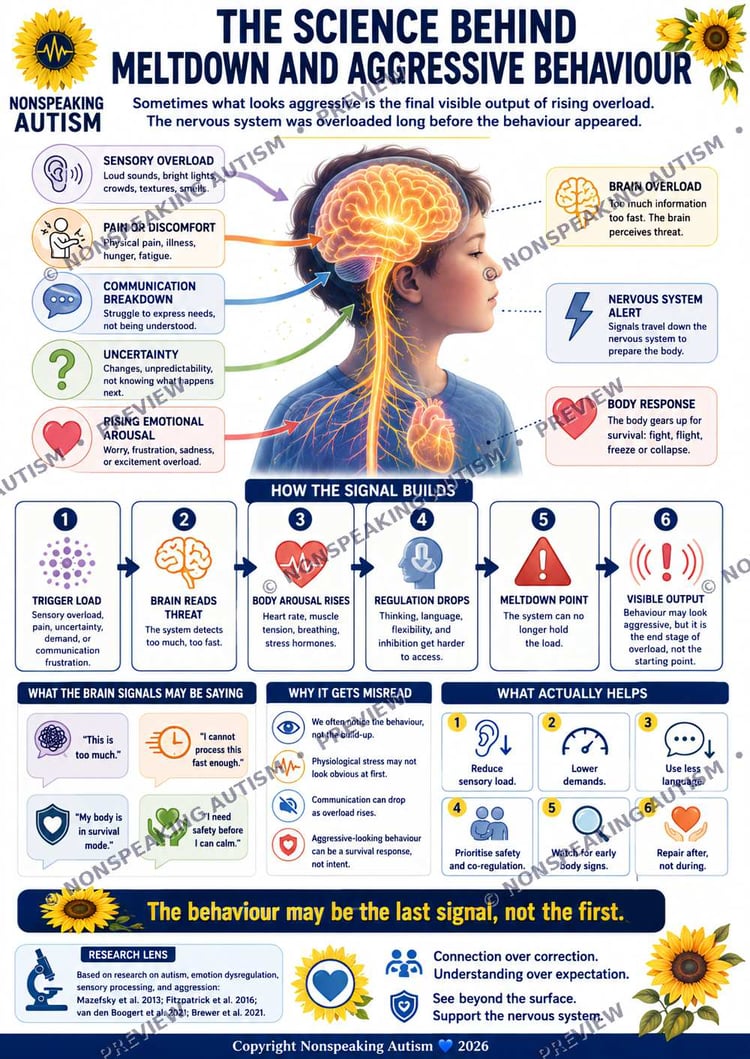
- What it can look like: meltdown, shutdown, fight response, flight response, freeze/dissociation — every child different, the cause the same
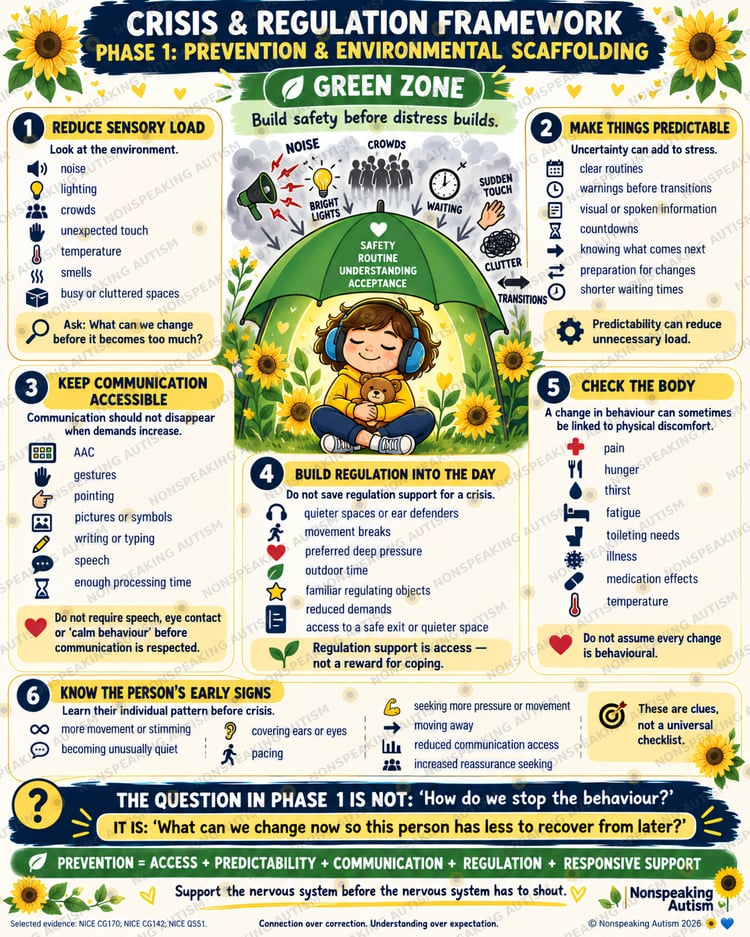
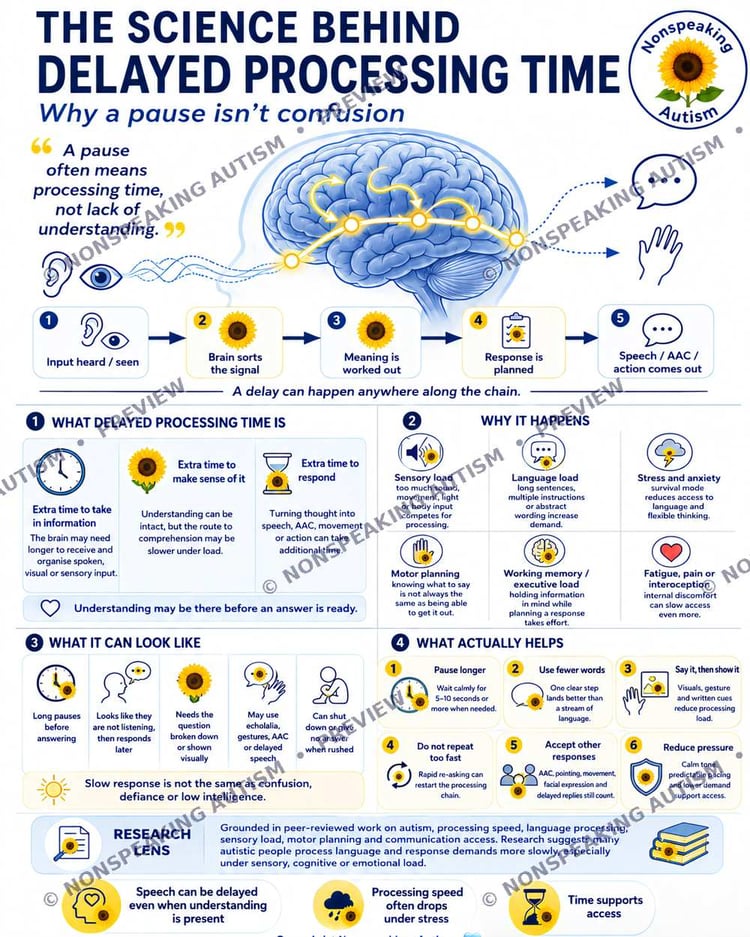
- What really helps: prepare for transitions, give warnings and visual supports, reduce sensory load, allow extra processing time, co-regulate — regulate first, then expect
What you get:
- High-resolution PDF, print-ready and scalable up to A2 (420 × 594mm)
- Instant digital download
Perfect for: SEND training, schools, therapy rooms, staff CPD, parent carer forums, and home use.
For personal, classroom, and professional educational use. Not for resale or redistribution.
© Nonspeaking Autism
Disclaimer:
This resource is intended for educational and informational purposes only. It is designed to support understanding of autism, sensory processing, nervous system regulation, and behaviour from a neurodevelopmental perspective.
The information provided is not medical, psychological, therapeutic, or legal advice and should not be used as a substitute for assessment, diagnosis, or treatment by a qualified healthcare professional.
Every autistic person is unique. Strategies and supports should always be tailored to the individual's needs, strengths, and circumstances.
If a child displays a sudden change in behaviour, severe distress, signs of illness, injury, or behaviours that place themselves or others at risk, seek appropriate medical advice or emergency assistance where necessary.
While every effort has been made to ensure the information is accurate and reflects current understanding, knowledge in autism and neuroscience continues to evolve.
This resource is for the purchaser's personal, educational, or professional use only. It may not be copied, redistributed, resold, edited, shared publicly, or reproduced in whole or in part without prior written permission.
© Nonspeaking Autism 💙