Kindergarten Observation and Assessment Toolkit
Not sure where your kindergartner is academically? Not sure if you should worry or relax? This toolkit gives you the full picture.
The Kindergarten Observation and Assessment Toolkit combines two approaches: observation guides that help you notice how your child learns in everyday life, and hands-on assessment activities you do together to find their working level in math, reading, and writing. You can use one approach or both.
This is not a standardized test. It is a parent-friendly set of tools designed to help you understand your child so you can make confident decisions about curriculum, pacing, and where to start.
What's inside:
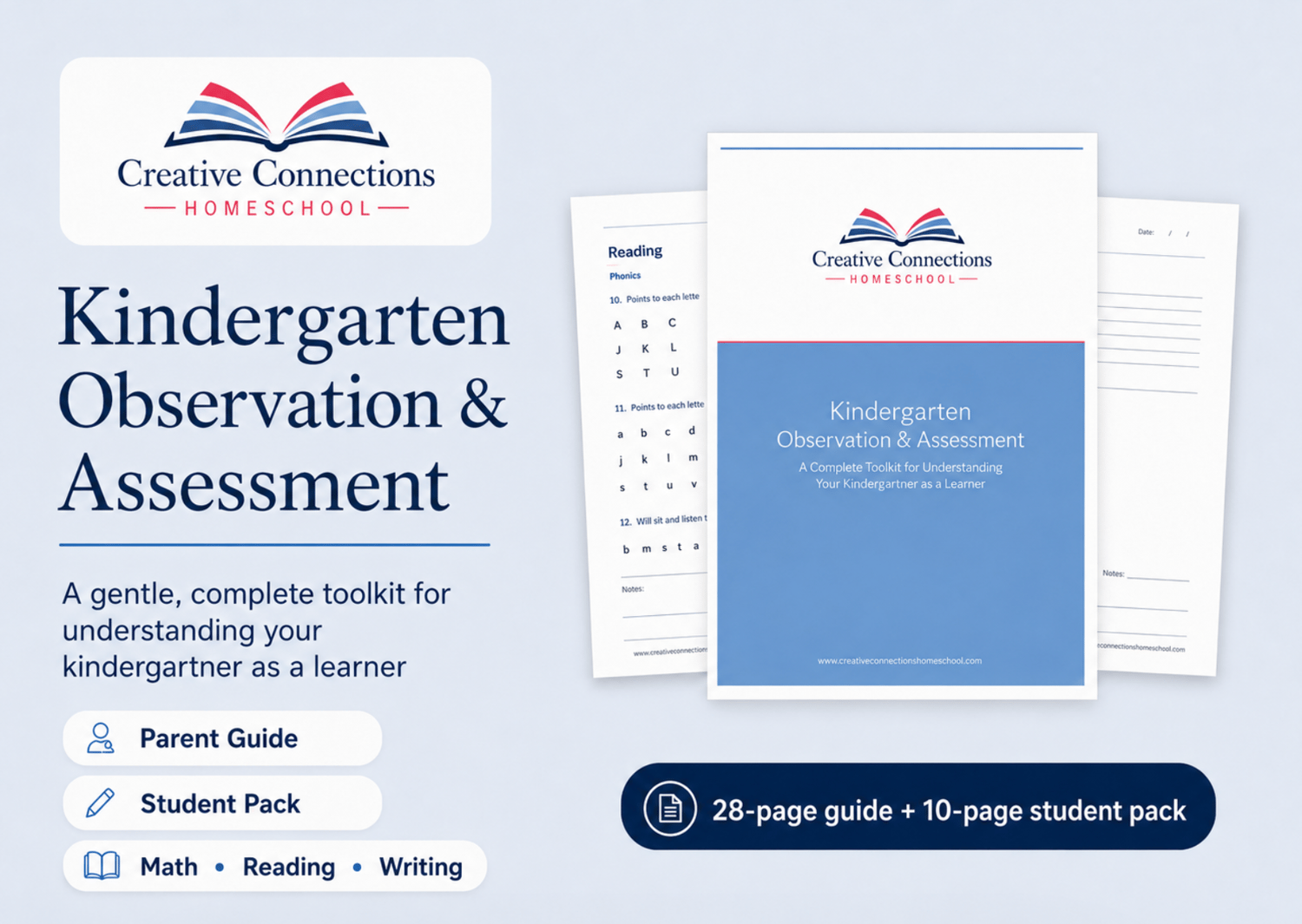
Parent Guide (28 pages)
- Observation guide for watching your kindergartner in everyday moments
- Complete skill checklist covering math, reading, writing, social-emotional development, and fine motor skills
- Step-by-step instructions for every assessment activity with space to record results
- "How Your Child Engages Best" section to help you understand how your child learns, not just what they know
- Weekly observation journals and an interests and strengths snapshot
- Action plan template to turn your results into a clear starting point
- Red flags vs. normal variation guide so you know when to relax and when to ask questions
- Curriculum recommendations for every skill level (with free options included)
Student Assessment Pack (10 pages)
- Printable, child-friendly pages your kindergartner works through with you
- Covers counting, number recognition, addition and subtraction, shapes, patterns, letter recognition (uppercase and lowercase), letter sounds, rhyming, name writing, letter formation, and early writing
- Designed to feel like a game, not a test
Who this is for:
This toolkit is for homeschool parents who want a clear, honest picture of where their kindergartner is right now. Whether you are just starting out and need to know where to begin, partway through the year and wondering if your approach is working, or planning ahead for first grade, this gives you the information you need to move forward with confidence.
Every child develops at their own pace. A child who is not reading at 5 is not behind. This toolkit helps you meet your child where they are.
What you'll need:
Pencil and paper, crayons or markers, small objects to count (blocks, buttons, cereal pieces), a favorite picture book, and letter cards or magnets. Keep each activity session to about 5 to 10 minutes.
Format: Instant PDF download (2 files). Print at home or use on a tablet.
Created by Erika, founder of Creative Connections Homeschool. 20+ years in education as a special education teacher, reading specialist, and private tutor. 8+ years homeschooling three children. Founder of Creative Connections Learning, a homeschool enrichment center serving hundreds of families.