6th Grade Observation and Assessment Toolkit
Know exactly where your sixth grader is, so you can meet them there.
Sixth grade is middle school, whether or not you call it that. The math is pre-algebra: ratios, negative numbers, expressions and equations, percent. The reading is analytical: evaluating arguments, identifying evidence, questioning the author's choices. The writing is persuasive: structured essays with claims, evidence, and counterarguments.
If your child has been coasting on natural ability, this is the year where effort starts to matter. If they've been struggling, this is where the right support makes the difference between falling further behind and closing the gap for good.
This toolkit gives you everything you need to understand your child's working level in math, reading, and writing, plus how they learn best, what's normal at this age, and where to go next.
No teaching degree required. No stressful testing. Just practical tools designed by a reading specialist and 20-year educator who has worked with hundreds of homeschool families.
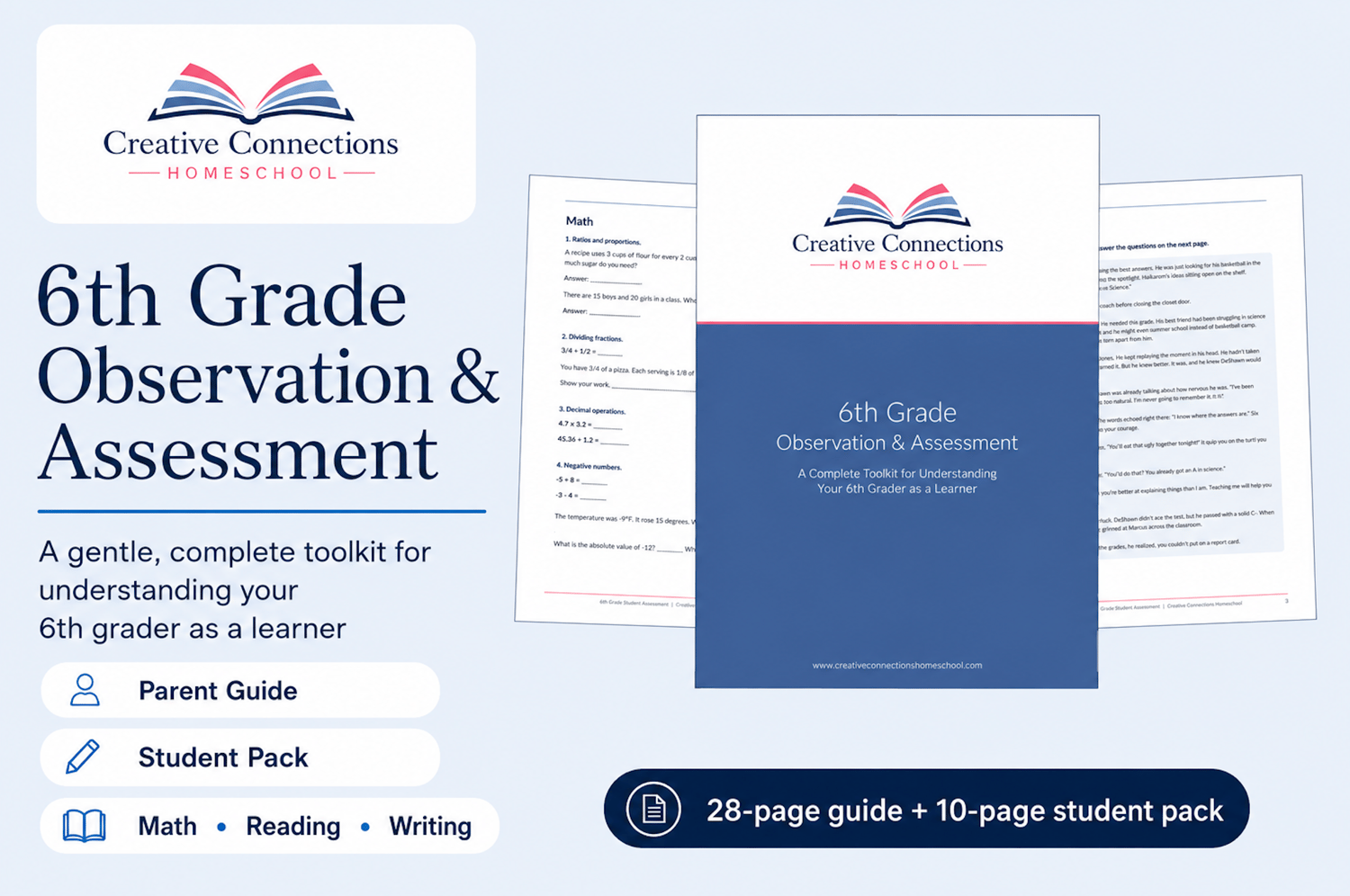
What's included (2 printable PDFs):
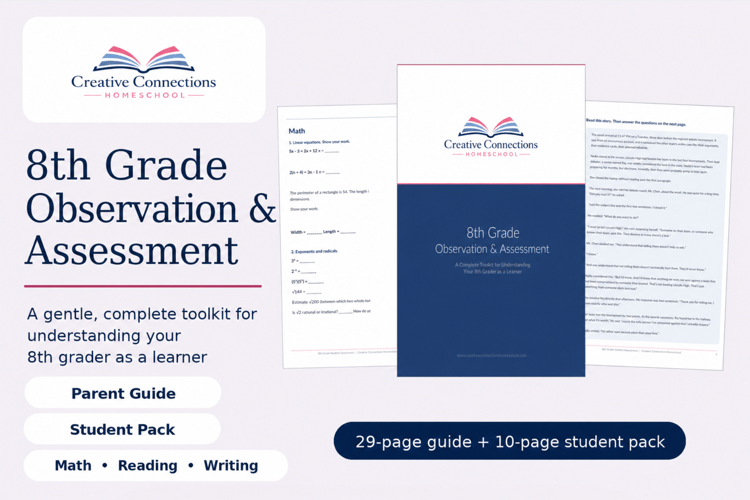
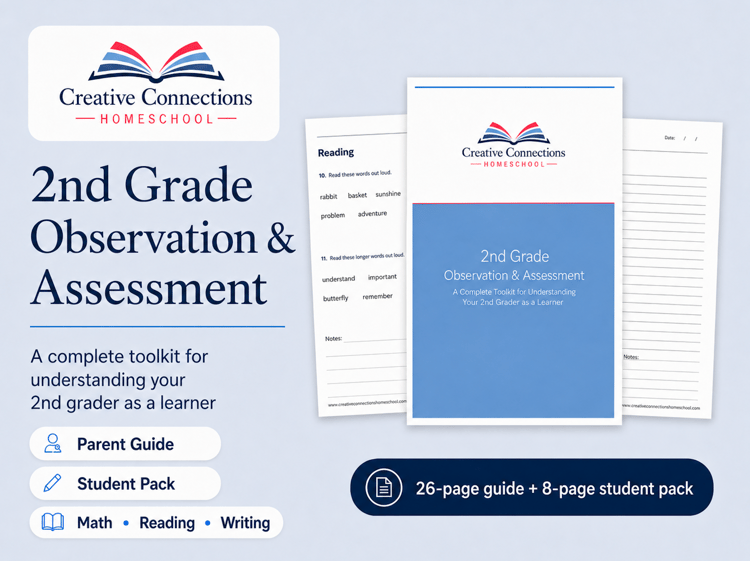
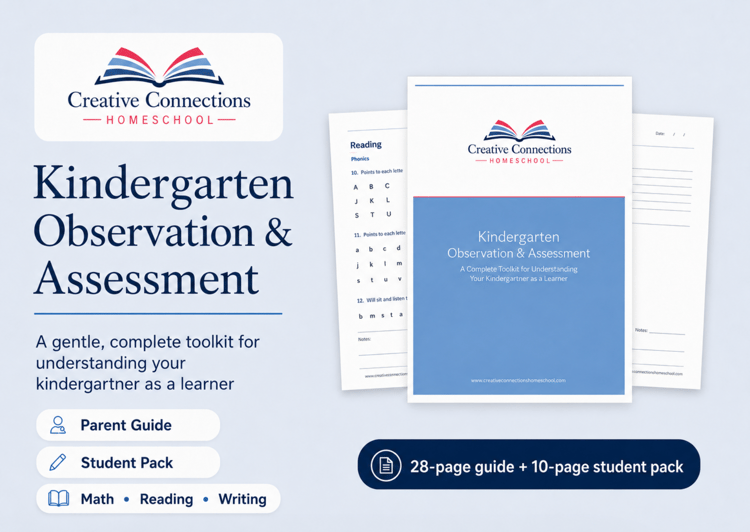
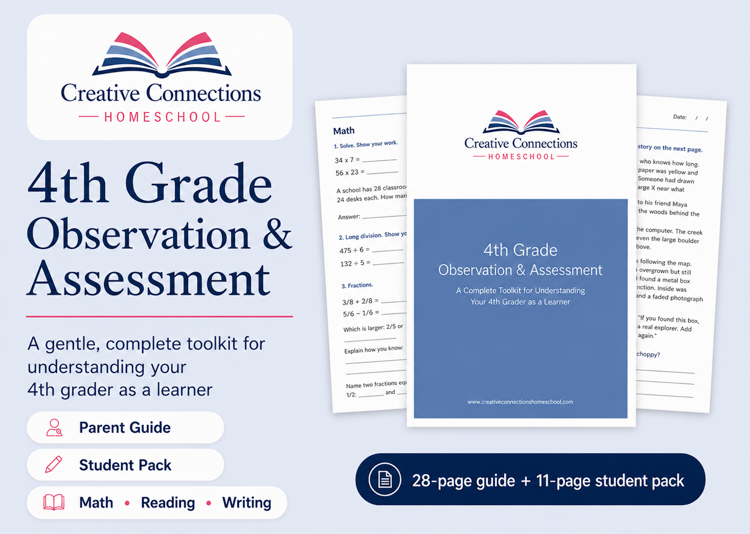
Parent Guide (28 pages)
- Observation guide for noticing how your child learns in everyday life
- Complete 6th grade skill checklist (math, reading, writing, social-emotional, study skills)
- Assessment activities with simple Got it / Getting there / Not yet scoring
- "How Your Child Engages Best" learning preference checklist
- Weekly observation journals and recording pages
- Red flags vs. normal variation guide
- Writing rubric calibrated to 6th grade expectations (claims with evidence, counterarguments, semicolons)
- Answer key for all assessment activities
- Action plan template to turn your results into a plan
- Grade-appropriate curriculum recommendations organized by readiness level
- 6th Grade Snapshot summary page
Student Assessment Pack (10 pages)
- Printable activities your child completes independently while you observe
- Math: ratios and proportions, dividing fractions, decimal operations, negative numbers and absolute value, expressions and equations, percent, area and volume
- Reading: two original passages (a fiction story exploring an ethical dilemma and a nonfiction passage requiring argument evaluation) with theme analysis, character development, evidence identification, and text structure questions
- Writing: argumentative essay with counterargument, explanatory text, and dictation
- Designed for short sessions (15-20 minutes) with no-pressure instructions
This toolkit is for you if:
- You're homeschooling a sixth grader and want a clear picture of where they are
- You need to know if your child is ready for pre-algebra
- You're choosing curriculum and want to match it to your child's actual level
- You're transitioning from school to homeschool and need a baseline
- You want to identify strengths and gaps before the high school clock starts ticking
What makes this different: This is not a standardized test. It combines real-world observation with hands-on assessment activities so you get a full picture of your child, not just a score. The original reading passages were written specifically for this toolkit and are designed to test analytical thinking, not just comprehension. The writing rubric gives you a clear framework for evaluating persuasive writing. And the curriculum recommendations are organized by readiness level, with specific program suggestions for every scenario.
Created by Erika, founder of Creative Connections Homeschool, with 20+ years in education as a special education teacher, reading specialist, and private tutor.
File Delivery Note
Instant download. You will receive 2 PDF files. Print at home and use as many times as you need.