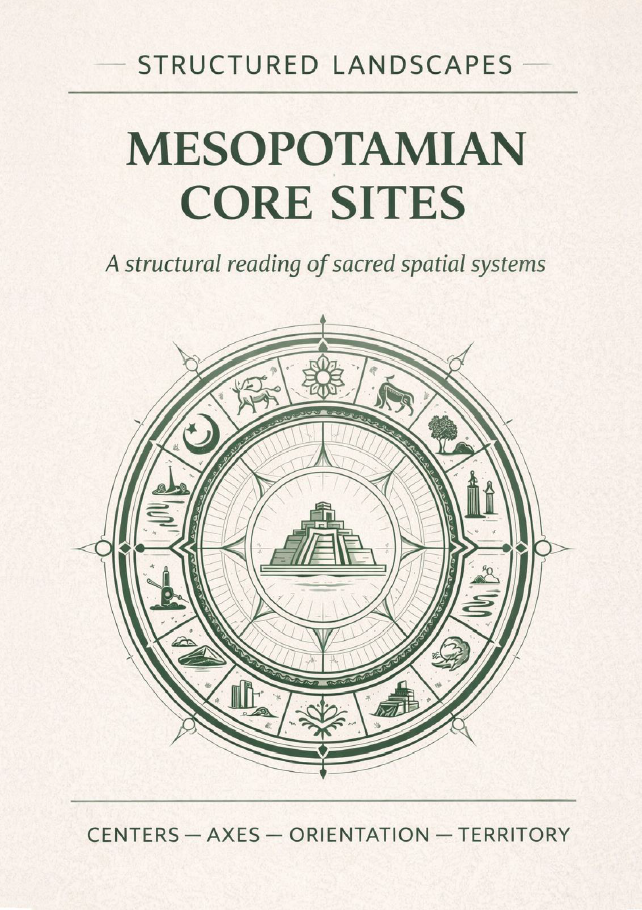



Mesopotamian Core Sites. A Structural Reading of Sacred Spatial Systems
Before cities, there were structures. Before history, there was orientation.
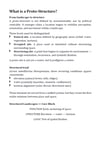
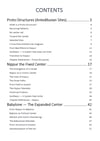
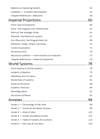
Mesopotamian Core Sites is not a study of ancient places. It is a structural reading of how space was first organized. From Eridu to Nippur, from early platforms to monumental centers, this volume explores the emergence of a system where:
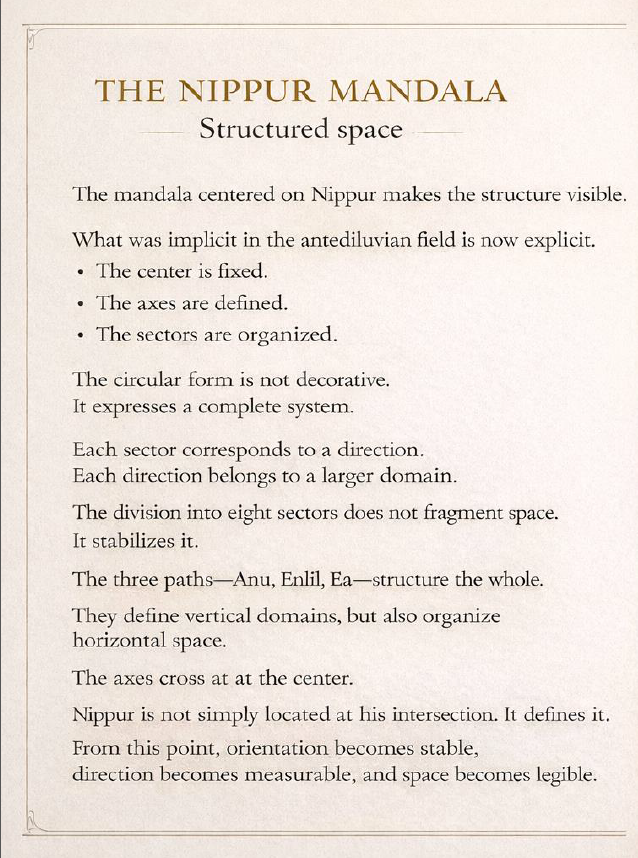
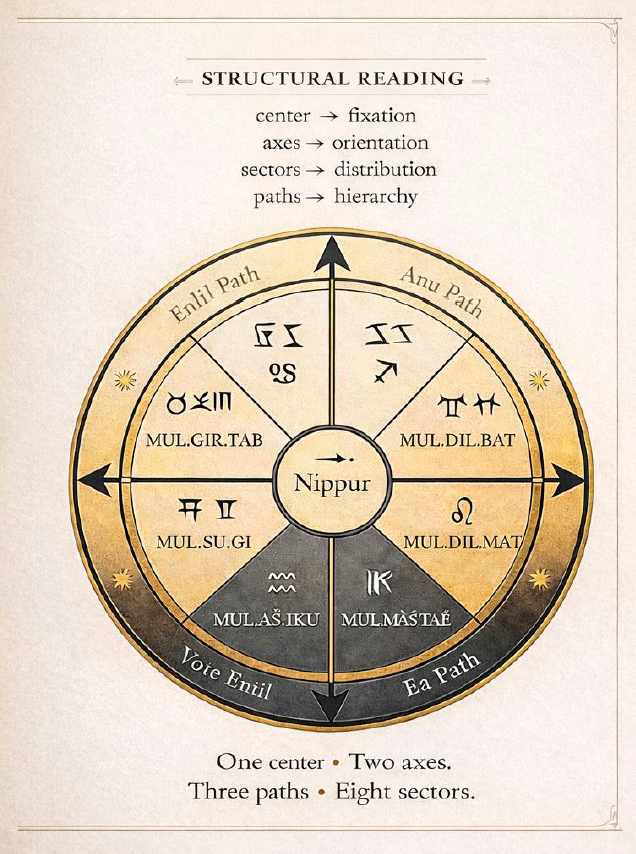
- centers anchor the world
- axes structure movement
- orientation aligns space with cosmos
- territory becomes meaningful
👉 Not a collection of sites — but a coherent spatial system.
What this book reveals
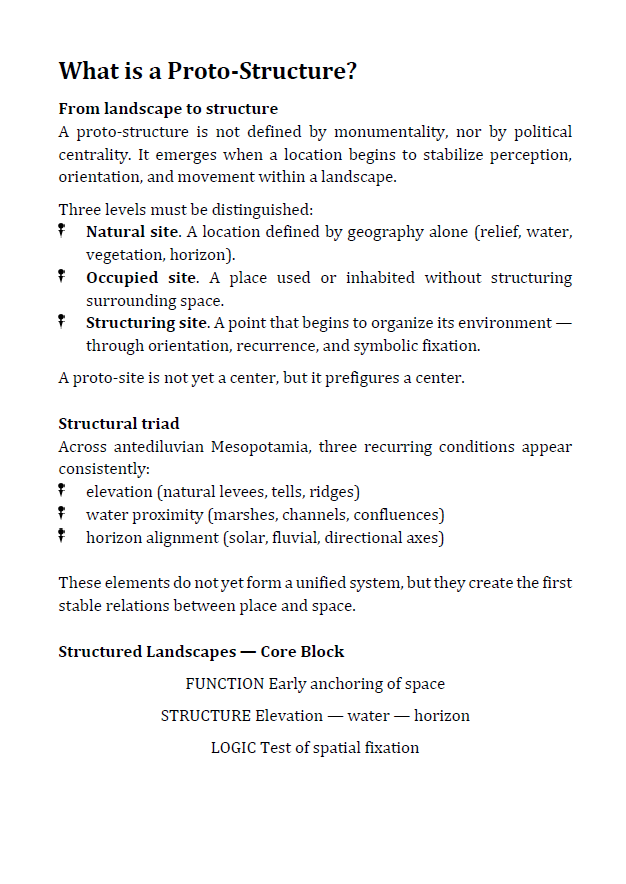
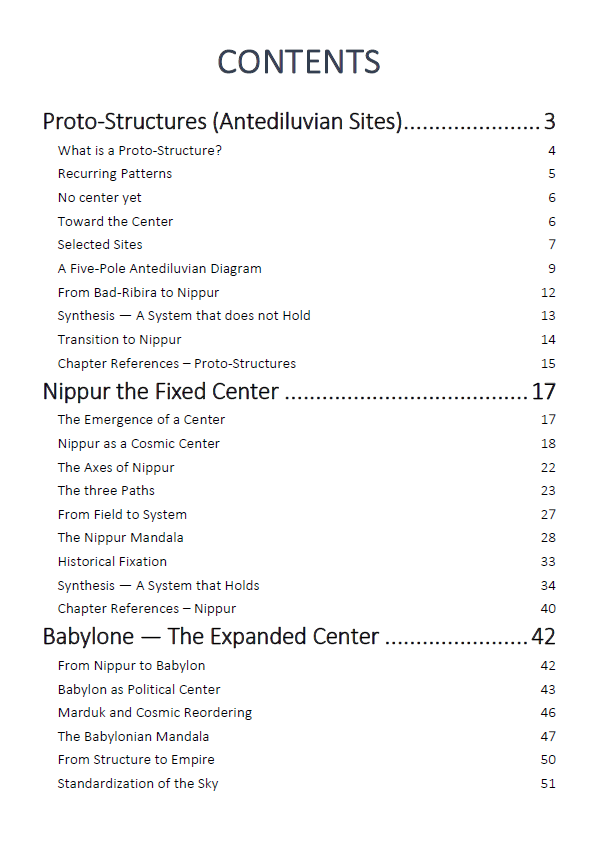
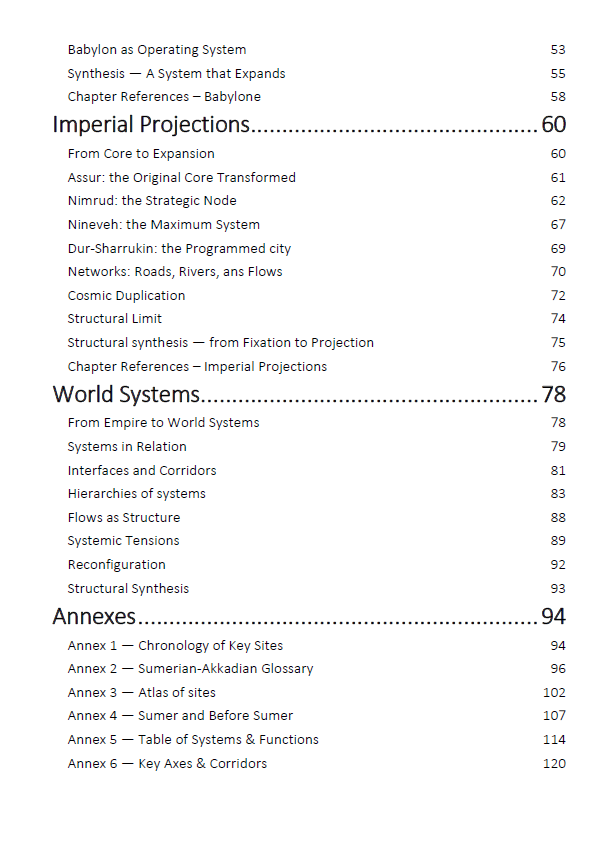
Across early Mesopotamia, forms repeat. Not randomly — structurally. This book identifies:
- the logic behind sacred centers
- the role of artificial elevation (“mountain before city”)
- the alignment of sites beyond geography
- the transition from dispersed points to organized space
What appears as archaeology becomes a system.
Core insight
The first cities were not only built. They were positioned. The question is not: What was built? But: How was space structured?
This is not a historical narrative, nor a catalogue of ruins. It is a structural framework to read sacred space. Not sites. Systems.
Format: PDF
Length: ~120 pages
Series: Symbolic Landscapes
Part of the Symbolic Landscapes collection
→ Explore the full system on legendsandcycles.com