
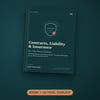

Contracts, Liability & Insurance for a One-Person Business (Book + Operator Toolkit)
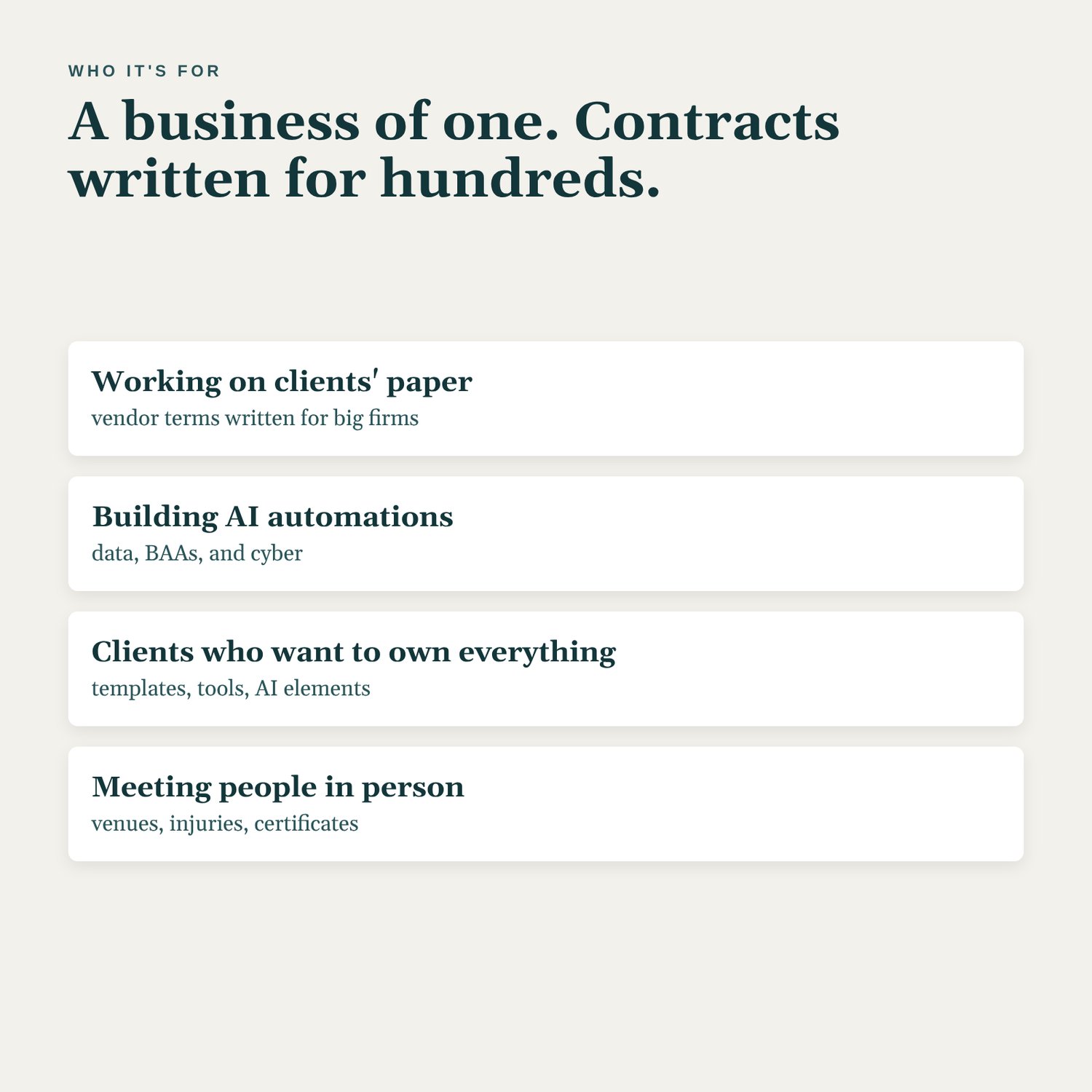
Your contracts were written for companies of hundreds. You are a company of one.
A client's fourteen-page vendor agreement arrives on a Friday. Somewhere on page nine, you agree to "indemnify, defend, and hold harmless" the client from "any and all claims." A procurement team asks for a certificate naming them as an additional insured on every policy. Your AI tool's terms say something different from what your client agreement promises. Nothing goes wrong for a long time, and then one thing does.
This book explains how the agreements and policies a one-person business depends on actually work, clause by clause, with the reasoning laid out, so you can read them before the bad day and know what they will do on it.
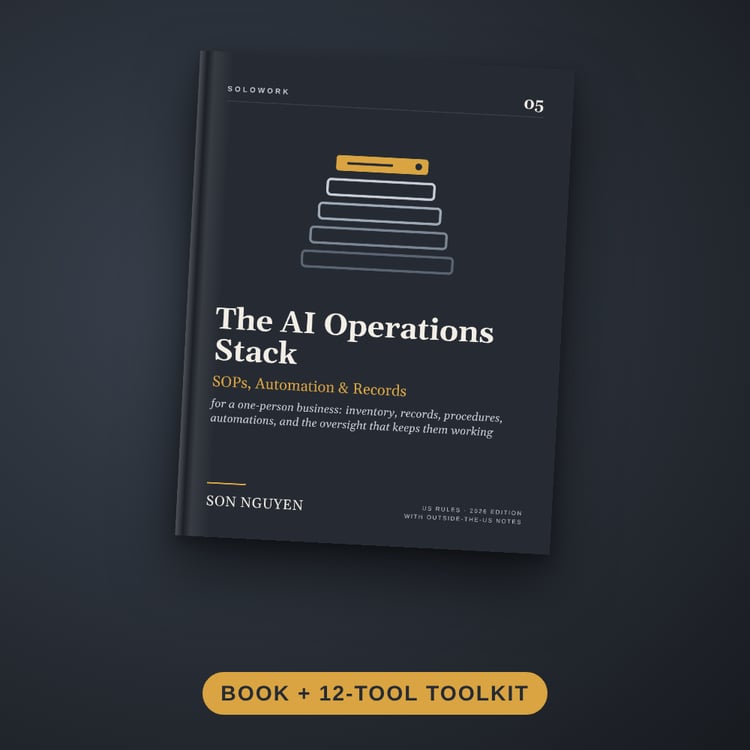
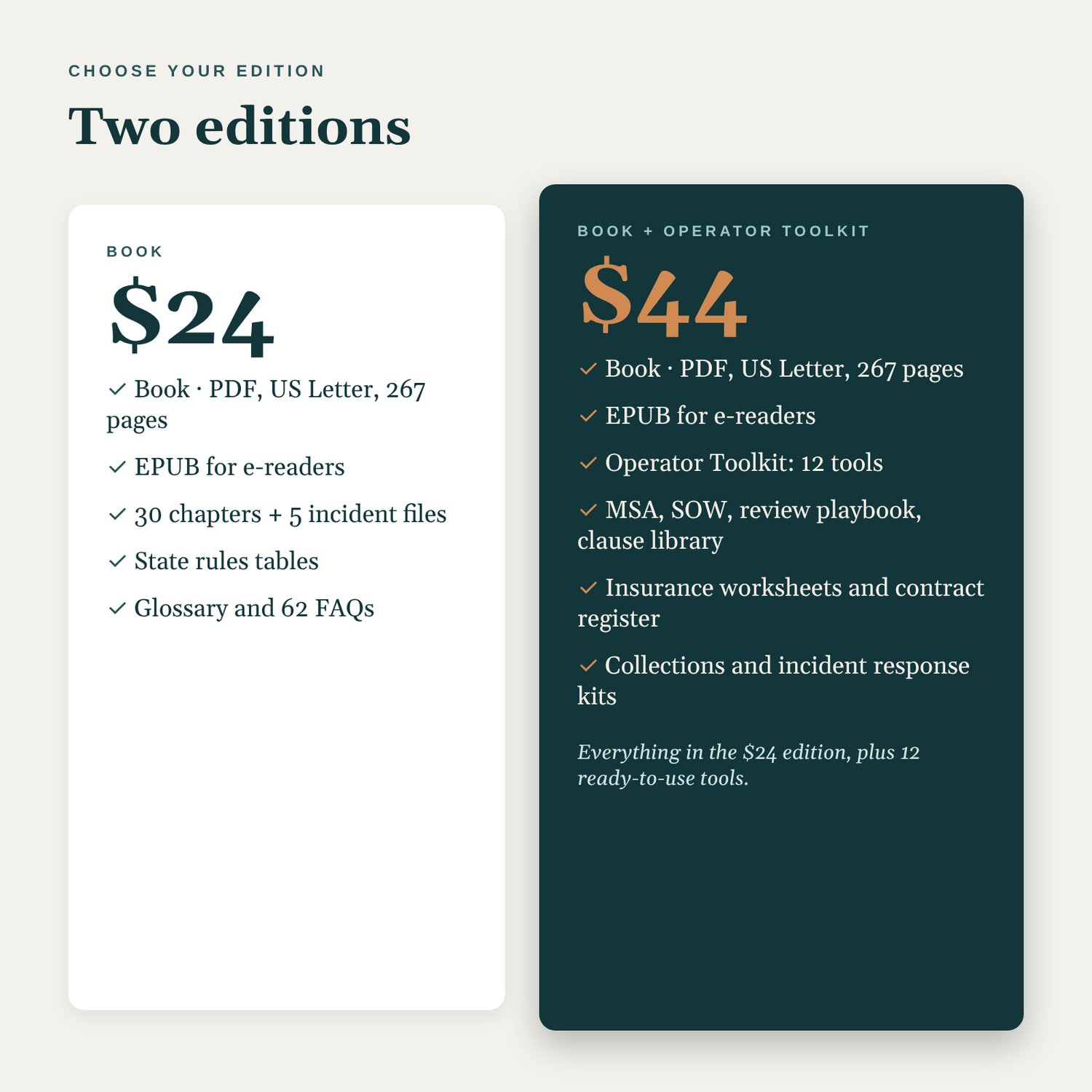
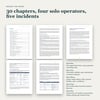
What's inside the book (267 pages, US Letter PDF + EPUB):
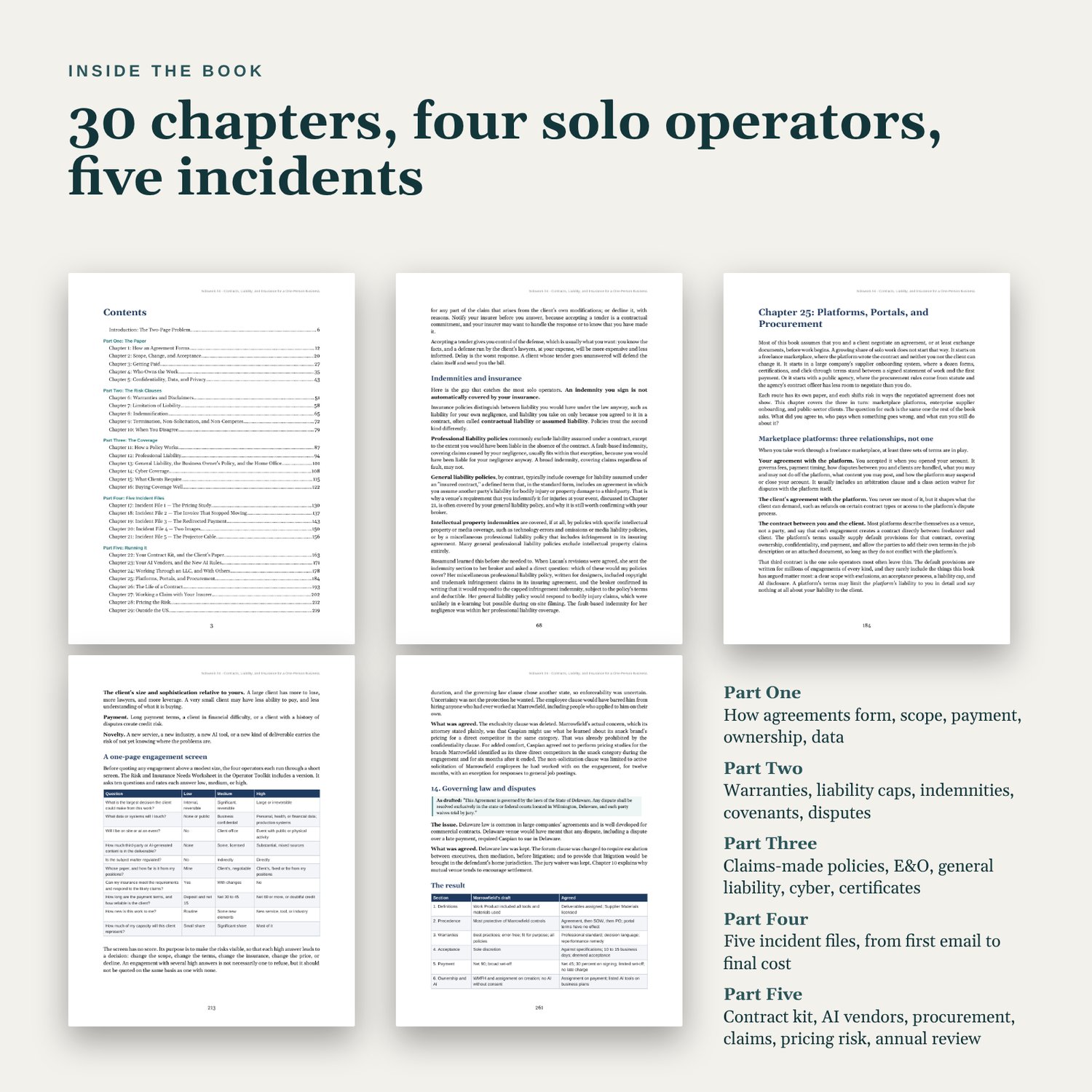
- Part One — The Paper: how an agreement forms (emails, purchase orders, portal checkboxes), scope, change, and acceptance, getting paid under the New York, Illinois, and California freelance laws, who owns the work and AI-generated material, and confidentiality, data, and privacy.
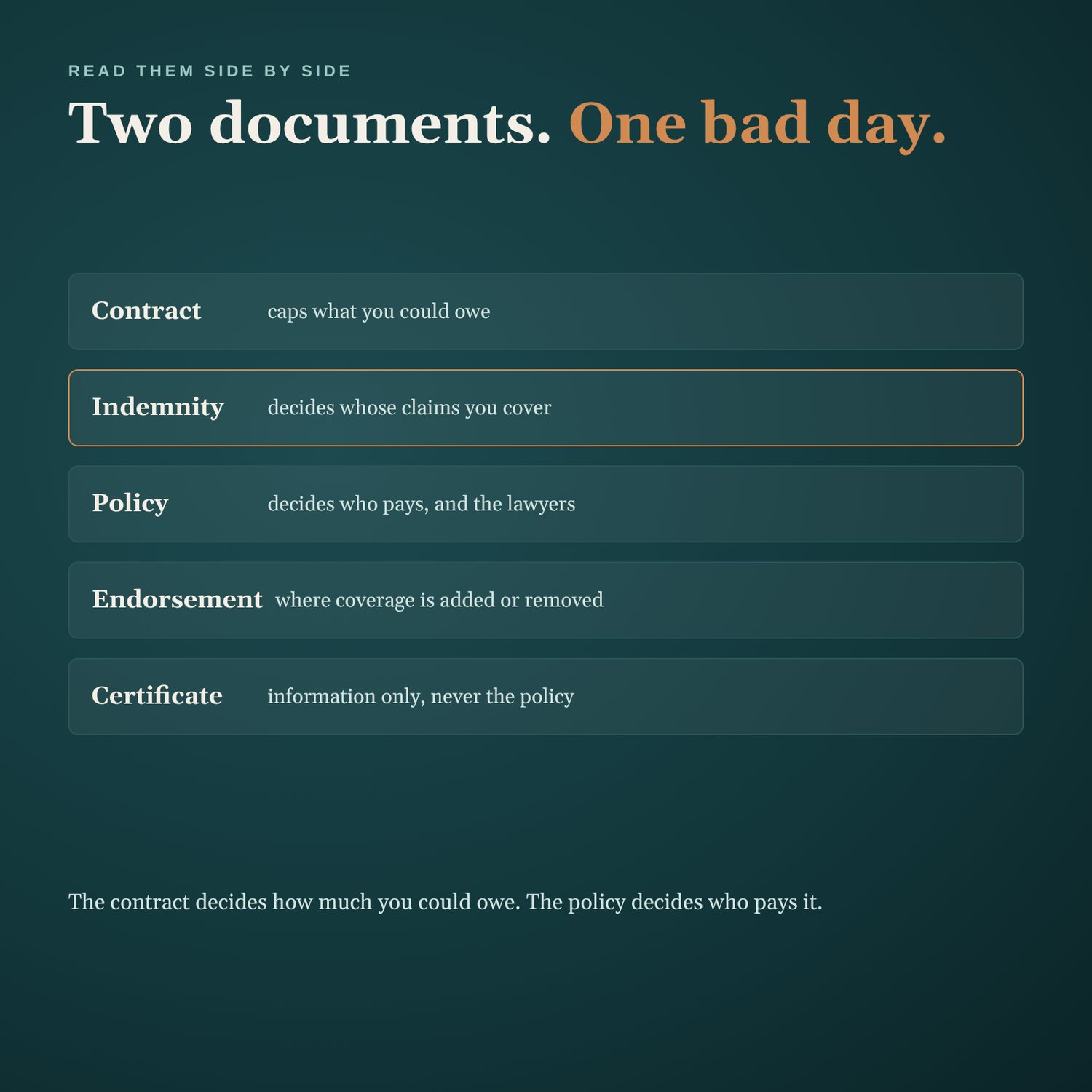
- Part Two — The Risk Clauses: warranties and disclaimers, limitation of liability and super-caps, indemnification and how it meets your insurance, termination and restrictive covenants after the FTC rule, and how disputes really unfold.
- Part Three — The Coverage: how a policy works (claims-made, occurrence, retroactive dates, tails), professional liability, general liability and the 2026 generative AI exclusions, cyber, what clients require (additional insured, waivers, certificates), and buying coverage well.
- Part Four — Five Incident Files: an analysis error that drew a $180,000 claim, an invoice that stopped moving, a phishing attack that redirected a payment, an AI image that drew an infringement demand, and an injury at a workshop, each traced from the first email to the final cost. All fictional.
- Part Five — Running It: your own contract kit and how to negotiate a client's, your AI vendors' terms and the new AI rules, working through an LLC and with subcontractors, work that comes through marketplaces, supplier portals, and public agencies, the life of a contract after signing, working a claim with your insurer, pricing the risk and knowing when to decline, notes for Canada, the UK, Australia, the EU, and Asia, and an annual risk review.
- Appendices: 104-term glossary, 62 common questions, state tables (freelance laws, small claims limits, non-compete bans, privacy laws, recording consent, limitation periods), toolkit sample pages, a large client's supplier agreement reviewed clause by clause, and primary sources.
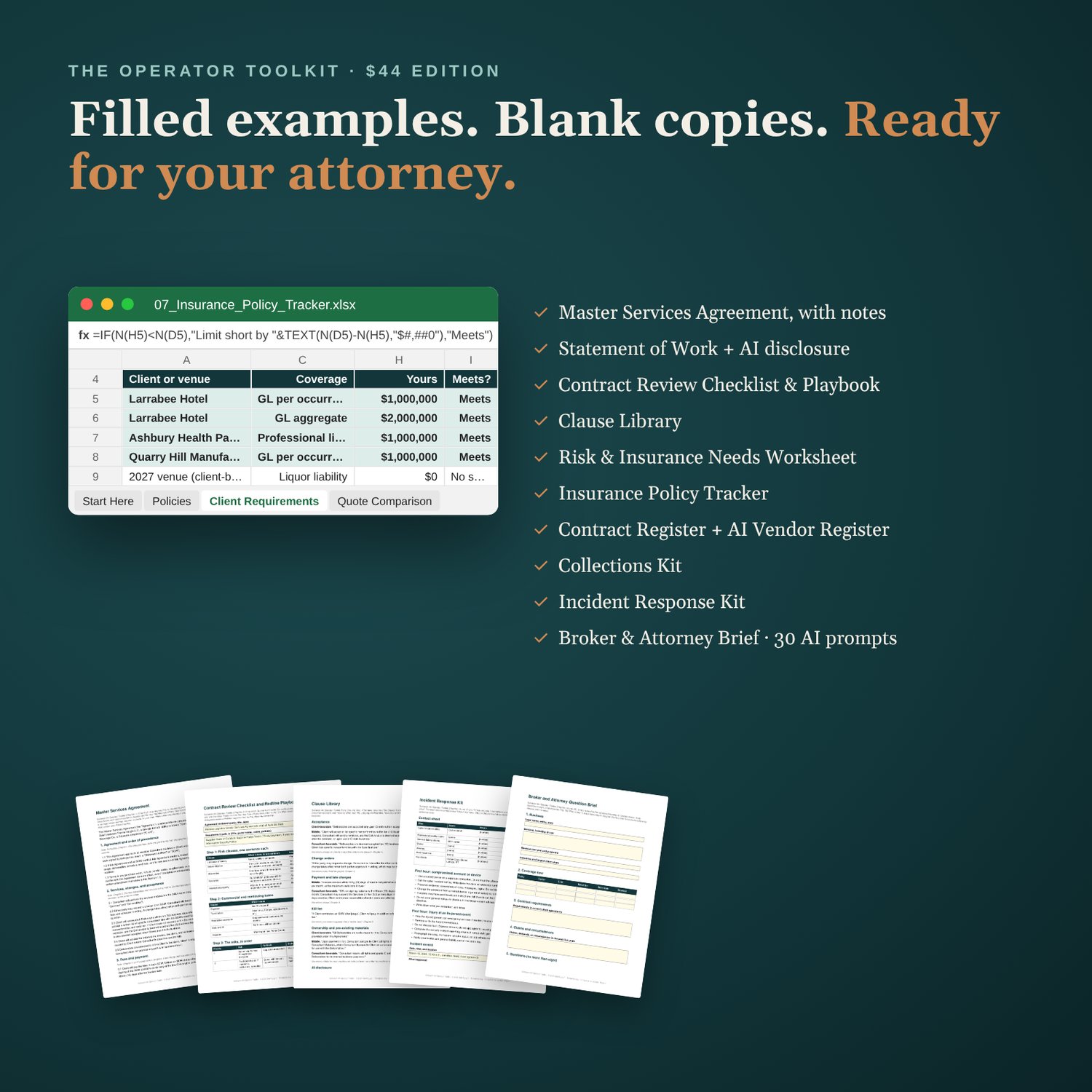
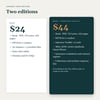
The Operator Toolkit ($44 version), 12 tools:
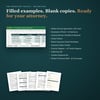
Most tools have a filled example (matching an operator in the book) and a blank version for you.
- Quick Start (your first hour)
- Master Services Agreement, with section notes
- Statement of Work, with an AI disclosure table
- Contract Review Checklist and Redline Playbook
- Clause Library: alternative clauses from client-favorable to consultant-favorable
- Risk and Insurance Needs Worksheet (exposures, coverage match, suggested limits, engagement screen)
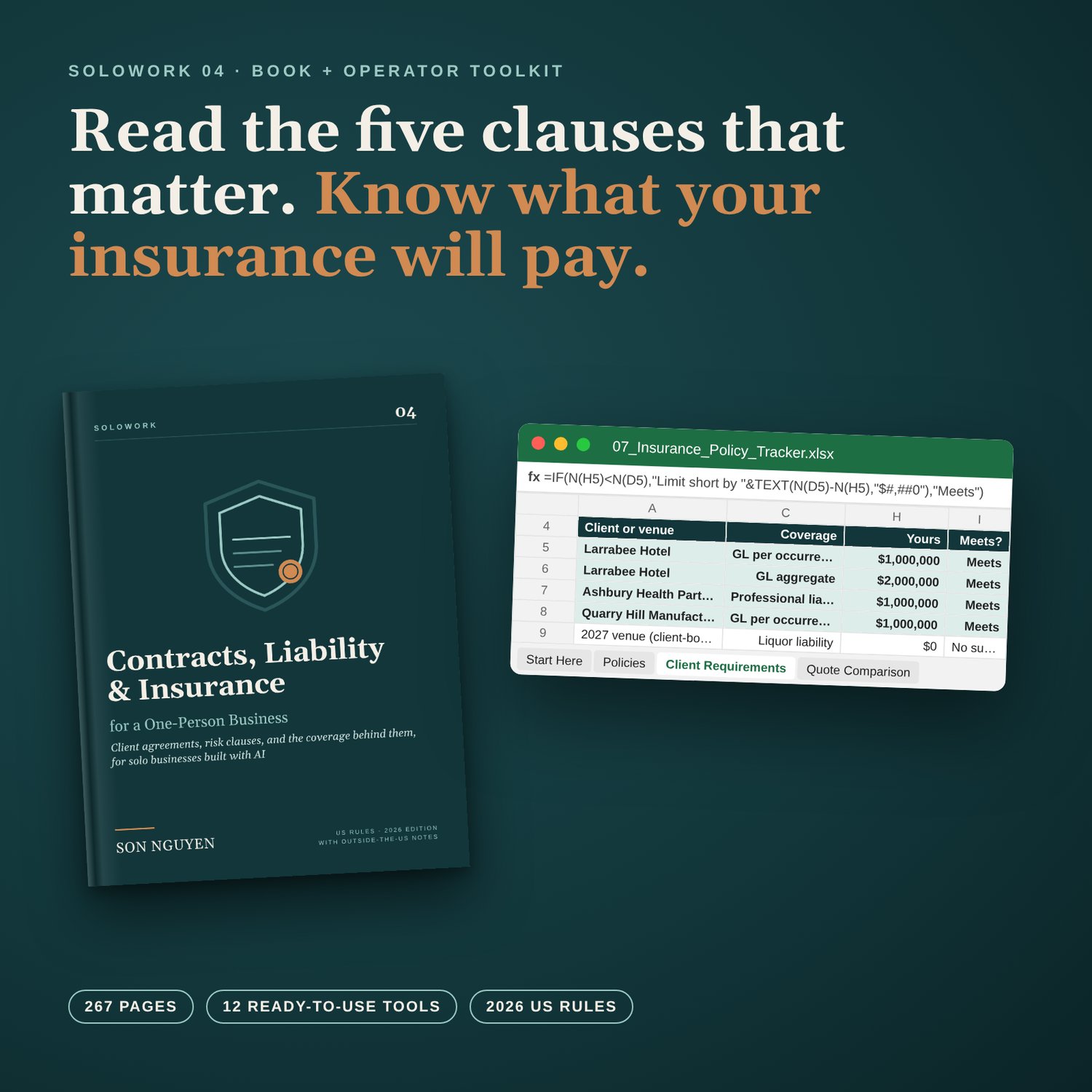
- Insurance Policy Tracker (policies, client requirements check, quote comparison)
- Contract Register, with an AI Vendor Register
- Collections Kit (reminders, demand letter, small claims checklist)
- Incident Response Kit (first-hour checklists, notices, incident record, security profile)
- Broker and Attorney Question Brief
- AI Prompt Library: 30 prompts written for the tasks in this book
Who it's for: consultants, designers, developers, trainers, and other solo professionals, often using AI tools in client work, who sign clients' agreements, write their own, and buy their own insurance.
Please note: This is education, not legal, insurance, tax, or financial advice. The sample agreements and clauses are starting points to review with your own attorney. All examples use fictional people and companies and hypothetical numbers; they are not quotes, predictions, or promises of any result. US rules are primary, with notes for other countries. Rules are current as of October 2026.
Digital download. No physical item will be shipped.