
Othello
In Shakespeare's searing tragedy of love corrupted by manipulation, Othello, a Moorish general who has risen to command Venice's armies, secretly marries Desdemona, a senator's daughter whose love defies social boundaries and her father's fury. Their passionate union should mark a triumph over prejudice, but it becomes the target of Iago, Othello's ensign, whose wounded pride and mysterious malice drive him to orchestrate an elaborate revenge. Through calculated insinuations and manufactured evidence, Iago plants the poison of suspicion in Othello's mind, convincing him that Desdemona has been unfaithful with Cassio, his loyal lieutenant. What follows is a devastating psychological unraveling as jealousy transforms the noble general into a rage-consumed stranger, his love twisted into murderous obsession while Iago watches his masterpiece of destruction unfold.
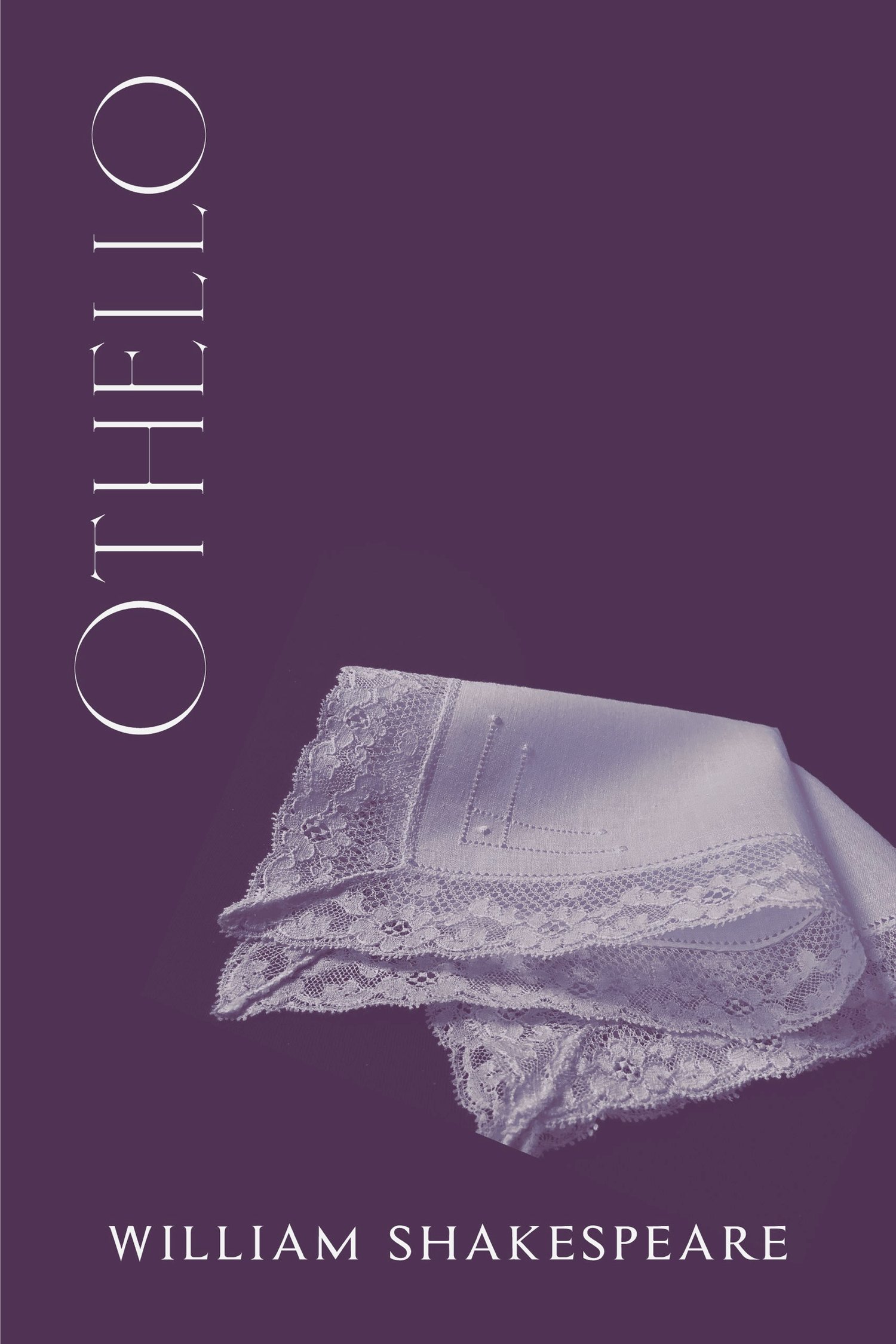
Shakespeare crafts in Iago one of literature's most chilling villains, a man who engineers catastrophe not for treasure or power but seemingly for the pure pleasure of watching others suffer, his motives remaining maddeningly opaque even as his schemes grow ever more diabolical. Against this embodiment of evil stands Desdemona, whose unwavering love and innocence make her fate all the more heartbreaking, and Emilia, Iago's wife, whose loyalty and eventual courage provide the play's most powerful moral voice. The tragedy intensifies through intimate domestic scenes charged with mounting tension—a lost handkerchief becomes damning proof, innocent words twist into confirmation of guilt, and Othello's initial doubt metastasizes into certainty as Iago's web tightens. The racial dynamics add another layer of complexity, as Othello's outsider status makes him vulnerable to the very insecurities Iago exploits, while other characters' casual racism underscores the fragility of his acceptance in Venetian society.
More than a tale of jealousy run amok, Othello is a profound exploration of how trust can be weaponized, how identity shapes vulnerability, and how evil operates through the corruption of good. Shakespeare poses devastating questions about the nature of proof, the power of reputation, and whether love can survive when doubt takes root. With its claustrophobic intensity, psychological precision, and inexorable movement toward horror, this masterwork reveals how easily human connections can be destroyed by the poison of suspicion, how racism and outsider status create exploitable wounds, and how tragedy can spring not from fate or grand political forces but from one man's inexplicable commitment to destruction. The final scenes, where truth emerges too late, and the cost is measured in innocent lives, stand among the most devastating moments Shakespeare ever wrote.
About the author
William Shakespeare (1564-1616) is widely regarded as the greatest writer in the English language and the world's preeminent dramatist. Born in Stratford-upon-Avon, he wrote approximately 39 plays and 154 sonnets that have shaped literature, theater, and the English language itself for over four centuries. His works, from tragedies like Hamlet and King Lear to comedies like A Midsummer Night's Dream and histories like Henry V, explore the full range of human experience with unmatched psychological insight, poetic brilliance, and emotional power. Shakespeare's influence extends far beyond the stage; his phrases and characters have become woven into the fabric of modern culture, and his exploration of timeless themes—love, power, ambition, jealousy, mortality—continues to resonate with audiences worldwide. Despite the passage of centuries, his work remains startlingly contemporary, speaking to each new generation with fresh relevance and inexhaustible depth.