

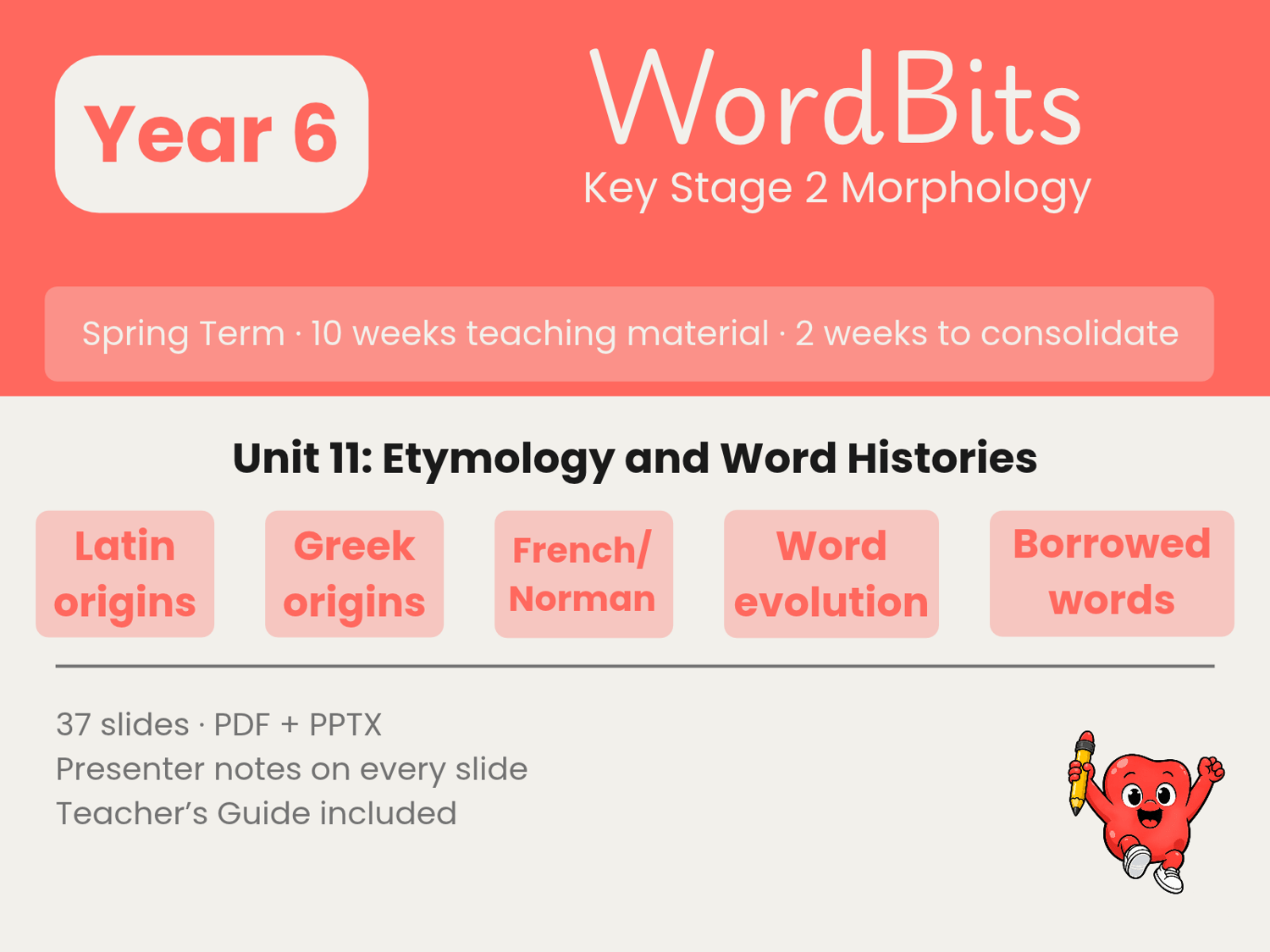


Unit 11: Y6 Spring Morphology - Etymology and Word Histories (10-Week Sequenced Unit)
A complete 10-week Year 6 Spring term morphology unit, teaching pupils where English words actually come from: Latin origins in everyday words, Greek origins in academic vocabulary, French/Norman influence, word evolution and meaning shift, and borrowed words from world languages.
This is Unit 11 of WordBits: The KS2 Morphology Programme, part of the growing programme built term by term across Y3-Y6 with the same care going into every unit.
What is included:
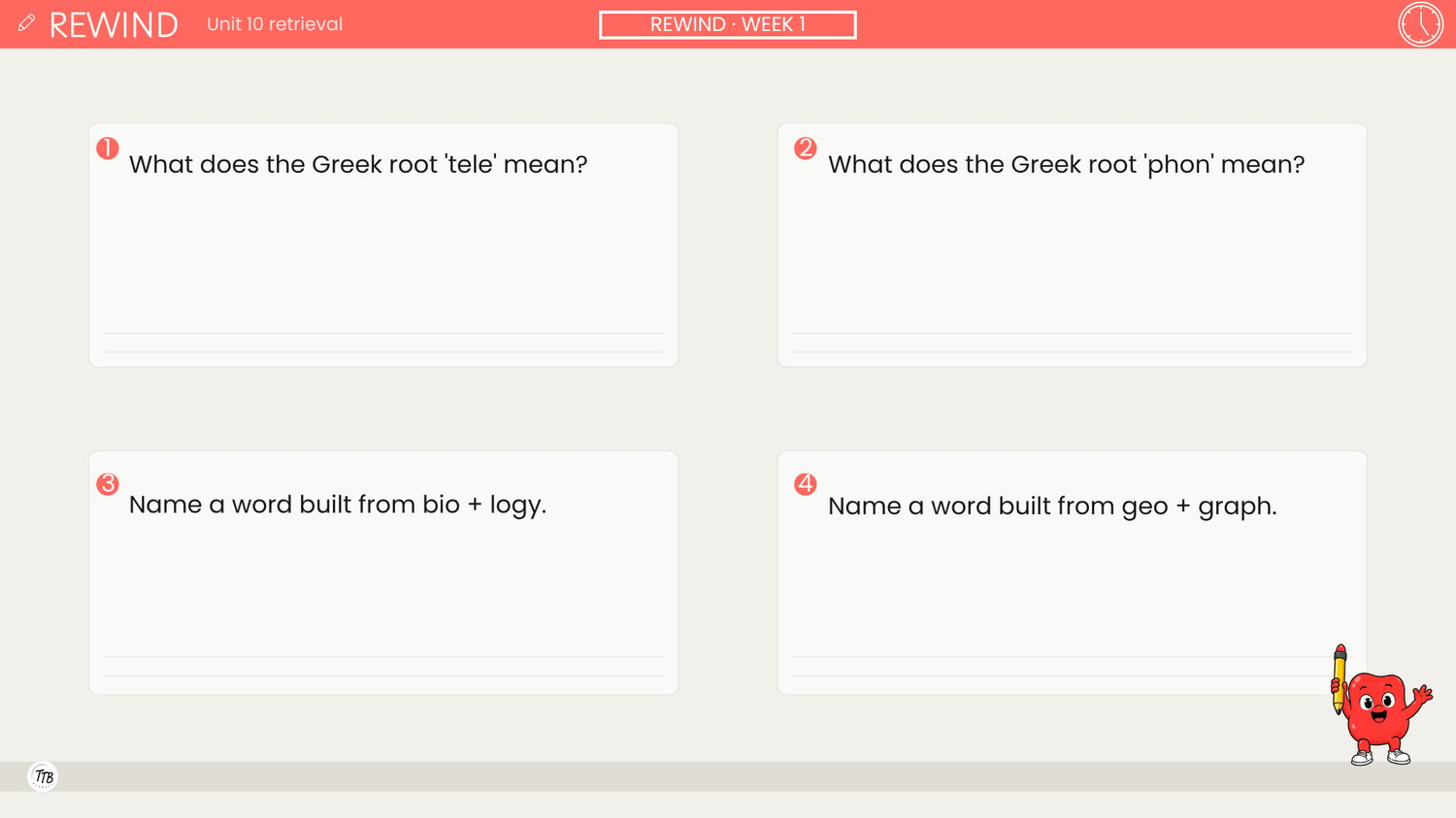
- 37-slide presentation (PDF and PowerPoint/PPTX): cover slide plus 30 teaching slides across five two-week blocks
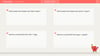
- 6 Rewind retrieval slides for low-stakes recap
- Full presenter notes on every slide: linguistic background, common misconceptions, and ready-to-use pupil-facing language, included as a printed document as well as built into the slides, so you are never tied to reading off a screen
- A full Teacher Guide explaining the programme structure, terminology, and how to use it across the term
- A full Programme Map showing how all 12 units sequence across Y3-Y6
- Not editable: locked, polished slides, so nothing shifts or breaks on any device
- Genuine curriculum exceptions flagged and explained where they occur
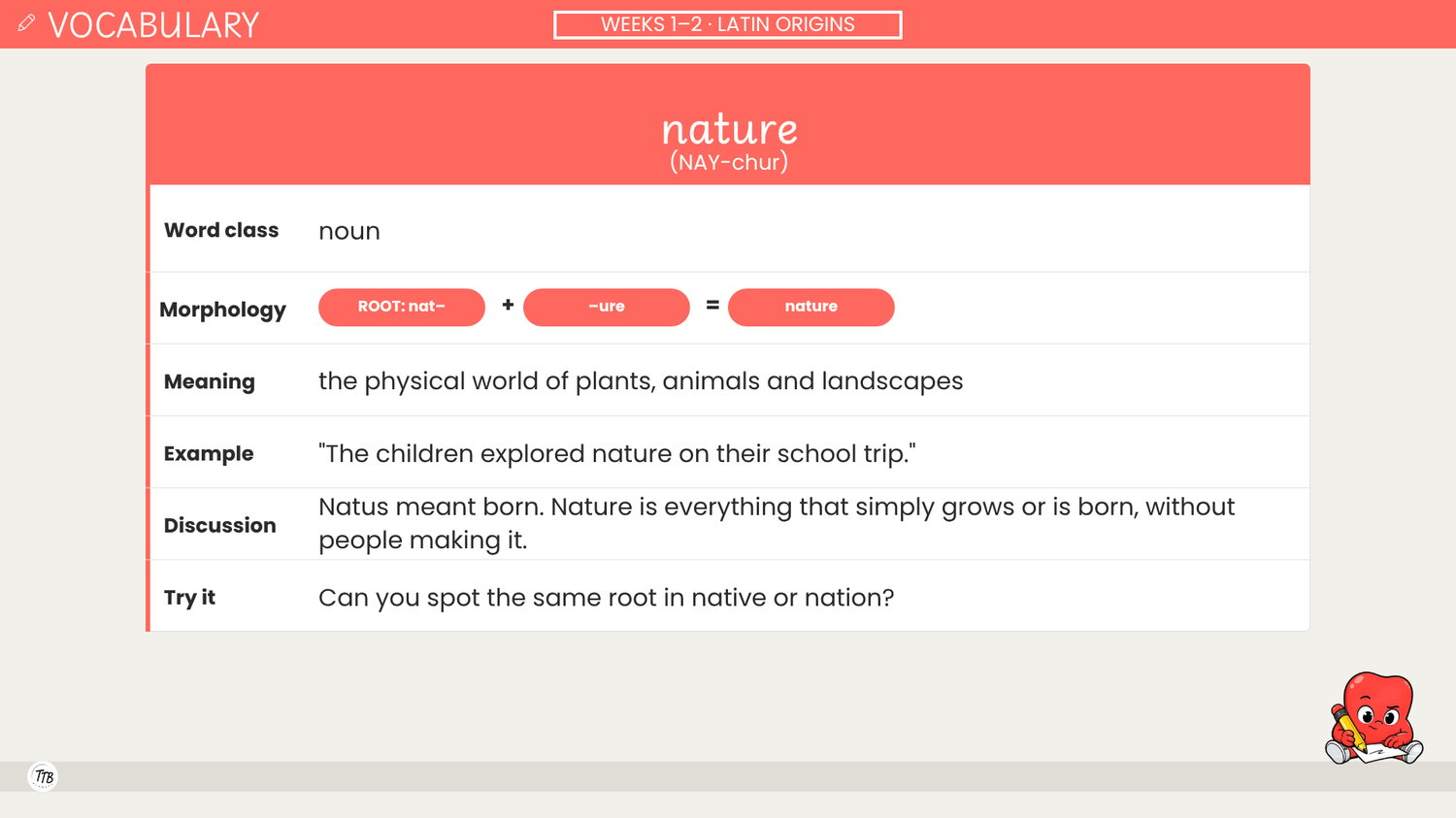
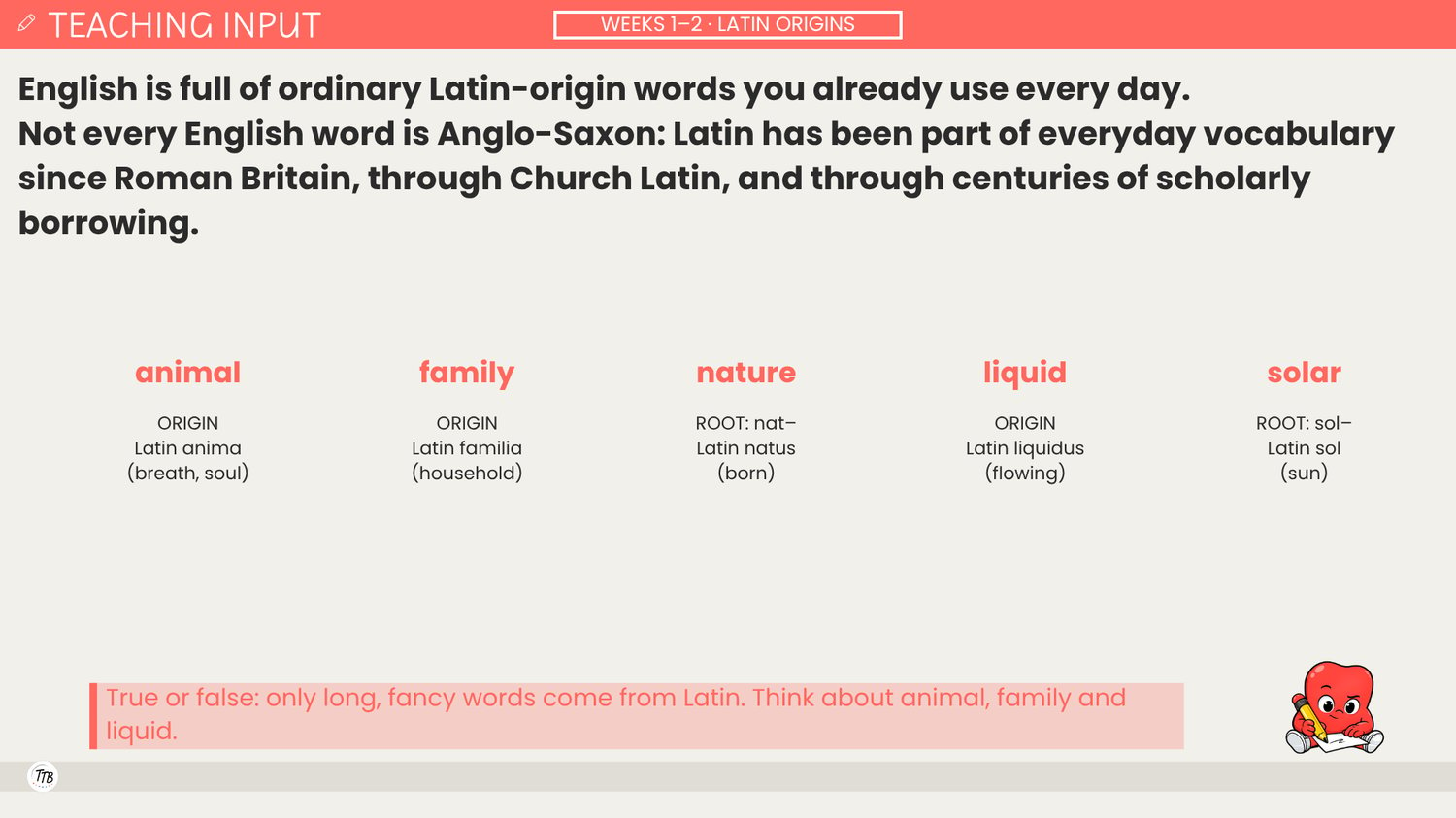
This unit introduces a third category alongside BASE and ROOT: ORIGIN, for words borrowed whole into English that cannot be split into meaningful parts at all, such as castle (Norman French) and karate (Japanese). Pupils see how nature and atmosphere still hide bound Latin and Greek roots, how the Norman Conquest split English vocabulary between farm animal and dinner plate (cow and beef, pig and pork), and how meanings themselves drift over centuries, with awful once meaning full of wonder rather than very bad.
Aligned to Year 5/6 statutory objectives on etymology and how language changes over time, plus vocabulary development, and to the explicit morphology teaching recommended in the DfE July 2025 Writing Framework.
Structure: Monday, Wednesday, Friday for teaching input. Tuesday and Thursday for Rewind retrieval activities. Ten teaching weeks, with two weeks built in for consolidation and assessment at your discretion.
Built for whole-class teaching, with you in the driving seat. You know your class best, so pacing, grouping, and any additional scaffolding for pupils with SEND is left in your hands, where that judgement belongs.
Everything you need to teach the whole term is in this one download.
This unit builds directly on the Greek combining forms taught in Unit 10 (Y6 Autumn).