


Coping vs Regulation: Interactive Clinical Decision Tool for Therapists
The Therapist Problem This Tool Solves
Clients arrive having tried what they were told are coping skills, and feel like nothing works. The skill is rarely the problem. The mismatch between the skill and the client's autonomic state usually is.
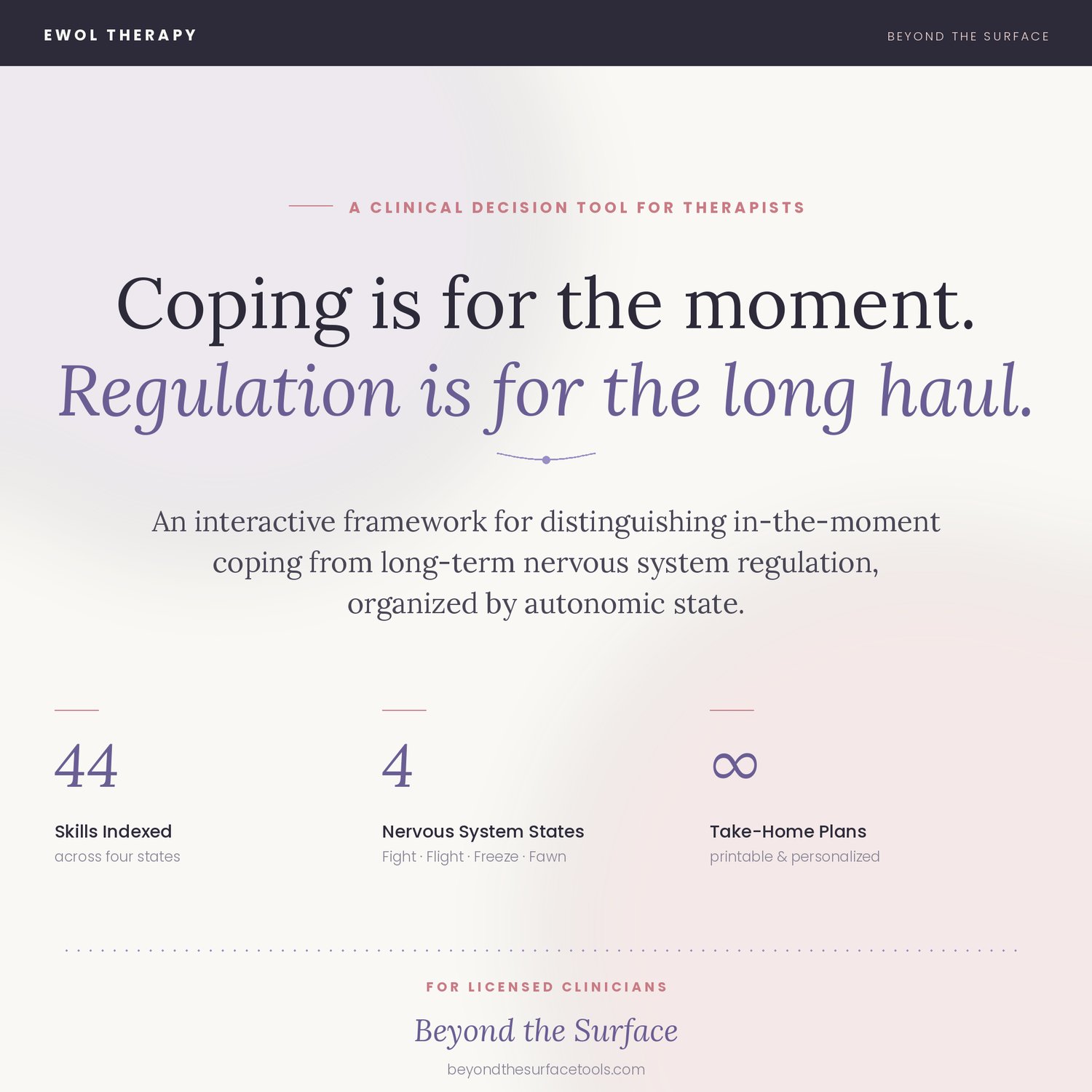
Coping skills and regulation skills do different jobs on different timelines. Coping is in-the-moment first aid. Regulation is long-term nervous system capacity. When the two are collapsed into one and assigned without state-matching, clients internalize the failure as evidence that they are broken.
This tool gives clinicians a working framework to teach the distinction explicitly, identify the state at hand, select the appropriate intervention, and build a personalized practice plan with the client in session.
What Is Included
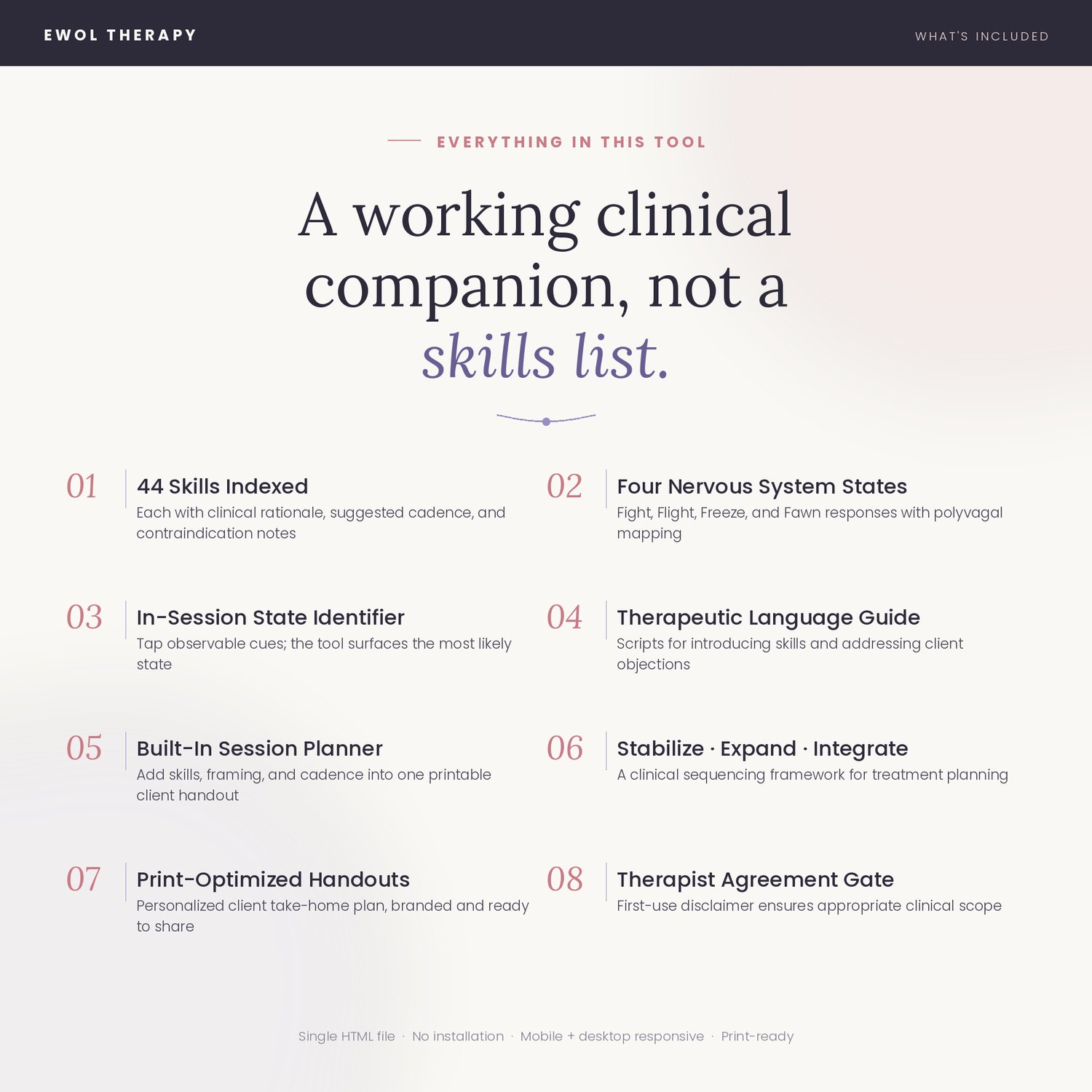
• One interactive HTML clinical decision tool, deployable on any web platform or run locally
• Forty-four skills indexed across the four mobilized and collapsed states (Fight, Flight, Freeze, Fawn)
• Each skill includes clinical rationale, best-fit presentations, suggested cadence, and contraindication notes where relevant
• State identification tool for in-session use that surfaces the most likely state from observable cues
• Polyvagal-informed mapping for each state, with window-of-tolerance framing
• Therapeutic language guide for introducing skills and addressing common client objections
• Clinical sequencing framework (stabilize, expand, integrate)
• Built-in session planner that generates a printable or downloadable practice plan for the client
• Print-optimized layout for clean PDF export
• Mobile and desktop responsive
Best For
• Licensed therapists, counselors, and clinical social workers
• Pre-licensed clinicians and supervisees who want a structured reference
• Trauma-informed practitioners who work with nervous system regulation
• Group practice owners building shared clinical resources
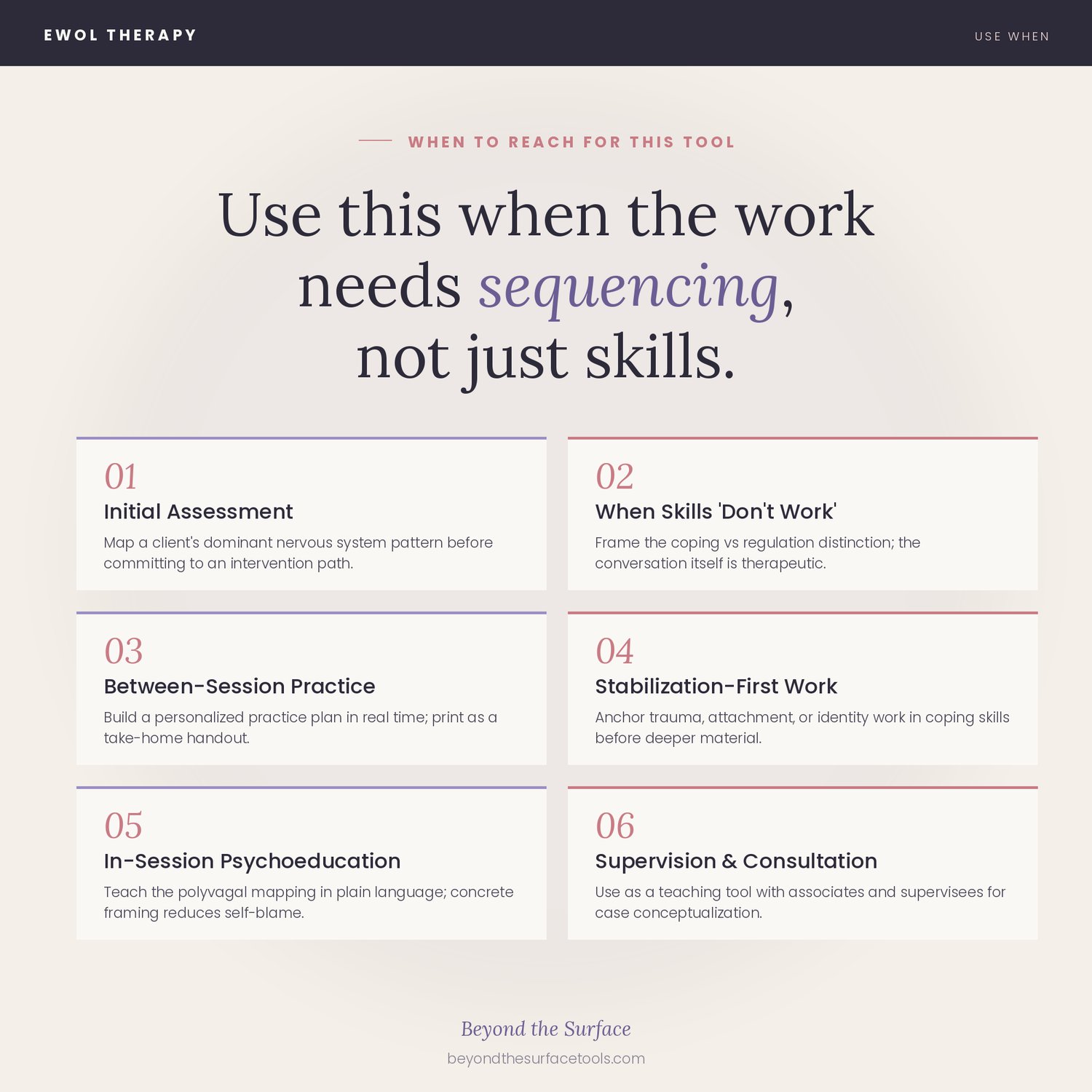
• Supervisors training associate clinicians on stabilization-first sequencing
How Clinicians Use It
• Open the tool during session and use the state identifier to confirm the autonomic state with the client
• Show the client the difference between coping and regulation in real time so they understand why some skills feel like they fail
• Build a take-home practice plan together by selecting skills directly into the planner
• Print or save the plan as a personalized PDF handout for the client
• Reference the language guide to introduce new skills without losing the client to skepticism
Why This Tool Is Different
Most coping skills handouts are static lists organized alphabetically or by category. They tell clients what to do but not when, why, or for which state. This tool is built around the actual clinical decision a therapist is making in session: what state is the client in, what is the goal right now, and what is the right intervention to match.
The state-by-state structure, the explicit coping versus regulation distinction, the dosing guidance, and the contraindication notes turn a reference list into a working clinical companion.
Format and Delivery
• Single HTML file, no installation required, opens in any modern browser
• Can be deployed via Netlify, Vercel, or any static host for client-side use
• Can be opened directly from a downloaded folder for offline use
• No data is stored or transmitted; selections live only in the local browser
• Print-optimized stylesheet for clean PDF export of session plans
Important Note
This tool is for licensed mental health professionals and trainees under supervision. It is a clinical reference, not a replacement for clinical judgment, individualized assessment, or appropriate scope of practice. Some skills referenced have specific contraindications (cardiovascular conditions, pregnancy, seizure disorders, active dissociation) that practitioners must screen for. Full disclaimer is included in the tool itself.