
Are Self-Preserving Products Truth or Marketing Myth?
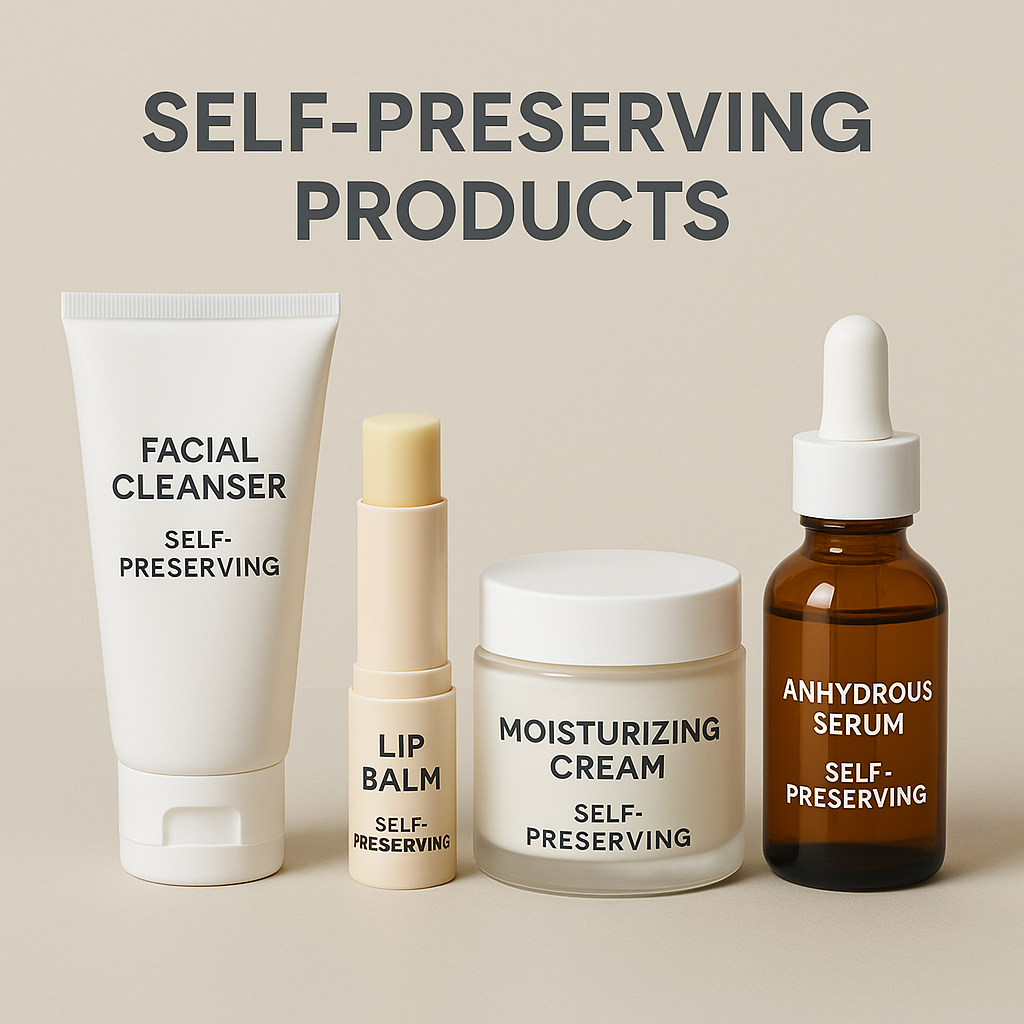
The term self-preserving is appearing more and more on cosmetic labels, promising safety without the use of traditional preservatives. In theory, these products are designed to resist microbial growth through smart formulation by controlling pH, reducing water activity, and using multifunctional ingredients that provide some antimicrobial benefit.
But here is the truth: not every product marketed as self-preserving actually lives up to the claim. Without proper testing, there is no guarantee it will remain safe throughout its shelf life. In some cases, the “preservative-free” angle is simply marketing designed to appeal to consumers who are wary of synthetic ingredients, even though those same synthetics are often far more effective and thoroughly tested.
The danger? A poorly formulated self-preserving product can lead to microbial contamination, product spoilage, and potential health risks. Unlike well-regulated preservation systems, these products can have a narrow margin for safety, and their performance can drop quickly under real-world conditions.
This is why the claim should always be backed by science, not just marketing hype. When done correctly, self-preservation is a technical achievement. When done poorly, it is a risk in a jar.
Deep dive into my new document to learn important details about self-preserving products, the greenwashing behind them, and much more.