How to Clean Your Home After a Sick Cat — Panleukopenia, Calicivirus, Ringworm, & more
Most people cleaning up after a sick cat are doing it wrong, and not because they're careless. They're using the exact product the label told them to use.
Here's what most people don't realize: the germs cats get aren't all built the same. Most are wrapped in a fatty outer coat that soap, alcohol, and any household cleaner tear apart on contact. For those, a normal wipe-down genuinely works.
A few have no coat at all. Just a bare shell of protein — and that shell shrugs off most household disinfectants, most disinfecting wipes, alcohol, vinegar, and time. One of them can stay infectious on your floor for up to a year.
Those are the ones that kill kittens. And the cleaner under your sink probably isn't touching them.
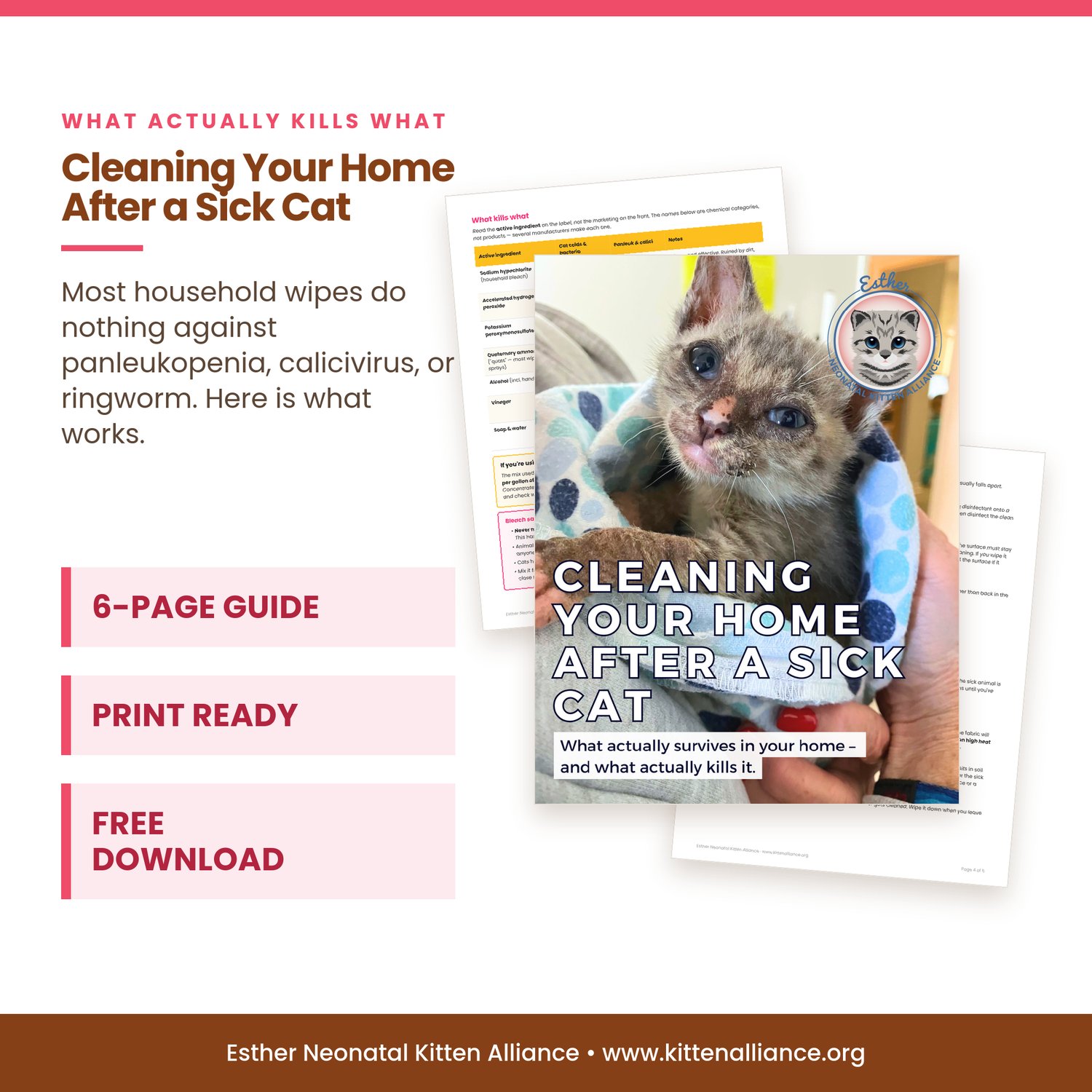
This guide is made of the protocols we run in our own nursery and ICU. No jargon, no product pitches — just what survives, what kills it, and the four things that decide whether any of your cleaning actually worked.
Inside:
- The two kinds of cat germs, and why it matters which one you're dealing with
- A plain table of what kills what, by active ingredient — including the one in most disinfecting wipes that doesn't work on the worst of them
- The four rules that decide whether your cleaning did anything at all
- The places people forget: laundry, shoes, your phone, the bowls
- What to do if you've had panleukopenia or ringworm in your home
- Why kittens are the ones who die of this, and what the vaccine schedule is actually doing
One thing we'll spoil up front: alcohol hand sanitizer does not kill panleukopenia. It's what most of us reach for after handling an animal, and against this particular virus it does nothing. Soap, water, and twenty seconds of scrubbing is what works.
Who this is for: foster parents, rescue and shelter volunteers, multi-cat households, anyone who just adopted, and anyone who's had a sick cat and is wondering whether their house is safe now.
6 pages. Print-friendly.
This is general education, not veterinary advice. Always read your product labels, and talk to your vet about your specific animals and situation.