



The Client Book: 20 Photography Client Email Templates and 11 Model Release Forms
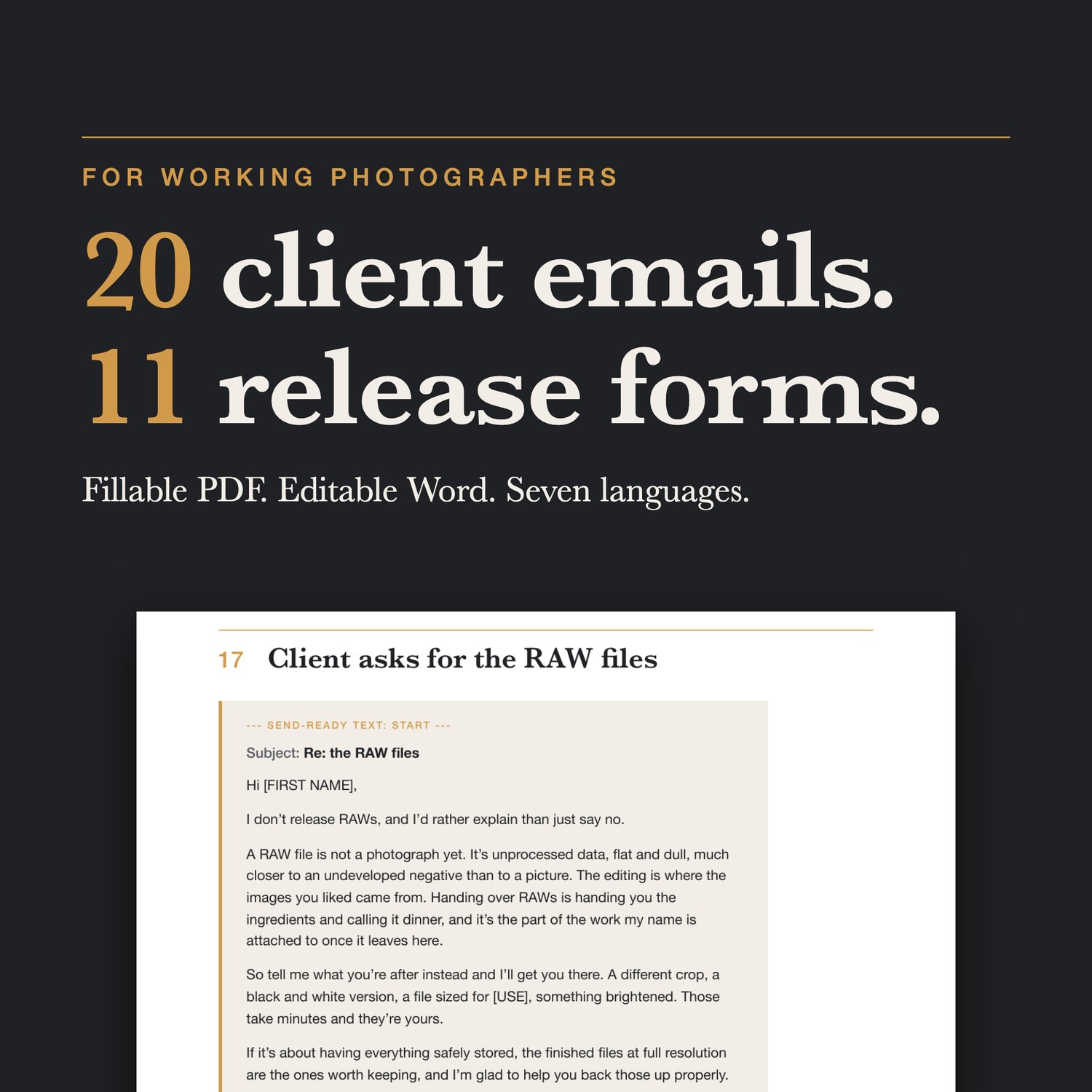
The emails you keep having to write, written. Twenty client emails plus eleven releases, fillable on your phone or iPad, printable, editable in Word.
Sold separately in this shop as the emails and the releases. Together here, and cheaper.
You know the email. You just don't want to write it again.
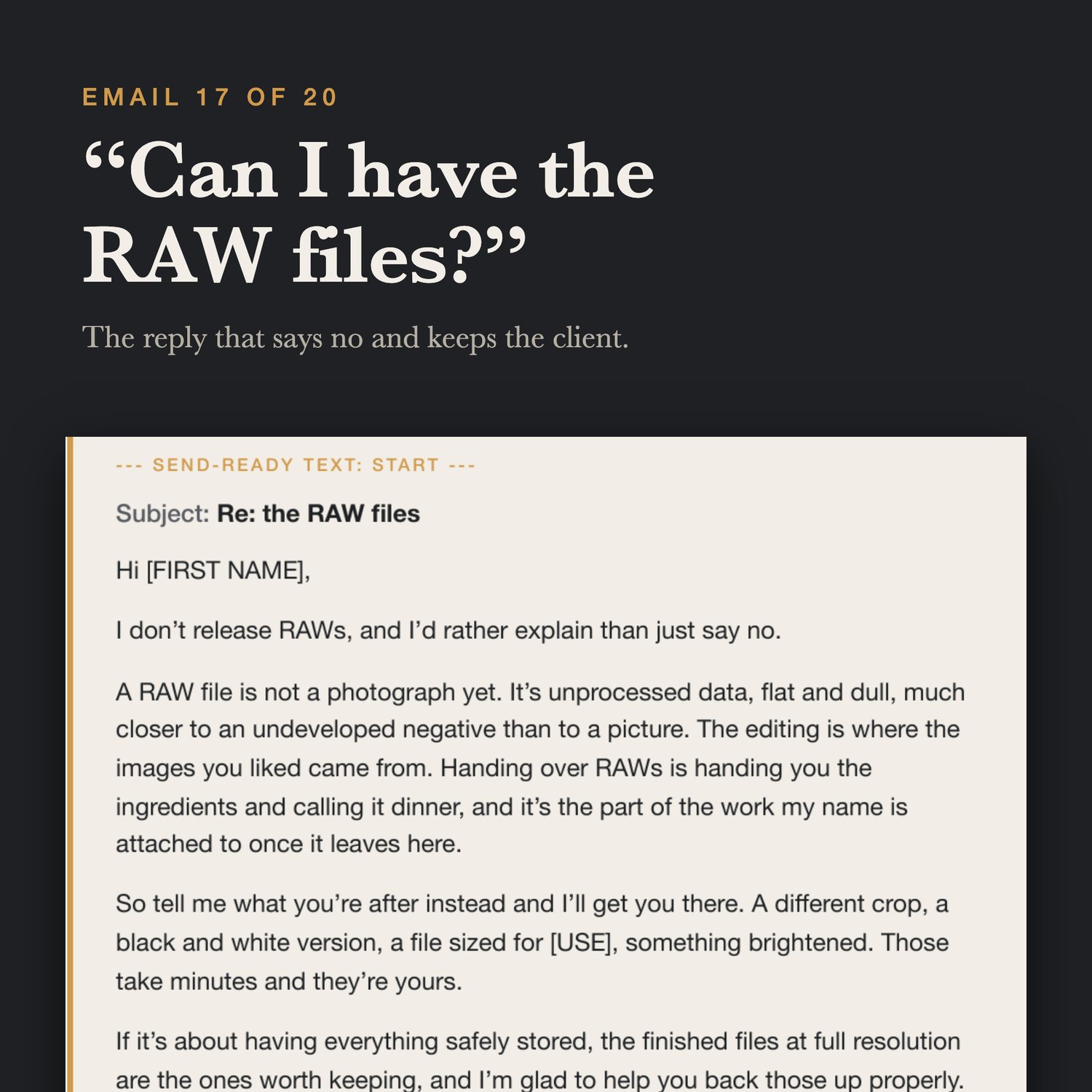
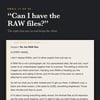
The one that asks a client for money owed since March without sounding weak or hostile. The one that answers "can I have the RAW files?" without starting an argument. The one that rescues a gallery nobody has opened in nine days.
WHAT'S INSIDE
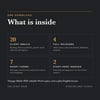
Twenty client emails in shoot order: booking, delivery, problems, growth. Each is fenced between visible START and END markers so you never paste the wrong part, and each carries a short note on what it is doing and when to send it.
Four releases: adults, minors, a nude and intimate session addendum, and property. Seven one-page short forms for travel and street work, in English, Spanish, French, Portuguese, Italian, German and Japanese.
THE PART NO OTHER PACK HAS
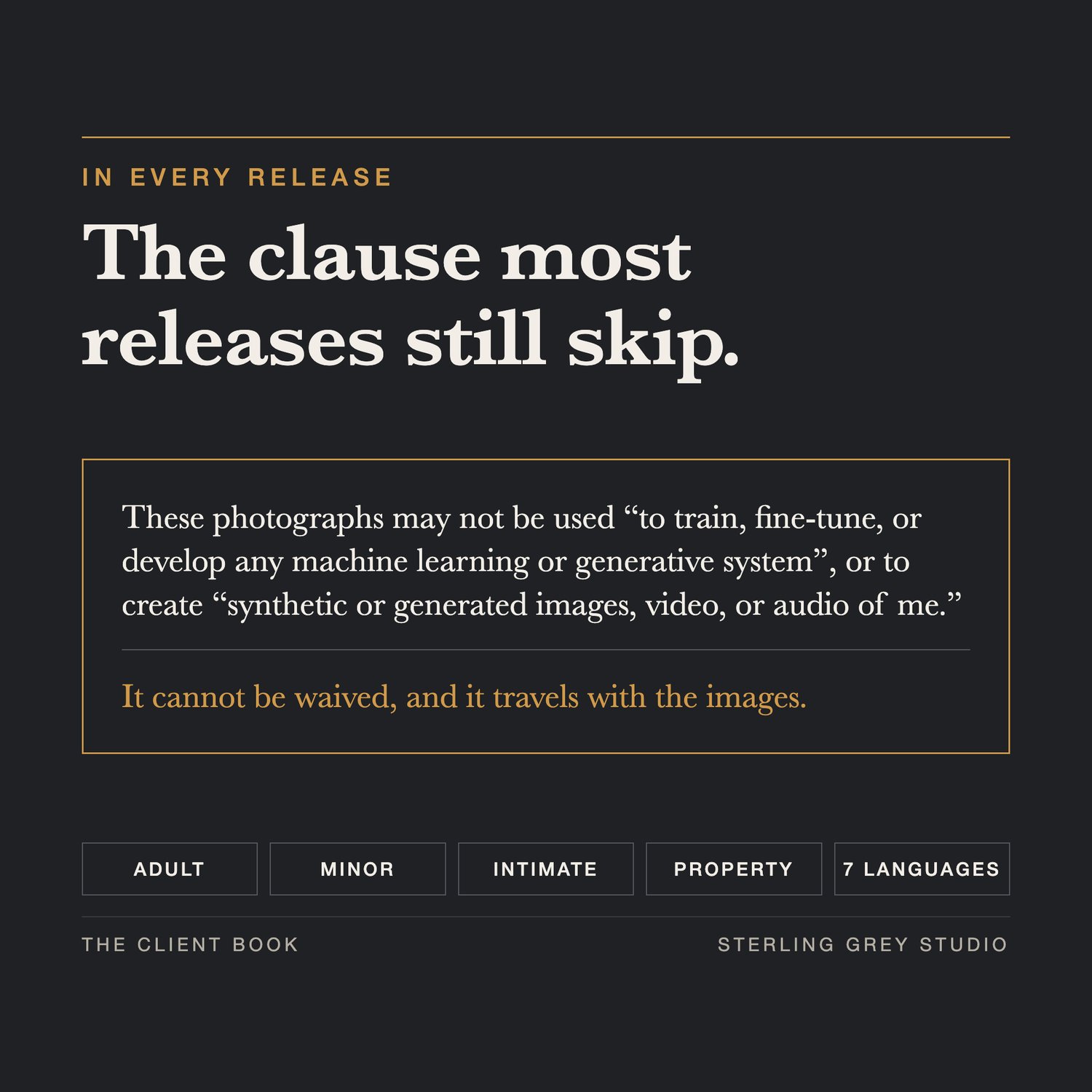
Every release permanently refuses the use of your subject's face to make synthetic or generated images, and the use of your photographs to train a generative system. It cannot be waived and it binds anyone the images are passed to. Most release templates on sale today were copied from documents written a decade ago and do not mention any of this.
IT FILLS ITSELF IN
Type your name, studio, phone, email and governing state once, on one page, and they appear on every release at the same time. Fill a release on your iPad at the shoot, save it under the client's name, print it, sign it.
FIND IT IN ONE TAP
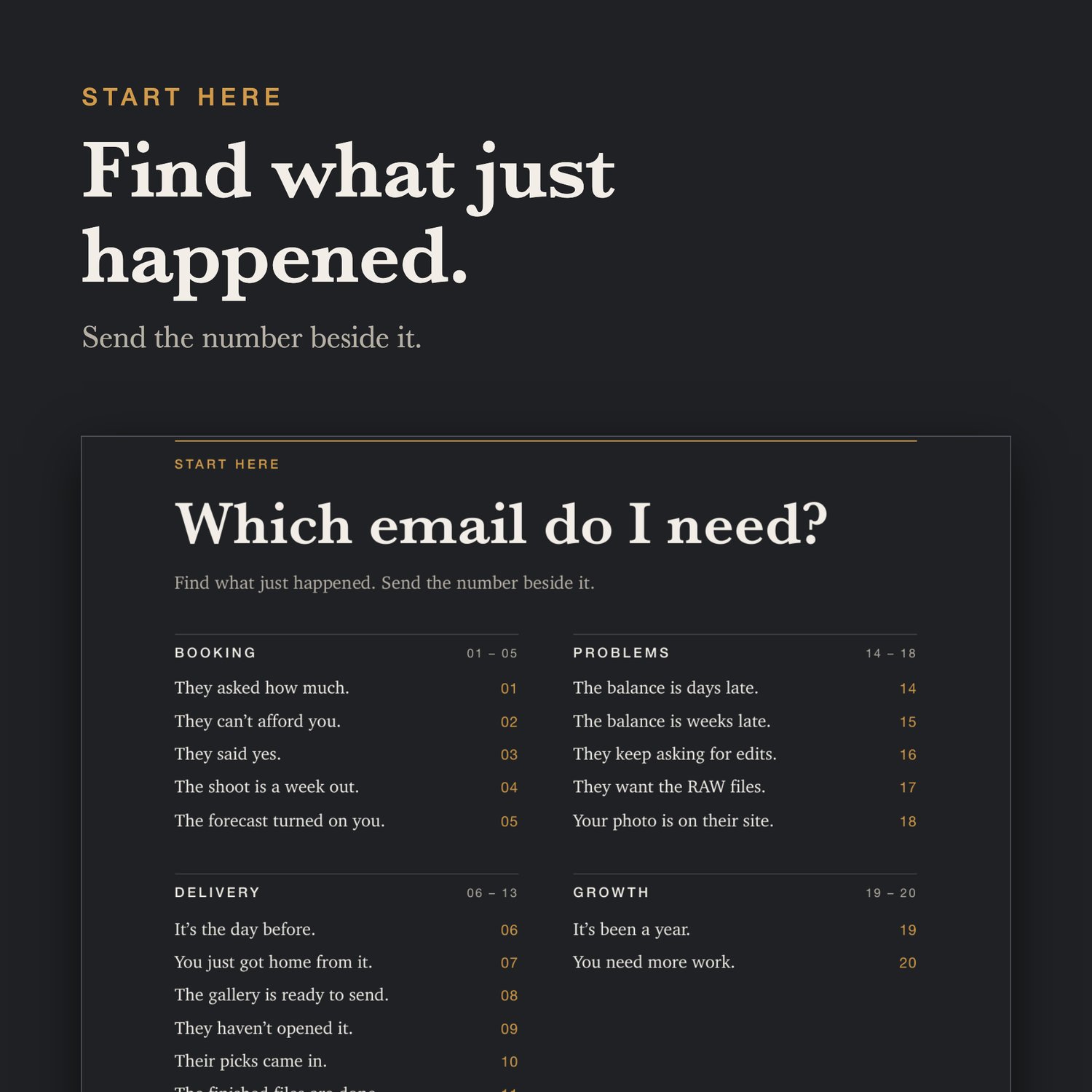
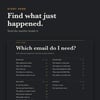
Two index pages built around what just happened, not around categories. "They asked how much" points to 01. "The subject is under 18" points to the minor release. Tap it and you are there. Both come with printable versions for the wall above your desk.
YOU RECEIVE
- The Client Book, 58 pages, fillable, working on iPhone, iPad, Mac and Windows, nothing to install
- Two printable one-page indexes, one for the emails and one for the releases
- Editable Word copies of every email, of the four full releases, and of the English short form
- A plain-English license
PLEASE READ
These releases are a starting point, not legal advice, and I am not your lawyer. Permission to use someone's likeness is state law and it varies. If your work involves commercial licensing or advertising, have a lawyer in your own state read them once.
Open the PDF in Files, Preview or Acrobat Reader. Apple Books will display it and will not save what you type into it.
This is a digital download. Nothing is posted to you.
ABOUT THE SEVEN LANGUAGES
Every bilingual release carries a clause stating that the English version governs, which is what real bilingual agreements do. The translation is there so your subject can read and understand what they are signing. The English text is the text that binds.
WHERE THE CLIENT PICKS
Some of these emails send a client to a gallery: to open it, to choose, to narrow their picks. The gallery I built for that part of the job is XtremeCamera. One tap marks a favourite, the link expires on the day you set, and you see only what the client chose.
HOW THIS WAS MADE
Fifty years of professional photography decided what is in this book: which twenty emails, what every release refuses, and what you need in your hand on the day of the shoot. I used today's AI tools to help draft and format it, and I directed, edited and approved every line.