
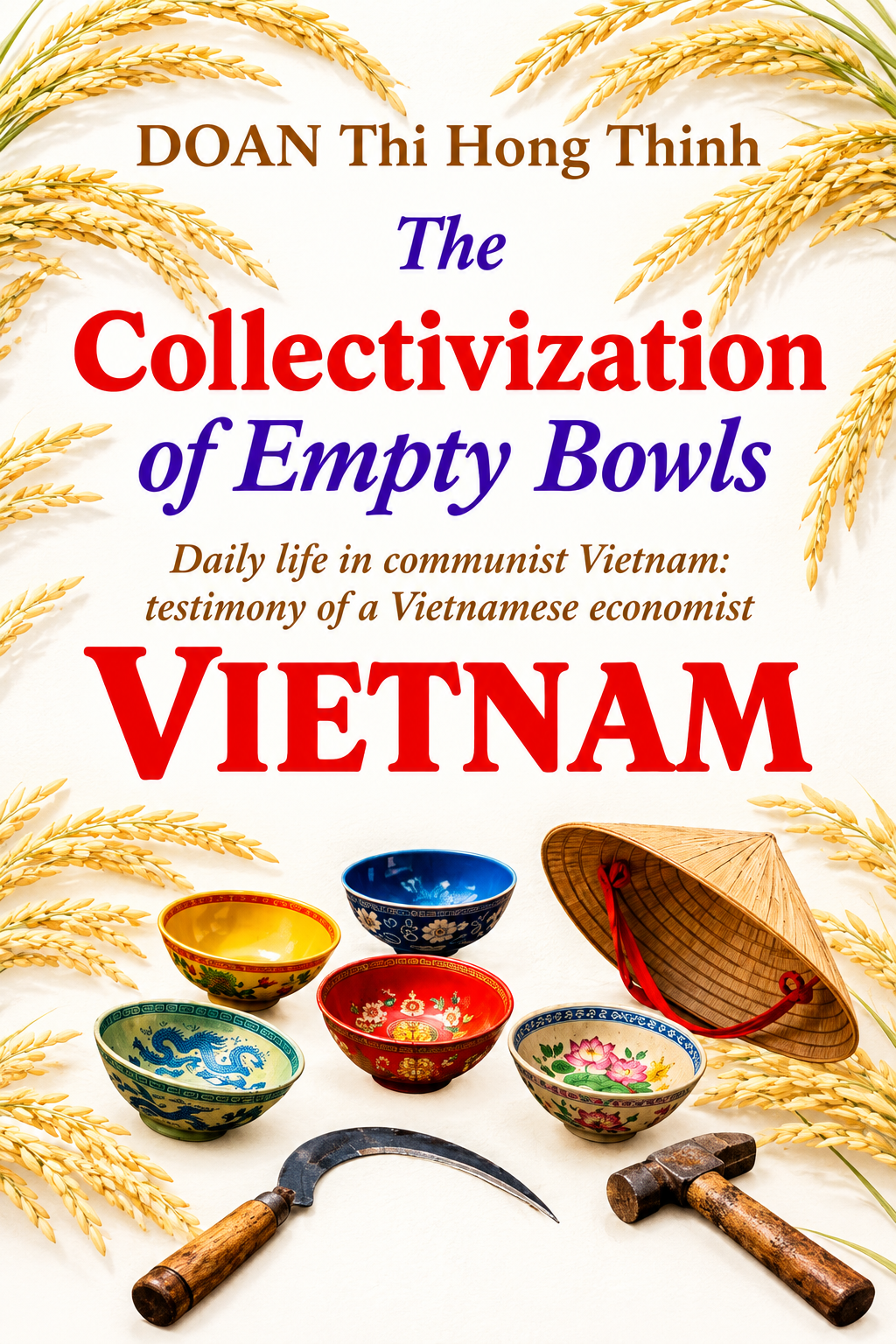
THE COLLECTIVIZATION OF EMPTY BOWLS: True Tragedy of COMMUNISM in Vietnam: Testimony from a Vietnamese Economist – A True Story in 100 Pocket-Size Pages.
How could an agricultural country experience shortages and hunger?
The story takes us into the workings of a planned economy: collectivization, rationing, cooperatives, state-controlled prices, and clandestine trade. What happens when the state largely determines what people produce, sell, and buy?
And why did Đổi Mới, launched in 1986, mark a decisive turning point in Vietnam’s economy? Without technical jargon, this book shows how government policies transformed the daily lives of farmers and why the reforms introduced in 1986 changed the lives of millions of people.
The Empty Bowls of Collectivization offers a family, historical, and economic perspective on a pivotal period in Vietnam’s history, while raising universal questions about the freedom to trade, the meaning of work and property, and each person’s ability to shape their own future.
Because behind statistics and economic policies, there are always human lives.
And sometimes, to understand the economy of a country, all you have to do is look at what is—or is not—in a simple bowl of rice.
This book is for anyone interested in Vietnam, the history of communism in Asia, development economics, or simply compelling family stories rooted in a powerful historical context.
About the Author
DOAN Thi Hong Thinh (All her books: https://payhip.com/HongThinhBooks) is an economist, researcher, and adventurer. She is the author of the France–Vietnam by Motorcycle series, which chronicles her motorcycle journeys across Europe, Mongolia, and Asia.
In The Empty Bowls of Collectivization, she brings together personal memories, Vietnamese culture, history, and economics to tell the story of an era that profoundly shaped her country and to shed light on the transformations that followed.
A personal account that offers a different way to discover Vietnam and understand how economic choices can transform people’s lives.