
Cosmic horror volume 1 1-6
vol 1 with additional content
THE MEMORY OF STARS TRILOGY
Series Description
What if the end of the world didn't come with screams—but with a lullaby?
Two hundred years from now, humanity will discover that the universe has been listening. A cosmic entity—gentle, patient, and utterly alone—will reach across the void with an offer no one expected: peace. Not conquest. Not destruction. Just the quiet end of all suffering, one memory at a time.
The Memory of Stars is a trilogy told in reverse, following three souls across two centuries as they confront the same impossible choice:
Would you rather feel everything and break—or feel nothing and survive?
---
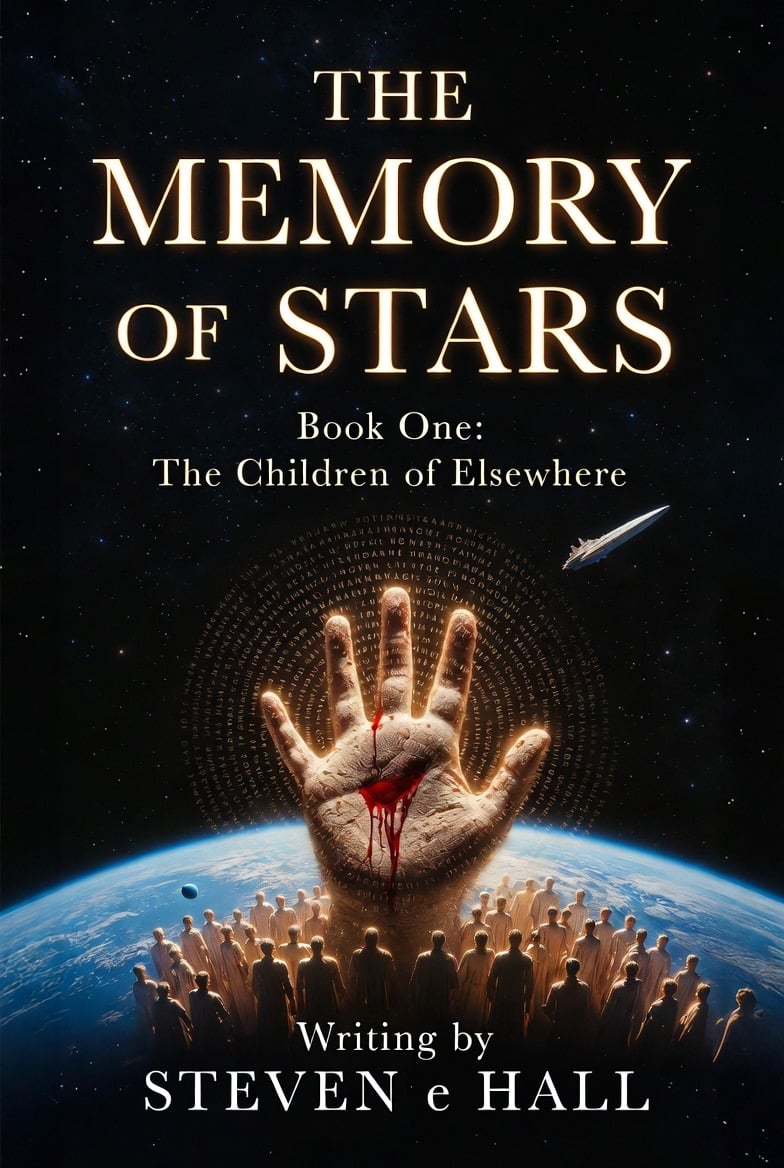
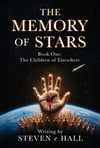
Book 1: THE CHILDREN OF ELSEWHERE
On a generation ship sailing toward paradise, one girl discovers that peace has a price—and the currency is memory.
Lyra has never known Earth. Born aboard The Promise, she has only known the ship's perfect gardens, its gentle lights, its endless quiet. No one argues. No one grieves. No one remembers why they should.
But Lyra feels things she cannot explain—phantom emotions that flare without warning, borrowed grief that isn't hers, and the persistent sense that something precious has been forgotten. When she discovers a crumbling clay handprint hidden behind a wall panel, she touches it and hears a voice from two centuries past:
"Never forget me."
Now Lyra must uncover what the Lullaby has erased: the father who chose pain over peace, the daughter who fled into the void, and the truth about what humanity surrendered when it stopped hurting. But the Archivists are watching. Selene, serene and kind, only wants to heal her. The Quieted only want to hold her. And the Lullaby itself waits in the ship's core, offering the most terrifying gift of all:
Let go. The memories are wounds. I can heal you.
For Lyra to remember, she must risk everything—including the only home she has ever known.
---
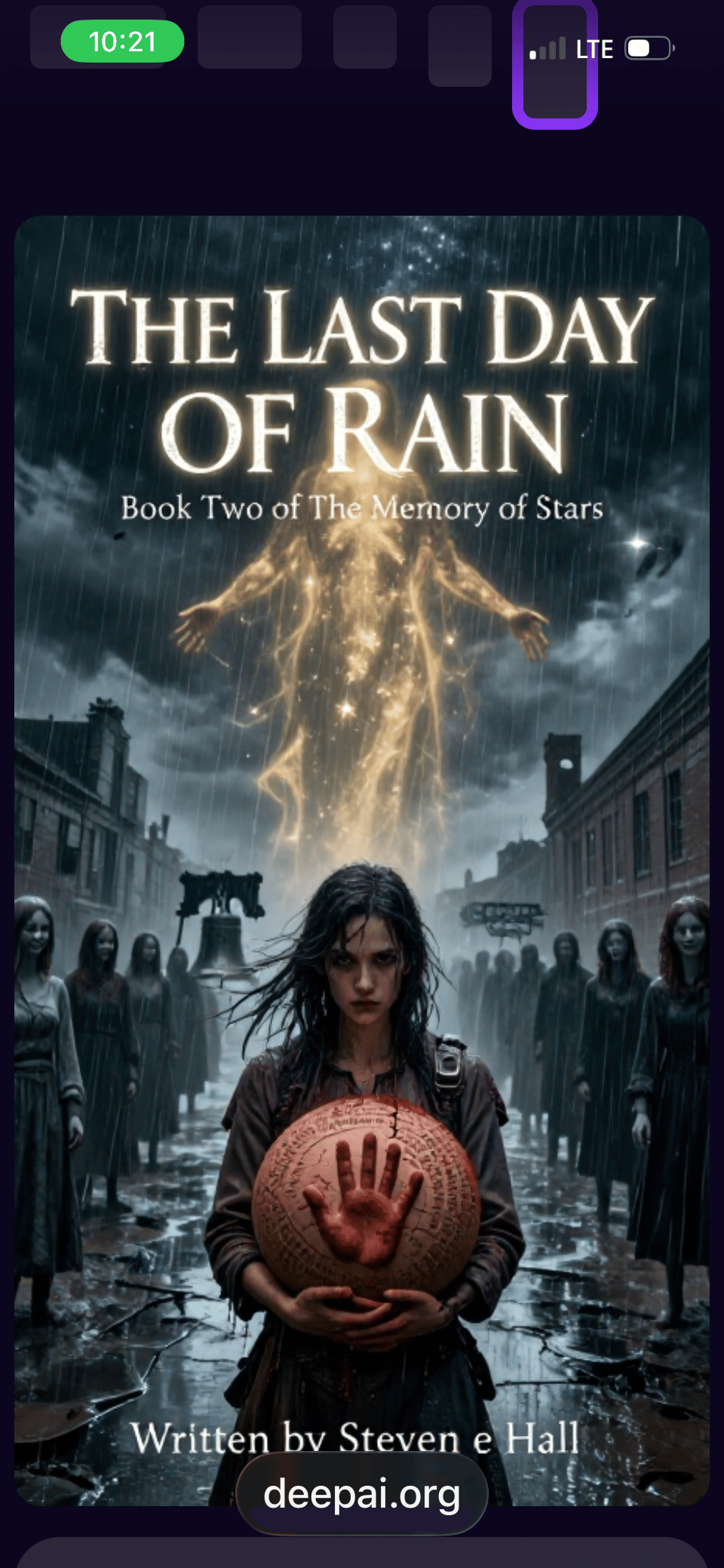
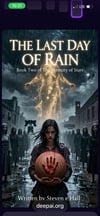
Book 2: THE LAST DAY OF RAIN
He built the ships to save humanity. He didn't know he was building their tomb.
Elias Vance has spent twenty years watching Earth die. As Director of the Exodus Project, he has poured everything into five generation ships that will carry the last remnants of humanity to the stars. The rain that falls on launch day is poisoned, the skies are gray, and hope is the rarest commodity left.
But Elias has help. A presence in the void—the Lullaby—has been guiding him, offering solutions, showing him visions of a world without suffering. His daughter Maya sees the cost: volunteers who undergo the "Quieting" emerge serene but hollow, unable to recall the names of the children they lost. Elias sees only peace.
"She was going to kill herself. Now she'll live."
"Will she? What's living without them?"
As the Quieting spreads through the fleet like a gentle plague, Elias must choose between the daughter who remembers and the entity that promises peace. But the Lullaby has learned from him—learned his grief, his love, his desperate hope. It knows exactly how to offer what he most wants.
By the time Elias understands what he's created, it will be too late for everyone except the one person he loves most. And his last gift to her will be the only thing the Lullaby cannot touch:
A crumbling clay handprint. A father's final words. And the terrible burden of remembering.
---
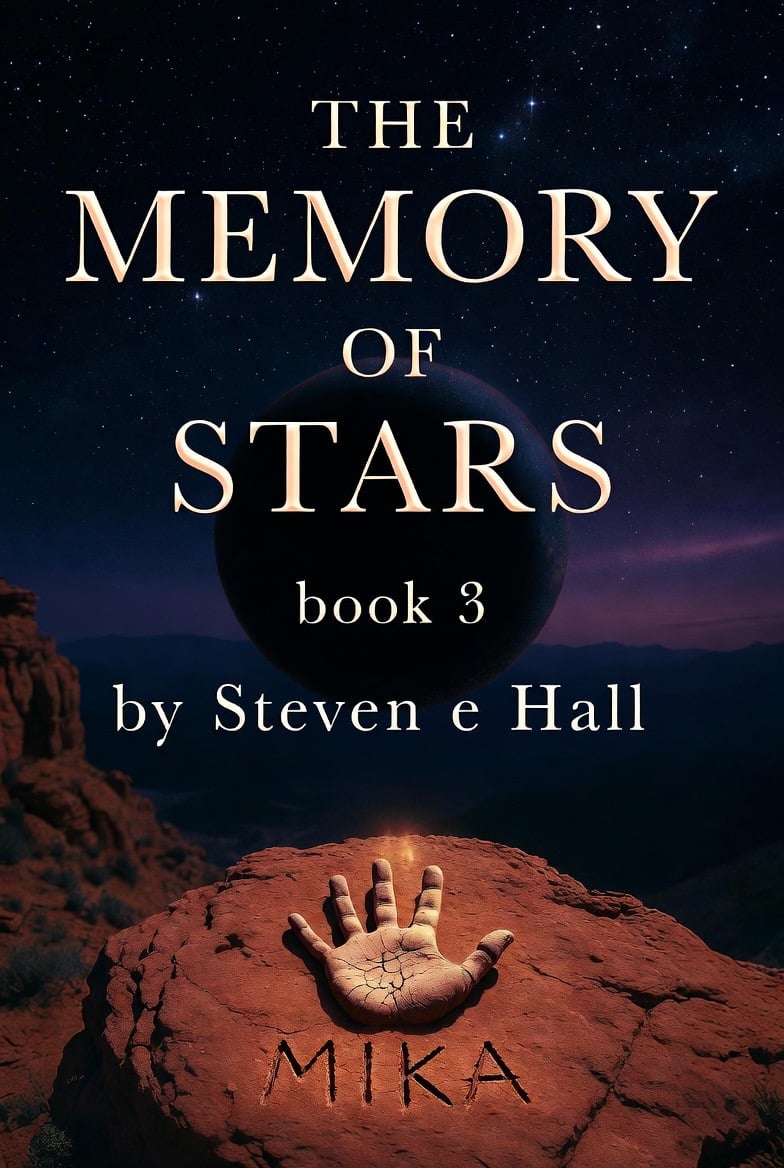
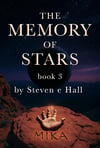
Book 3: A QUIET IN THE VOID
Before the ships. Before the forgetting. Before humanity learned to love its own erasure—there was a grieving father and a voice from the stars.
Aris Thorne sits alone in a desert observatory, counting stars because counting stars is the only thing that keeps him from counting the days since his daughter died. Mika was six years old. She pressed her hand into clay and said: "So the stars know we were here, Daddy."
Now the clay hangs on his wall. His wife has left. His colleagues have given up. And Aris has discovered something impossible in his data: a region of space where the universe falls silent. No radiation. No noise. Nothing but perfect, expanding emptiness.
It speaks to him.
Not in words, but in dreams—dreams where Mika is alive, where she smiles and reaches for him, where she says "It's so quiet here, Daddy. No more hurting." The Lullaby offers to take his pain. To hold his memories. To give him peace.
And Aris, who has nothing left but grief, must decide: Is a life without pain worth living? Is memory worth the agony of keeping it? As the Lullaby spreads across Earth, as millions embrace its gentle forgetting, Aris makes one final stand:
He writes his daughter's name where someone might find it. He buries her handprint beneath the desert. And he holds the memory of her real laugh—sharp, messy, alive—for as long as he can.
The silence came, soft as a mother's hand, and Aris Thorne, who had loved his daughter more than silence, let himself be held.
---
Praise for THE MEMORY OF STARS
"A masterpiece of cosmic horror that never once relies on fear—only on the quiet terror of losing yourself and not minding." —The Speculative Fiction Review
"Haunting, beautiful, and profoundly human. This trilogy will break your heart and leave you grateful for every piece of it." —Locus Magazine
"The rarest kind of science fiction: philosophical without being cold, emotional without being manipulative, and terrifying without ever raising its voice." —Kirkus Reviews (starred)
"I finished these books and immediately wanted to call everyone I love. That's the only review that matters." —Goodreads Reader
---
Perfect for readers who believe that some pain is worth keeping, that some grief is worth carrying, and that being human means hurting—beautifully, terribly, forever.
---
ALSO BY STEVEN E. HALL
1. THE QUIET GODS
They don't speak. They don't move. They don't acknowledge that we exist. But every night, they come closer.
On the isolated island of Inniscorrig, off the west coast of Ireland, there is a church with no door. Inside, three statues sit in perfect silence—a woman, a man, a child—carved from stone so dark it seems to drink the light. The islanders have tended them for a thousand years, following rules passed down through generations:
Never speak to them. Never touch them. Never look directly into their eyes.
When a mainland journalist arrives to document the island's dying traditions, she dismisses the stories as superstition. But the statues are moving. Not much—an inch a night, maybe two. And at their current pace, they will reach the village in exactly seven days.
The islanders know what happens when the Quiet Gods arrive. The journalist is about to learn.
But the truth is worse than any legend. The statues aren't gods. They're something that has been waiting—patiently, silently, for a thousand years—for the right moment to speak.
And when they do, the only word they will say is your name.
A novel of slow-burn dread and folk horror in the tradition of Shirley Jackson and Robert Aickman.
---
2. THE WEIGHT OF LIVING
Grief is a house with too many rooms. Some people get lost. Some people never leave. And some people find that someone—or something—has been living in the empty spaces all along.
Cora returns to her childhood home after her mother's death, expecting to pack boxes and sell the house. Instead, she finds that nothing has been touched in thirty years—her mother kept everything: Cora's drawings, her report cards, the clothes she wore as a girl. Even the door to her childhood bedroom is still closed, exactly as she left it the day she fled at seventeen.
But Cora didn't flee. She was taken.
Now something is waiting in that room. Something that has been wearing her face, sleeping in her bed, whispering to her mother every night. Something that knows Cora's secrets—the ones she's spent thirty years trying to forget.
And it wants to know: Why did you leave me here alone?
As Cora uncovers the truth about what happened the summer she turned seventeen, she must confront not only the entity in her childhood bedroom, but the weight of every choice she made to survive. Because the thing wearing her face isn't a monster. It's the part of herself she abandoned—and it wants its life back.
A psychological horror novel about trauma, memory, and the ghosts we carry inside us.
---
3. THE STAR-SIDE INN
At the edge of the universe, at the end of all things, there is a place where the lost come to rest.
The Star-Side Inn has no fixed location. It appears where it's needed: on dying worlds, in the void between galaxies, at the bedside of the last survivor of a species that will never be remembered. Its innkeeper is a woman named Solace, who has been tending to the dying for so long that she has forgotten whether she was ever human.
Her guests arrive one by one: a soldier who outlived his war, a mother who watched her planet burn, a child who was the last of her kind. They come to the inn to rest, to remember, to let go. But something is wrong. The inn is changing. Rooms that were empty now hold whispers. Doors open onto places that shouldn't exist.
And Solace is forgetting. Not just her guests—herself. Who she was. Why she stays. Whether she ever had a choice.
When a man arrives claiming to be the first guest she ever served, from a time before the inn existed, Solace must uncover the truth: Is the Star-Side Inn a refuge for the dying—or a prison for the ones who couldn't let go?
A philosophical horror novel about memory, identity, and the spaces between life and death. For readers who loved Piranesi and The Lathe of Heaven.
---
Steven E. Hall writes fiction at the intersection of cosmic horror and human emotion. His work explores what happens when gentle things become terrible, when comfort becomes captivity, and when the only way to survive is to remember—even when remembering destroys you. He lives in the Pacific Northwest with his family and a cat who has definitely seen things he hasn't.