
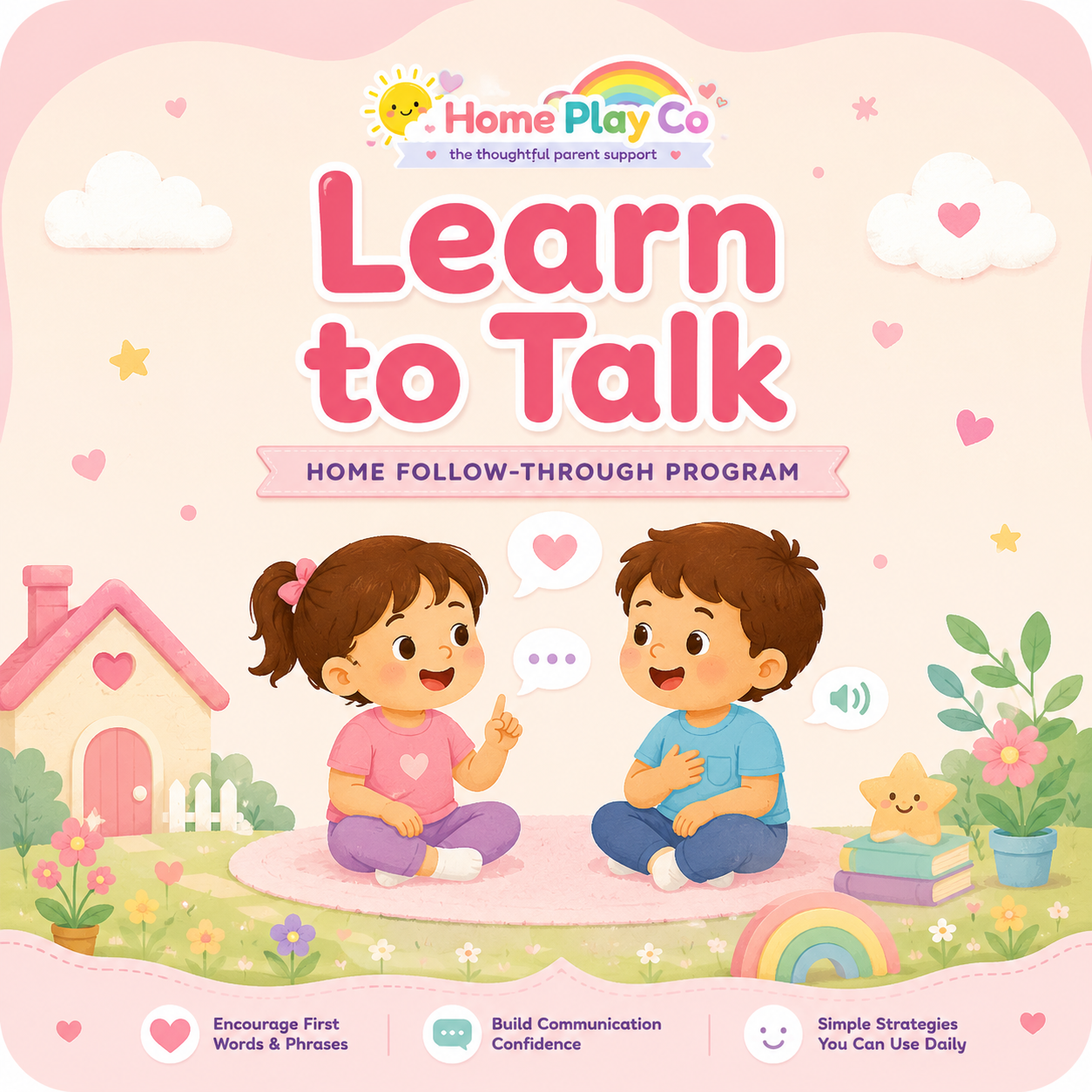
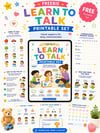
Learn to Talk Home Follow Through | Non-Verbal to Verbal Communication Skills Follow Up at Home
HELP YOUR CHILD BUILD EARLY COMMUNICATION, FIRST WORDS, REQUESTING, IMITATION, AND TALKING CONFIDENCE — WITH STEP-BY-STEP PARENT GUIDANCE AT HOME
If you’ve ever found yourself thinking:
• “Bakit hindi pa siya nagsasalita?”
• “May sounds naman siya, pero hindi pa nagagamit as words…”
• “Hindi niya pa nasasabi kapag may gusto siya…”
• “Mostly iyak, turo, hila, or tantrum kapag may kailangan…”
• “Parang naiintindihan naman niya minsan, pero hindi niya ma-express…”
• “Hindi ko alam kung paano ko siya kakausapin para mas ma-encourage siyang magsalita…”
Or maybe you’ve tried talking to your child more…
but you still feel unsure if you’re doing it the right way.
Because honestly, helping a child learn to talk can feel emotional.
Minsan hopeful ka kasi may sound, may eye contact, may response.
Tapos minsan biglang mapapaisip ka ulit:
“Bakit hindi pa rin siya nagsasabi?”
“Should I wait?”
“Should I push more?”
“Paano ko siya tutulungan sa bahay?”
“Anong words ba dapat unahin?”
“Paano kung puro iyak or hila lang kapag may gusto?”
You’re not alone.
And one important thing to remember is this:
Learning to talk is not just about repeating words.
It is not just about:
• “Say mama”
• “Say water”
• “Ano ‘to?”
• flashcards
• alphabet
• or making the child repeat labels again and again
Because before a child can confidently use words, many communication foundations often need to be built first.
Sometimes, children still need support with:
• noticing people and sounds
• copying actions
• imitating simple sounds
• using gestures
• requesting help or items
• making choices
• understanding simple words
• connecting words to real needs
• using communication during routines
• building confidence to try
And for many parents, the hardest part is not the effort.
It is not knowing what to do next at home.
This is where this guide comes in.
WHAT THIS IS
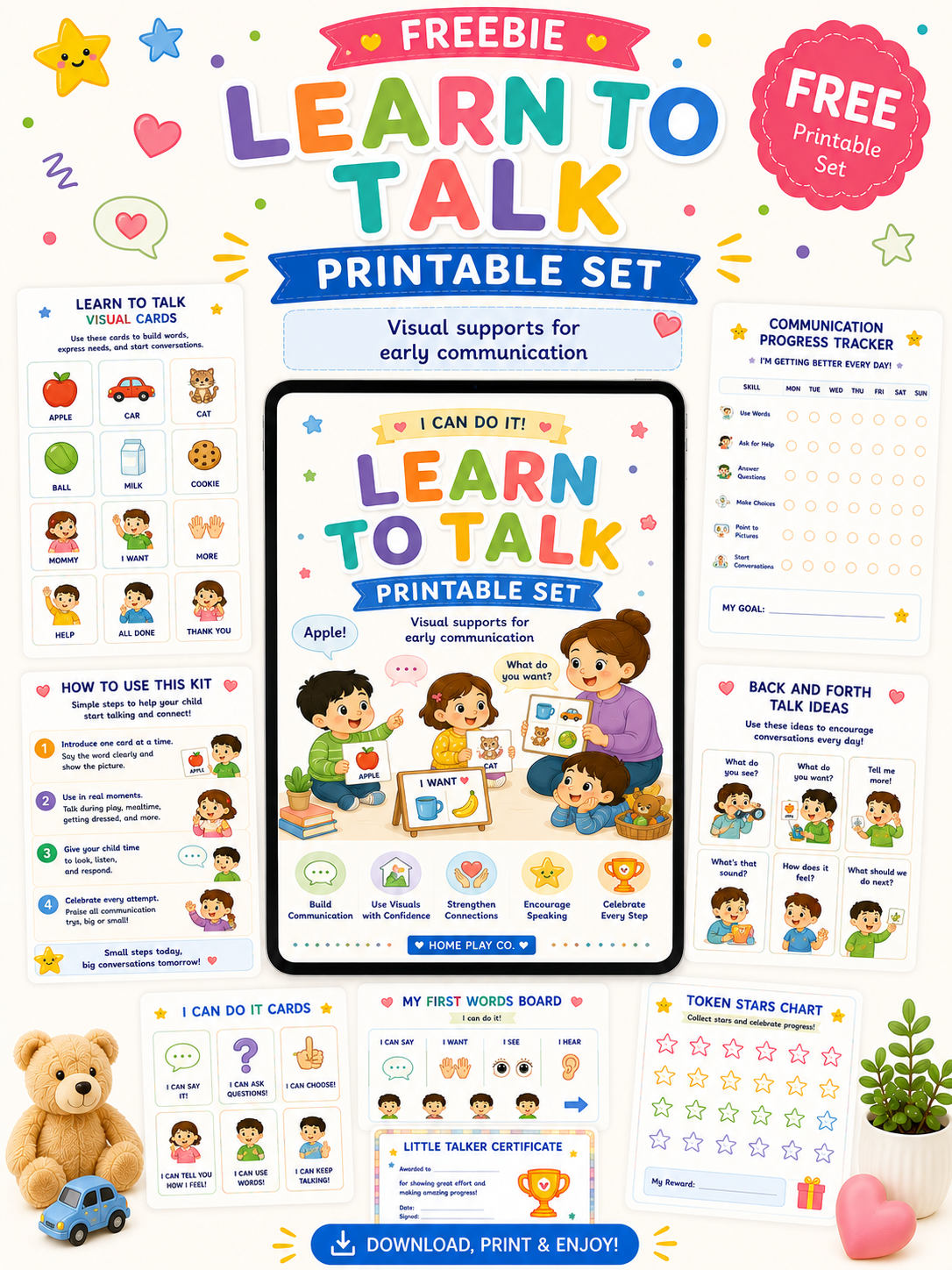
This is a Home Follow-Through Learn to Talk Guide designed to help you support your child’s early communication in a clearer, calmer, and more structured way at home.
This is not just a speech activity list.
This is not just flashcards.
This is not just “talk to your child more.”
And this is not a promise that your child will magically speak overnight.
This is a parent coaching system that helps you understand what early communication skills to practice first, how to guide your child during real routines, what to say, how to model words, and how to respond when your child is not yet talking, not yet imitating, or still mostly communicating through crying, pointing, pulling, or gestures.
It helps your child move from:
👉 “hindi pa nagsasalita / mostly gestures, crying, pulling, or sounds / hindi pa consistent mag-request”
to
👉 “more guided, more supported, and more exposed to meaningful communication moments at home”
Inside, you’ll learn:
• how to build communication foundations before expecting words
• how to encourage imitation through actions, sounds, and play
• how to model first words naturally during routines
• how to support requesting without forcing speech
• how to use choices, gestures, pointing, and simple words
• how to respond when your child cries, pulls, points, avoids, or gets frustrated
• how to turn everyday routines into communication practice
• how to support your child’s current communication level without pressure
All based on real home follow-through, not random speech tips, not flashcard drilling, and not pressure-based talking practice.
SAMPLE LIVE PREVIEW CLICK HERE
SAMPLE LIVE PREVIEW CLICK HERE
WHY THIS WORKS
Most parents are not lacking effort.
Many parents are already talking, singing, reading, asking questions, naming objects, and trying to make their child repeat words.
But effort can feel heavy when there is no clear sequence.
Because without guidance, speech practice can easily become:
“Say this.”
“Ano ‘to?”
“Repeat after mommy.”
“Bakit ayaw niya gumaya?”
“Bakit sound lang?”
“Bakit umiiyak instead of saying what he/she wants?”
And after a while, both parent and child can feel frustrated.
The parent feels worried.
The child feels pressured.
Communication starts feeling like a test.
And instead of helping the child enjoy interaction, talking practice becomes another stressful moment.
This guide works differently because early communication is broken down into smaller, more doable skills.
Not just:
“Make the child talk.”
But:
✔ Does my child notice and engage with me?
✔ Can my child copy actions?
✔ Can my child imitate sounds?
✔ Can my child use gestures or pointing?
✔ Can my child make choices?
✔ Can my child request in any way?
✔ Can my child connect words with real needs?
✔ How do I model words without forcing?
✔ What do I do when my child cries instead of communicating?
Instead of leaving you to guess, this guide gives you a clearer direction.
So you are not just waiting for speech to “come out.”
You are helping your child practice the foundation behind talking, one small communication moment at a time.
So instead of:
“Hindi ko alam kung paano ko siya tuturuan magsalita.”
It becomes:
“Mas alam ko na what to model, what to practice, what to wait for, and how to respond.”
SAMPLE LIVE PREVIEW CLICK HERE
SAMPLE LIVE PREVIEW CLICK HERE
WHAT’S INSIDE THE GUIDE
A structured Learn to Talk Home Follow-Through Guide designed to help parents support early communication, imitation, requesting, first words, gestures, sound play, understanding, and expressive language through real-life home practice.
Inside the guide, you’ll find:
• progressive early communication activities arranged by phase/category
• step-by-step parent coaching for every activity
• embedded parent scripts so you know what to say, model, pause, and repeat
• simple materials list using toys, routines, household items, books, food, and everyday objects
• activity goals and target communication skills
• support for nonverbal, minimally verbal, and emerging verbal children
• guidance for gestures, pointing, choices, sounds, word approximations, and simple words
• gentle support strategies for frustration, crying, pulling, grabbing, avoiding, or not responding yet
• real-life practice ideas for playtime, mealtime, bath time, dressing, clean-up, bedtime, and requesting routines
• parent-friendly explanations so you understand why talking is not only about repeating words
• organized Notion layout for easy access
• mobile-friendly guide you can open while interacting with your child
PROGRAM COVERAGE
COMMUNICATION READINESS
• building awareness that communication has a purpose
• helping your child notice people, actions, sounds, and routines
• creating more back-and-forth moments
• supporting early connection before expecting spoken words
ATTENTION AND ENGAGEMENT
• helping your child stay with simple interaction moments
• using your child’s interests to invite communication
• practicing short play-based connection
• reducing pressure by following what your child naturally enjoys
IMITATION FOUNDATION
• copying actions before expecting words
• practicing simple movement imitation
• copying play actions like tap, shake, push, give, open, close, and more
• helping your child learn that copying is part of communication
SOUND IMITATION
• playing with fun sounds during routines and play
• encouraging animal sounds, vehicle sounds, exclamations, and simple syllables
• accepting approximations instead of demanding perfect words
• helping your child feel safe trying sounds
GESTURES AND POINTING
• encouraging pointing, reaching, giving, showing, waving, and nodding
• using gestures as meaningful communication
• supporting children who are not yet ready for spoken words
• building the bridge between nonverbal communication and verbal expression
REQUESTING SKILLS
• helping your child ask for items, help, more, open, again, stop, or all done
• using choices to encourage communication
• supporting verbal and nonverbal requests
• reducing frustration by giving your child a clearer way to express needs
FIRST WORD MODELING
• modeling functional first words during real routines
• focusing on useful words, not just labels
• using words like more, open, help, eat, drink, go, up, down, stop, done, mama, papa, and favorite items
• helping your child connect words with real-life meaning
RECEPTIVE LANGUAGE SUPPORT
• helping your child understand simple words and instructions
• pairing words with actions and routines
• practicing simple “give,” “get,” “open,” “put,” “come,” “sit,” and “look” moments
• supporting understanding before expecting expressive language
CHOICE-MAKING
• offering two clear choices
• helping your child point, reach, look, gesture, or say a word approximation
• reducing guessing during daily routines
• supporting communication without forcing speech
PLAY-BASED COMMUNICATION
• using toys and simple play to encourage interaction
• creating reasons to communicate during play
• practicing turn-taking, imitation, requesting, and sound play
• making communication feel natural instead of test-like
DAILY ROUTINE COMMUNICATION
• practicing communication during mealtime, bath time, dressing, clean-up, bedtime, and play
• using repeated words during familiar routines
• helping your child hear and use language in meaningful moments
• building carryover from activity practice to real life
FRUSTRATION AND COMMUNICATION SUPPORT
• helping your child communicate before crying or melting down
• offering simple scripts and choices
• accepting gestures, sounds, pointing, or approximations
• guiding your child toward safer, clearer communication
SAMPLE LIVE PREVIEW CLICK HERE
SAMPLE LIVE PREVIEW CLICK HERE
HOW YOU WILL USE THIS
This is not a flashcard-only speech program.
This is not a “repeat after me” drill.
This is not a pressure-based talking method.
You use this when:
• your child is not yet talking
• your child is starting to make sounds but not words yet
• your child says a few words but does not use them consistently
• your child mostly points, pulls, cries, grabs, or leads you to what they want
• your child has difficulty requesting
• your child does not imitate words yet
• you want to know how to model language during real routines
• you want clearer direction on how to support talking at home
Simple flow:
• Start with your child’s current communication level
• Choose one communication skill to practice
• Use the suggested parent script
• Model words naturally during real play or routines
• Pause and give your child a chance to respond
• Accept gestures, sounds, pointing, or word attempts
• Repeat through everyday routines without pressure
No forcing.
No constant “say this.”
No making communication feel like a test.
The goal is not to make your child talk perfectly right away.
The goal is to help your child slowly build connection, imitation, requesting, sounds, first words, and communication confidence through parent-guided follow-through at home.
SAMPLE LIVE PREVIEW CLICK HERE
SAMPLE LIVE PREVIEW CLICK HERE
WHO THIS IS FOR
✔ parents of toddlers and preschoolers who need support with early communication and first words
✔ parents of kids around ages 1.5–5 who are not yet talking, minimally verbal, or just starting to use words
✔ also helpful for some older kids who may still need support with early communication foundations because of developmental delays, speech delay, language delay, neurodevelopmental conditions, or other learning/developmental needs
✔ kids who:
• are not yet speaking
• use sounds but not clear words yet
• say a few words but not consistently
• mostly point, pull, cry, grab, or lead adults to what they want
• have difficulty requesting help or items
• do not yet imitate sounds or words
• need support with gestures, pointing, choices, and first words
• get frustrated because they cannot express needs clearly
• need more guided communication practice during daily routines
✔ parents who want structured communication support at home
✔ parents who want to help their child talk without forcing, pressuring, or relying only on flashcards
WHO THIS IS NOT FOR
✘ if you want instant talking results overnight
✘ if you want a flashcard-only speech program
✘ if you prefer forcing your child to repeat words before they are ready
✘ if you do not want to model, wait, repeat, and support communication during real routines
✘ if you are looking for a replacement for speech therapy, developmental evaluation, medical advice, hearing assessment, or professional intervention
✘ if your child has sudden speech regression, hearing concerns, feeding concerns, or other developmental red flags that need professional assessment
This is for gradual, consistent, parent-guided early communication follow-through at home.
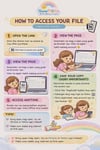
HOW TO ACCESS AFTER PURCHASE VIA WEBSITE
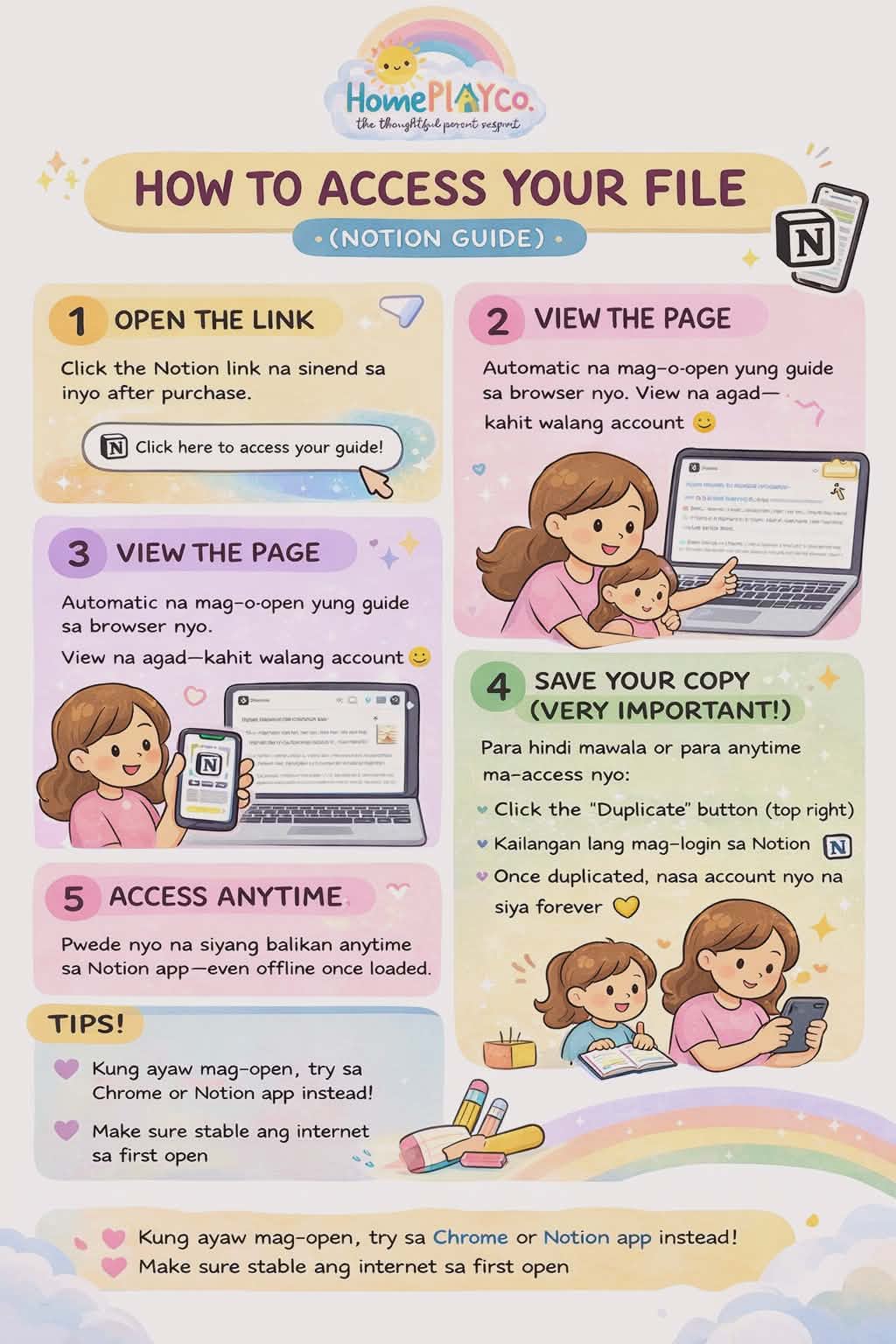
After payment, Payhip website will automatically provide the file/access details. Inside, you’ll find the Notion guide link.
Open the link using your phone, tablet, or laptop.
You can view the guide directly through the link, or duplicate it to your own free Notion account if you prefer having your own copy.
No need to print everything.
No complicated setup.
Just open the link, choose the activity or communication skill, and follow the guide step by step.
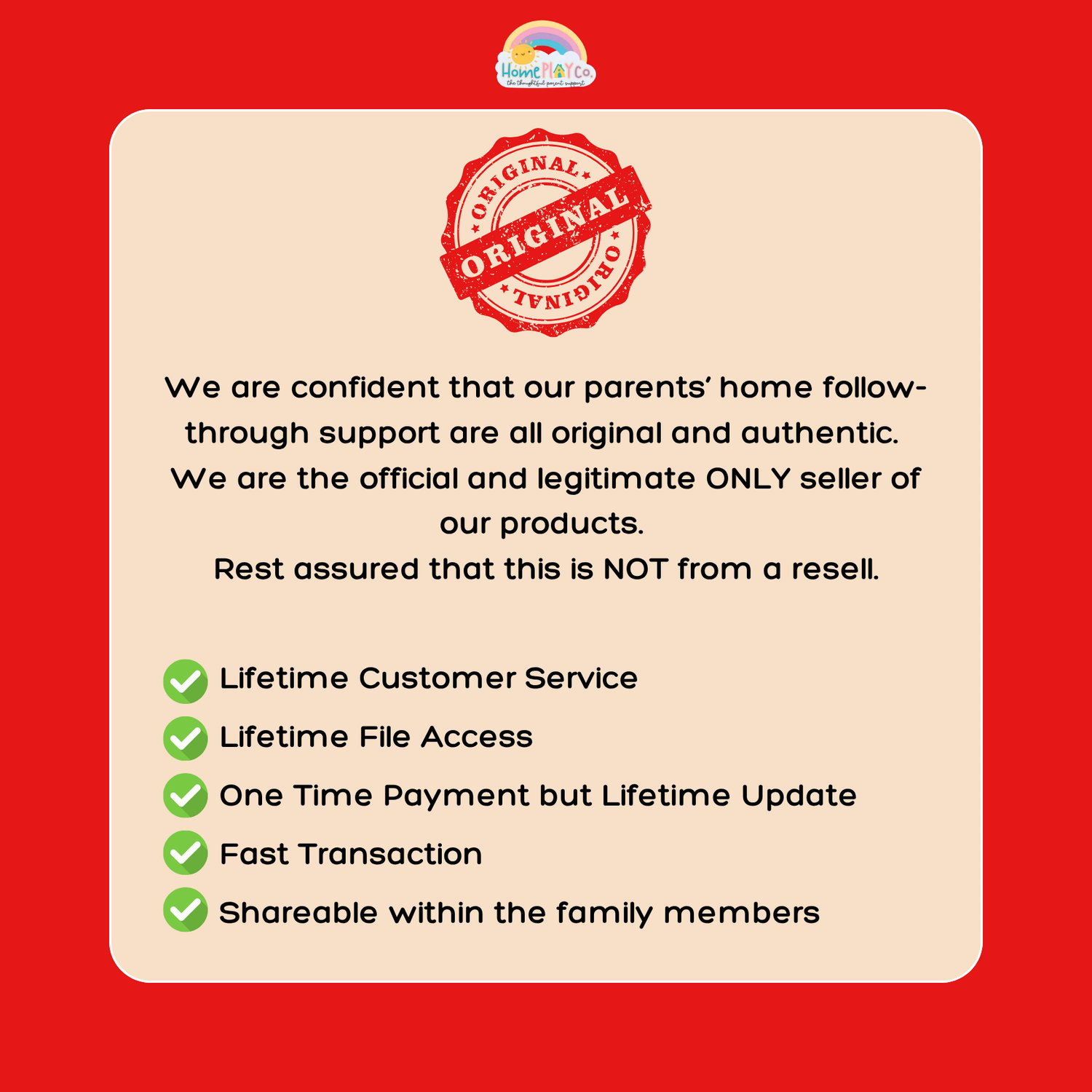
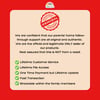
This is a one-time payment only.
You’ll get lifetime access to the guide, including future updates if we improve or add helpful parts to the guide.
After-sales assistance is also available. If you have questions about accessing the guide or using it, you may message us on our Facebook Page.
ASSISTED PURCHASE TRANSACTION VIA FB PAGE MESSENGER:
If you don’t have a debit card, credit card, or PayPal account, you may still purchase through assisted transaction via Messenger.
Just send us a message on our Facebook Page and we’ll guide you through the payment and access process.
After payment confirmation, we will send your Notion access link through Messenger or email.
Facebook Page:
https://www.facebook.com/homeplaycomainfbpage
WHAT YOU WILL RECEIVE
• instant access link after purchase
• full digital guide inside Notion
• organized early communication follow-through system by phase/category
• step-by-step parent coaching
• embedded parent scripts
• support for nonverbal, minimally verbal, and emerging verbal children
• communication practice for gestures, pointing, sounds, choices, requesting, and first words
• mobile-friendly access
• one-time payment only
• lifetime access to the guide link
• lifetime updates whenever improvements or helpful additions are added
• after-sales assistance for access or guide-related questions
• option to duplicate to your own Notion account optional only
SAMPLE LIVE PREVIEW CLICK HERE
SAMPLE LIVE PREVIEW CLICK HERE
FAQs
Is this only for nonverbal children?
No. This can support nonverbal, minimally verbal, and emerging verbal children who need help with communication foundations, requesting, gestures, imitation, sound play, and first words.
Is this for diagnosed kids only?
No. This can be used whether your child has a diagnosis or not.
What age is this for?
This is mainly for toddlers and preschoolers around ages 1.5–5, but some older children may still benefit if they need support with early communication foundations because of developmental delays, language delays, speech delays, neurodevelopmental conditions, or other learning/developmental needs.
Will this make my child talk right away?
No guide can guarantee instant talking. Progress depends on your child’s readiness, consistency, communication level, developmental needs, hearing, environment, and the level of support they need. This guide helps you build the foundation and create more meaningful communication opportunities at home.
What if my child does not imitate words yet?
That is okay. The guide includes earlier foundations like action imitation, gestures, sound play, choices, and requesting before expecting clear words.
What if my child only points, pulls, or cries?
The guide helps you respond to those communication attempts and slowly shape them into clearer gestures, sounds, word attempts, or simple requests.
Kailangan ba verbal na ang child para magamit ito?
No. This guide is especially helpful for children who are not yet fully verbal. You can use gestures, visuals, pointing, choices, sounds, modeled words, and simple communication opportunities.
Does this replace speech therapy?
No. This is a parent-friendly home follow-through guide. It does not replace speech therapy, developmental evaluation, medical advice, hearing assessment, or professional intervention.
What if my child is already in therapy?
You can use this as home follow-through support between sessions, as long as it aligns with your child’s therapist’s guidance. The goal is to help parents create more communication opportunities during everyday routines.
What if my child has autism, GDD, or developmental delay?
This guide may be used as gentle home support for some children with developmental or neurodevelopmental needs, as long as activities are matched to the child’s current ability and done with patience, flexibility, and proper professional guidance when needed.
Do I need special materials?
No. Most activities use toys, books, food, household items, routines, songs, and everyday interactions.
Kailangan ba matagal gawin every day?
No. Short, repeated communication moments during everyday routines are often more doable than long sessions. Consistency matters more than length.
What if my child gets frustrated when I try to make them talk?
The guide avoids forcing speech. It focuses on modeling, waiting, offering choices, accepting attempts, and giving your child a clearer way to communicate.
Can I use this with other HFT guides?
Yes. Learn to Talk connects well with Start to Converse, Following Instructions, Social Skills and Manners, Big Emotions and Behaviour, Sensory Regulation, Focus and Attention, and Routine and Transitions.
What if my child suddenly stopped talking or lost words?
If your child had words and suddenly lost them, please consult a developmental pediatrician, speech-language pathologist, or other qualified professional. Sudden regression should be assessed professionally.
SAMPLE LIVE PREVIEW CLICK HERE
SAMPLE LIVE PREVIEW CLICK HERE
FINAL NOTE
Your child is not automatically “tamad magsalita,” “ayaw lang,” or “hindi nakikinig” just because talking has not come easily yet.
And you are not a bad parent just because you feel worried, confused, or unsure what to do at home.
Sometimes, what your child needs is not more pressure to repeat.
Sometimes, what you need is not another random speech tip.
Sometimes, the missing piece is a clearer step-by-step way to support communication during real everyday moments.
Learning to talk is not just about words.
It is about connection, imitation, gestures, understanding, requesting, confidence, and repeated chances to communicate.
One sound.
One gesture.
One shared moment.
One request.
One guided routine at a time.
This guide is designed to give you clearer direction, so you are not left guessing daily how to help your child communicate.
For older kids with developmental, communication, sensory, or neurological concerns, use the activities gently, slowly, and with the right level of support.
This system helps you support your child’s early communication, first words, requesting, imitation, and talking confidence step by step, at home.
Should you have any concerns, pls direct message us to our Facebook Page:
https://www.facebook.com/homeplaycomainfbpage
We’d love to assist you further!
Thank you so much!