
Self Regulation Support Home Follow Through
HELP YOUR CHILD BUILD SELF REGULATION, CALM BODY AWARENESS, CO-REGULATION, WAITING, EMOTIONAL RECOVERY, AND CALM-DOWN ROUTINES — WITH STEP-BY-STEP PARENT GUIDANCE AT HOME
If you’ve ever found yourself thinking:
• “Hirap siyang kumalma kapag upset, frustrated, excited, or overwhelmed…”
• “Kapag may big emotions, parang hindi niya alam paano babalik sa calm body…”
• “Minsan mabilis siyang ma-trigger sa waiting, transitions, no, not yet, or changes…”
• “Hindi ko alam paano siya tuturuan mag-calm down without forcing him/her to stop crying agad…”
• “Kapag sinasabi kong calm down, parang mas lalo lang siyang nai-stress…”
• “Gusto ko siyang turuan ng self regulation, pero hindi ko alam paano sisimulan sa bahay…”
Or maybe you’ve tried calming your child already…
“Stop crying.”
“Calm down.”
“Okay na.”
“Wait lang.”
“Don’t shout.”
“Take a deep breath.”
Pero in the actual moment, your child may still cry harder, run away, shout, refuse, cling, hit, throw, hide, or shut down.
Because honestly, self regulation can feel confusing for parents.
Minsan akala natin kapag sinabi nating “calm down,” alam na agad ng child what to do.
Pero for many children, calm down is not yet a skill they can do alone.
They may still need you to guide their body.
They may still need help noticing what they feel.
They may still need support before, during, and after big emotions.
And then you start wondering:
“Bakit hindi niya makontrol emotions niya?”
“Too much ba yung reaction niya?”
“Paano ko siya tutulungan mag-calm?”
“Dapat ba hayaan ko lang umiyak?”
“Dapat ba i-comfort ko?”
“Paano ko siya tuturuan ng self regulation without making him/her feel wrong for having emotions?”
You’re not alone.
And one important thing to remember is this:
Self regulation is not just about stopping big emotions.
It is not just about:
• being quiet
• sitting still
• stopping crying immediately
• following “calm down” on command
• ignoring emotions
• or expecting the child to manage feelings alone
Because for many children, self regulation is made up of many small skills that still need to be practiced step by step.
Sometimes, children still need support with:
• noticing body signals
• understanding what calm body feels like
• accepting co-regulation from an adult
• naming simple feelings
• waiting for short moments
• handling no, stop, or not yet
• shifting during transitions
• recovering after big emotions
• using simple calming actions
• building an independent calm-down routine slowly
And for many parents, the hardest part is not wanting the child to calm down.
It is knowing how to guide the child before, during, and after emotional moments without shouting, forcing, over-explaining, or giving in every time.
This is where this guide comes in.
WHAT THIS IS
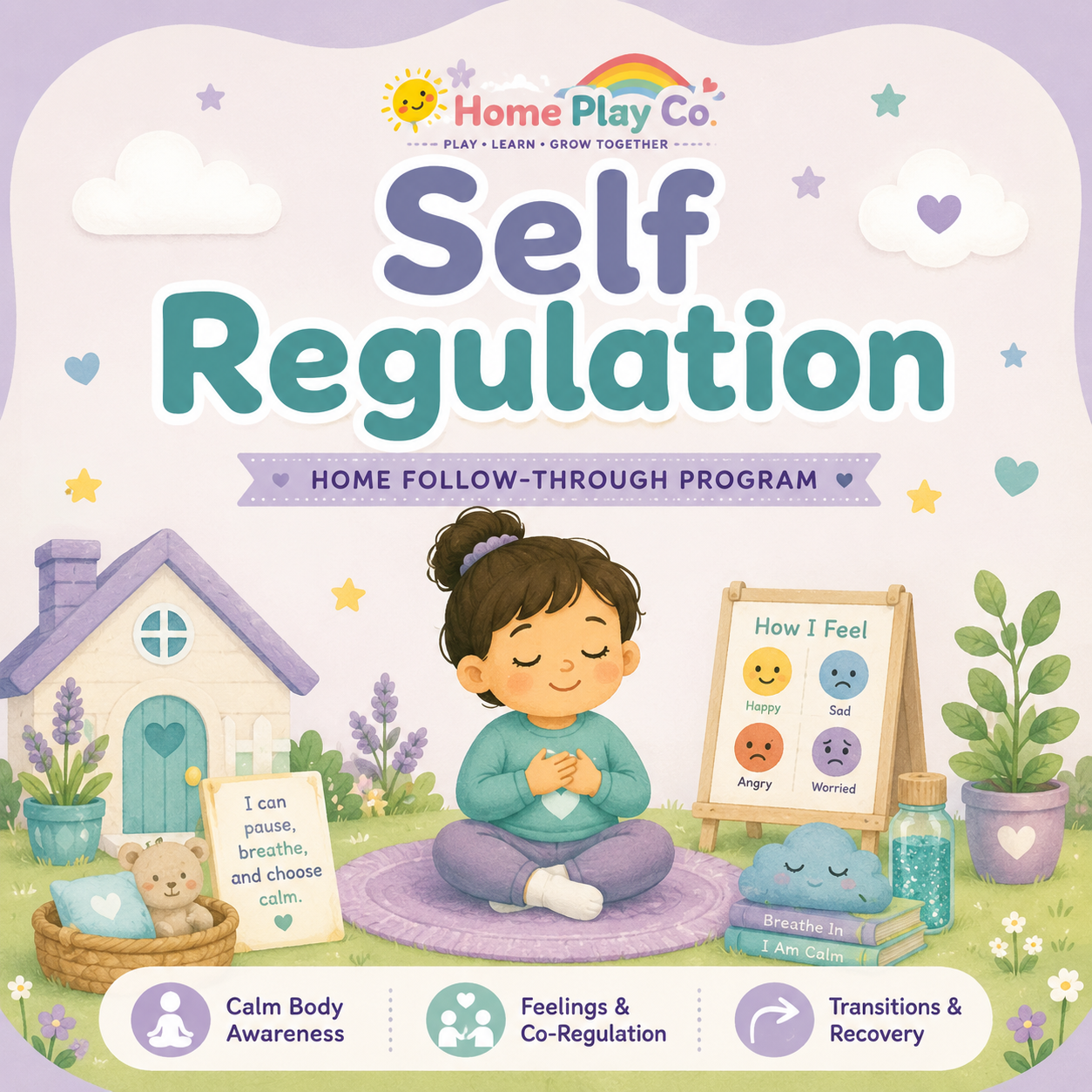
This is a Home Follow-Through Self Regulation Guide designed to help you support your child’s calm body awareness, co-regulation, feelings awareness, waiting, transition regulation, emotional recovery, and calm-down routines in a clearer, calmer, and more structured way at home.
This is not just a calming activity list.
This is not just breathing exercises.
This is not just “teach your child to calm down.”
And this is not a promise that your child will instantly regulate emotions alone overnight.
This is a parent coaching system that helps you understand what self regulation skills to practice first, how to guide your child through emotional moments, what to say, how to co-regulate, and how to respond when your child cries, refuses, gets overwhelmed, melts down, shuts down, or cannot calm yet.
It helps your child move from:
👉 “hirap kumalma / overwhelmed agad / hindi pa alam paano mag-wait, accept no, or recover after big emotions”
to
👉 “more guided, more supported, and more able to practice calm body awareness, co-regulation, waiting, and emotional recovery at home”
Inside, you’ll learn:
• how to build calm body awareness before expecting self-control
• how to support your child through co-regulation
• how to introduce simple feelings awareness
• how to practice waiting and delaying in small steps
• how to guide your child through no, stop, and not yet moments
• how to support transition regulation and recovery after big emotions
• how to slowly build an independent calm-down routine
• how to respond when your child cries, refuses, gets frustrated, melts down, or shuts down
All based on real home follow-through, not random calming tips, not shame-based discipline, and not expecting the child to regulate alone before they are ready.
SAMPLE LIVE PREVIEW CLICK HERE
SAMPLE LIVE PREVIEW CLICK HERE
WHY THIS WORKS
Most parents are not lacking patience.
Many parents are already comforting, explaining, reminding, distracting, hugging, giving space, setting limits, and trying to help their child calm down.
But effort can feel heavy when there is no clear structure.
Because without guidance, self regulation practice can easily become:
“Calm down.”
“Stop crying.”
“Okay na yan.”
“Don’t shout.”
“Wait lang.”
“Bakit ang big ng reaction?”
And after a while, both parent and child can feel overwhelmed.
The parent feels drained.
The child feels misunderstood.
Emotional moments become stressful.
And instead of learning regulation gradually, the child may depend only on crying, avoiding, shouting, clinging, refusing, or melting down to express what feels hard.
This guide works differently because self regulation is broken down into smaller, more doable skills.
Not just:
“Make the child calm.”
But:
✔ Does my child know what calm body feels like?
✔ Can my child notice when the body is too fast, too tight, or too overwhelmed?
✔ Can my child accept help from an adult to calm down?
✔ Can my child wait for a short moment?
✔ Can my child handle not yet with support?
✔ Can my child recover after crying or frustration?
✔ What do I say when my child is already overwhelmed?
✔ How do I support without giving in to everything?
✔ How do I help my child slowly build a calm-down routine?
Instead of leaving you to guess, this guide gives you a clearer direction.
So you are not just saying “calm down” and hoping your child can do it.
You are helping your child practice the foundation behind regulation, one small supported moment at a time.
So instead of:
“Hindi ko alam paano siya tutulungan mag-regulate.”
It becomes:
“Mas alam ko na what to practice, what to say, how to co-regulate, and how to support my child step by step.”
SAMPLE LIVE PREVIEW CLICK HERE
SAMPLE LIVE PREVIEW CLICK HERE
WHAT’S INSIDE THE GUIDE
A structured Self Regulation Home Follow-Through Guide designed to help parents support calm body awareness, co-regulation, feelings awareness, waiting, handling no and not yet, transition regulation, recovery after big emotions, and independent calm-down routines through real-life home practice.
Inside the guide, you’ll find:
• progressive self regulation activities arranged by phase/category
• step-by-step parent coaching for every activity
• embedded parent scripts so you know what to say before, during, and after emotional moments
• simple materials list using common home items, routines, visuals, movement, comfort objects, and calming tools
• activity goals and target self regulation skills
• support for children who cry, refuse, shout, cling, run away, shut down, get overwhelmed, or struggle to calm
• guidance for calm body awareness, co-regulation, feelings awareness, waiting, accepting limits, transitions, recovery, and calm-down routines
• gentle support strategies for frustration, big emotions, refusal, dysregulation, and emotional recovery
• real-life practice ideas for playtime, waiting, transitions, mealtime, bedtime, clean-up, learning tasks, and daily routines
• parent-friendly explanations so you understand why self regulation is not only about stopping behavior
• organized Notion layout for easy access
• mobile-friendly guide you can open while guiding your child
PROGRAM COVERAGE
CALM BODY AWARENESS
• helping your child notice what calm body feels like
• practicing body cues like slow body, quiet body, gentle hands, and relaxed body
• helping your child compare calm body and fast body
• building awareness before expecting independent calming
CO-REGULATION WITH PARENT
• supporting your child through adult-guided calming
• using calm voice, simple words, body support, and predictable responses
• helping your child borrow your calm before finding their own
• guiding emotional moments without over-explaining
FEELINGS AWARENESS
• naming simple feelings like happy, sad, mad, scared, tired, and frustrated
• connecting feelings to real situations
• helping your child understand emotions without shame
• supporting children who cannot yet explain feelings verbally
WAITING AND DELAYING
• practicing short wait moments
• helping your child tolerate not getting something immediately
• using simple scripts for wait, not yet, later, and after
• building frustration tolerance gradually
HANDLING NO, STOP, AND NOT YET
• supporting disappointment when the answer is no
• helping your child understand stop and not yet with guidance
• giving safe alternatives when something is not allowed
• setting limits without shame or fear-based teaching
TRANSITION REGULATION
• helping your child shift from one activity to another
• supporting emotions during stopping, clean-up, leaving, or changing routines
• practicing calm transition cues
• reducing overwhelm during daily routine changes
RECOVERY AFTER BIG EMOTIONS
• helping your child return to calm after crying, frustration, or dysregulation
• reconnecting after hard moments
• practicing simple repair or reset routines
• supporting emotional safety after big feelings
CALMING ACTIONS
• practicing simple calming strategies during calm moments first
• using breathing, squeezing, heavy work, quiet space, movement, or comfort routines
• helping your child discover what supports their body
• building a calm-down toolkit gradually
COMMUNICATION DURING EMOTIONS
• helping your child ask for help, break, space, more time, stop, or done
• using words, gestures, visuals, pointing, choices, or supported communication
• reducing frustration by giving your child a clearer way to express needs
• supporting children who are not yet fully verbal
INDEPENDENT CALM-DOWN ROUTINE
• slowly building a routine your child can use with less help over time
• practicing simple steps like pause, breathe, squeeze, ask help, or go to calm space
• helping your child recognize when they need support
• building independence gradually, not suddenly
REAL-LIFE SELF REGULATION PRACTICE
• practicing self regulation during actual home routines
• using waiting, transitions, play, mealtime, clean-up, bedtime, and tasks as practice moments
• building carryover from calm practice to real-life emotions
• helping regulation become part of everyday home rhythm
SAMPLE LIVE PREVIEW CLICK HERE
SAMPLE LIVE PREVIEW CLICK HERE
HOW YOU WILL USE THIS
This is not a punishment-based behavior program.
This is not just a calming activity list.
This is not a quick-fix calm-down method.
You use this when:
• your child struggles to calm down after crying, frustration, or overwhelm
• your child has difficulty waiting or accepting not yet
• your child gets upset during transitions or changes
• your child does not yet know how to express feelings clearly
• your child needs co-regulation before independent calming
• your child shuts down, cries, clings, refuses, or becomes dysregulated
• you want to support emotions without forcing your child to stop feeling
• you want clearer direction on how to build self regulation at home
Simple flow:
• Start with your child’s current regulation level
• Choose one self regulation skill to practice
• Practice first during calm moments
• Use the suggested parent script
• Guide your child through small emotional challenges
• Co-regulate before expecting independent calming
• Repeat during real routines without pressure
No shame-based discipline.
No expecting instant calm.
No making emotions feel wrong.
The goal is not to make your child stop crying immediately or regulate alone right away.
The goal is to help your child slowly build calm body awareness, co-regulation, feelings awareness, waiting, recovery, and calm-down routines through parent-guided follow-through at home.
SAMPLE LIVE PREVIEW CLICK HERE
SAMPLE LIVE PREVIEW CLICK HERE
WHO THIS IS FOR
✔ parents of toddlers, preschoolers, and young children who need support with self regulation, calming, waiting, emotions, and recovery after big feelings
✔ parents of kids around ages 2–7 who cry, refuse, cling, get overwhelmed, struggle with waiting, or have difficulty calming down
✔ also helpful for some older kids who may still need support with self regulation, co-regulation, emotional awareness, waiting, transitions, recovery, or calm-down routines because of developmental delays, neurodevelopmental conditions, sensory needs, communication delays, or other learning/developmental needs
✔ kids who:
• struggle to calm down after crying or frustration
• need help noticing body signals
• have difficulty waiting or accepting not yet
• get upset during transitions or changes
• need adult support to calm down
• struggle to express feelings clearly
• shut down, cling, refuse, or become overwhelmed
• need more guided practice with calm-down routines
✔ parents who want structured self regulation support at home
✔ parents who want to guide emotions gently without relying only on shouting, threats, punishment, or giving in
WHO THIS IS NOT FOR
✘ if you want instant emotional regulation overnight
✘ if you want punishment-only or fear-based discipline
✘ if you want random calming activities only without parent guidance
✘ if you expect your child to calm down independently before they are ready
✘ if you do not want to model, guide, repeat, and support your child during emotional moments
✘ if you are looking for a replacement for therapy, professional behavior support, developmental evaluation, medical advice, or crisis intervention
✘ if your child has intense aggression, self-injury, elopement, severe meltdowns, or safety risks that need professional support
This is for gradual, consistent, parent-guided self regulation follow-through at home.
HOW TO ACCESS AFTER PURCHASE VIA WEBSITE
After payment, Payhip website will automatically provide the file/access details. Inside, you’ll find the Notion guide link. Open the link using your phone, tablet, or laptop.
You can view the guide directly through the link, or duplicate it to your own free Notion account if you prefer having your own copy.
No need to print everything.
No complicated setup.
Just open the link, choose the activity or regulation skill, and follow the guide step by step.
This is a one-time payment only.
You’ll get lifetime access to the guide, including future updates if we improve or add helpful parts to the guide.
After-sales assistance is also available. If you have questions about accessing the guide or using it, you may message us on our Facebook Page.
ASSISTED PURCHASE TRANSACTION VIA FB PAGE MESSENGER:
If you don’t have a debit card, credit card, or PayPal account, you may still purchase through assisted transaction via Messenger.
Just send us a message on our Facebook Page and we’ll guide you through the payment and access process.
After payment confirmation, we will send your Notion access link through Messenger or email.
Facebook Page:
https://www.facebook.com/homeplaycomainfbpage
WHAT YOU WILL RECEIVE
• instant access link after purchase
• full digital guide inside Notion
• organized self regulation follow-through system by phase/category
• step-by-step parent coaching
• embedded parent scripts
• support for children who cry, refuse, cling, get overwhelmed, shut down, or struggle to calm
• self regulation practice for calm body awareness, co-regulation, feelings awareness, waiting, handling no/not yet, transitions, recovery, and calm-down routines
• mobile-friendly access
• one-time payment only
• lifetime access to the guide link
• lifetime updates whenever improvements or helpful additions are added
• after-sales assistance for access or guide-related questions
• option to duplicate to your own Notion account optional only
SAMPLE LIVE PREVIEW CLICK HERE
SAMPLE LIVE PREVIEW CLICK HERE
FAQs
Is this the same as behavior support?
No. Self Regulation focuses more on calm body awareness, co-regulation, feelings awareness, waiting, recovery, and calm-down routines. Behaviour Support may focus more on difficult behaviors, replacement responses, limits, and behavior patterns.
Is this for diagnosed kids only?
No. This can be used whether your child has a diagnosis or not.
What age is this for?
This is mainly for toddlers, preschoolers, and young children around ages 2–7, but some older children may still benefit if they need support with self regulation, co-regulation, emotional awareness, waiting, transitions, or calm-down routines due to developmental delays, sensory needs, communication delays, neurodevelopmental conditions, or other learning/developmental needs.
Will this make my child calm down right away?
No. This guide does not promise instant regulation. It helps you build self regulation gradually through repeated parent-guided practice.
What if my child cannot explain what they feel?
That is okay. The guide supports children through gestures, visuals, pointing, choices, body cues, modeled words, simple feeling language, and co-regulation.
Kailangan ba verbal ang child para magamit ito?
No. Self regulation can be practiced through gestures, visuals, pointing, choices, modeled actions, simple cues, supported communication, and parent-guided calming.
Does this replace therapy?
No. This is a parent-friendly home follow-through guide. It does not replace therapy, behavioral intervention, developmental evaluation, medical advice, crisis support, or professional intervention.
What if my child is already in therapy?
You can use this as home follow-through support between sessions, as long as it aligns with your child’s therapist’s guidance.
What if my child has autism, ADHD traits, GDD, sensory needs, or developmental delay?
This guide may be used as gentle home support for some children with developmental, sensory, communication, or neurodevelopmental needs, as long as activities are matched to the child’s current ability and done with patience, flexibility, safety awareness, and proper professional guidance when needed.
Do I need special materials?
No. Most activities use simple visuals, toys, household items, calming tools, movement, routines, and parent-child interaction.
Kailangan ba matagal gawin every day?
No. Short, repeated regulation moments during calm times and real-life routines are often more doable than long sessions. Consistency matters more than length.
Can this help with school readiness?
Yes. Waiting, calming after frustration, accepting limits, asking for help, recovering after mistakes, and participating after big emotions are important readiness skills for school, therapy sessions, group settings, and daily routines.
Can I use this with other HFT guides?
Yes. Self Regulation connects well with Big Emotions + Behaviour, Behaviour Support, Sensory Regulation, Routine and Transitions, Focus and Attention, Following Instructions, Social Skills and Manners, and Kindergarten Readiness.
What if my child has intense meltdowns or unsafe behavior?
If your child has intense aggression, self-injury, elopement, severe meltdowns, or safety risks, please seek guidance from a developmental specialist, therapist, behavior professional, or qualified provider. This guide can support home practice, but it does not replace individualized professional support.
SAMPLE LIVE PREVIEW CLICK HERE
SAMPLE LIVE PREVIEW CLICK HERE
FINAL NOTE
Your child is not automatically “OA,” “pasaway,” “too emotional,” or “walang control” just because self regulation feels hard right now.
And you are not a bad parent just because you feel tired, confused, or unsure how to help your child calm down.
Sometimes, what your child needs is not more pressure to stop crying.
Sometimes, what you need is not another random calming tip.
Sometimes, the missing piece is a clearer step-by-step way to support regulation during real everyday moments.
Self regulation is not just about being quiet.
It is about noticing the body, accepting help, naming feelings, waiting, recovering, and slowly learning what helps the body return to calm.
One body cue noticed.
One co-regulated moment.
One short wait.
One recovered emotion.
One calm-down routine at a time.
This guide is designed to give you clearer direction, so you are not left guessing daily how to help your child build self regulation.
For older kids with developmental, sensory, communication, behavioral, or neurological concerns, use the activities gently, slowly, and with the right level of support.
This system helps you support your child’s self regulation, calm body awareness, co-regulation, waiting, emotional recovery, and calm-down routines step by step, at home.
Should you have any concerns, pls direct message us to our Facebook Page:
https://www.facebook.com/homeplaycomainfbpage
We’d love to assist you further!
Thank you so much!