Vijnana - Bhairav - Tantra (Original) (Hindi)
On Sale
$9.99
$9.99
Bibliography Information -
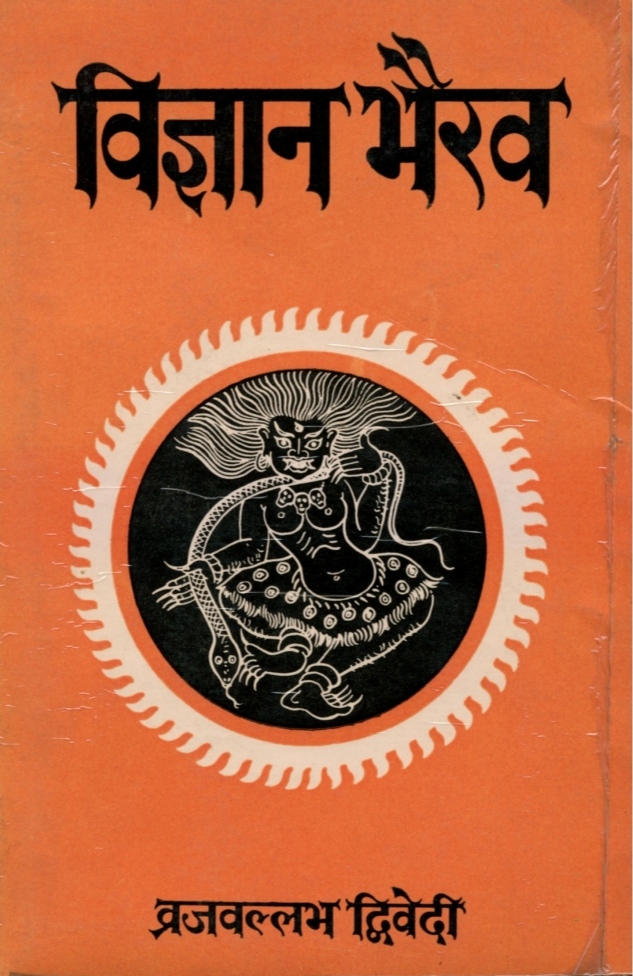
• Title - Vijnana Bhirava Tantra
• Title - Vijnana Bhirava Tantra
• Author - Vraj Vallabh Dwivedi
• Publisher - Shri Tarun Dwivedi, Surviving Son of Late Vraj Vallabh Dwivediji (15 Jul 1926 - 17 Feb 2012)
• Language - Sanskrit Text with Hindi Translation
• Print Length - 256 pages
Product Description -
The Vijñāna-bhairava-tantra (VBT, sometimes spelled in a Hindicised way as Vigyan Bhairav Tantra) is a Shaiva Tantra, of the Kaula Trika tradition of Kashmir Shaivism, dated to ca. the 7th century CE. It is also called the Śiva-jñāna-upaniṣad by Abhinavagupta.
The VBT is framed as a discourse between Bhairava (the "tremendous one", or "the terrifying") and the goddess Bhairavi in 163 Sanskrit anuṣṭubh stanzas. It briefly presents around 112 Tantric meditation methods (yuktis) or centering techniques (dhāraṇās) in very compressed form.
Lord Shiva says, "If one is established in any of these 112 ways of meditation, one becomes the Bhairava (Divine) himself".
These practices are supposed to lead to the recognition of the true nature of Reality, the "tremendous" or "awesome" consciousness (i.e. vijñāna-bhairava). These include several variants of breath awareness, concentration on various centers in the body, non-dual awareness, mantra practice, visualizations and contemplations which make use of the senses. A prerequisite to success in any of the practices is a clear understanding of which method is most suitable to the practitioner.
The text presents itself as containing the essence of the Rudrayamala-tantra, a Bhairava tantra that is now lost. In the Vijñāna-bhairava-tantra (VBT), Bhairavi, the goddess (Shakti), asks Bhairava (the terrifying form of Shiva) to reveal the essence of how to realize the true nature of reality. In his answer Bhairava describes 112 ways to enter into the universal and transcendental state of consciousness. References to it appear throughout the literature of Kashmir Shaivism, indicating that it was considered to be an important text in this tradition.
The VBT describes the goal of these practices, the "true nature of reality", as follows in the Christopher Wallis translation from 2018:
"Beyond reckoning in space or time; without direction or locality; impossible to represent; ultimately indescribable; Blissful with the experience of that which is inmost; a field of awareness free of mental constructs: that state of overflowing fullness is Bhairavī, the essence of Bhairava. It is that essence which is ultimately real & fundamental; it is that which ought to be known & experienced; it is that which is inherently pure, and it is that which pervades everything."
According to Christopher Wallis, Bhairava and Bhairavi are also used to refer to expanded states of consciousness, with Bhairavi referring more to energetic and active (śakti) states, and Bhairava referring to still and quiescent (śūnya) states. Wallis also notes that the text exhibits a "strong Buddhist influence", and one of the most common meditations taught in the text focuses on the ‘voidness’ (śūnya) of things, such as verse 48 which offers a meditation on the body as empty space, and verses 45 and 49 which teach meditations on the empty space of the heart.