
Protecting Your Child Through The Family Court: Domestic Abuse & Coercive Control Evidence & Impact Workbook
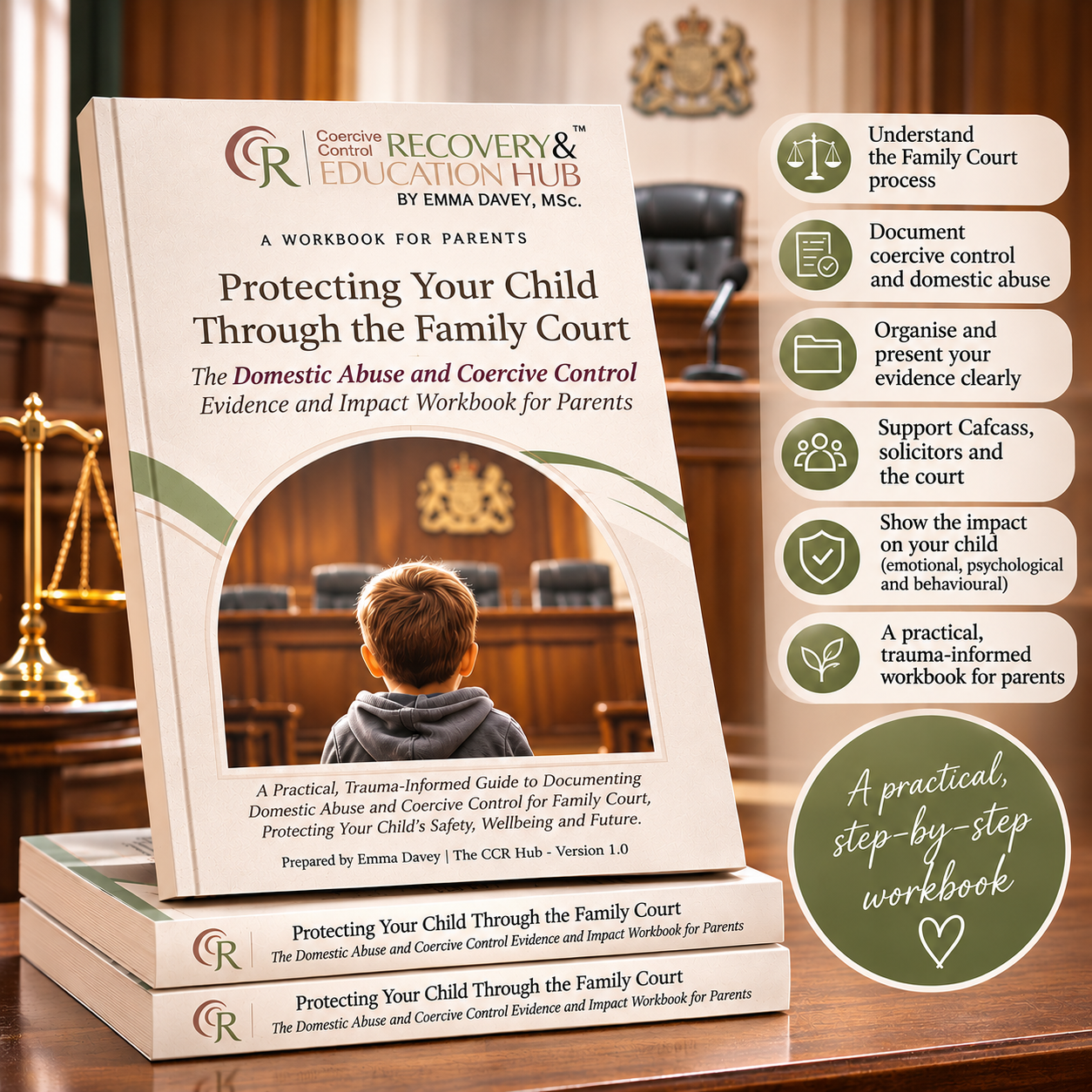
Protecting Your Child Through the Family Court
The Coercive Control and Domestic Abuse Evidence and Impact Workbook for Parents
You’ve left. You thought the hardest part was over. Then the family court began.
If you’re a parent going through the family court after domestic abuse or coercive control, you’ll know how frightening, exhausting and lonely it can feel. Nobody tells you what to expect. Nobody explains what Cafcass is looking for, how to write a statement, or how to show what your child has been living through. And all the while, the person who harmed you may still be using the children, the court process and other people to keep control.
This workbook was created to change that.
Why parents need this workbook
Because coercive control is hard to see, and harder to prove. Often, there are no bruises and no police reports. Just a pattern of fear, rules, manipulation and control that can sound “minor” when described one incident at a time. This workbook shows you how to make that pattern visible.
Because your child is a victim too. Under the Domestic Abuse Act 2021, children who see, hear or experience the effects of domestic abuse are recognised as victims in their own right. This workbook helps you understand and record what your child has experienced, and how it has affected them.
Your child’s behaviour tells a story. Meltdowns after contact, being “perfect” with one parent, bedwetting, saying they want to live with the parent who frightens them. These are often a nervous system response to fear, not naughtiness, and not something you’ve caused. This workbook helps you understand it, respond to it, and explain it to professionals.
Because how you present the evidence matters. Emotional, angry or opinion-based writing can be used against you. Calm, factual, child-focused evidence is far harder to dismiss. This workbook teaches you exactly how to write it.
Because abusers often know how to work the system. DARVO, counter-allegations, “alienation” claims, financial pressure through repeated court applications, setting you up to fail, and using other people to manipulate the situation. This workbook helps you recognise these tactics, stay steady, and respond with evidence instead of emotion.
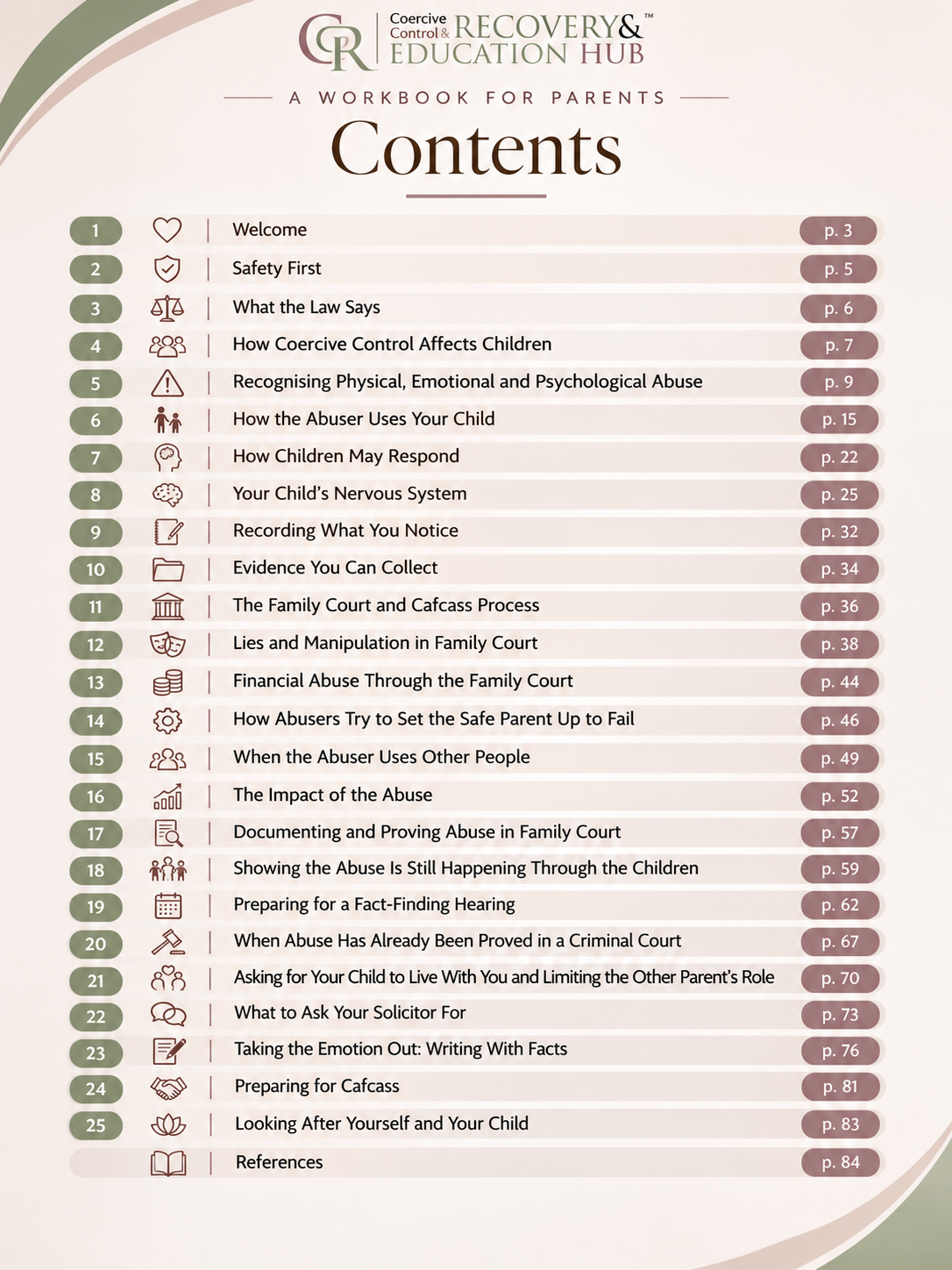
What’s inside
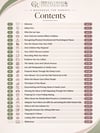
- Recognising abuse: detailed, real-life examples of physical, emotional and psychological abuse of children, and how coercive control affects the whole household
- How the abuser uses your child: controlling time with the children, turning the child against you, withholding them, endangering their health, and trying to be involved in everything
- Your child’s nervous system: the traffic light check-in, polyvagal theory explained simply, fight, flight, freeze and fawn, and practical ways to help your child regulate
- The CCR Hub Impact Framework™ for Children: a step-by-step way to record any incident through Incident → Fear → Survival Response → Impact, alongside Threat, Power and Meaning, with a worked example
- Recording and evidence: child observation logs, evidence checklists, and an evidence code system that links straight to your Statement, Evidence and Impact Workbook
- DARVO and court manipulation: how it looks, how to identify it, how to document it, and how to prove the facts behind it
- Financial abuse through the family court: how to demonstrate it with costs and litigation logs
- Showing the impact: on your health, work, home, finances, relationships and pets, and why impact is so important to evidence
- The family court and Cafcass process, including Child Focused Courts and recent changes in the law
- Preparing for a fact-finding hearing: allegations, special measures, and calm answers to difficult cross-examination questions
- When there’s been a criminal conviction, and how it can be used in family court
- Asking for your child to live with you: understanding the orders available and how to build your case around risk
- What to ask your solicitor for
- Taking the emotion out: how to write with facts, with before-and-after examples
- Writing your Cafcass statement, with templates, checklists and example paragraphs
- Looking after yourself and your child through the process
All of this comes in a beautifully designed, 91-page print-ready workbook, with worksheets, writing space and visual guides throughout.
Who it’s for
- Mothers and fathers going through, or preparing for, family court proceedings where there has been domestic abuse or coercive control
- Parents worried about how contact is affecting their child
- Professionals supporting parents, including IDVAs, family support workers, domestic abuse services and solicitors
Created by Emma Davey
Emma Davey MSc – Psychology of Coercive Control
Multi-Award Winning Trauma-Informed MBACP Counsellor, Educator, Domestic Abuse and Coercive Control Specialist, Survivor
Founder, The CCR Hub
This workbook comes from six years of supporting clients through the family court: helping them understand what their children have lived through, and showing them how to document it clearly and factually so their children’s safety is at the centre of every decision.
“Your role is not to prove you are the ‘better parent’. It is to help the professionals around your child see what your child has lived through, and what they need to be safe and well.”
Works beautifully alongside
The Statement, Evidence and Impact Workbook: that workbook records your experience, and this one focuses on your child’s. Both use the same evidence code system and the CCR Hub Impact Framework™, so all your evidence sits together in one place.
This workbook provides information, not legal advice. It reflects the law and family court process in England and Wales. For advice on your own case, please speak to a family law solicitor, an IDVA or a specialist domestic abuse service. If you or your child are in immediate danger, call 999. National Domestic Abuse Helpline: 0808 2000 247 (free, 24 hours).