
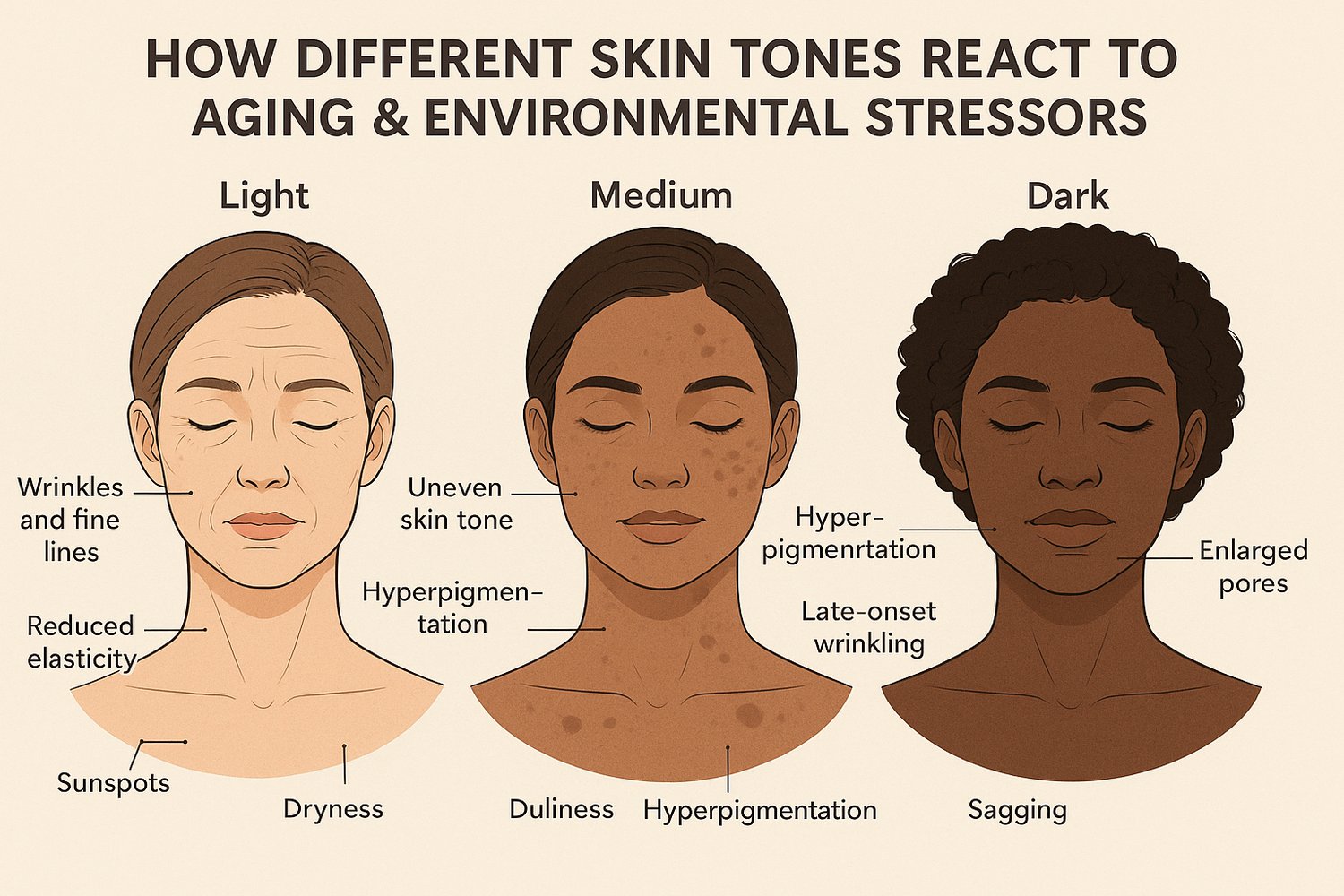
How Different Skin Tones React to Ageing and Environmental Stressors
Understanding how skin tones age differently is essential for formulators, dermatologists, and skincare professionals who aim to create inclusive and effective products. Genetics, melanin levels, collagen density, and lipid composition all influence how skin responds to ageing, sun exposure, pollution, and other environmental stressors.
This guide explores how different skin tones react to these stressors and what this means for targeted skincare.
1. The Role of Melanin in Ageing and Environmental Response
Melanin is the primary factor influencing how skin reacts to environmental stressors. It serves as the skin’s natural defence against ultraviolet (UV) radiation by absorbing and scattering UV rays.
- Darker Skin Tones (Fitzpatrick IV–VI):
Higher melanin content provides better natural photoprotection, reducing sunburn risk and slowing visible photoageing such as fine lines and sagging. However, increased melanin activity makes these skin tones more prone to hyperpigmentation when exposed to UV, heat, or inflammation.
- Lighter Skin Tones (Fitzpatrick I–III):
With less melanin, lighter skin is more susceptible to UV-induced DNA damage, leading to earlier signs of wrinkling, sagging, and loss of elasticity. Photoageing is the dominant ageing factor in lighter skin, while pigmentation irregularities are less frequent compared to darker tones.
2. Collagen Density and Structural Ageing
Collagen and elastin fibres are critical for firmness and resilience. Genetics strongly influence collagen density, which impacts how skin visibly ages.
- Darker Skin Tones:
Generally have denser and thicker dermal layers, providing stronger support to the skin structure. Wrinkles and fine lines appear later and are often less pronounced. However, once sagging begins, it can appear more abrupt due to heavier skin tissue.
- Lighter Skin Tones:
Thinner dermal structure and lower collagen density make lighter skin more prone to early wrinkling and creping, especially around the eyes and mouth. Loss of elasticity can start as early as the late twenties to early thirties in fair skin exposed to high UV levels.
3. Response to Environmental Stressors
3.1 UV Radiation
- Darker Skin: Better natural UV protection but higher risk of post-inflammatory hyperpigmentation (PIH)after acne, injury, or irritation.
- Lighter Skin: Lower melanin protection leads to faster collagen breakdown and earlier onset of actinic keratosis and other sun-related damage.
3.2 Pollution & Oxidative Stress
Airborne pollutants generate free radicals that damage collagen and trigger pigmentation.
- Darker Skin: More active melanocytes respond strongly to oxidative stress, leading to dark spots and uneven tone.
- Lighter Skin: More prone to redness, inflammation, and barrier impairment rather than pigmentation.
3.3 Temperature & Humidity Changes
- Darker Skin: Can experience ashy or greyish tones in cold, dry weather due to transepidermal water loss (TEWL).
- Lighter Skin: More reactive to vascular changes, showing redness and broken capillaries in extreme temperatures.
4. Common Ageing Patterns by Skin Tone

5. Skincare Formulation Considerations
To address these differences, formulators should consider skin tone-specific needs when designing anti-ageing and protective products:
For Lighter Skin Tones:
- High-SPF, broad-spectrum sunscreens to prevent early photoageing.
- Antioxidant-rich serums (Vitamin C, Ferulic Acid, Resveratrol) to combat oxidative stress.
- Barrier-repairing ingredients such as ceramides and niacinamide to reduce redness and sensitivity.
For Darker Skin Tones:
- Brightening agents (Niacinamide, Alpha Arbutin, Azelaic Acid) to minimise PIH.
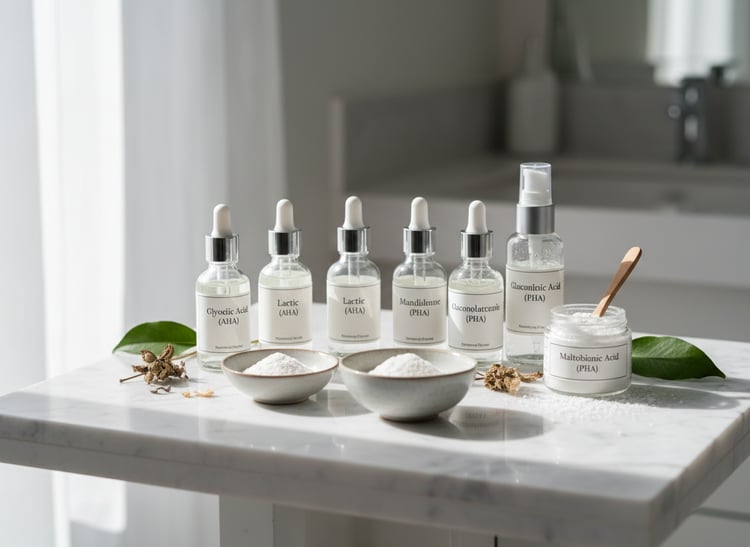
- Gentle exfoliation (PHA, Mandelic Acid) to improve texture without triggering irritation.
- Peptides and retinoid alternatives (Bakuchiol, Granactive Retinoid) for collagen support without excessive peeling.
- Barrier hydration with humectants and occlusives (Hyaluronic Acid, Squalane, Shea Butter) to prevent ashy appearance.
6. The Importance of Inclusive Ageing Research
Historically, most dermatological ageing studies focused on lighter skin types, leaving gaps in understanding how darker skin tones age. However, as inclusivity becomes essential in cosmetic science, research now highlights the need for:
- Testing formulations on diverse skin tones to ensure efficacy and safety.
- Developing pigmentation-safe anti-ageing products for melanin-rich skin.
- Education on specific ageing pathways for different ethnicities.
7. Key Takeaways
- Melanin protects but also predisposes to pigmentation issues.
- Collagen density delays wrinkles in darker skin but does not prevent sagging over time.
- Environmental stressors affect all skin types differently, requiring targeted solutions.
- Inclusive formulation and testing are essential for global skincare efficacy.