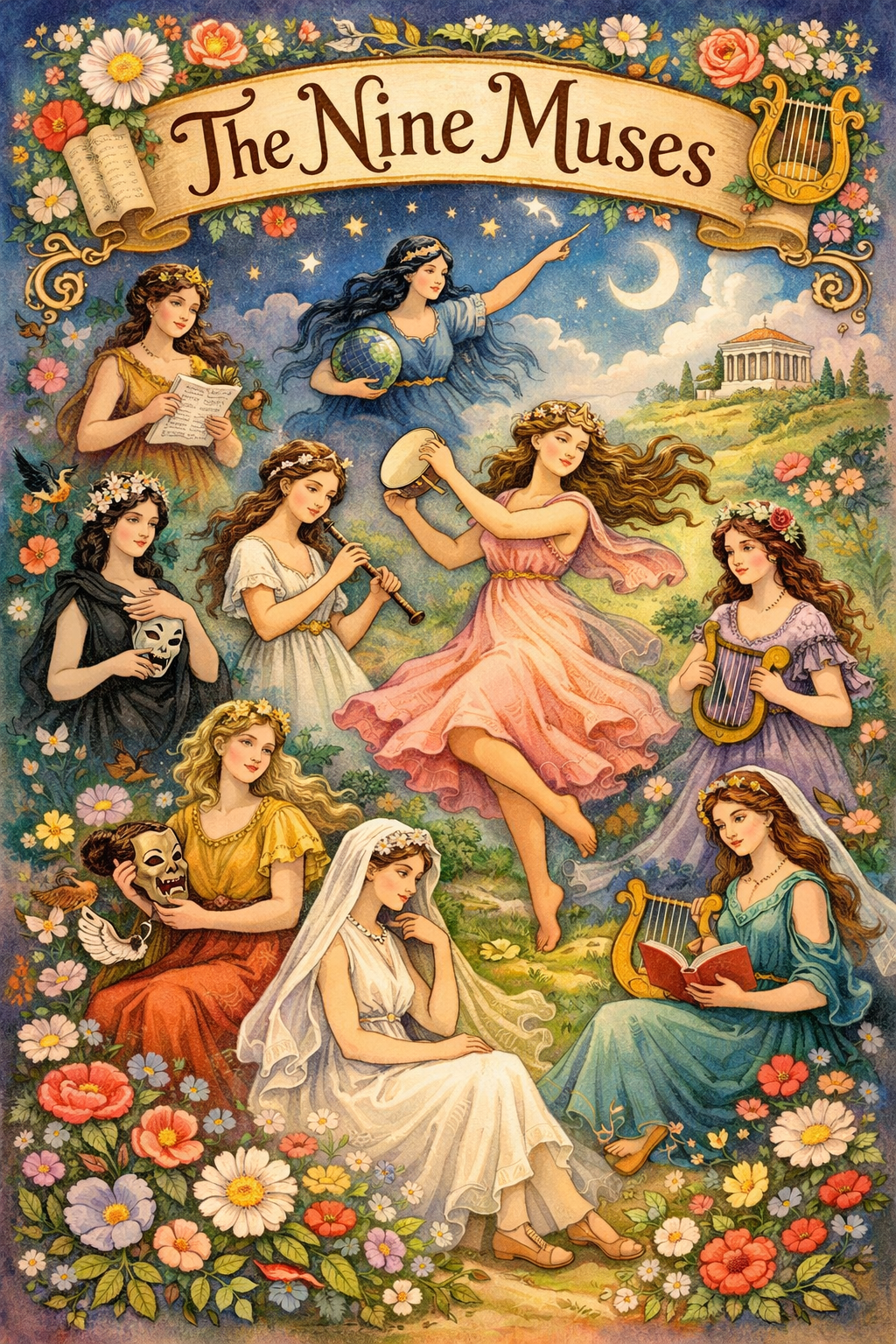
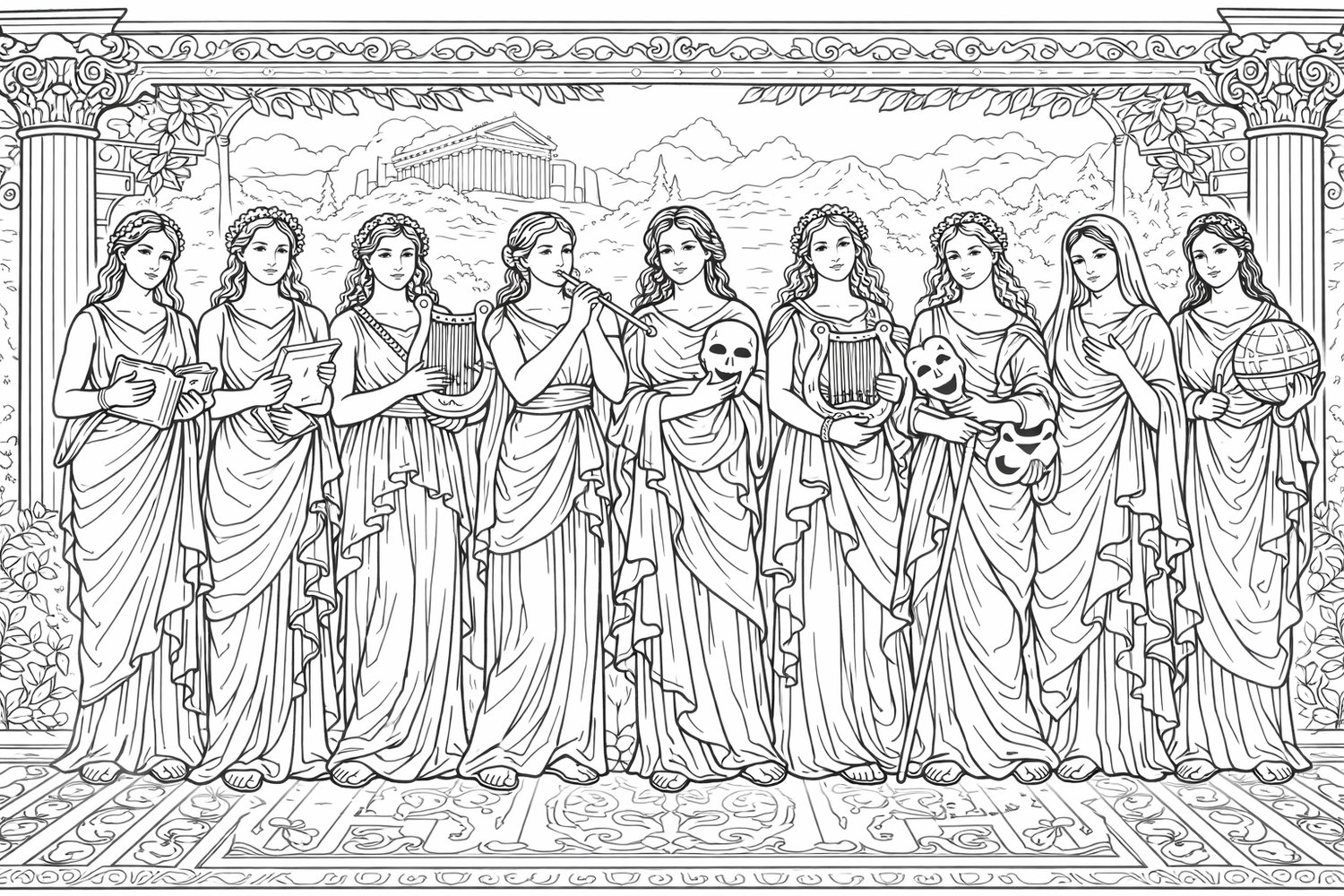
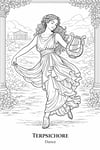
The nine muses, 43 designs, coloring ebook, digital printable product, instantly download
The nine muses, 43 designs, coloring ebook, digital printable product, instantly download.
The Nine Muses of Ancient Greek Mythology
Divine Sources of Art, Knowledge, and Inspiration
In ancient Greek mythology, the Muses were the divine patrons of the arts, intellectual pursuits, and all forms of creative expression. They were nine sisters, born to Zeus, king of the gods, and Mnemosyne, the goddess of memory. Their origin is deeply symbolic: for the ancient Greeks, memory was the foundation of knowledge, poetry, and art. Without memory, creation could not exist.
The Muses were believed to dwell on Mount Olympus, as well as on the sacred mountains Helicon and Parnassus, places closely associated with poetry and learning. Poets, historians, musicians, and philosophers traditionally invoked the Muses at the beginning of their works, asking for inspiration, clarity, and truth.
The Role of the Muses in Ancient Greek Culture
The Muses were not merely mythological figures; they embodied the core disciplines of civilization: literature, music, theater, dance, history, and science. To the ancient Greeks, creativity was a divine gift, and true artistic or intellectual achievement required the favor of the Muses.
The influence of the Muses is evident throughout ancient literature, most famously in the epics of Homer, who begins his works by calling upon them. Even the word “music” derives from the Muses and originally referred to all forms of intellectual and artistic education, not only sound.
The Nine Muses and Their Domains

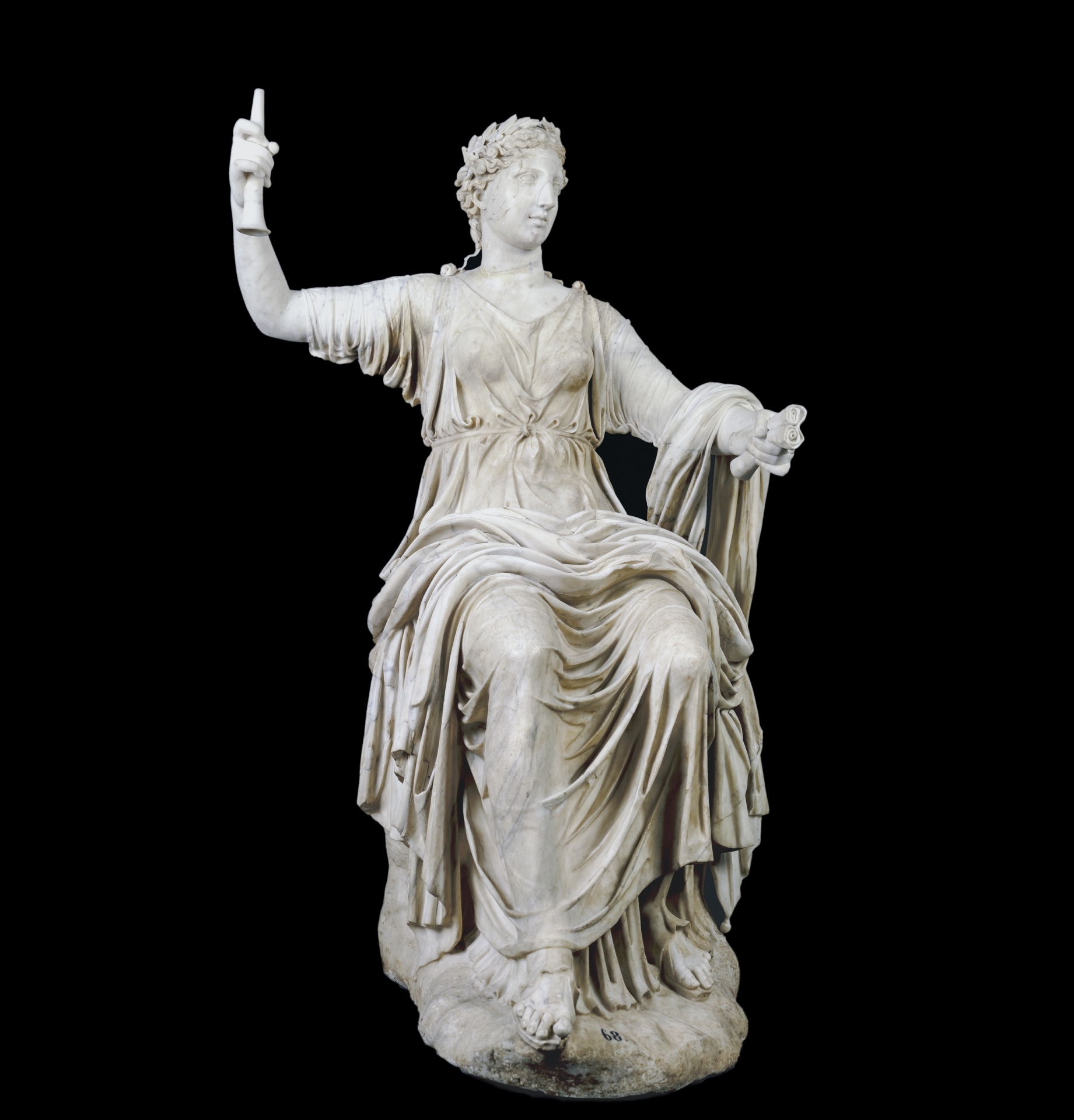
9
1. Calliope – Muse of Epic Poetry
Calliope was regarded as the chief of the Muses. She inspired epic poetry and eloquence and was associated with wisdom and noble speech. She is often depicted holding a writing tablet or scroll. According to myth, she inspired poets who sang of heroes and great deeds.
2. Clio – Muse of History
Clio presided over history and the recording of past events. Her name comes from the Greek word meaning “to celebrate” or “to make famous.” She is commonly shown holding a scroll or a chest of books, symbolizing historical knowledge and memory.
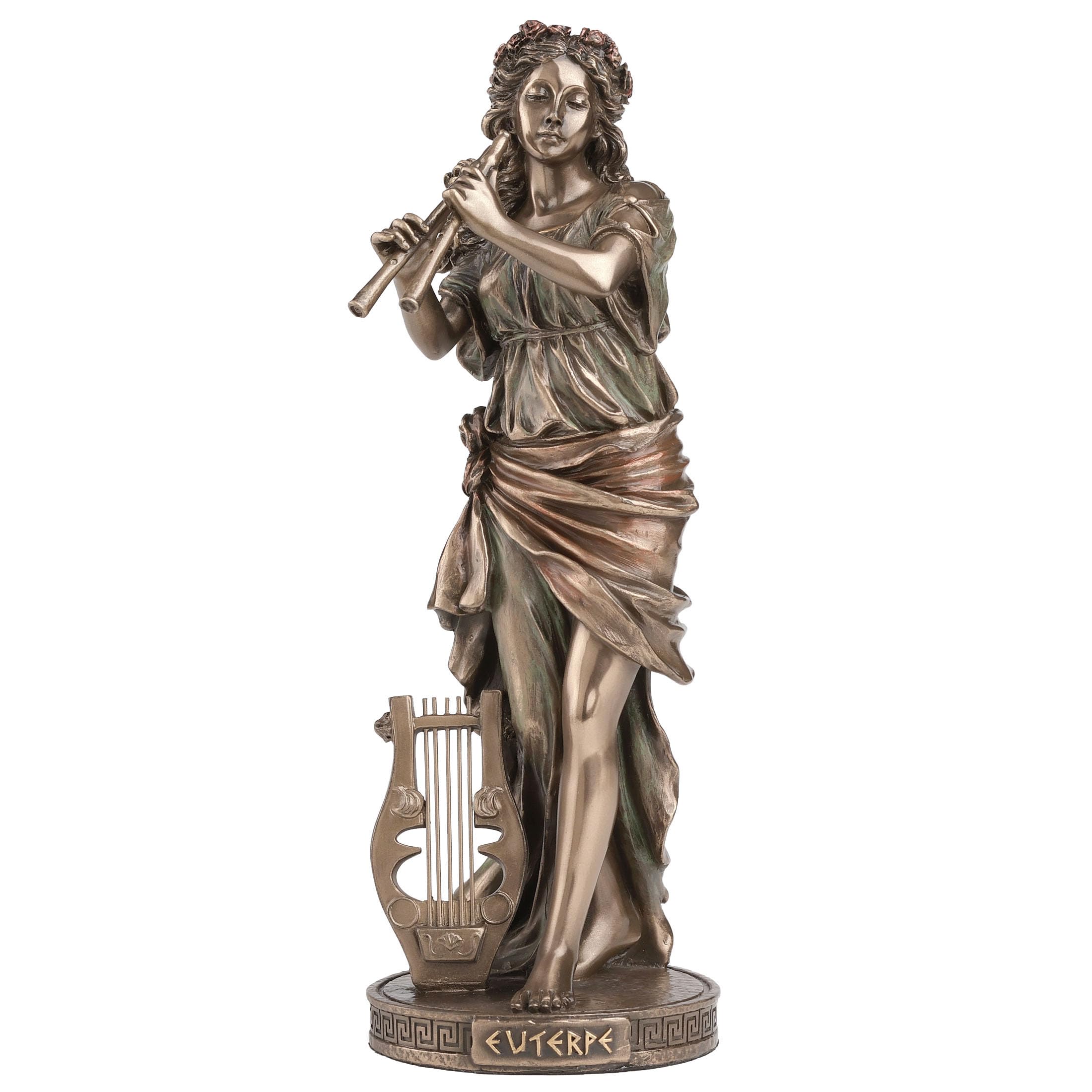
3. Euterpe – Muse of Music
Euterpe was the muse of lyric music and melody. She is frequently portrayed with a flute, as she was believed to have invented or perfected wind instruments. Her presence represents the emotional power and joy of music.
4. Thalia – Muse of Comedy
Thalia was the muse of comedy and light-hearted poetry. She is depicted holding a comic mask and symbolizes humor, celebration, and the vitality of life. Through laughter, she reminded people of balance and joy.
5. Melpomene – Muse of Tragedy
Melpomene governed tragedy and dramatic art. Often shown with a tragic mask and sometimes a sword or wreath, she represents suffering, fate, and the depth of human emotion. Her art explored the serious and painful aspects of life.
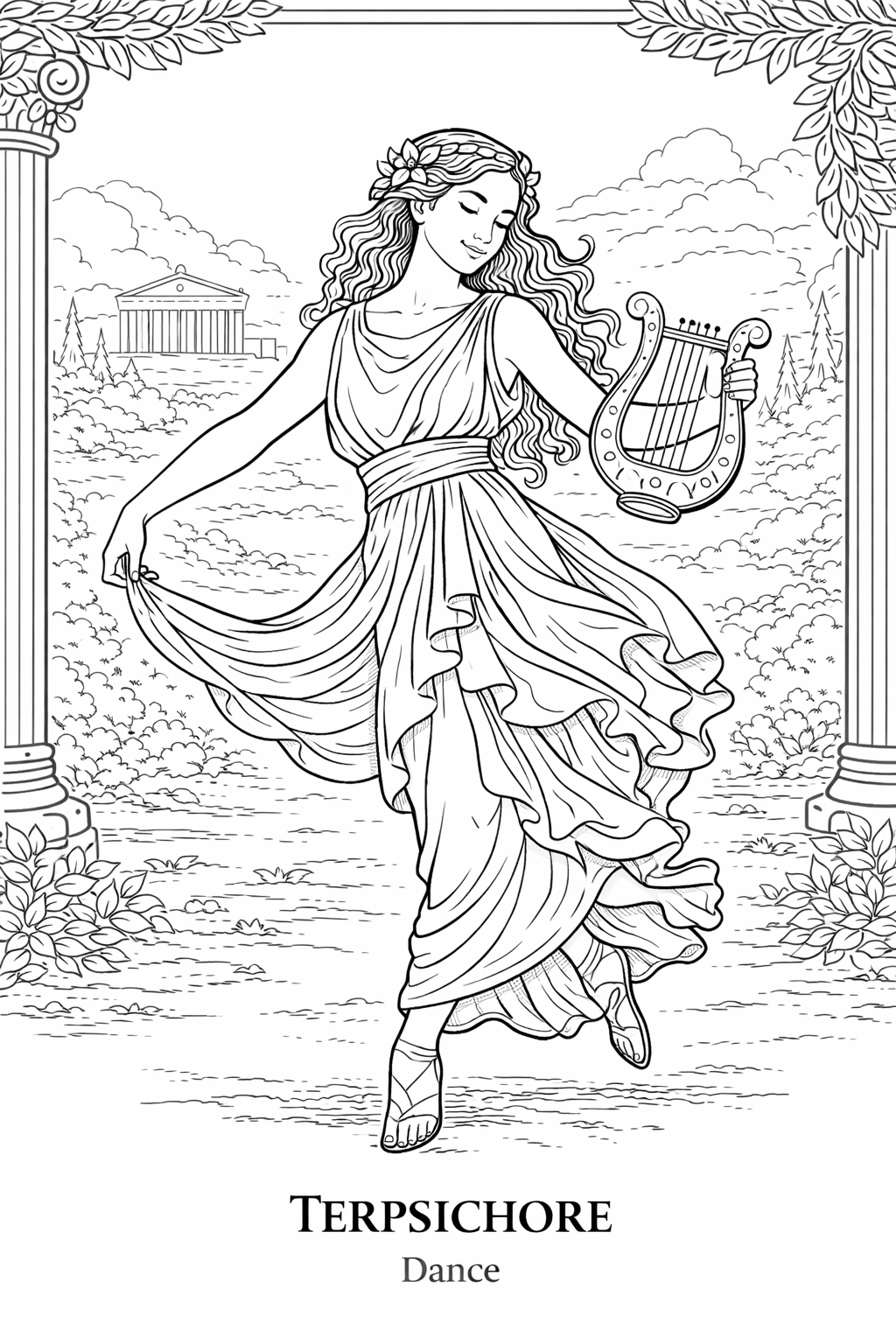
6. Terpsichore – Muse of Dance
Terpsichore inspired dance and choral song. Her name means “the one who delights in dance.” For the ancient Greeks, dance was a sacred art, combining movement, rhythm, and harmony.
7. Erato – Muse of Love and Lyric Poetry
Erato was associated with romantic and erotic poetry, as well as marriage songs. She is often depicted with a lyre and a crown of roses, symbolizing love, passion, and lyrical beauty.
8. Polyhymnia – Muse of Sacred Hymns and Reflection
Polyhymnia presided over sacred poetry, hymns, and deep contemplation. She is usually shown in a thoughtful, solemn pose, representing spiritual devotion, meditation, and intellectual discipline.
9. Urania – Muse of Astronomy
Urania was the muse of astronomy and celestial knowledge. She is depicted holding a globe or compass, gazing toward the heavens. Urania symbolizes humanity’s desire to understand the universe and the order of the cosmos.
The Enduring Legacy of the Muses
The Muses have remained powerful symbols of inspiration and creativity throughout history. During the Renaissance and beyond, artists and scholars continued to portray and invoke them as representations of ideal knowledge and artistic excellence.
Even today, when we speak of being “inspired,” we echo the ancient belief that creativity comes from a higher source. The Muses remind us that art and knowledge are not merely skills, but expressions of the human spirit guided by imagination, memory, and wonder.