Sleep after Shift Pack
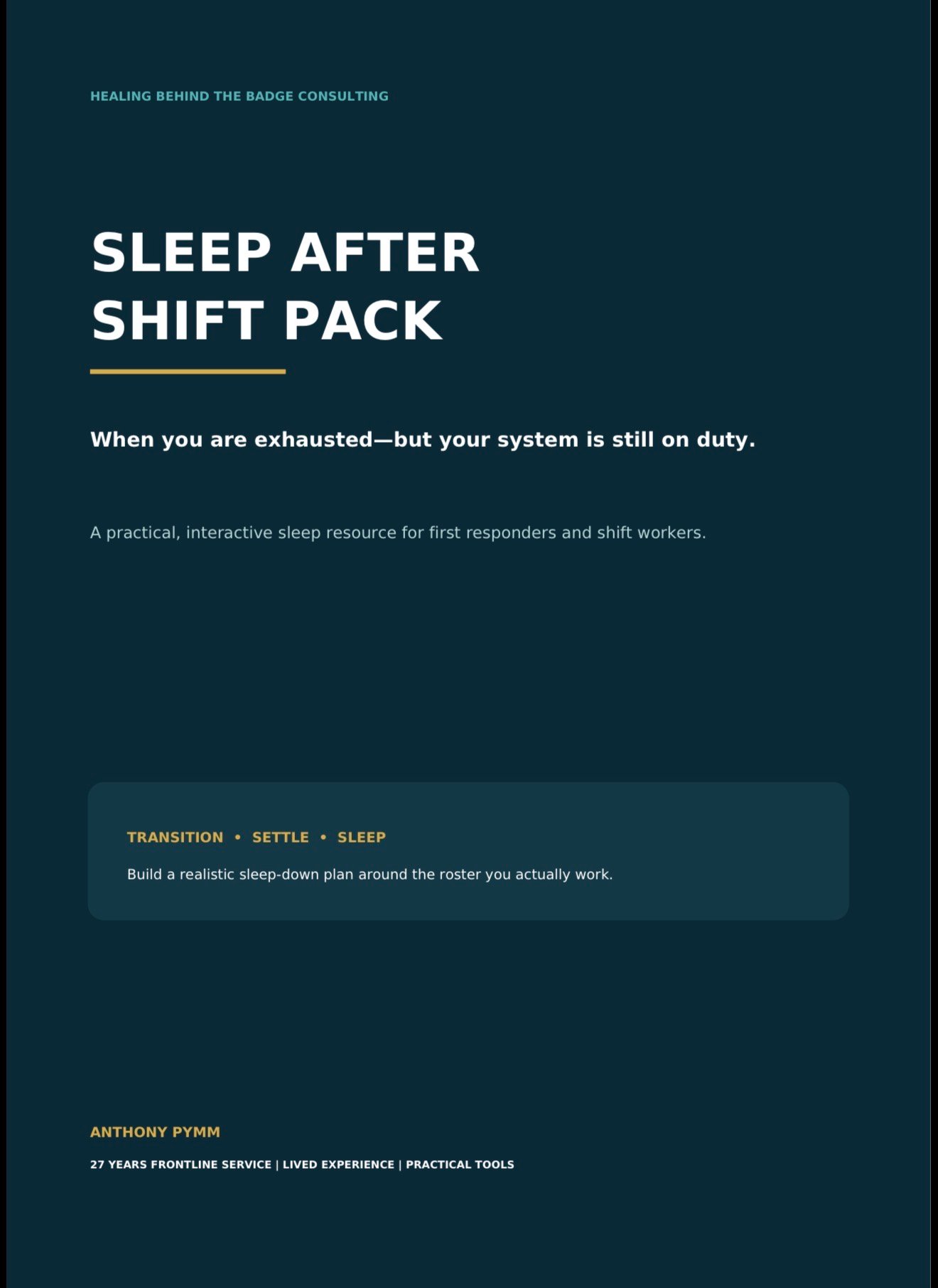
Sleep After Shift Pack
When you are exhausted—but your system is still on duty.
The shift has finished. Your body is tired. But your mind is replaying conversations, scanning for problems and refusing to stand down.
For first responders and shift workers, sleep is not always as simple as going to bed earlier. Operational alertness, rotating rosters, daylight, difficult incidents and accumulated fatigue can all interfere with the body’s ability to settle.
The Sleep After Shift Pack is a practical, interactive digital resource designed to help you understand your sleep pattern, create a realistic post-shift routine and give recovery a better opportunity.
This is not another rigid sleep routine designed around a nine-to-five lifestyle. It is built for the rosters, pressure and unpredictability of frontline work.
What is included?
Inside this 19-page premium digital pack, you will find:
- An explanation of why sleep after operational work can be different
- The exhausted-but-still-alert cycle
- A personal sleep-pattern assessment
- A practical post-shift sleep-down sequence
- A racing-thought reset
- Body-first settling tools
- A daylight-sleep plan for night-shift workers
- Caffeine, alcohol, food and screen reflection
- A plan for waking during sleep
- Nightmares and difficult-dream guidance
- A partner and household sleep agreement
- A simple seven-day sleep-pattern tracker
- A Minimum Viable Sleep-Down for difficult days
- Fatigue and driving-safety guidance
- Signs that professional sleep support may be needed
- A complete personal Sleep After Shift action plan
Built for real shift work
This pack acknowledges that first responders cannot always maintain a perfect bedtime, wake time or evening routine.
Instead, it helps you identify the parts of sleep preparation you can realistically influence:
- Reducing stimulation after work
- Parking unfinished thoughts
- Settling physical activation
- Protecting darkness, temperature and noise
- Communicating sleep needs at home
- Planning around night shifts and rotating rosters
- Recognising when fatigue is becoming a safety concern
The aim is not to force sleep. It is to reduce the struggle around it and create better conditions for recovery.
Minimum Viable Sleep-Down
When your capacity is low, the pack reduces the routine to three practical steps:
Reduce: Lower light, stimulation and unnecessary decisions.
Settle: Choose one body-based settling tool.
Protect: Make your sleep space as dark, quiet and comfortable as reasonably possible.
Minimum does not mean meaningless. A small, repeatable sequence can still help after a demanding shift.
Protecting sleep at home
The pack includes a shared agreement to help shift workers and their households discuss:
- Protected sleep windows
- Noise, children, calls and deliveries
- Which interruptions are genuinely important
- What the household needs in return
- How and when everyone will reconnect after sleep
Sleep protection and family connection both matter. The agreement is designed to be mutual, practical and respectful.
Who is it for?
- Police officers
- Firefighters
- Paramedics and emergency medical personnel
- Corrections and custodial staff
- Defence personnel and veterans
- Healthcare and emergency-service workers
- Night-shift and rotating-roster workers
- Partners and families supporting shift workers
- Anyone who finishes work exhausted but remains mentally alert
Interactive digital format
The pack includes:
- 39 digitally fillable writing fields
- 20 genuine one-tap checkboxes
- Personal reflection, planning and tracking pages
- The option to complete it electronically or print it at home
For the best digital experience, download the PDF and open it in Adobe Acrobat Reader or another form-compatible PDF reader.
Created by Anthony Pymm, Founder and Principal Consultant of Healing Behind the Badge Consulting, this resource draws on 27 years of frontline service, leadership, training and lived experience of PTSD recovery.
Some sleep periods will still be shorter or more disrupted than you hoped. That does not mean the plan has failed.
Come down from the job. Let the shift end. Give yourself permission to recover.
Important information
This resource is informed by lived experience and intended for personal education and practical reflection. It does not provide clinical advice, diagnosis or treatment.
It does not replace medical care, therapy, professional sleep assessment or workplace fatigue-management procedures. Do not drive or undertake safety-critical work if you cannot remain awake.
Format: Interactive digital PDF
Length: 19 pages
Use: Complete electronically or print at home
© 2026 Anthony Pymm — Healing Behind the Badge Consulting
Real Talk. Real Healing.