
Bartleby, the Scrivener
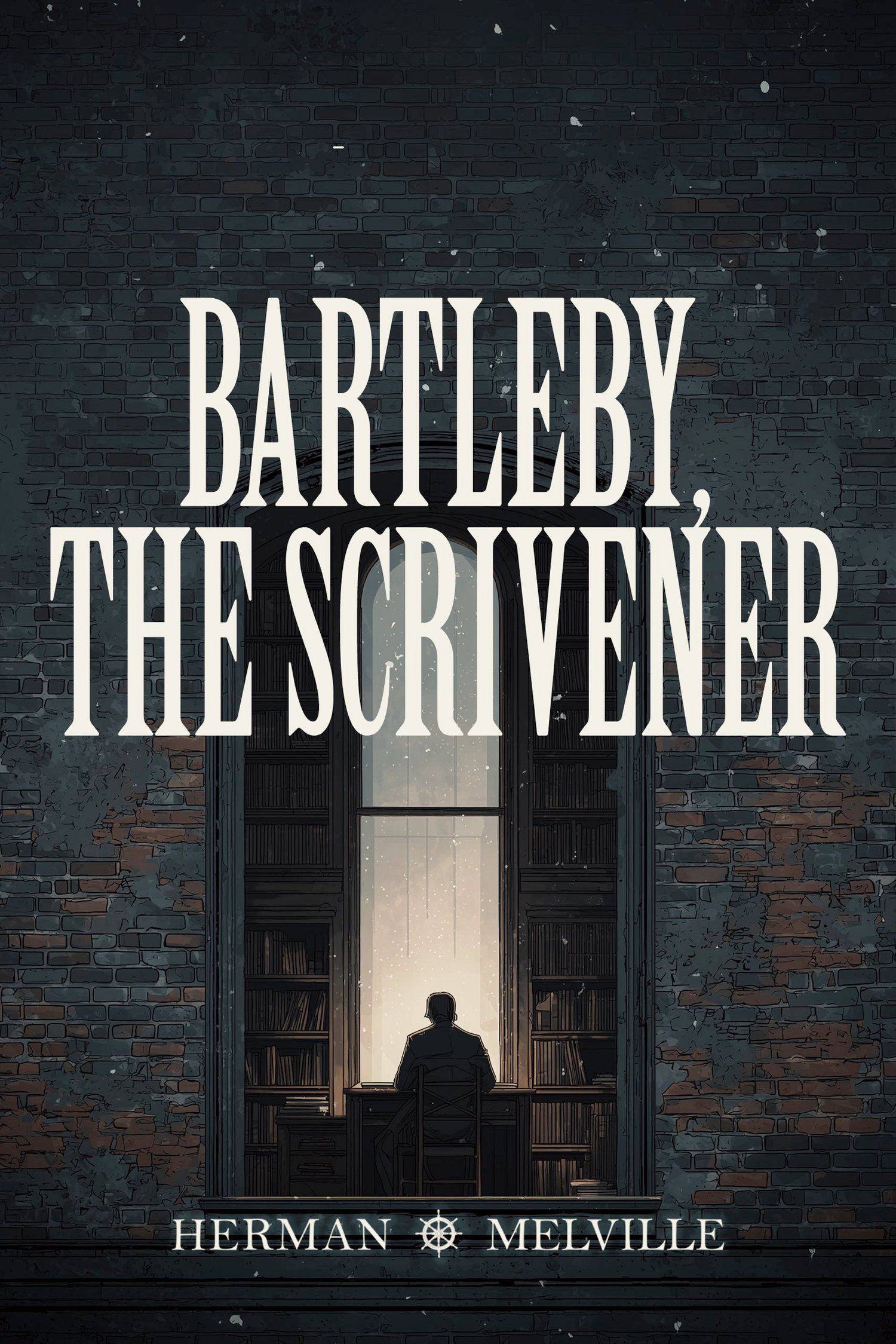
Herman Melville’s Bartleby, the Scrivener is a story that begins in the familiar rhythms of office life—copyists bent over their desks, the scratch of pen on paper, a harried lawyer juggling clients and paperwork. Into this tidy world walks Bartleby, a quiet man with impeccable manners and an otherworldly stillness. At first, he seems like an ideal employee: industrious, neat, wholly unremarkable. Then, almost imperceptibly, a rift appears in the ordinary. When asked to complete the simplest of tasks, Bartleby replies with unyielding politeness: “I would prefer not to.” Nothing in the lawyer’s long career has prepared him for that gentle refusal, and nothing that follows is quite the same.
As Bartleby persists in his curious resistance, the office transforms into a stage where bafflement, frustration, pity, and quiet dread play out in turn. The lawyer, our narrator, finds himself unable to dismiss this enigmatic scrivener, even as Bartleby’s refusals expand from rechecking documents to working at all, to leaving the office, to engaging with the world itself. The building hums around him—clerks gossip, business carries on—but Bartleby inhabits a stillness that seems to swallow sound and sense. His passivity isn’t dramatic rebellion; it’s something far stranger and more unsettling, a kind of existential gravity that pulls everything toward it.
In the end, Bartleby, the Scrivener becomes far more than a tale about workplace eccentricity. It is a haunting meditation on isolation in the heart of bustling modern life, on the limits of compassion, and on the fragile boundaries between duty and humanity. Melville gives us a character who refuses to participate, who slips beyond our categories of laziness, madness, or mere obstinacy. Through this quiet man who “prefers not to,” we are invited to examine the machinery of society—and ourselves—with unnerving clarity. It’s a brief tale, yet it lingers like a whisper you can’t quite shake, asking why we do what we do, and what becomes of those who simply step aside.
About the author
Herman Melville (1819–1891) was one of America’s most iconic novelists and thinkers, celebrated for his profound explorations of humanity’s relationship with nature and the mysteries of existence. Best known for his magnum opus, Moby-Dick, and his evocative tales such as Bartleby, the Scrivener and Billy Budd, Melville’s works captivate readers with their intricate symbolism, philosophical depth, and vivid depictions of life at sea. His literary legacy endures as a cornerstone of American literature, offering timeless reflections on the human spirit and its place in an ever-changing world.