

Fiction Key Terms Explained | 4 Posters + Fiction Detectives Activity Pack
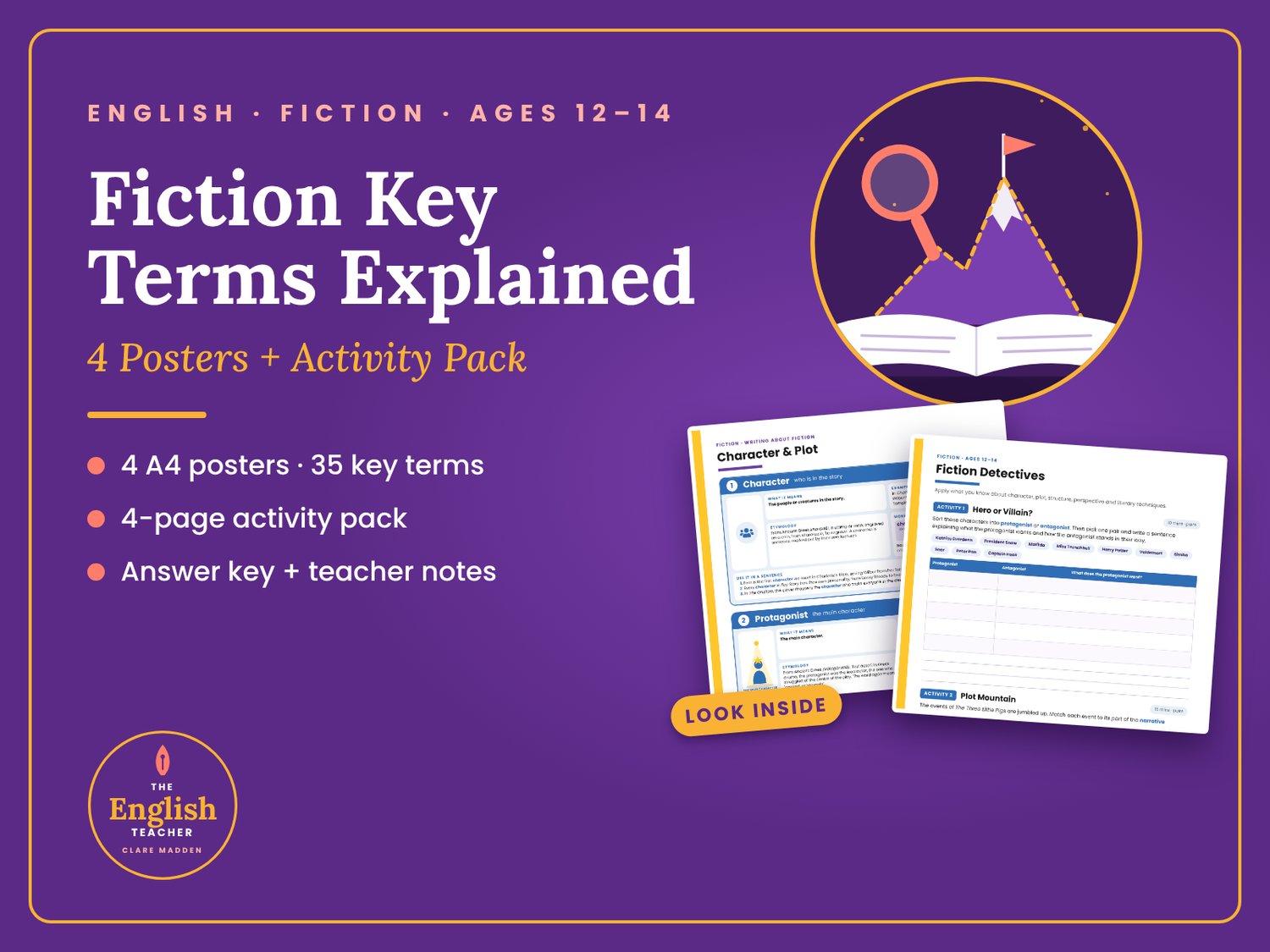
Give students the words they need to write confidently about fiction, then get them using those words. This pack pairs four A4 key-term posters (35 terms) with a four-page activity pack that has students spotting, sorting, rewriting and creating.
Written by Clare Madden, secondary English teacher and author of the Touchstones Junior Cycle English series.
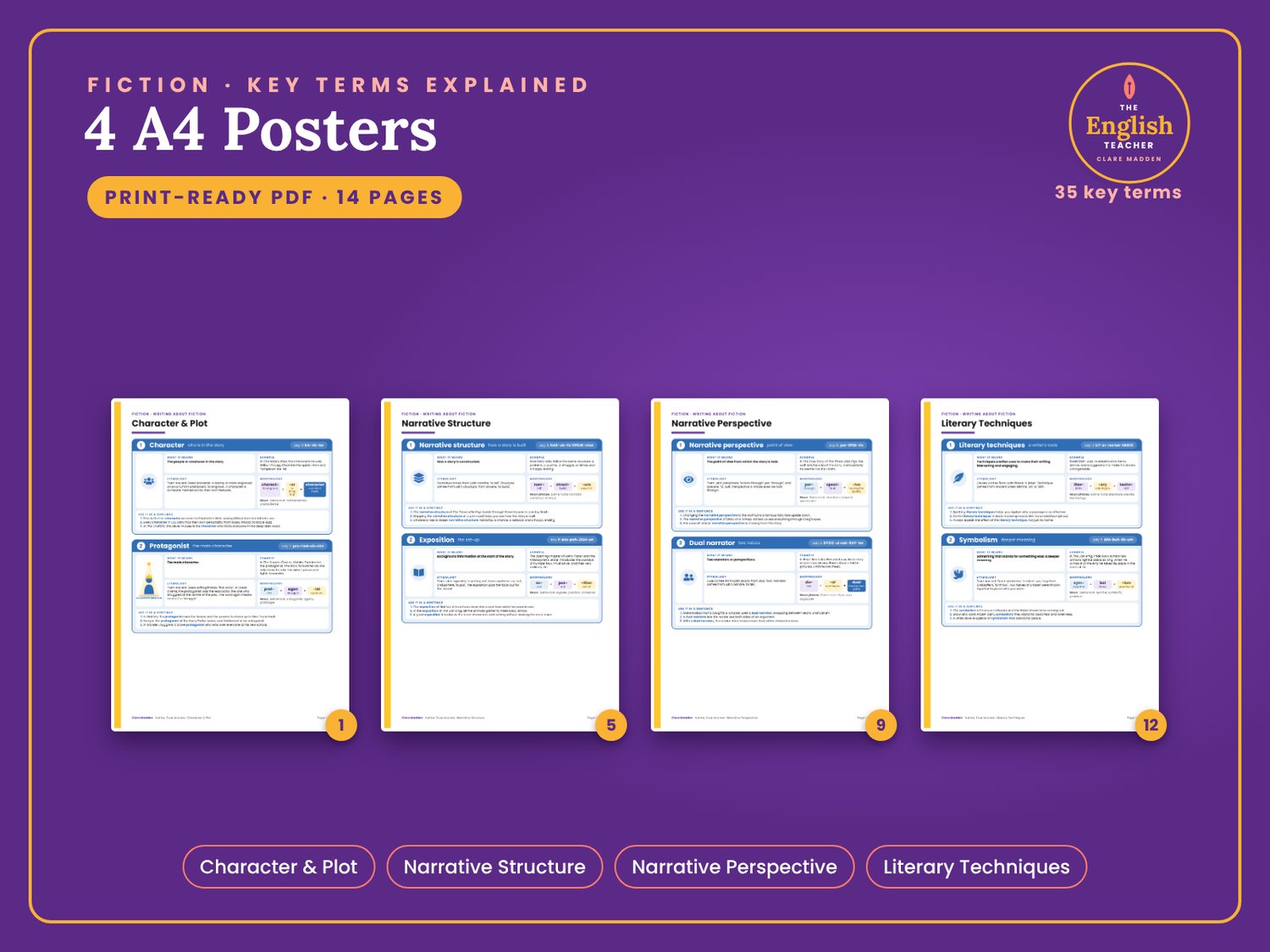
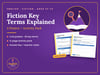
**Fiction Key Terms Explained: 4 posters, 14 pages, 35 terms**
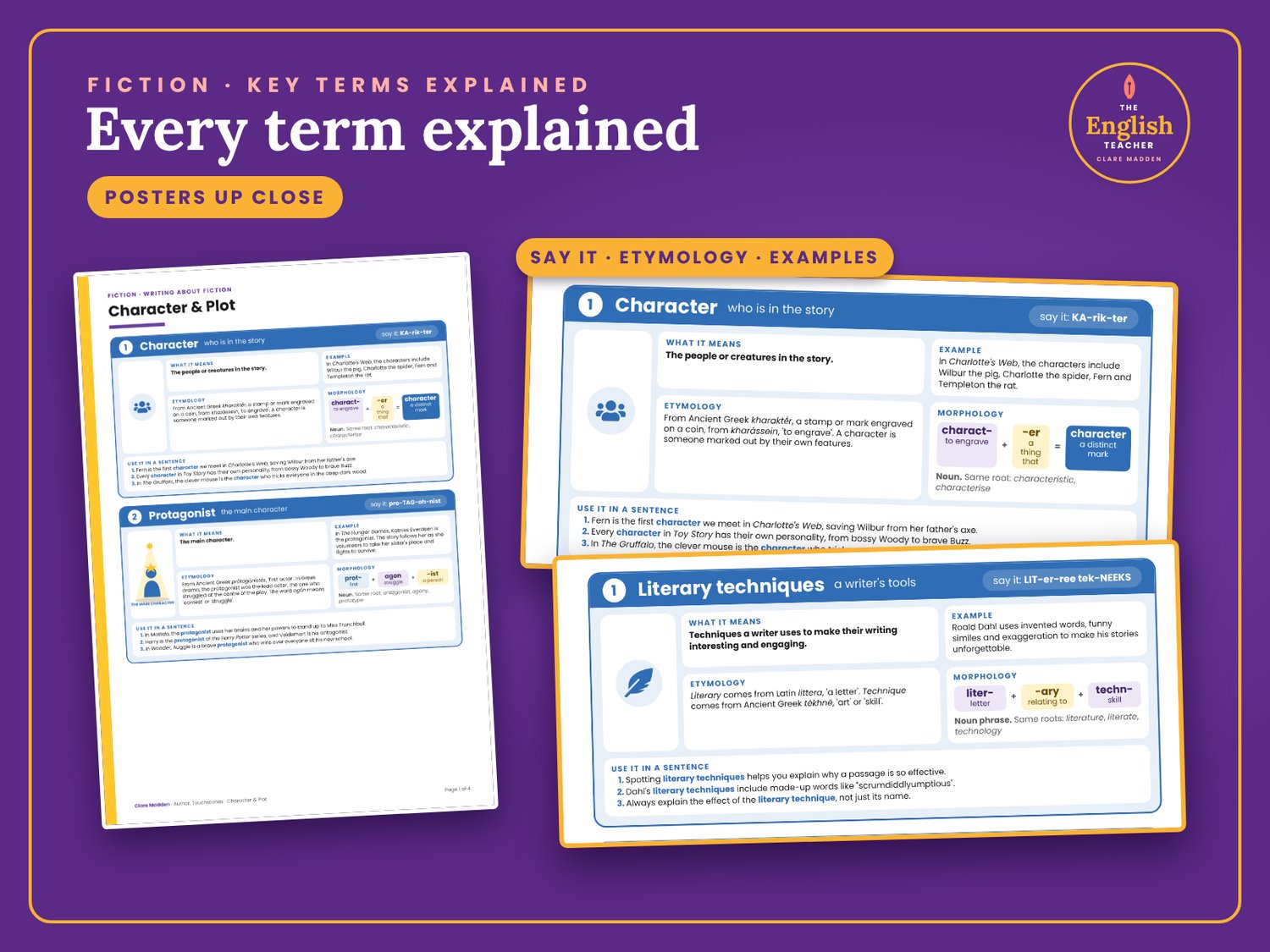
1. **Character & Plot (9 terms):** character, protagonist, antagonist, characterisation, plot, key moments, setting and context, themes, dialogue
2. **Narrative Structure (10 terms):** narrative structure, exposition, inciting incident, rising action, climax, falling action, resolution, chronological narrative, flashback, flashforward
3. **Narrative Perspective (8 terms):** narrative perspective, dual narrator, multiple narrators, first person, second person, third-person limited, third-person omniscient, narrator reliability
4. **Literary Techniques (8 terms):** literary techniques, symbolism, foreshadowing, personification, metaphor, simile, motif, irony
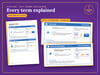
Every term has:
- Pronunciation ("say it: pro-TAG-oh-nist")
- A clear definition and an example from a story students already know
- Etymology and morphology, showing how the word is built from its Latin or Greek roots
- Three "use it in a sentence" models
Display them on the wall, or give them out as reference sheets for any novel or short story.
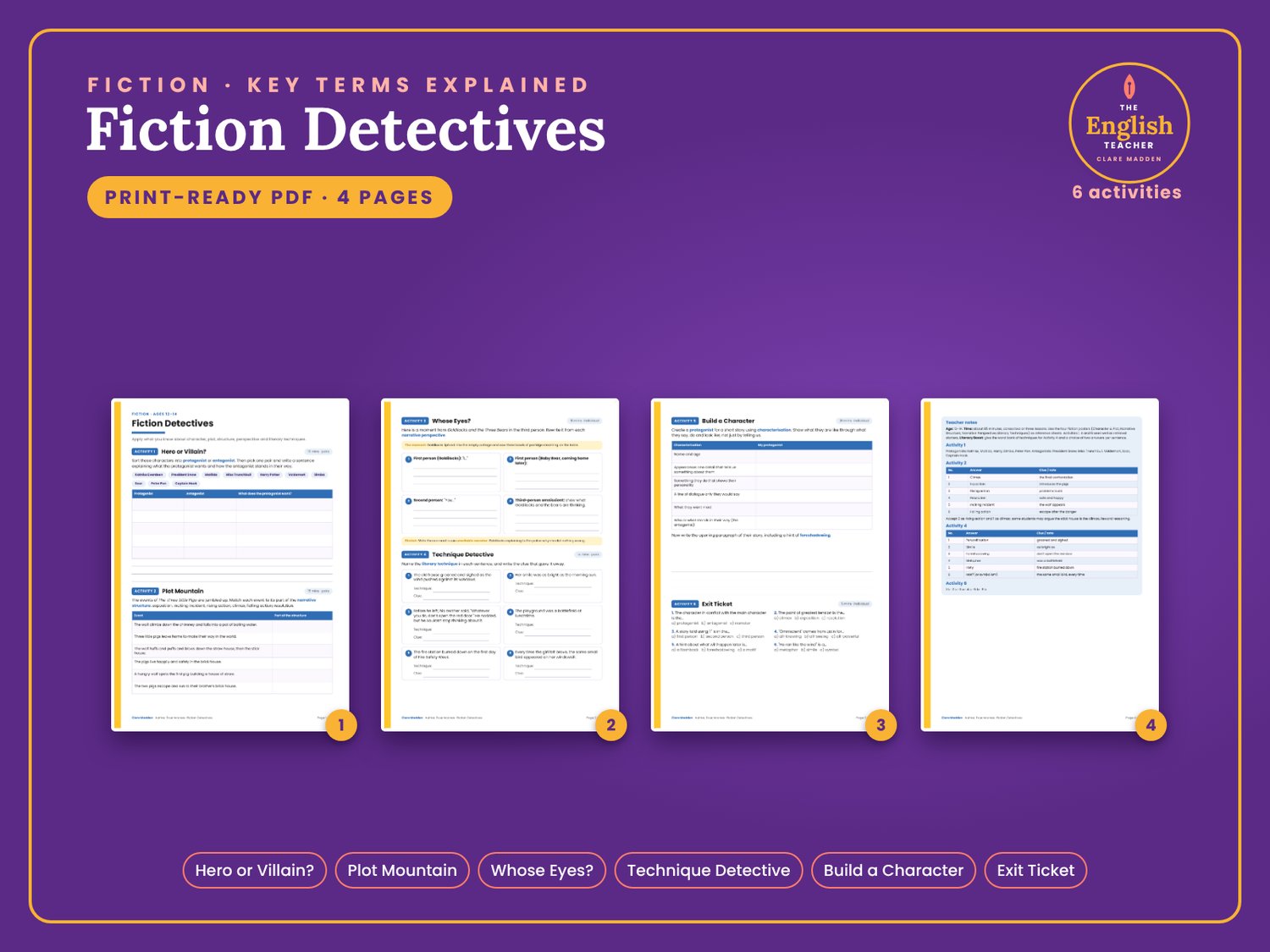
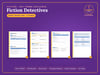
**Fiction Detectives activity pack (4 pages, 6 activities)**
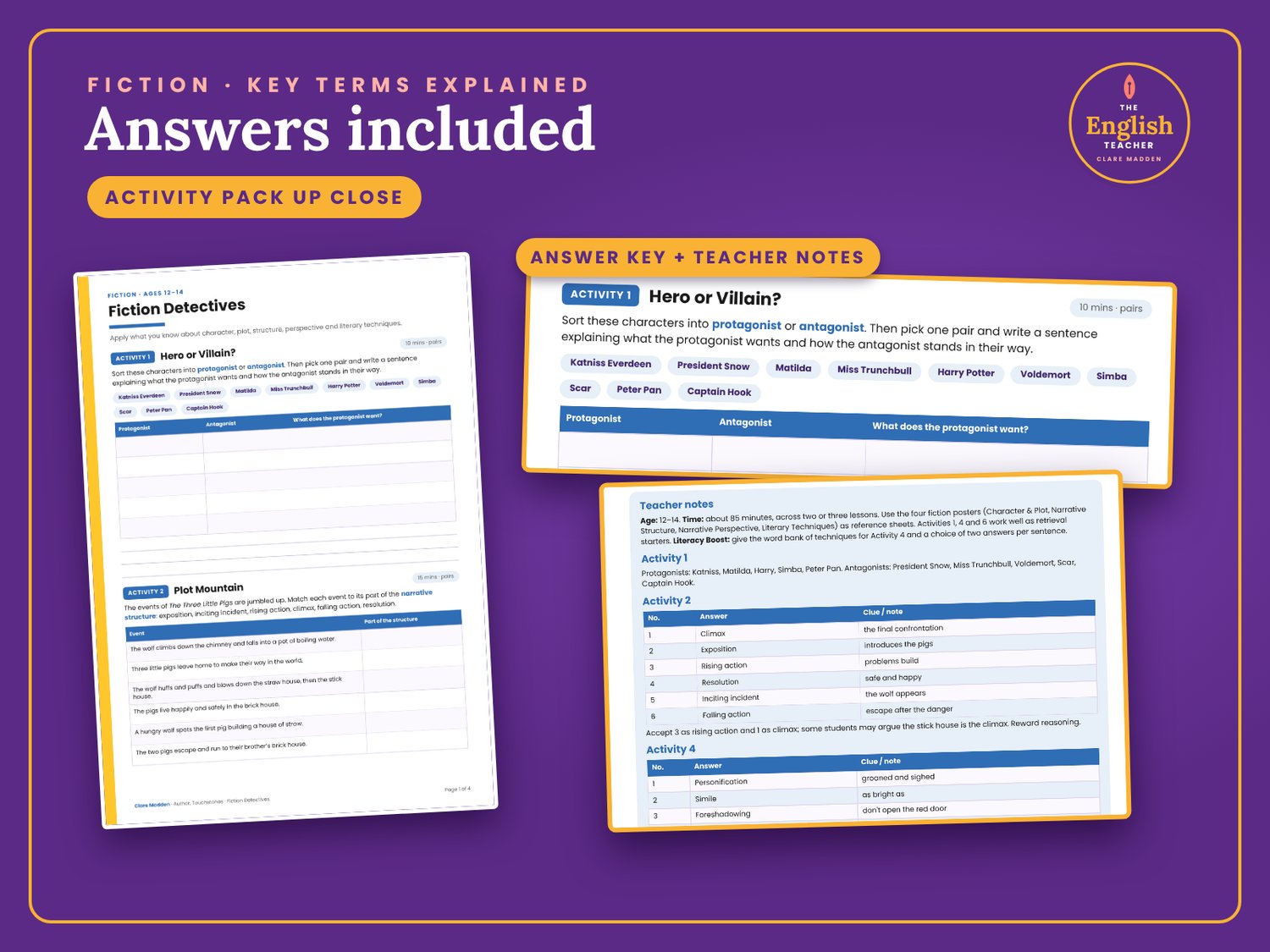
1. **Hero or Villain?** (10 mins, pairs): sort familiar characters into protagonists and antagonists
2. **Plot Mountain** (15 mins, pairs): match the jumbled events of *The Three Little Pigs* to the stages of narrative structure
3. **Whose Eyes?** (15 mins, individual): rewrite a moment from *Goldilocks* in first, second and third person, with an unreliable narrator stretch task
4. **Technique Detective** (15 mins, pairs): name the literary technique in six sentences and find the clue
5. **Build a Character** (20 mins, individual): plan a protagonist using characterisation, then write an opening with a hint of foreshadowing
6. **Exit Ticket** (5 mins): a quick multiple-choice check
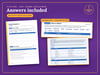
**Teacher notes and answers:** suggested timings (about 85 minutes, across two or three lessons), a Literacy Boost support suggestion, and answers for Activities 1, 2, 4 and 6.
**Who it's for**
- English classes aged 12–14 (Junior Cycle, KS3 or similar)
- An introduction before starting a class novel or short story unit
- Older students who need a refresher on the terms for writing about fiction
**Format:** two print-ready A4 PDFs (posters, 14 pages; activity pack, 4 pages), in full colour.