
The Middle East Brief
On Sale
ILS50.00
₪50.00
“Every headline screams for attention, but how many tell the truth?”
The reality is that fake news is everywhere.
Social media is full of made-up stories, and the regular news often twists the truth.
With about 62% of online info now considered unreliable and fake stories spreading six times faster than the truth, it is easier to get confused about the Middle East than ever before.
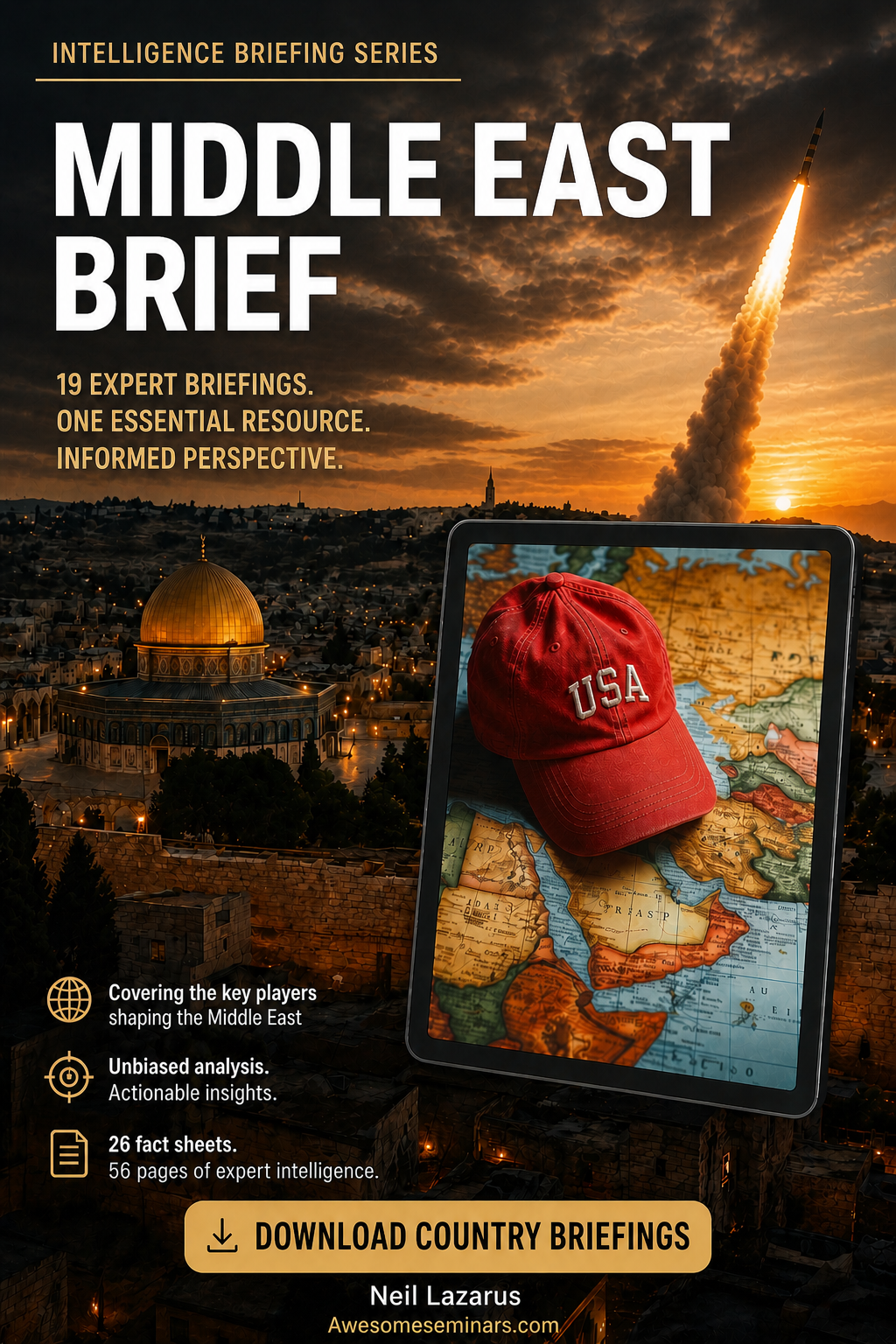
This intelligence guide gives you the "basic tools" you need to stay informed and avoid being tricked.
It explains the big events in a way that is easy to understand.
This guide doesn’t just tell you what happened — it shows you why it matters.
In a world drowning in misinformation, it gives you the clarity to finally see the Middle East as it truly is.
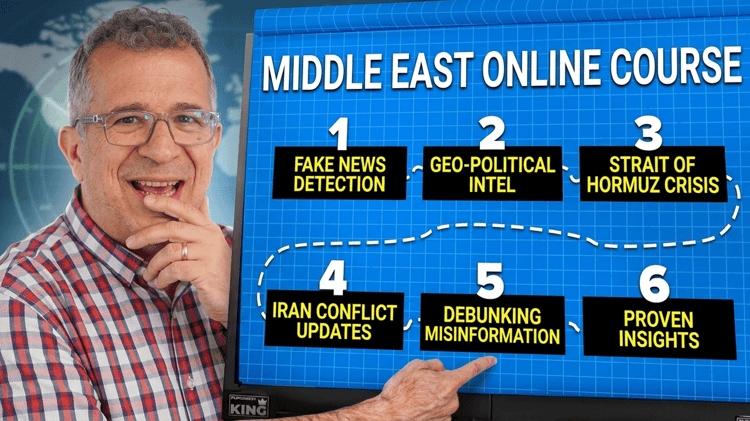
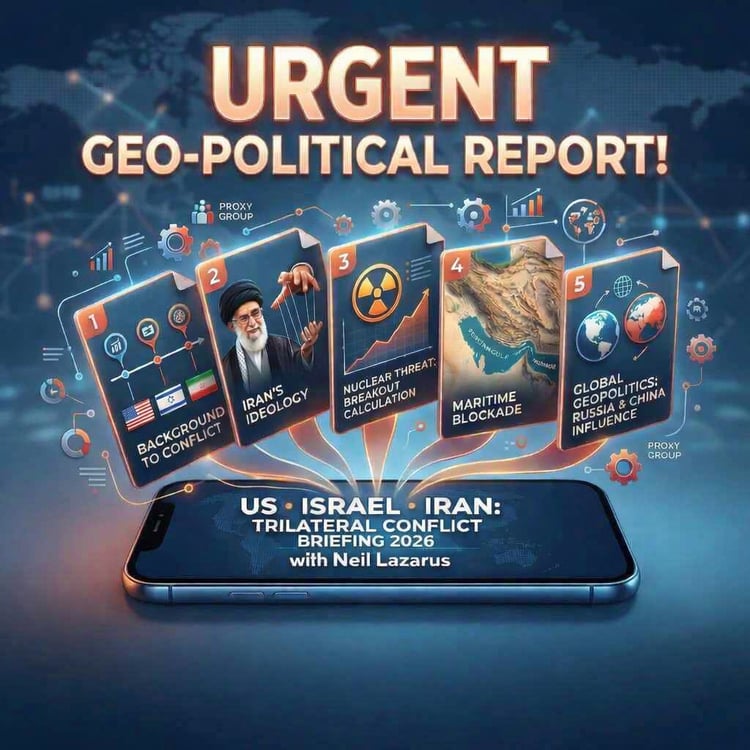
UPDATED We have totally updated it to include the Iran War (Operation Epic Fury), the crisis in the Strait of Hormuz, and the big changes in Syria.
You might ask, "Who cares? News is free."
The truth is that while "news" is free, accurate news is not.
Headlines are often designed to trigger outrage or serve a specific government’s agenda.
These briefings allow you to go behind those headlines. Understanding is not a headline; it is the ability to see the "load-bearing facts" that don't change overnight.
We break down what 19 countries and 3 superpowers actually want so you can see the real story:
- Trump’s America: The U.S. has moved away from long-term strategy to focus on "making deals." Relationships are now based on "transactionalism," where a country's value is measured by how many American weapons they buy or how much money they invest. While Trump remains highly pro-Israel, he is also impatient and pressures allies to end wars quickly.
- China’s Strategy: Beijing is playing a "30-year game" to make the Middle East economically dependent on them. They have invested over $200 billion in infrastructure to ensure their energy security, as they are the world's largest oil importer. Their goal is to have other countries need them for trade while letting the U.S. pay for the military protection.
- Russia’s Problem: Russia suffered its biggest setback in decades when the Assad government in Syria collapsed in December 2024. This "humiliating scramble" forced them to double down on their relationship with Iran, signing a 20-year deal to work together on military tech and dodging sanctions. However, Russia has made it clear they will not fight Iran's wars for them.
- Saudi Arabia's Pivot: The Kingdom is moving through a "civilizational pivot," focusing on its "Vision 2030" goals. They use their role as co-chair of OPEC+ to control oil prices, which gives them leverage over global powers.
- The Go-Betweens: While the big powers fight, countries like Oman and Qatar have become the region's most important "back channels." Oman stays neutral by hosting U.S. partners while talking to Iran, and Qatar has branded itself as the "indispensable mediator."
- The Frontlines: We look at the "load-bearing facts" on the ground in places like Egypt, which focuses on regime survival, and Kuwait, where the parliament holds unique power in the Gulf. We also cover the fractured war economies in Yemen and the "permanent transition" in Libya.