

Edie W. Cane: „Ballade for old masters sake“
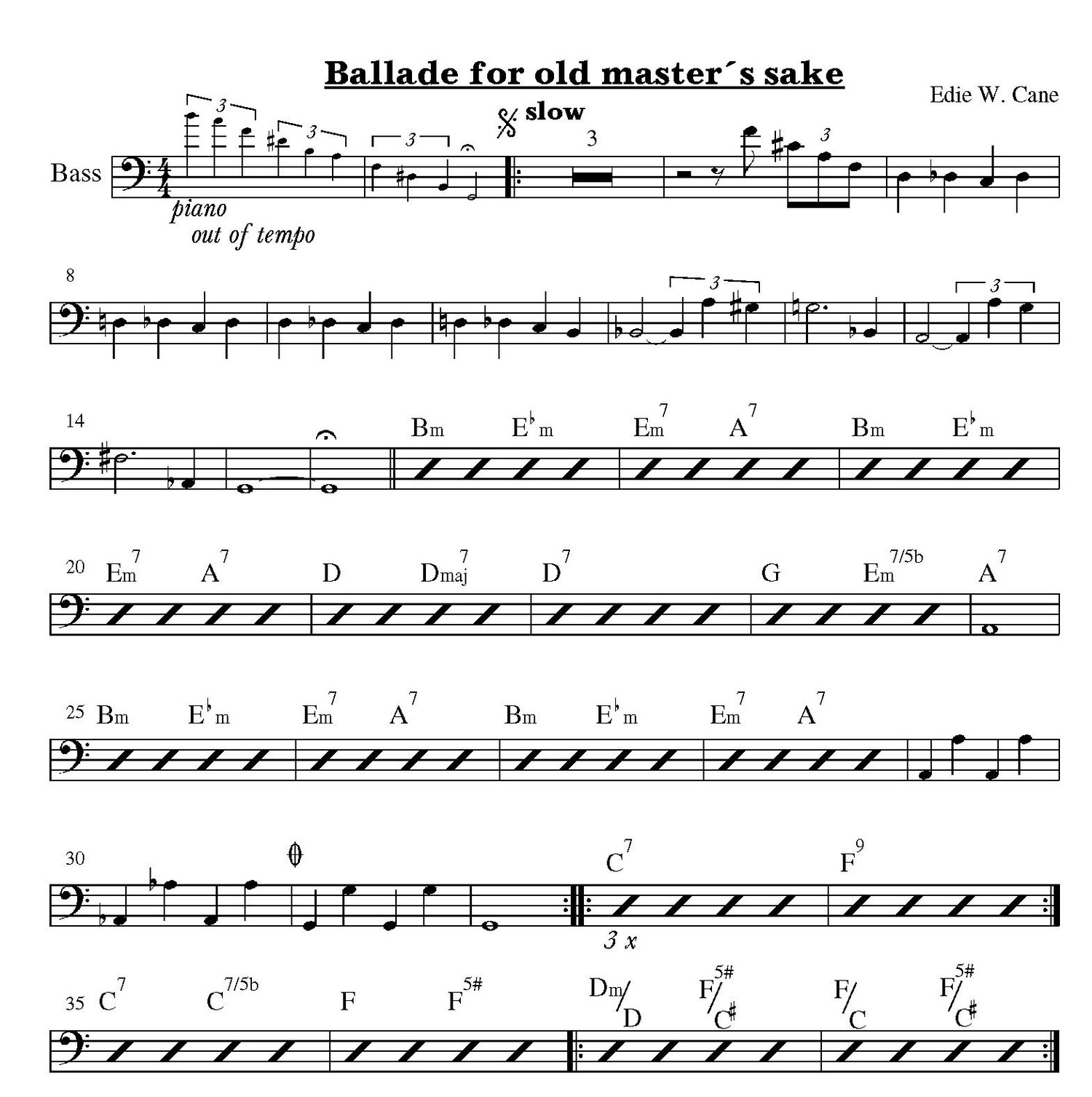
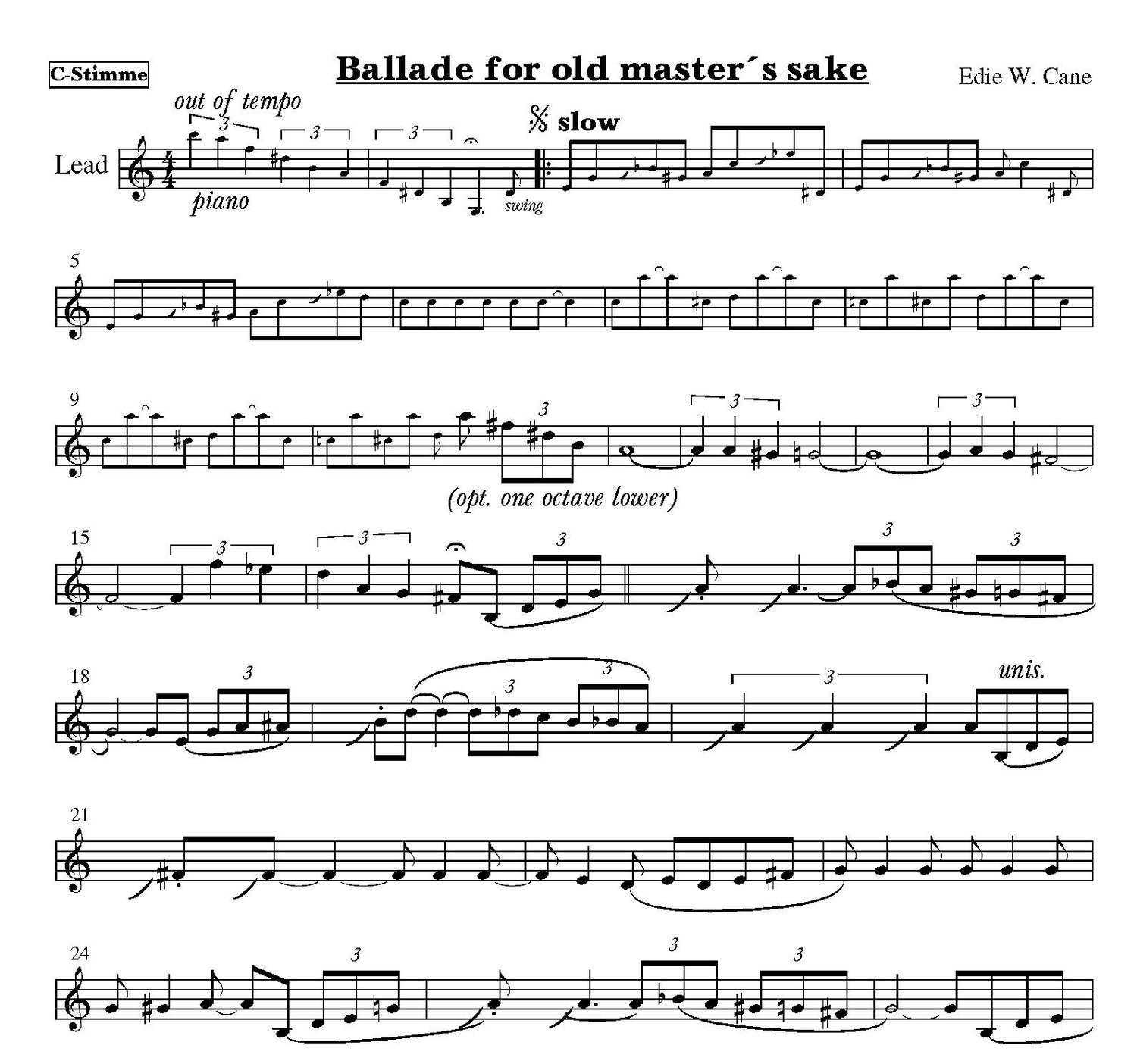
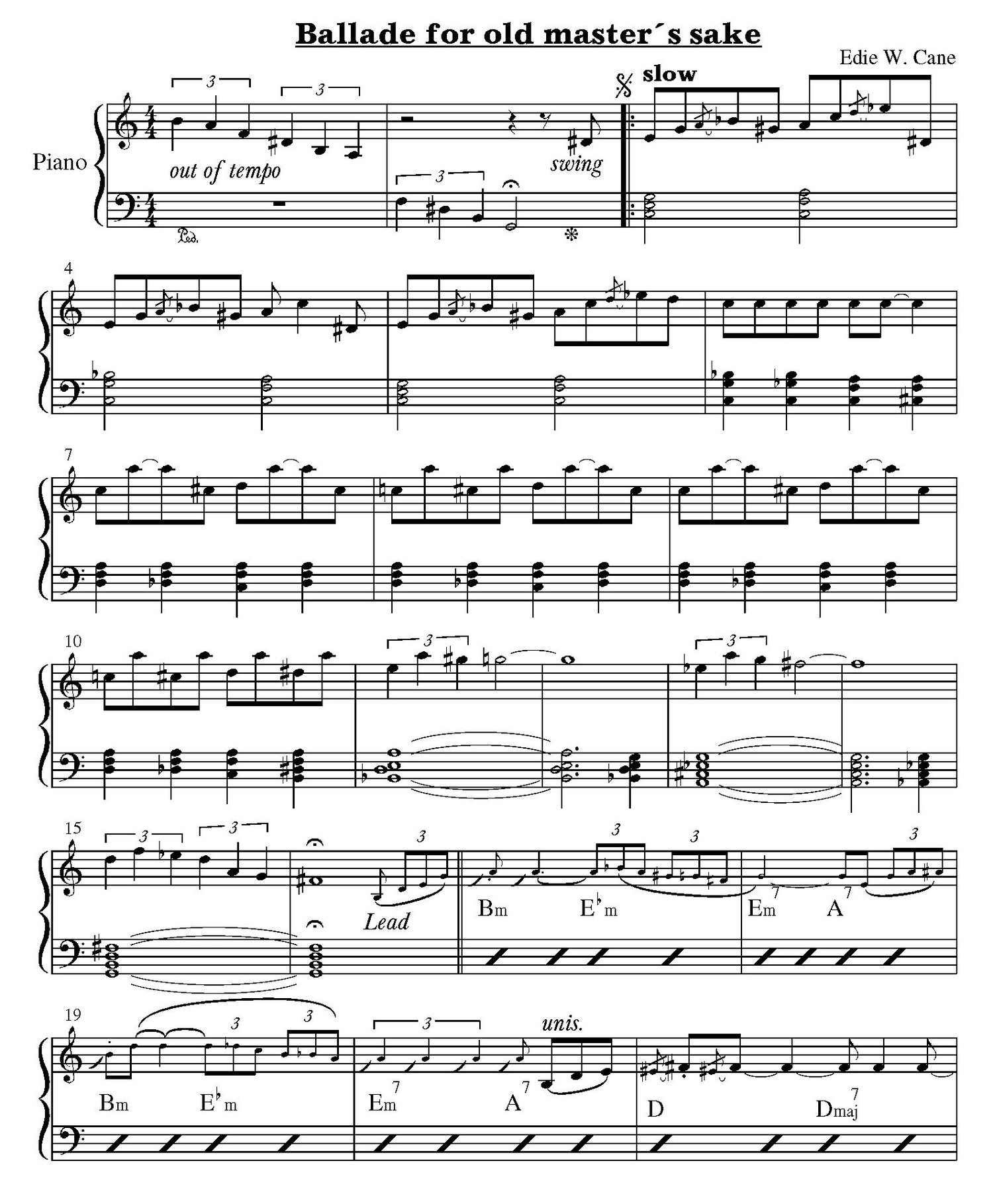
Dieses Stück entstand in einer Zeit, als der Komponist den Eindruck hatte, es stürben der Welt gerade die großen Musiker des Jazz weg. Im Großen und Ganzen hält es sich an die traditionelle A-B-A-Form, die A- und B-Teile sind aber in sich komplex aufgebaut: Nach zweitaktiger Einleitung folgt ein bluesiges Thema in C-Dur, dann eine kurze durchkomponierte Bridge zu einem Abschnitt in h-Moll. Nachdem beide Teile wiederholt worden sind, kommt ein kurzer Improvisationsabschnitt über den C-Dur-Teil, gefolgt von der (diesmal anders durchkomponierten) Bridge, welche in den eigentlichen Improvisationsteil (dem B-Teil) überleitet, der frei gestaltet werden kann. Danach kommt wieder der A-Teil (bluesiger C-Dur-Abschnitt - Bridge - h-Moll-Teil) mit Überleitung in eine abschließende Coda.
This piece was written at a time when the composer had the impression that the world was losing the great musicians of jazz. On the whole, it adheres to the traditional A-B-A form, but the A and B sections are complex in structure: A two-bar introduction is followed by a bluesy theme in C major, then a short through-composed bridge to a section in B minor. After both parts have been repeated, there is a short improvisation section over the C major part, followed by the bridge (composed differently this time), which leads into the actual improvisation part (the B section), which can be freely arranged. Then comes the A section again (bluesy C major section - bridge - B minor section) with a transition into a final coda.