
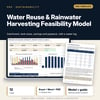


Water Reuse & Rainwater Harvesting Feasibility Model: Rainwater Harvesting and Greywater Reuse Payback Model
Full description
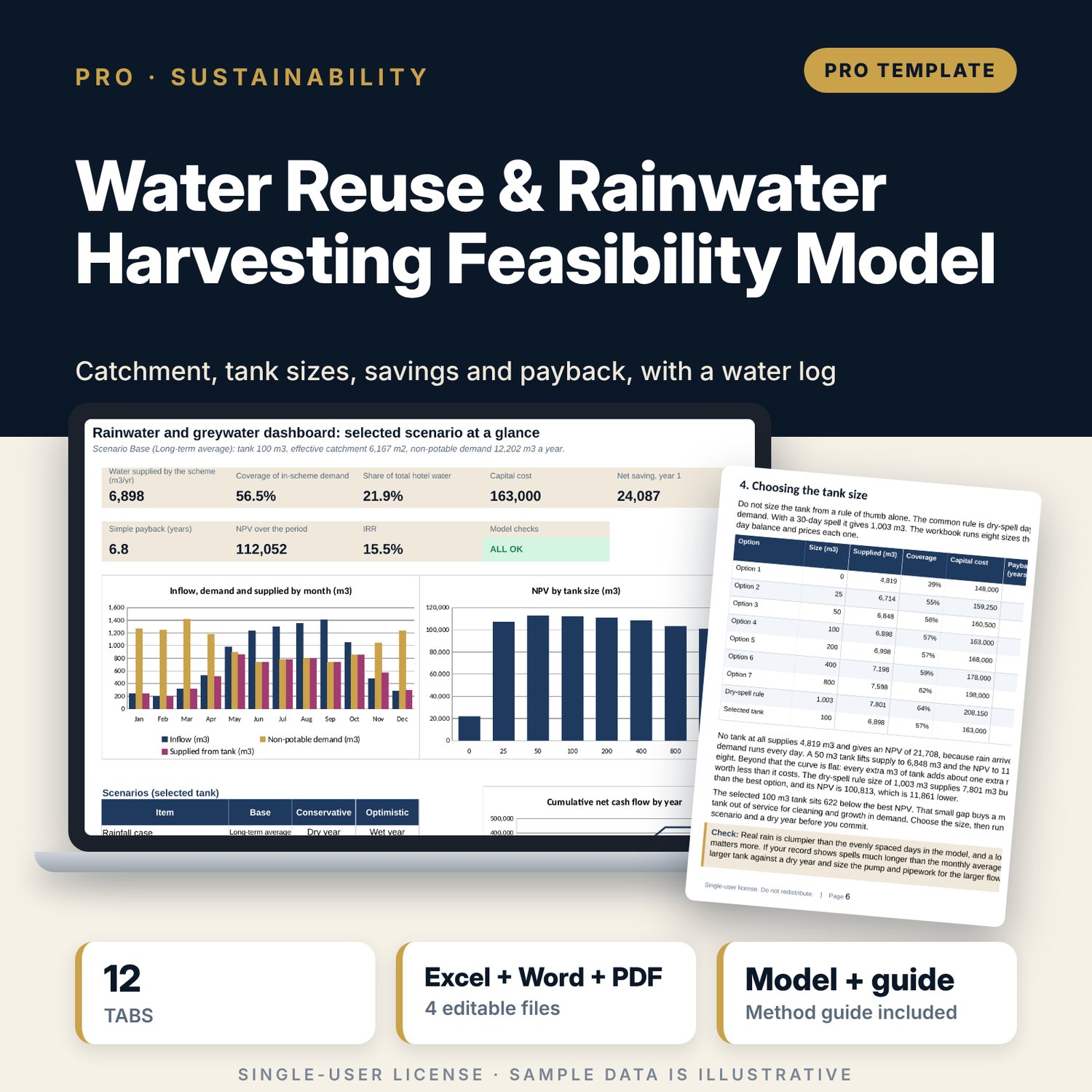
For chief engineers, hotel general managers and finance managers who need to decide whether a rainwater and greywater scheme pays. The workbook builds the catchment from your roofs, runs a 730-day tank balance against non-potable demand by use, compares eight tank sizes, and returns the water supplied, the saving, the payback and the NPV. Three scenarios and two sensitivity grids show how far the answer moves. A companion log tracks monthly sub-meter readings against the plan and flags leaks, and a 10-page guide explains each step with a worked example.
What is inside
- Rainwater_Harvesting_Feasibility_Model.xlsx: 12 tabs, 24,563 formulas, 7 native charts, 37 drop-down and input rules
- Rain and Catchment: 6 surfaces with runoff and efficiency, 12 months of rain in 3 cases (long-term average, dry year, wet year), first-flush loss and harvest per rain event
- Demand: 12 months of activity, 5 non-potable uses (irrigation, cooling make-up, toilet flushing, cleaning, pool top-up) with a serve-or-not switch, 5 potable uses and greywater
- Daily Engine: 730 days with the tank empty on day 1, for the selected tank, 8 tank sizes and 3 scenarios (23,382 formulas)
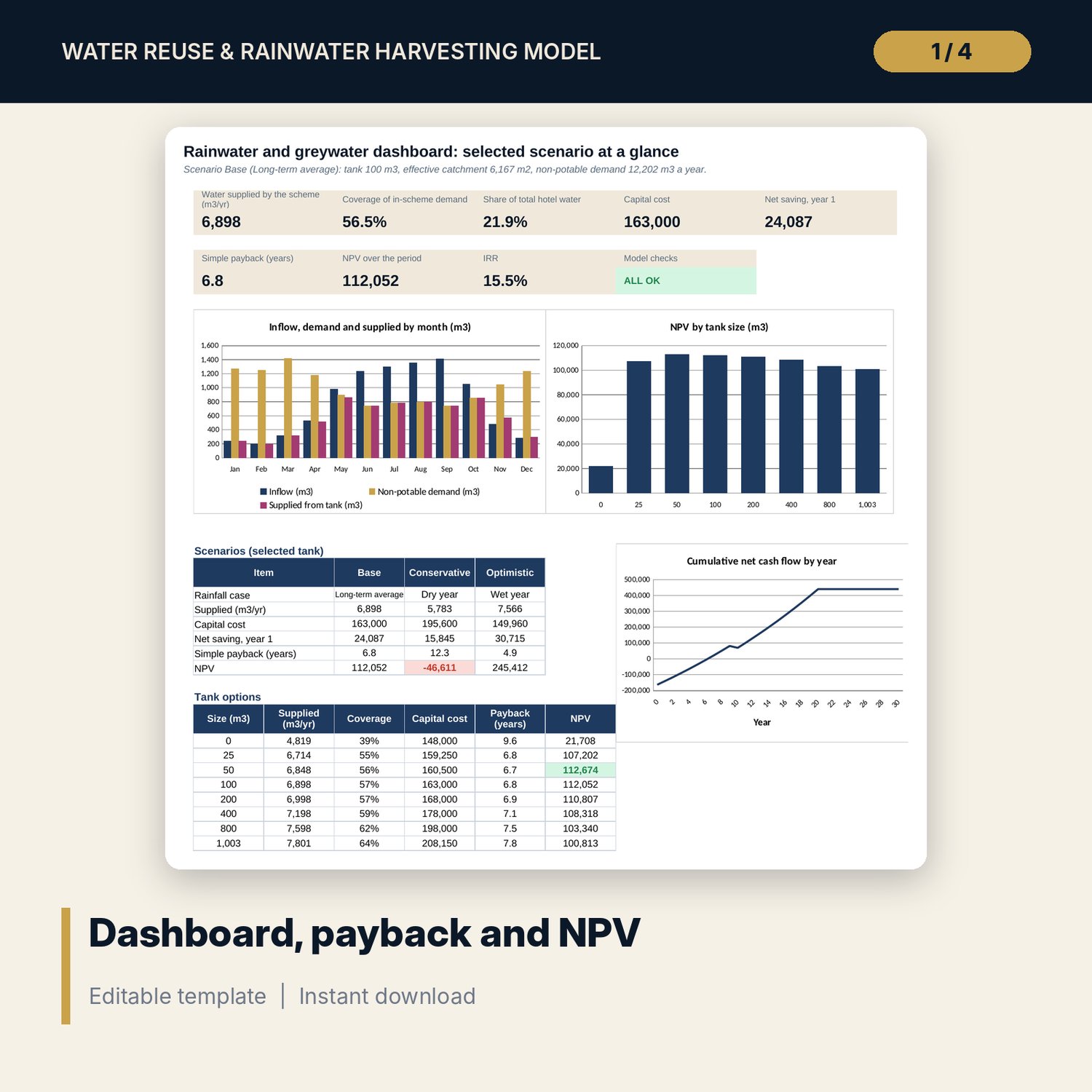
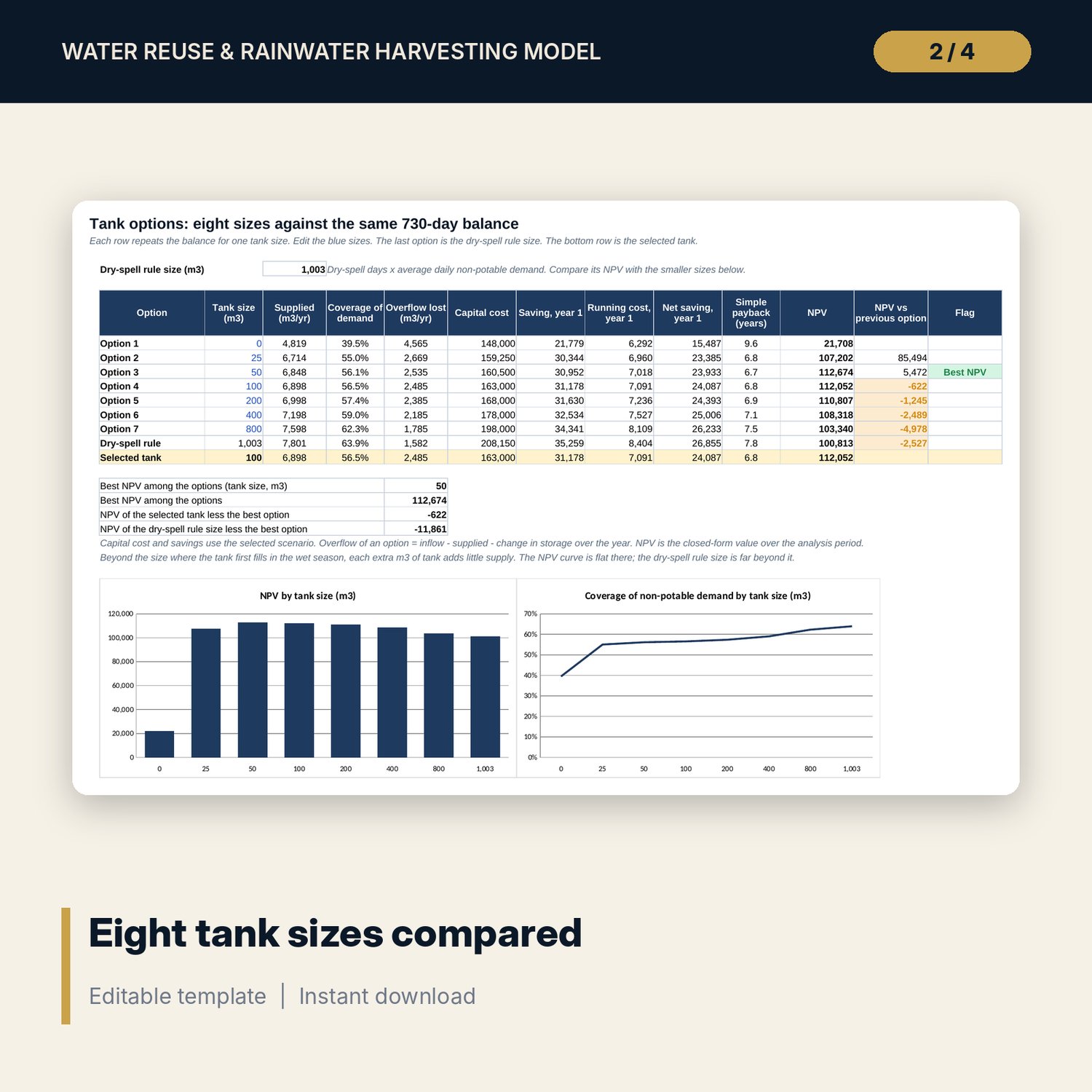
- Water Balance by month, Tank Options (8 sizes plus the dry-spell rule size) with NPV, payback and overflow, Economics with 31-year cash flow, NPV, IRR and payback
- 3 scenarios, 2 sensitivity grids of 25 cells each, a Dashboard with 8 tiles, a check tile and 3 charts, 14 integrity checks, a Method tab with 16 documented calculations
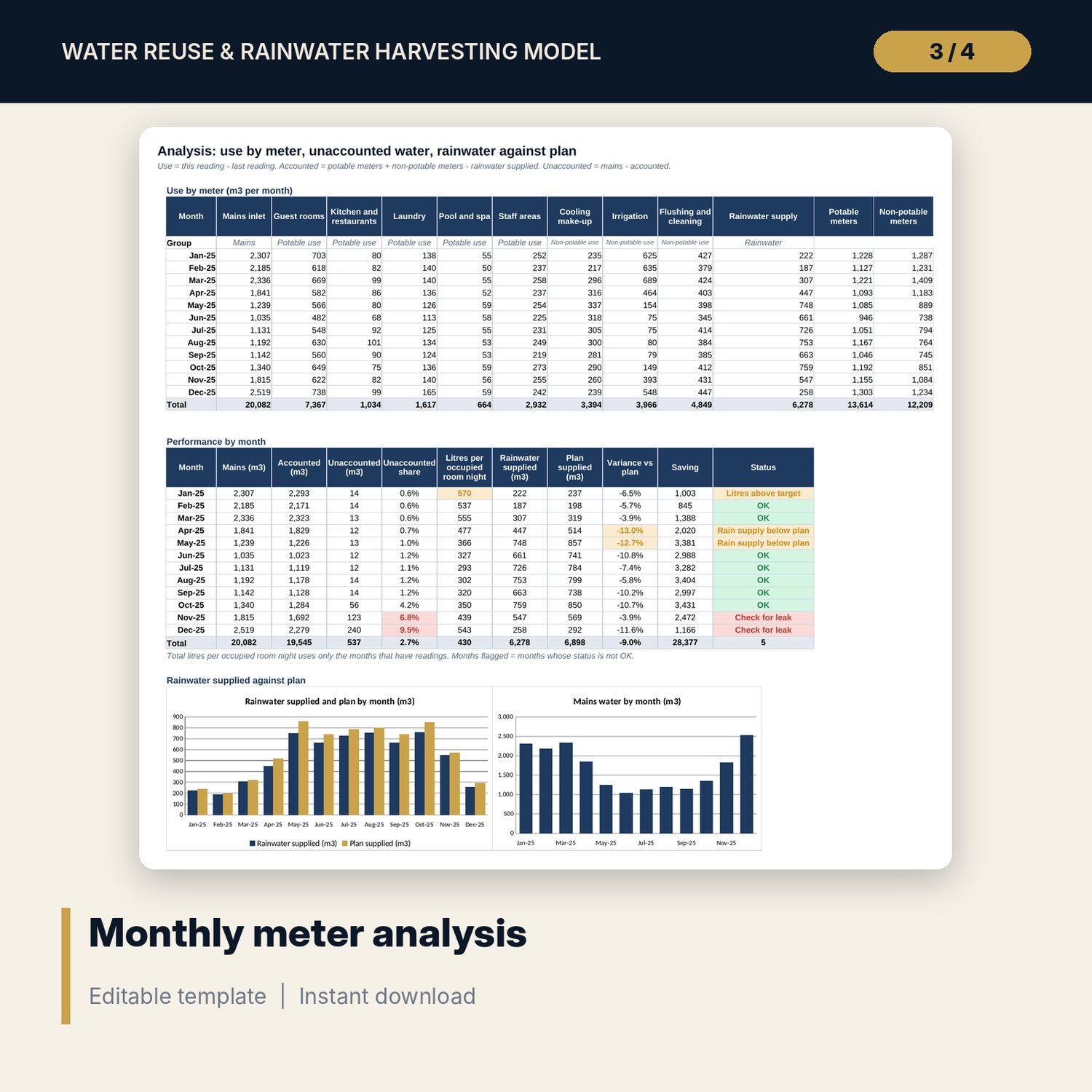
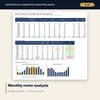
- Rainwater_Harvesting_Monthly_Water_Log.xlsx: 5 tabs, 395 formulas, 10 meters, 12 months of readings, unaccounted water, litres per occupied room night, rainwater against plan, 7 checks
- Rainwater_Harvesting_Feasibility_Guide.docx and PDF: 10 pages with inputs and owners, equations, a worked example read from the workbook, tank sizing, scenarios, a 15-line design checklist and the log routine
- README.txt and LICENSE-and-Terms.txt
How it works
- Enter rates, tariffs and costs on Assumptions, list your surfaces and rainfall, and enter twelve months of activity.
- Pick a scenario and a tank size. Read the monthly water balance, the coverage and the overflow.
- Compare the eight tank sizes by NPV and payback, then test the Conservative scenario and the sensitivity grids.
- After you build, log meter readings monthly and compare the rainwater supplied with the plan.
Details
- Formats: 2 Excel workbooks (.xlsx), 1 guide in Word (.docx) and PDF, English
- Software: Excel 2016 or later, or LibreOffice Calc 7 or later
- No macros, no external links, no data tables, no array formulas
- 4 files plus README and license; instant digital download
Good to know
- Sample data is illustrative. Replace it with your own figures.
- Rainfall, rates, tariffs and costs are examples. Verify local requirements, including the permit for rainwater and greywater reuse and the water-quality rules for each use.
- The files are planning tools, not engineering, financial or legal advice.
- Single-user license. Do not redistribute.
FAQ
Does it size the tank?
It compares eight tank sizes, including the dry-spell rule size, against the same 730-day balance and shows supplied water, overflow, payback and NPV for each.
Why a daily balance and not a monthly one?
A monthly balance cannot show a tank carrying water from a wet week to a dry week. The daily engine can, so tank size changes the result.
Does it include greywater?
Yes. Set greywater reuse to Yes or No on Assumptions. It adds shower and basin water to the tank and adds its treatment cost.
What does the water log do?
It takes cumulative readings from ten meters, works out use, unaccounted water, litres per occupied room night and rainwater against plan, and flags each month.
Do I need macros?
No. Every result is a standard worksheet formula, including the sensitivity grids.