
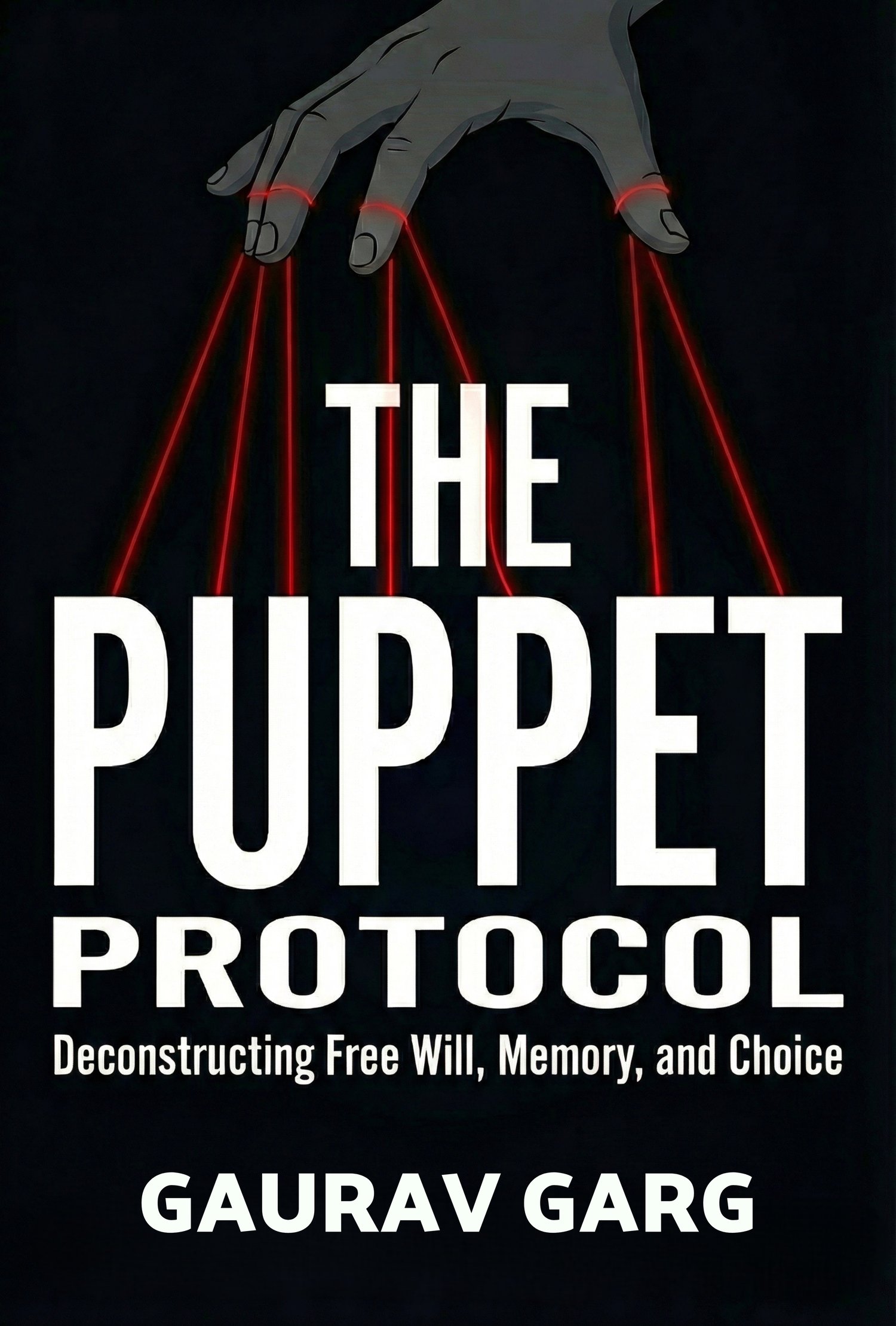
The Puppet Protocol
You did not choose to pick up this book.
You likely believe you did. You believe that you were walking through a bookstore, or scrolling through a digital storefront, and your eyes landed on the cover. You believe that your conscious mind—that steady, narrating voice you call "I"—weighed the pros and cons, evaluated the title, and made an executive decision to invest your time and money.
It is a comforting story. It is the story we tell ourselves about everything: our careers, our partners, our politics, and our breakfast orders. It is the story of the Sovereign Self, the captain of the soul, the unmoved mover.
But if you are holding this book, it is because a specific sequence of biological and algorithmic tumblers clicked into place long before you were aware of them. A flash of color triggered your amygdala. A phrase on the jacket hacked your scarcity loop. A recommendation from a friend primed your mirror neurons. By the time you felt the urge to read, the decision had already been executed by a silent, subterranean operating system that has been running on autopilot for two hundred thousand years.
You are not the captain. You are the passenger.
This book is about how to climb into the cockpit.
For the past two decades, I have lived at the intersection of two very different worlds: the rigorous, peer-reviewed world of cognitive neuroscience, and the shadowy, practical world of influence—the domain of magicians, con artists, and social engineers.
In the lab, we call it "Cognitive Bias." On the street, they call it "The Work." In the lab, we study "Inattentional Blindness." On the street, they call it "Pickpocketing." In the lab, we publish papers on "Social Contagion." On the street, they call it "Starting a Riot."
For a long time, these two worlds did not speak. The scientists considered the manipulators to be charlatans; the manipulators considered the scientists to be irrelevant. But recently, a third player has entered the game, one that has industrialized the dark arts of the street using the data of the lab.
Technology.
We are living through a unique moment in history where the external world has evolved faster than our internal hardware. We are running Paleolithic software—code written for the savannah, designed to spot tigers and bond with a tribe of 150 people—on a planet of fiber-optic cables, deepfakes, and algorithmic super-stimuli.
The result is a glitch. A massive, systemic failure of the human operating system.
We see it in the polarization of our politics, where "truth" has become a function of tribal signaling rather than objective reality. We see it in the mental health crisis, where our dopamine receptors are burned out by the supernormal stimuli of infinite scrolling. We see it in the rise of conspiracy theories, where the brain’s pattern-matching software goes rogue, finding monsters in the static.
We are being hacked. Not by a guy in a hoodie typing code, but by our own biology, weaponized against us by systems designed to maximize engagement at the expense of sanity.
The Glitch is not a self-help book. It is not a collection of life hacks to make you more productive or more charismatic, though it will do both those things.
It is a manual.
It is a schematic of the machine you live inside. It is divided into four parts, mirroring the architecture of any complex system:
· Part I: The Hardware. We will strip the chassis and look at the biological machinery—the eyes, the nerves, the reflexes—that dictates your physical reality before you even have a chance to think about it.
· Part II: The Software. We will audit the code—the cognitive shortcuts, the memory protocols, and the linguistic tricks—that structure your thoughts and decisions.
· Part III: The Network. We will look at the connectivity—the invisible Wi-Fi of emotion and culture that binds us into a Hive Mind, often against our will.
· Part IV: The Merge. We will look at the future—the rapidly closing gap between the brain and the computer, and what happens when "hacking a human" stops being a metaphor and becomes a literal, wireless protocol.
Some of the techniques you will learn in these pages are dangerous. I have included protocols for inducing confusion, for forcing compliance, and for rewriting memory. I debated redaction. I debated softening the edges.
But I realized that safety through obscurity is a myth. The predators already know these glitches. The marketers know them. The politicians know them. The algorithms certainly know them.
The only people who don't know them are the Users.
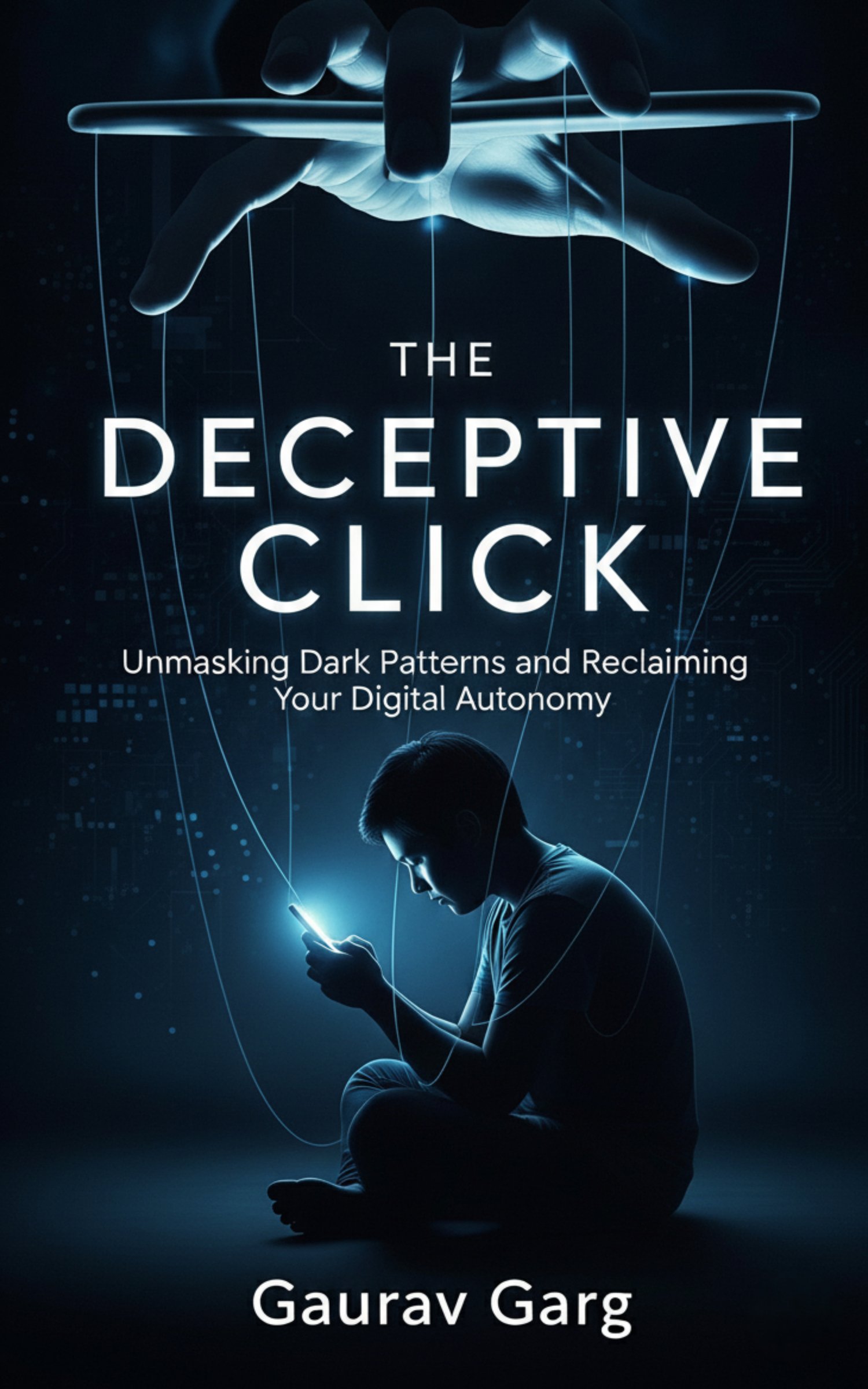
By hiding the mechanics of influence, we do not protect the innocent; we merely disarm them. The only defense against a hack is to understand the vulnerability. To see the strings is the first step to cutting them.
This book demands something of you. It is not a passive experience. It requires you to test your own reality. It asks you to perform the drills, to feel the weight of the pendulum, to catch your own pupils dilating, to notice when your memory reshapes itself to protect your ego.
It asks you to accept a humbling truth: You are not as free as you think you are. You are a biological machine, prone to error, susceptible to suggestion, and wired for conformity.
But in that acceptance lies a strange and powerful freedom.
Because once you know you are a machine, you can stop being a machine that runs on default. You can become a machine that learns. A machine that updates. A machine that creates its own code.
You can stop being the User. You can become the Admin.
The system is open. The terminal is ready.
Let’s begin.