Dementia Caregiver Clarity Kit
The guide for when you're overwhelmed, under-supported, and need to know what to do next.
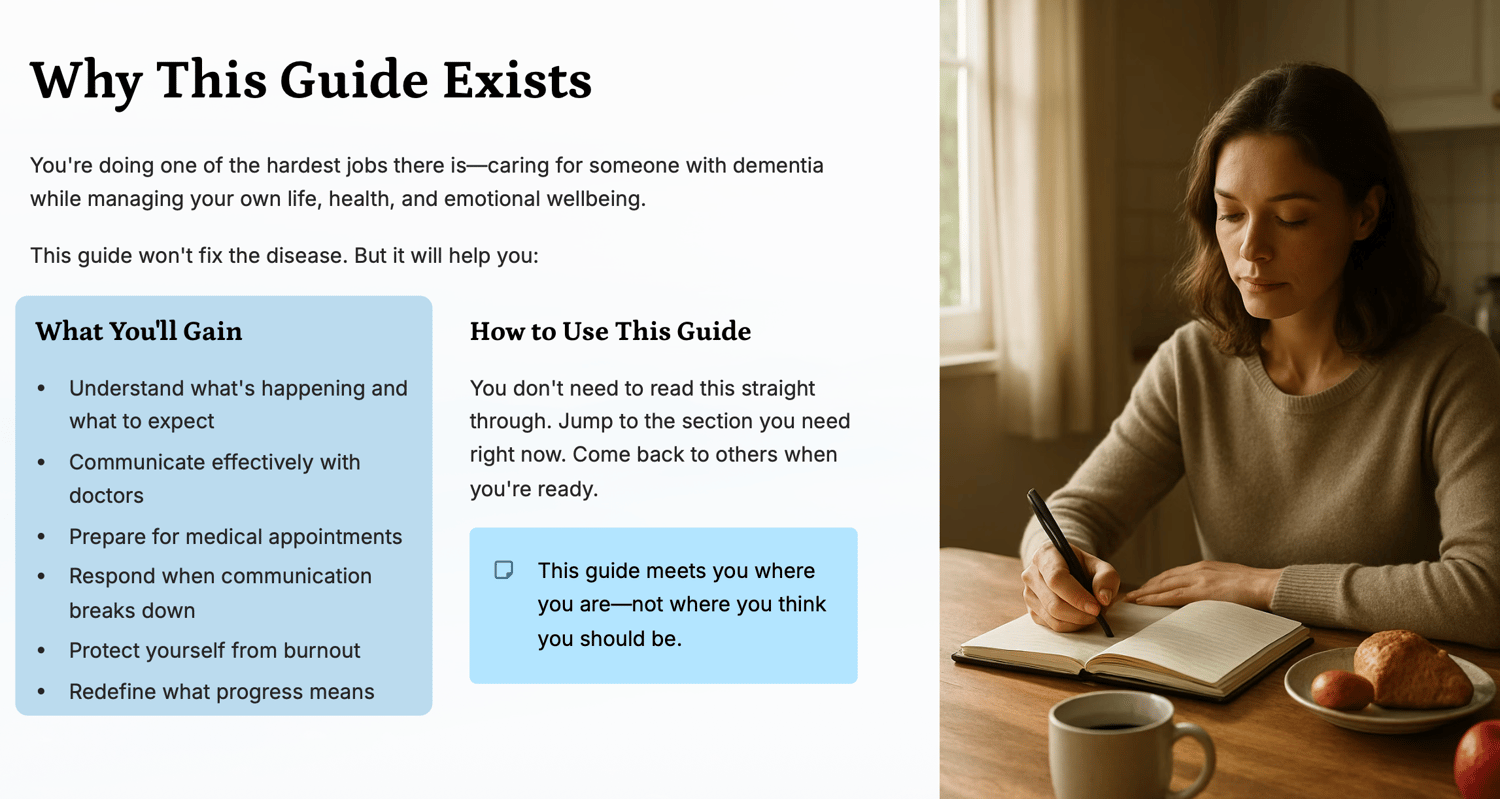
What You Get
A 25-page downloadable PDF designed for caregivers navigating dementia—whether you have a diagnosis yet or not.
This isn't another list of dementia symptoms you could find on WebMD.
This is the guide that tells you:
- How to get doctors to actually listen (with exact scripts to use)
- How to prepare for appointments when your brain is too full to think
- What to say when they ask the same question for the fifth time today
- How to access government-funded respite care (with actual phone numbers)
- What progress looks like when there's no cure
What Makes This Different
Most dementia resources tell you what's happening.
This guide tells you what to do about it.
✓ 6-step appointment prep framework you'll use before every doctor visit
✓ Symptom tracker template that gets doctors to take you seriously
✓ "Less effective vs. more effective" communication examples you can copy verbatim
✓ Government respite resources with phone numbers and how to ask
✓ Pre-diagnosis guidance for the 1-3 years before doctors will commit
✓ Safety red flags including when to call the fire department for lift assist
✓ What to do at 2am when you're at your breaking point
Who This Is For
- Caregivers who just got a diagnosis and don't know where to start
- Caregivers who've been noticing changes for months (or years) but can't get doctors to take it seriously
- Adult children managing care from a distance
- Spouses watching their partner disappear in slow motion
- Anyone who's ever Googled "how to talk to someone with dementia" at 2am
Age range: Designed for caregivers 30-80+ caring for parents, spouses, or other loved ones
What You'll Be Able to Do
After using this guide, you'll know how to:
→ Walk into a doctor's appointment with your top 3 concerns organized and ready
→ Speak in the language doctors respond to (safety risks + documented patterns)
→ Redirect confused or repetitive behavior without escalating frustration
→ Find and access government-funded respite care in your area
→ Tell the difference between "wait and see" and "this needs action now"
→ Redefine what progress means when there's no going back to normal
What's Inside
- Section 1: Understanding What's Happening
- The language to describe what you're seeing—including what to do when there's no diagnosis yet and how to push for one.
- Section 2: Getting Doctors to Listen
- How to communicate so medical appointments actually help. Includes scripts, neurologist types, and questions that move things forward.
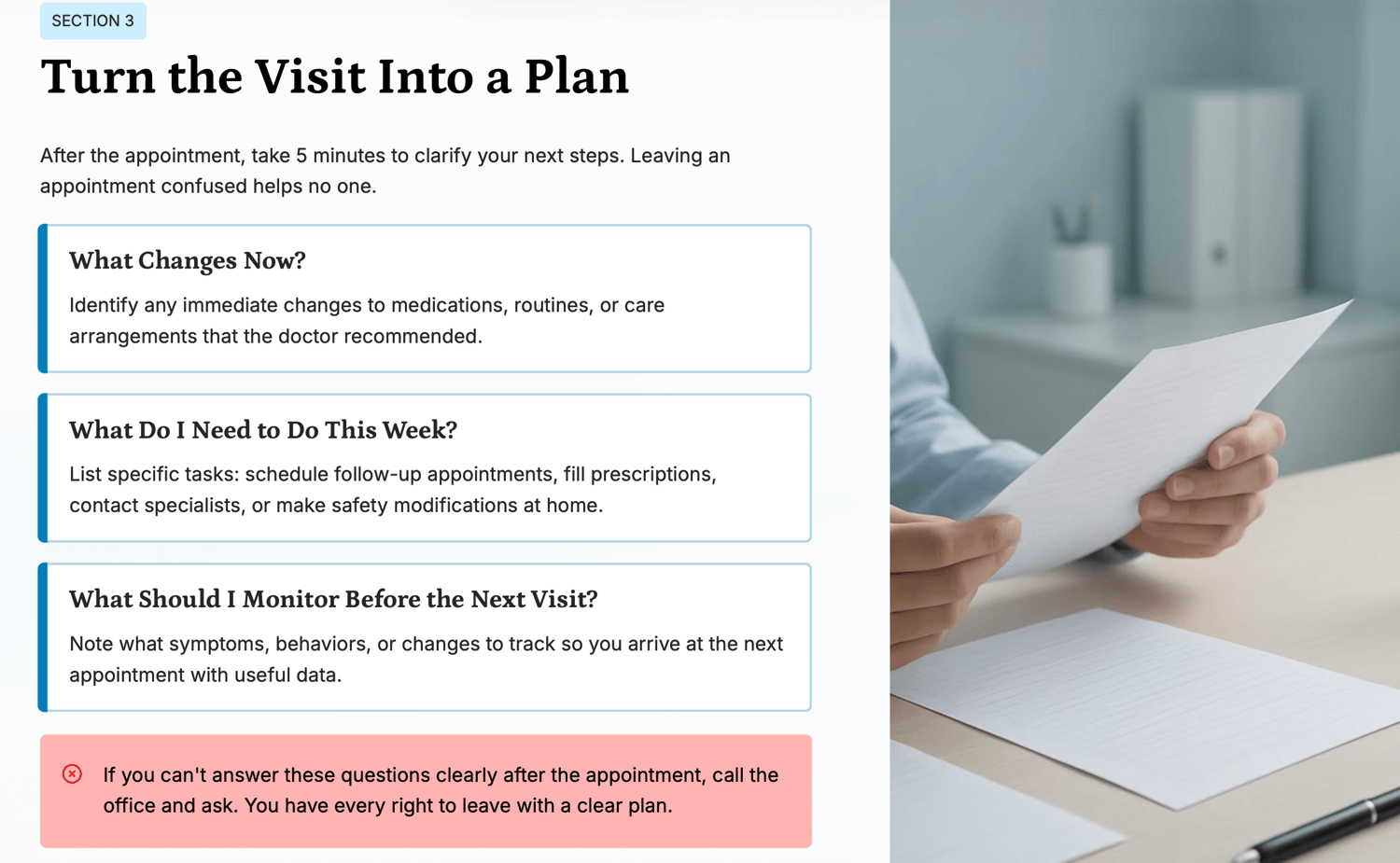
- Section 3: Preparing for Every Appointment
- A step-by-step framework to use 48 hours before every visit. Includes symptom tracker template and question guides.
- Section 4: Responding When Nothing Makes Sense
- What to do when words don't work anymore. Communication scripts for daily interactions.
- Section 5: Protecting Yourself from Burnout
- Evidence-based strategies, respite care options, and how to access government funding (with actual contact info).
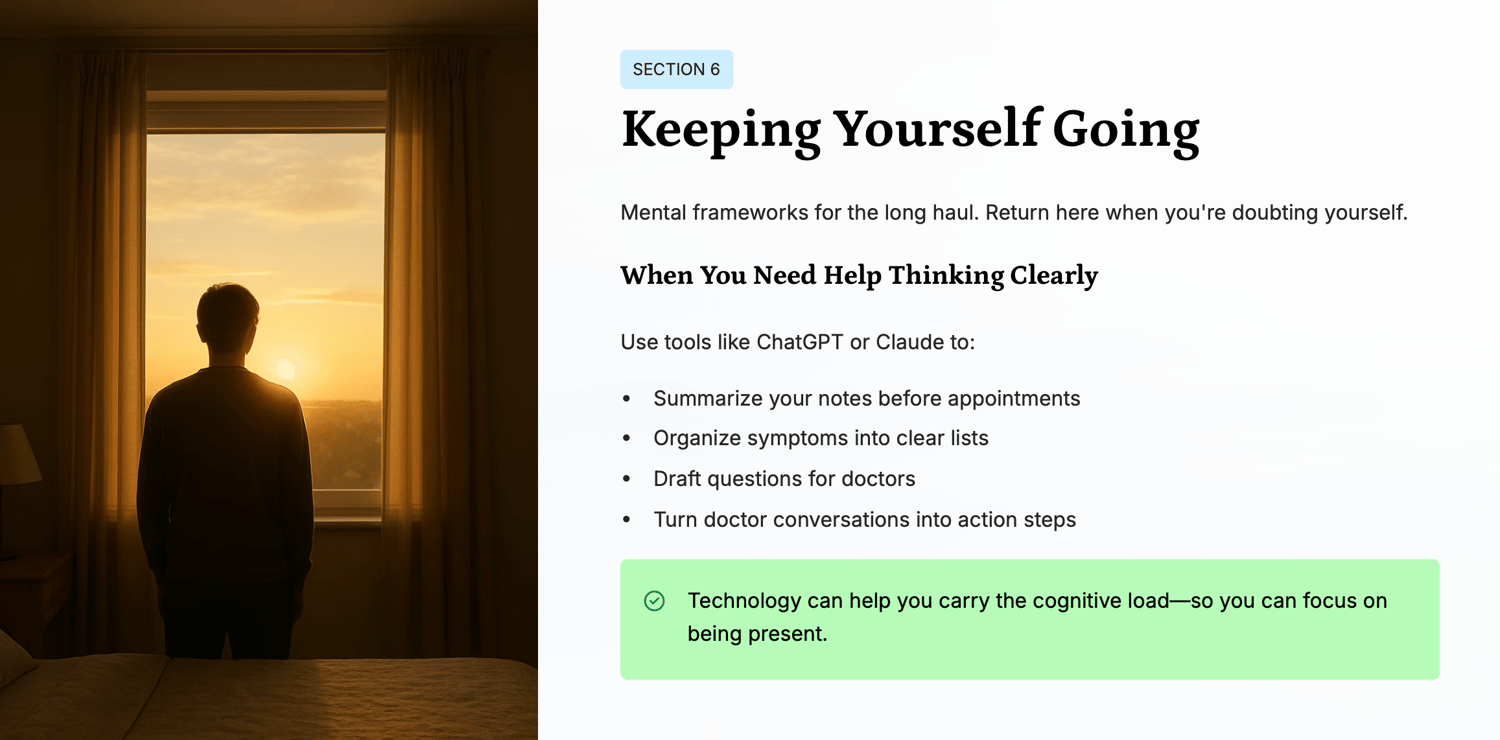
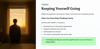
- Section 6: Keeping Yourself Going
- Mental frameworks for the long haul—including what to do when you can't do this anymore.
Format & Delivery
- 22-page PDF optimized for printing or screen reading
- Instant download after purchase
- Works on all devices (phone, tablet, computer)
- Print at home or save to your phone for quick reference
Design: Calm, easy-to-navigate layout with generous white space, symptom tracking worksheets, and quick-reference callout boxes.
Why $20?
This guide gives you:
- Frameworks you'll use next week (not someday)
- Scripts you can copy verbatim when your brain is full
- Phone numbers you won't have to hunt for at 2am
- Permission (with proof) that redefining progress is okay
- Validation for pre-diagnosis caregivers doing all the work with none of the recognition
You're not paying for information you could Google.
You're paying for clarity when you can't think straight.
Instant Access
Purchase now and download immediately. No waiting, no shipping.
Perfect for:
- Reading on your phone during appointment waiting rooms
- Printing and keeping in your caregiving binder
- Sharing with family members who want to help but don't know how
About the Creator
This guide was created by someone who understands that caregivers don't need another academic explanation of dementia stages—they need to know what to do on Tuesday morning when the person they love can't remember how to use the coffee maker they've used for 20 years.
For questions or support: consultwithatwist@gmail.com
Purchase includes:
- Full 22-page PDF guide
- Printable symptom tracker worksheet
- Government resource contact list
- Lifetime access to download
Buy once. Use forever.
FAQ
Q: Is this guide only for Alzheimer's?
A: No. It covers all types of dementia (Alzheimer's, vascular, frontotemporal, Lewy body) and is useful whether you have a formal diagnosis or not.
Q: What if I'm just starting to notice changes?
A: Perfect. The "When There's No Diagnosis Yet" section is specifically for you—including how to push doctors for assessment.
Q: Will this work if I live far away from my loved one?
A: Yes. The appointment prep framework works for virtual or in-person visits, and the communication strategies help whether you're there daily or coordinating from a distance.
Q: Can I print this?
A: Absolutely. Print the whole thing or just the pages you need.
Q: Is this a replacement for medical advice?
A: No. This guide helps you communicate better with doctors and navigate the system—it doesn't replace professional medical care.
Get the clarity you need. Download now.