

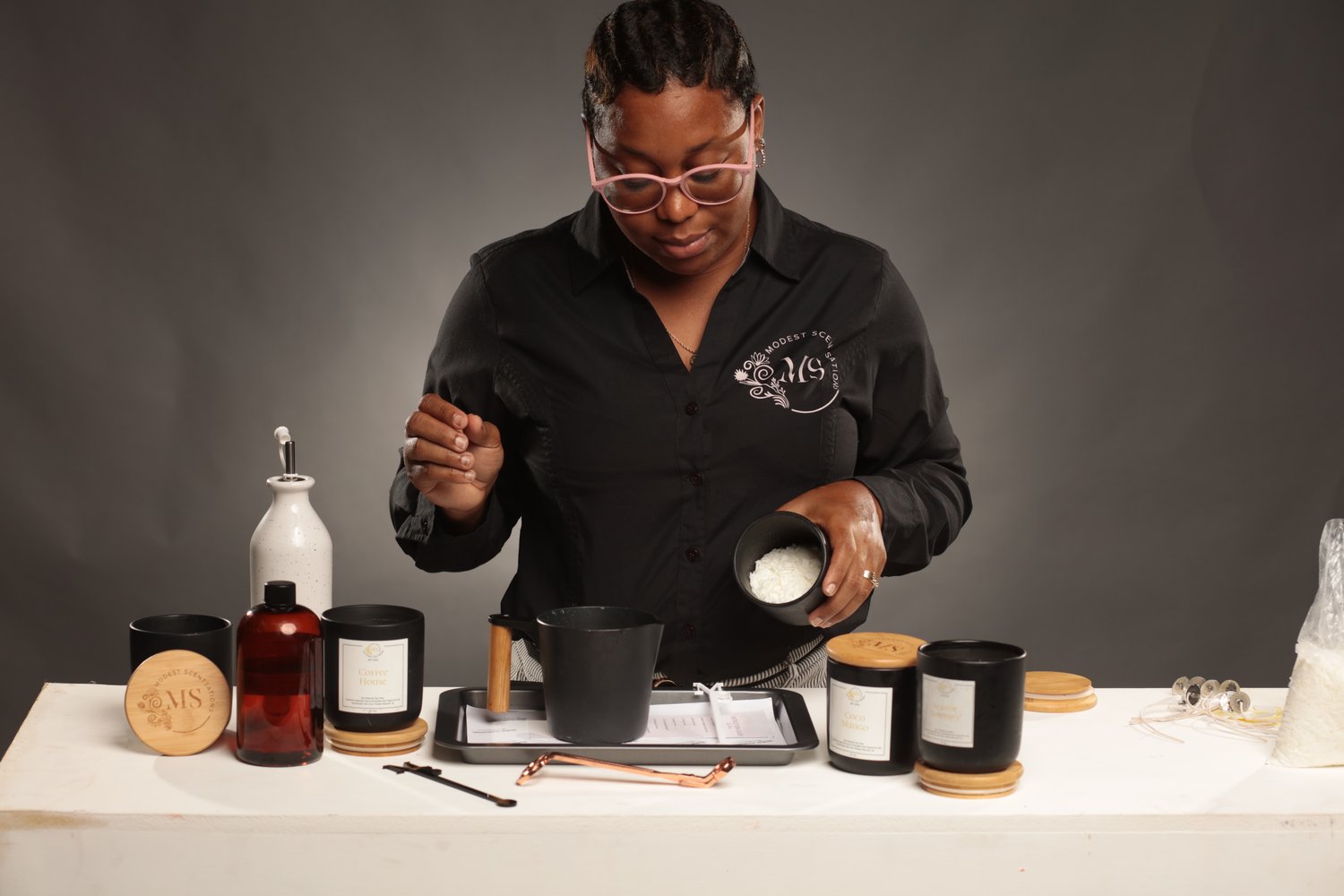
How to make Scentsational Candles: Book 2 Let's Make Candles
This document is a comprehensive guide on candle making, covering types of wax, fragrances, and techniques for creating scented candles.
Types of Candle Waxes
Common waxes include beeswax, soy, paraffin, gel, palm, and coconut, each with unique properties.
Choice depends on personal preference, desired burn time, scent throw, and environmental impact.
Advantages and Disadvantages of Waxes
Soy wax is eco-friendly with a clean burn but is costly and prone to frosting.
Paraffin is affordable and versatile but releases soot and toxins when burned.
Fragrance Selection and Notes
Fragrance oils are man-made, cost-effective, and customizable; essential oils are natural but limited and costly.
Fragrance notes include top, middle, and base, with families like spicy, gourmand, woody, floral, citrus, and fruity.
Wick Types and Sizing
Wicks vary by material and size; testing is crucial for optimal burn and melt pool.
Proper wick selection depends on candle type, container size, wax, and fragrance load.
Candle Making Process
Use double boiling to melt wax, monitor temperature, and add fragrance and color.
Pour at specific temperatures, straighten wicks, and cure for at least 14 days for best scent throw and performance.