
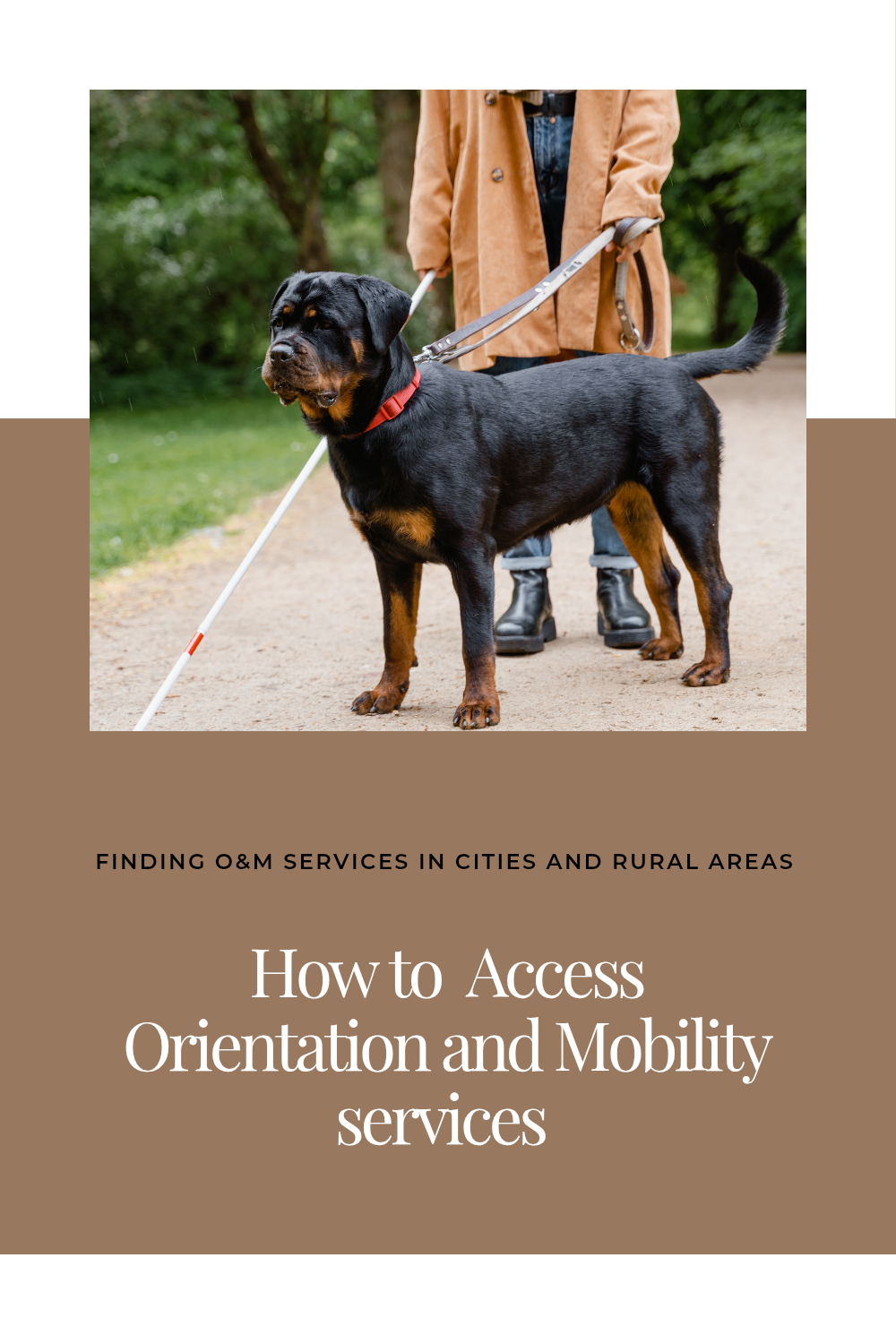
Traveling independently, navigating daily routines, and moving confidently in unfamiliar environments start with building solid Orientation & Mobility (O&M) skills. But many people wonder: “How can I get access to O&M services, especially if I live far from big cities or specialized centers?”
Here are practical steps and resources anyone anywhere can use,whether in urban centers with many services, or remote/rural areas with few.
What O&M Services Usually Include
Before looking for services, it helps to know what to expect. O&M services typically involve:
- Assessment of current mobility and orientation skills (e.g., ability to navigate indoors, route planning, use of cane or other aids).
- Training in cane use or other mobility aids.
- Learning safe travel in different environments (streets, public transport, rural paths).
- Use of assistive tools, technology (GPS, cane, audio/tactile cues).
Knowing that, you can more clearly identify what kind of service you need and what to ask or look for.
How to Find O&M Services in Urban Areas
If you live in or near a city, you have certain advantages. Here’s how to tap into them:
Check Rehabilitation Centers / Vision Clinics
Many cities have rehab centers or clinics for the blind/low vision that offer O&M as part of their services. Ask if they have certified O&M specialists.
Universities, Special Education Schools, or NGOs
Institutions often offer mobility training through their disability services or special education departments. NGOs working in vision loss frequently run support programs.
Professional Associations & Directories
Use directories like the APH Directory of Services (for the USA and some international entries) to find O&M service providers.
Technology / Online Support for Hybrid Models
In urban settings, many O&M providers will offer blended services (online + in-person), especially for support or concept development (e.g., using video for environmental familiarization).
How to Access O&M Services in Rural or Remote Areas
If you live far from centers or resources, don’t be discouraged. There are meaningful ways to access or build O&M support even in remote locations.
Mobile or Traveling Specialists
Sometimes non-profits or government disability services send specialists on outreach to rural areas. Check with local government offices, disability commissions, or NGOs to see if that happens in your area.
Remote / Tele-Support
Via phone, WhatsApp or video calls: instructions, route planning, concept development, even some cane training can be done remotely or with community help.
Training Local Volunteers
If no trained O&M specialist is nearby, sometimes fellow persons with visual impairment, local health workers, or educators can be trained in basic O&M techniques (human guiding, aligning, route familiarization) via online resources, then support others in the community.
Use Universal Tools & Resources
- Use GPS apps, audio maps, or tactile maps if available.
- Use local landmarks to help orientation.
- Build familiarity with paths from home to nearby shops or landmarks.
Key Questions to Ask / Things to Check When Selecting a Service
Whether in city or rural area, to make sure you get useful help,make sure to ask:
- Is the instructor certified in O&M (or properly trained)?
- Do they cover outdoor travel or only indoor or basic moves?
- Do they incorporate tools/technology (GPS, audio cues, cane)?
- Do they offer ongoing support or only a one-off session?
- Can they adapt training to your environment (rural paths, uneven terrain, low light, etc.)?
How My eBook Supports These Steps
Because I’ve seen how many well-meaning parents, educators, and learners have will but don’t always have tools or know where to start, I wrote Let’s Talk About Orientation & Mobility for Individuals with Visual Impairments.
Here’s how the eBook helps:
- Summaries of key O&M basics (from the 3rd & 4th editions of Foundations of Orientation & Mobility) in everyday language.
- Guidance that works whether you are in a big city, or a remote place.
- Bonus Solo Travel Tips, helping build confidence to navigate beyond home safely.
What You Can Do Right Now
If you want to find or start O&M services, you might try:
- Contact your country’s Disability Commission or Ministry/Department for Persons with Disabilities.
- Look for local vision impairment organizations or “school for the blind” institutions.
- Search online with keywords: “Orientation & Mobility services in your Country” or “Mobility training blind in your City/Region”
- Ask in online communities/groups (blind or low vision forums) if anyone has recommendations.
Final Thought
Access to Orientation & Mobility services is not a luxury,it’s central to independence, dignity, and quality of life. Whether you live in a capital city or in a remote village, there are paths to getting the training, tools, and support you need.
If you’re ready to take more concrete steps, I invite you to preview my eBook Let’s Talk About Orientation & Mobility ... it’s designed to give you clarity, direction, and immediate support so you can begin building more independence today.