
The Friend-First Intro
Let's be real — most "business plan" templates feel like homework you didn't sign up for. You open them, see 40 pages of blank boxes, and immediately close your laptop. I get it. You just want to start something, not write a novel.
But here's the thing: a business plan isn't about impressing a bank. It's about giving you clarity. When your ideas are messy, your business feels messy. A simple plan fixes that.
So in this post, I'm walking you through how to create a lean, useful business plan — without the corporate fluff. And yes, I built a downloadable PDF version of this guide over at my Payhip store, DOC DROP, if you want it in a neat, printable format you can fill out at your own pace.
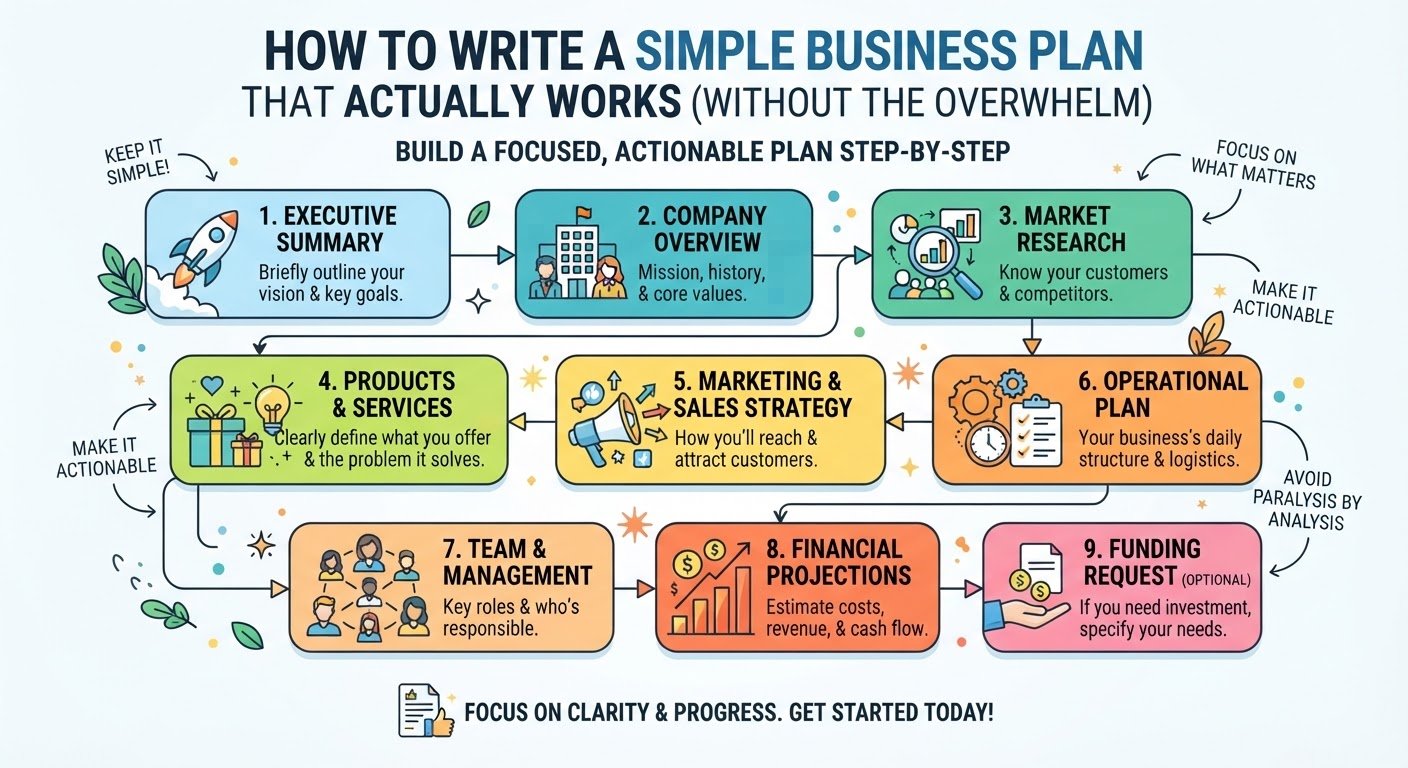
1. Start With the Problem, Not the Product
Most people start with "What am I selling?" Flip that. Start with: What problem am I solving? If you can name the problem clearly, the rest of the plan falls into place.
Example: Let's say you want to sell digital planners. The problem isn't "people don't have planners." It's "people feel scattered and forget deadlines." See the difference? The second version gives you a real direction.
Quick tip: Write one sentence describing the problem your business solves. If it takes more than 20 words, simplify it.
2. Know Who You're Talking To (Even If It's Just "People Like Me")
You don't need a 10-page customer profile. You just need to know who your customer is, where they spend time, and what they're struggling with today.
Ask yourself:
- What are they doing right before they need my product?
- What's the last thing they tried that didn't work?
- What would make their life 10% easier tomorrow?
Real example: A student buying a study guide isn't just "a student." They're a student who has an exam in two weeks, is panicking, and needs something that cuts through the noise. Speak to that person.
3. Keep Your Offer Simple
This is where people overthink. You don't need five products on day one. You need one clear offer. A PDF guide. A planner. A checklist. Something someone can buy, download, and use in 10 minutes.
At DOC DROP, I focus on simple PDF downloads — guides, templates, and everyday problem-solving ebooks — because I believe tools should work the moment you open them.
4. Price for Value, Not for Hours
A common trap: "It took me 3 hours to make, so I'll charge R50." Your customer doesn't care how long it took you. They care what it does for them.
If your PDF saves someone 3 hours of research, R150 is a fair trade. Trust the value you provide.
5. Your Marketing Plan Can Be One Paragraph
Seriously. You don't need a full marketing degree. Just write:
- Where will people find me? (Instagram, Google search, WhatsApp groups?)
- What's the one message I'll repeat?
- How will I turn a visitor into a buyer? (A simple landing page + a clear download link works.)
That's it. You can refine it as you grow.
6. Numbers That Don't Scare You
You don't need a spreadsheet that looks like a bank audit. Just track:
- How much you spend (tools, design, ads)
- How much you earn
- What's left over
If the leftover number is positive, you're winning. If not, adjust either your price or your cost.
7. Make It Real With a Timeline
A plan without dates is just a wish list. Pick 3 milestones:
- Launch product
- Make first 10 sales
- Gather feedback and improve
Give each a rough date. It builds momentum.
Soft CTA — Check Out DOC DROP
If you want a clean, printable version of this business planning guide — plus templates you can actually fill in — I put together a PDF over at my Payhip store, DOC DROP. It's the same friendly tone, just in a format you can save, print, or share. No pressure — just a tool if you need it.